
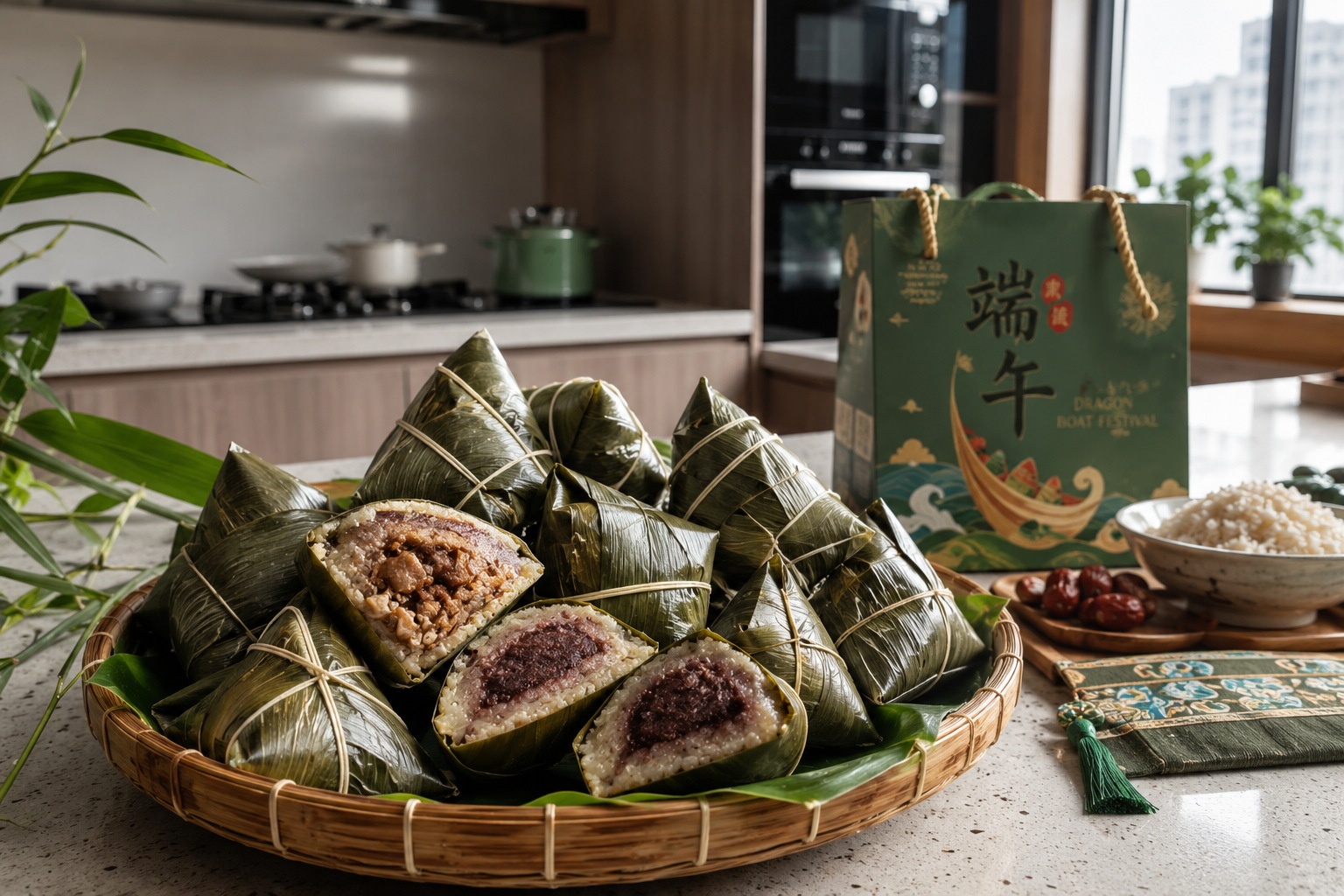

The Digital Battlefield: A Sticky Rice Schism
It starts innocently enough. It’s early June, the air is getting humid, and the smell of reed leaves is drifting from kitchens across China. But if you scroll through Weibo or Xiaohongshu (Little Red Book), you won’t see peaceful festival greetings. Instead, you’ll find a digital battlefield.
The combatants? The “Salty Faction” versus the “Sweet Faction.” For those unfamiliar, zongzi are pyramid-shaped dumplings made of glutinous rice wrapped in bamboo or reed leaves. But how you fill them defines your soul—or at least your social media feed.
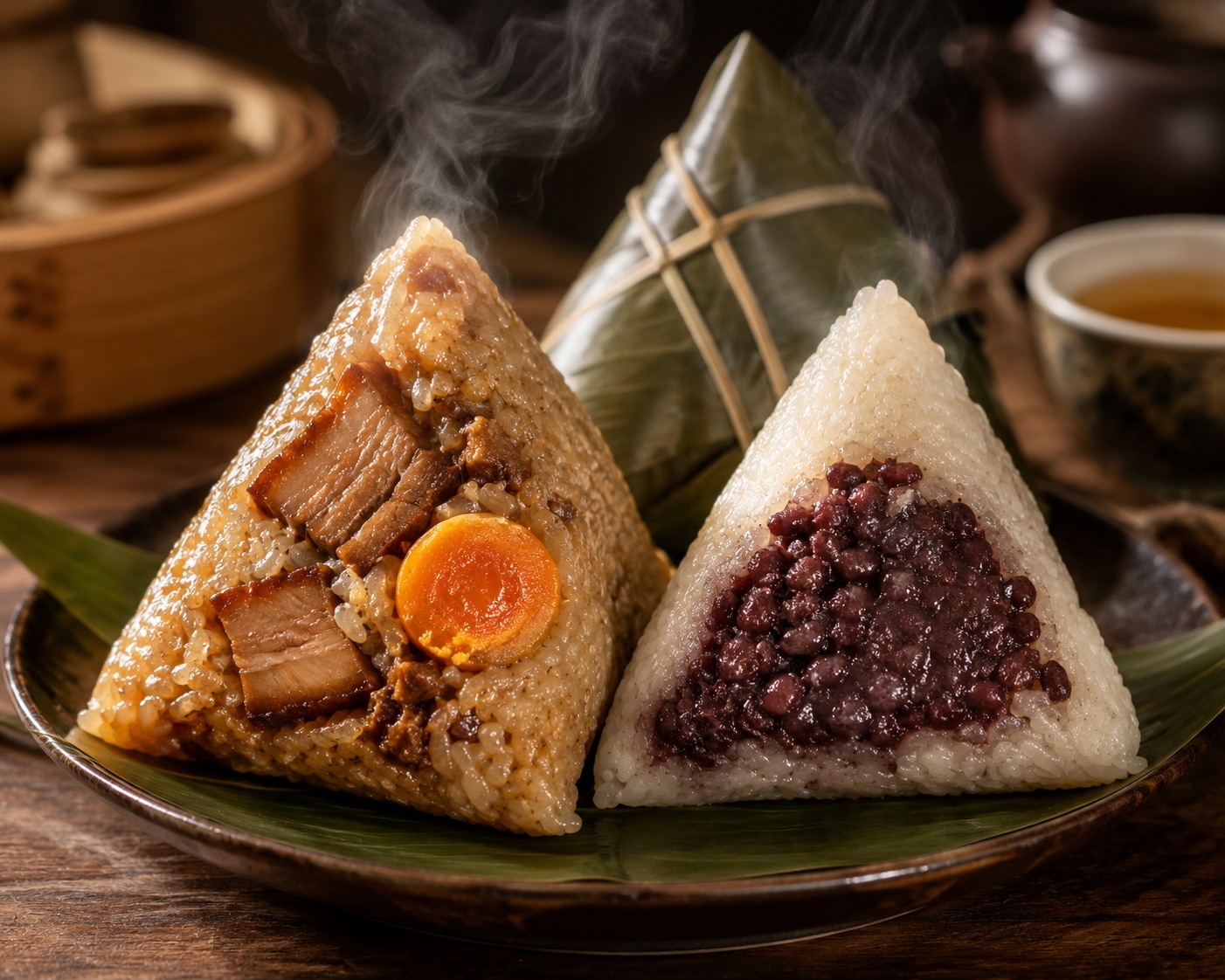
The Salty side, largely dominant in Southern and Central China, argues that zongzi should be a savory meal. Their arsenal includes marinated pork belly, salted duck egg yolks, mushrooms, and dried shrimp. To them, rice without meat is just carbs waiting to happen.
The Sweet side, rooted in Northern traditions, insists zongzi are a dessert or snack. They stuff their bundles with red bean paste, dates, or plain white rice meant to be dipped in sugar or honey. Their argument is simple: “Why ruin perfectly good glutinous rice with soy sauce?”
Every year, this debate reignites. Last year, it wasn’t just comments sections; it was entire threads of people explaining why the other side is technically wrong. It’s a harmless, sticky, yet surprisingly passionate proxy war.
Beyond Taste Buds: Geography as Identity
Why does this matter? Because in China, food is geography. The sweet-salty divide roughly maps onto the historic North-South cultural split. But today, it’s also a shorthand for identity.
When a young professional in Shanghai orders a savory zongzi with lotus leaf flavor, they aren’t just eating lunch. They are signaling belonging to a coastal, pragmatic, and fast-paced lifestyle. When someone in Beijing chooses sweet red bean paste, they are connecting to a more traditional, perhaps nostalgic, northern rhythm.

For Chinese youth, these preferences are rarely just about taste. They are low-stakes ways to assert regional pride without getting bogged down in heavy cultural analysis. It’s the culinary equivalent of arguing whether football or basketball is better—passionate, tribal, but ultimately harmless.
However, the real story isn’t the divide. It’s how quickly that divide is blurring. As millions of Chinese move from rural hometowns to mega-cities for work, they take their taste preferences with them. A factory worker from Hunan might now live in Shenzhen, eating sweet zongzi because that’s what’s available in their local supermarket. The “pure” regional diets are becoming hybrids.
The ‘New’ Chinese Consumer: Fusion and Individuality
If the traditional war is Sweet vs. Salty, the new battleground is Weird vs. Normal. This year, e-commerce platforms reported a surge in “extreme flavor” zongzi, targeting Gen Z consumers who view tradition not as a rulebook, but as a canvas.
We’re talking about zongzi filled with spicy crayfish, durian fruit, chocolate, or even black pepper beef. These aren’t just gimmicks; they reflect a broader shift in China’s consumer economy. Young Chinese are less interested in uniformity and more interested in personalization.
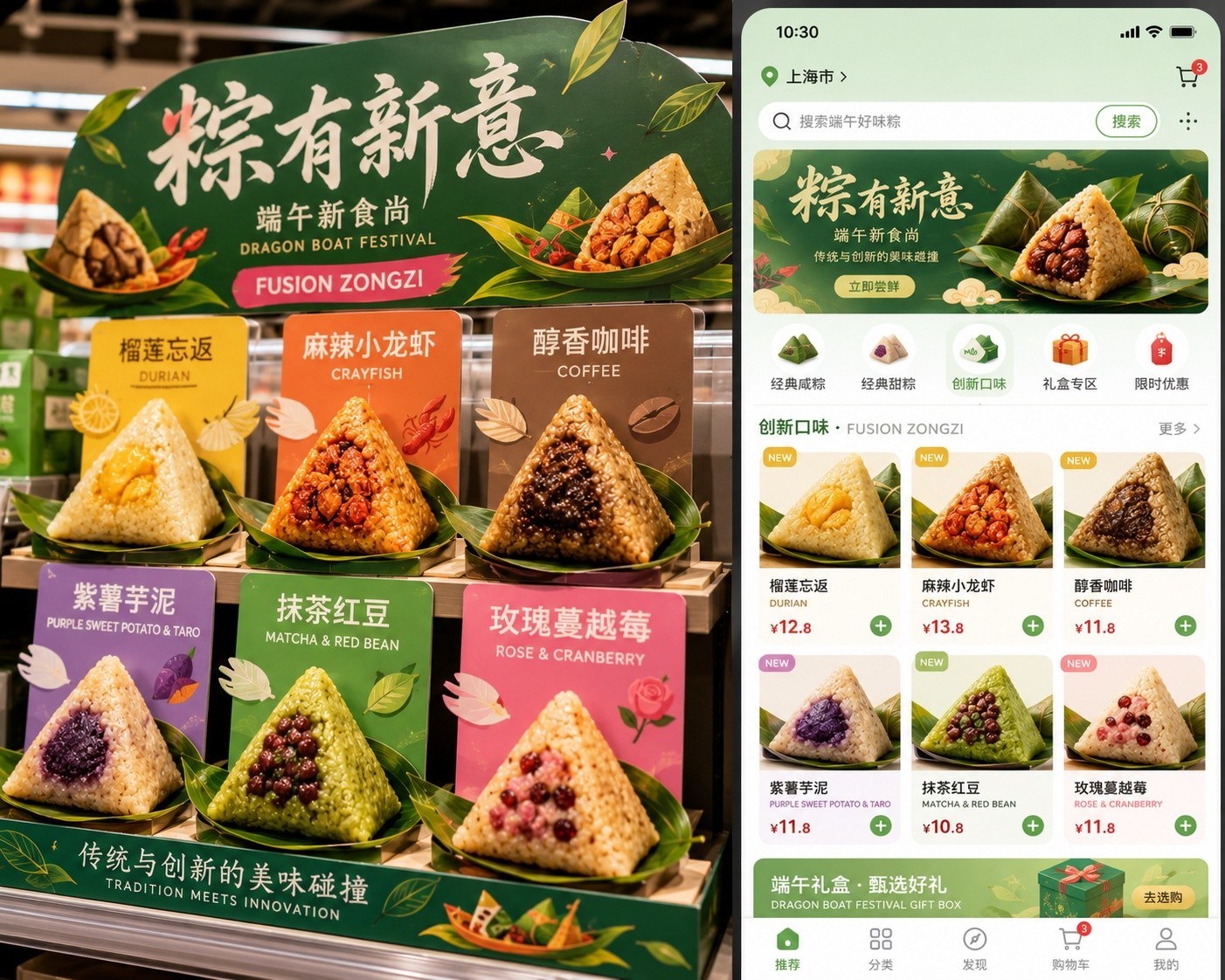
Consider the case of “Latte Zongzi” or “Coffee Zongzi.” These items, which combine traditional glutinous rice with modern coffee beans or matcha, sell out within minutes during pre-sales. For a foreign observer, this might seem chaotic. But to a 25-year-old office worker in Hangzhou, it’s logical. They grew up with global brands and instant delivery apps. Tradition for them isn’t static; it’s an API they can plug into.
This diversification mirrors the broader economic landscape. China is no longer just the “world’s factory” producing uniform goods. It’s a market of millions of distinct micro-tastes. The fact that a student can order a durian zongzi delivered to their dorm in under 30 minutes via an app highlights the sophistication of China’s digital infrastructure. It’s not just about buying things; it’s about the frictionless integration of culture and convenience.
A Microcosm of Social Change
So, why should an international reader care about a rice dumpling dispute? Because it’s a perfect, edible microcosm of contemporary China.
First, it shows the vibrancy of Chinese social media. It’s not just a tool for information; it’s a space for cultural play. The humor and banter allow people to engage with heritage in a light, accessible way. It democratizes culture—you don’t need a PhD in anthropology to have an opinion on zongzi.
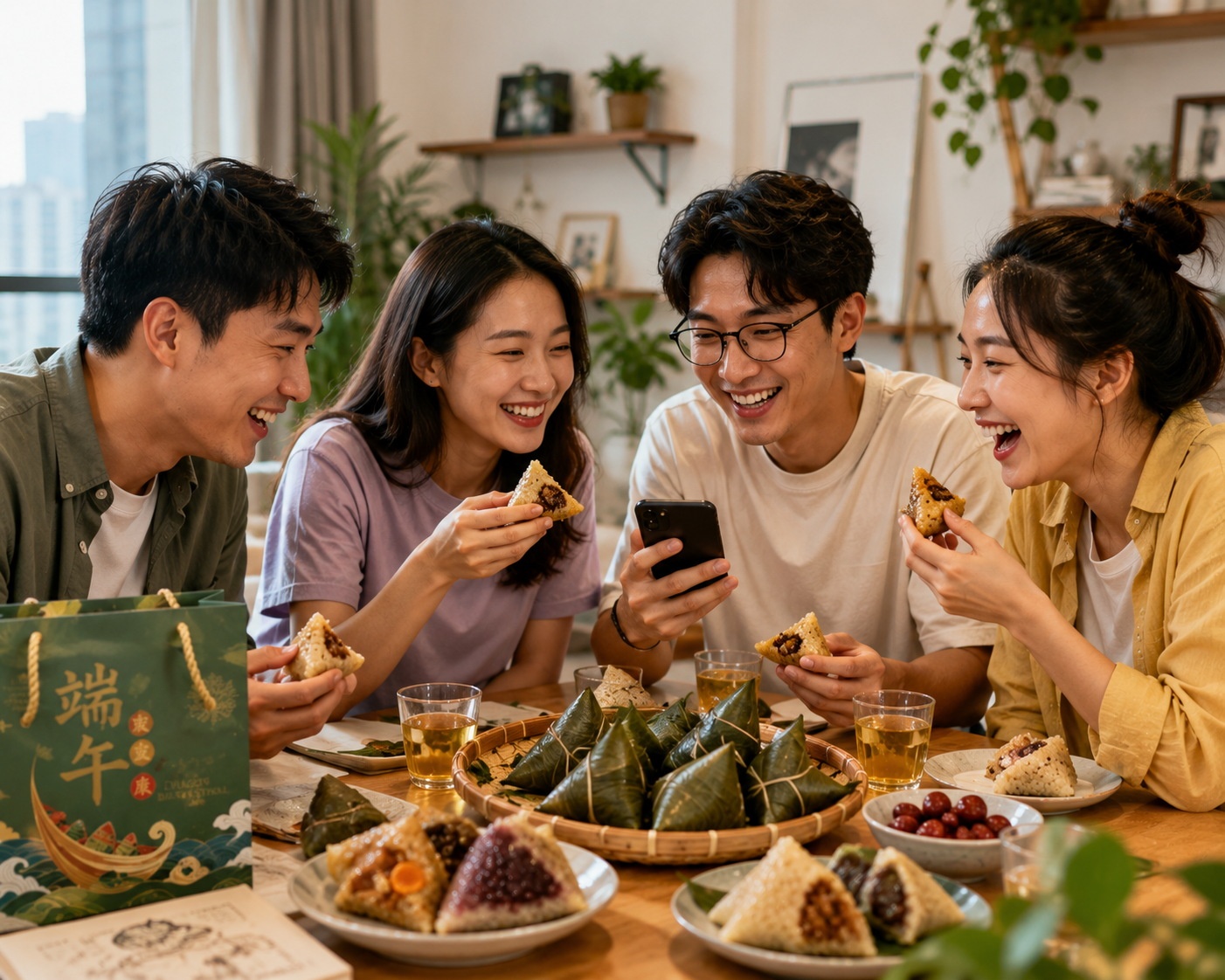
Second, it reveals the tension between heritage and individuality. Older generations often view the “weird” flavors as a betrayal of tradition. Younger generations view them as evolution. This isn’t a clash of values, but a negotiation of how to keep culture alive in a fast-changing world. The zongzi remains the same shape; the filling just adapts.
Finally, it highlights the paradox of connection. While people argue fiercely online, they are also sharing. You’ll often see posts like, “I’m from the North, but I finally get why you love the salty ones.” The debate itself becomes a bonding ritual. It’s a way for strangers to find common ground over a shared, sticky meal.
Conclusion: More Than Just Food
The next time you see a headline about Chinese food trends, don’t dismiss it as trivial. The sweet vs. salty zongzi war is a window into a society that is deeply rooted in history yet rapidly reinventing itself. It’s a place where regional identities are preserved not by isolation, but by adaptation.
China is not a monolith. It’s a collection of millions of individual tastes, digital behaviors, and personal choices. Understanding this “small” conflict helps you understand the big picture: a country where tradition and modernity aren’t at war—they’re just mixing in the same bowl.