

The Sizzle of the Wok Meets the Vacuum Seal
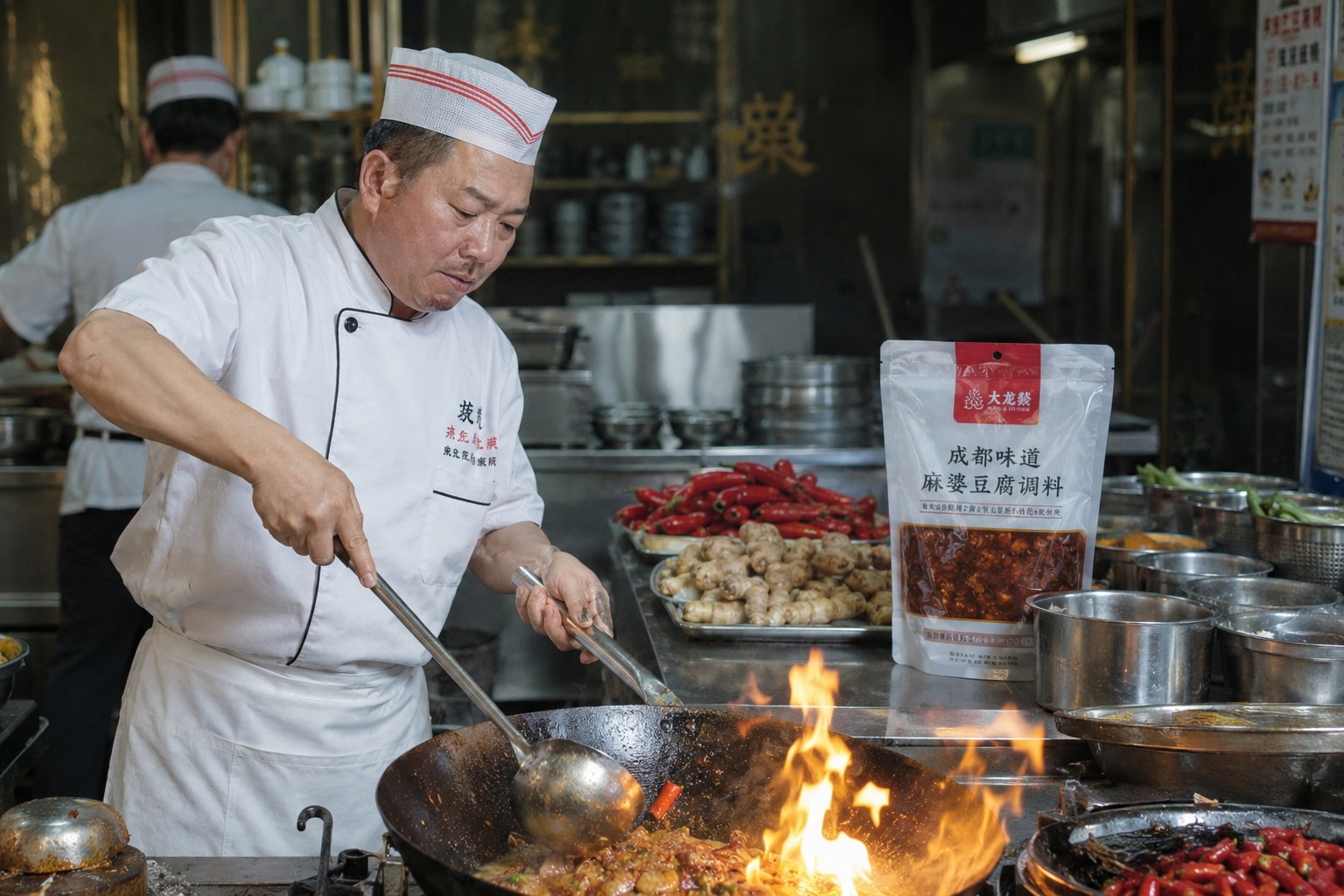
It is 7:30 PM on a Friday in Chengdu. The air in the back kitchen of “Old Zhang’s Sichuan Kitchen” is thick, humid, and smells intensely of fermented black beans, garlic, and chili oil. Old Zhang, 58, moves with the rhythmic precision of someone who has cooked for thirty years. His wok, seasoned by decades of heat, sings as he tosses beef strips in a fiery stir-fry.
But look closer at his station. Next to the fresh chilies and ginger sits a vacuum-sealed plastic bag. Inside is a pre-mixed sauce paste, labeled only with a barcode. This is “yu zhi cai” (pre-prepared dishes), the silent revolution reshaping China’s food industry.
When “Wok Hei” Meets the Central Kitchen
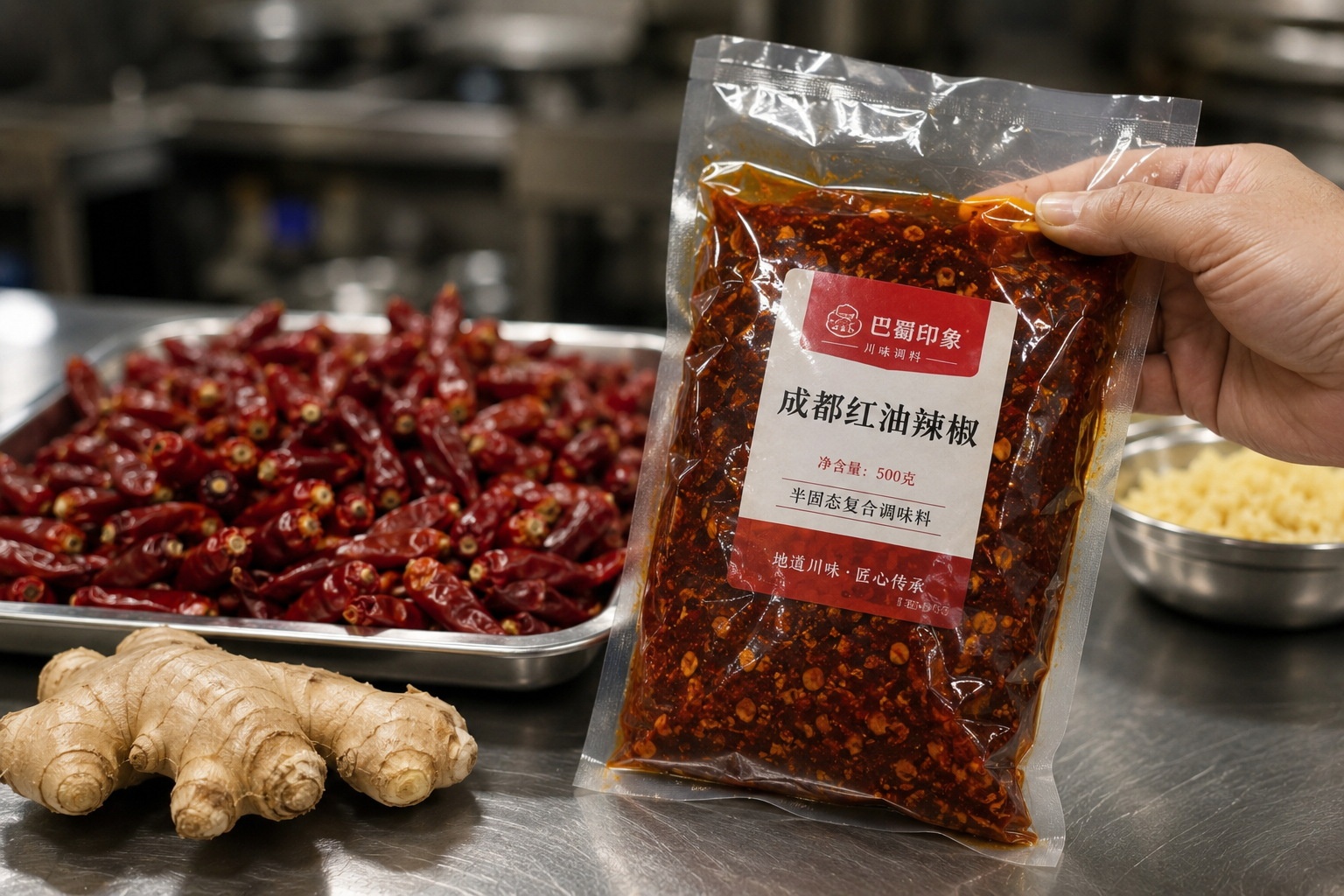
Old Zhang represents a generation of chefs who believe that taste is born from patience. In the past, making the perfect mapo tofu or kung pao chicken required hours of prep: grinding Sichuan peppercorns, frying chili oil from scratch, and layering flavors manually.
“Thirty years ago, if you didn’t grind the spices yourself, your food had no soul,” Zhang says, wiping sweat from his forehead. “Now? The boss wants 200 plates out in an hour. My hands can’t keep up with the delivery riders knocking at the door.”
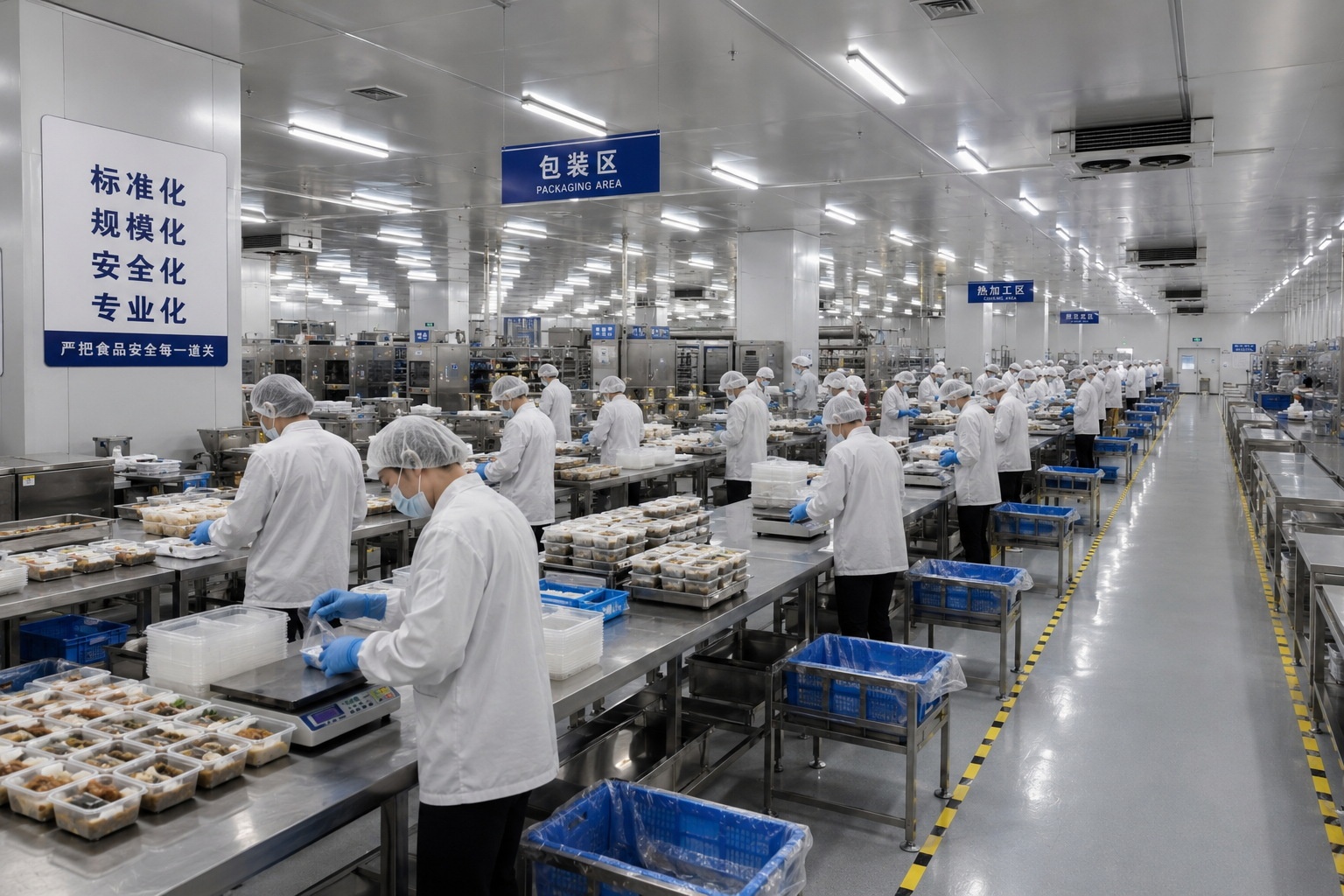
He doesn’t hate the pre-made sauces. In fact, he admits they are consistent. The problem isn’t quality; it’s economics. Labor costs in China have risen sharply. A skilled cook like Zhang commands a high salary, but turnover is high. Central kitchens—massive industrial facilities that chop, cook, and package meals—offer a solution. They reduce waste, ensure uniform taste across hundreds of branches, and allow restaurants to operate with fewer staff.
The Consumer’s Dilemma: Speed vs. Soul
For the average Chinese diner, the choice between tradition and convenience is often invisible until it matters. China has one of the world’s most developed delivery ecosystems. Apps like Meituan and Ele.me deliver meals in under 30 minutes. For young professionals working 9-to-9 schedules, a hot, affordable meal is a necessity, not a luxury.
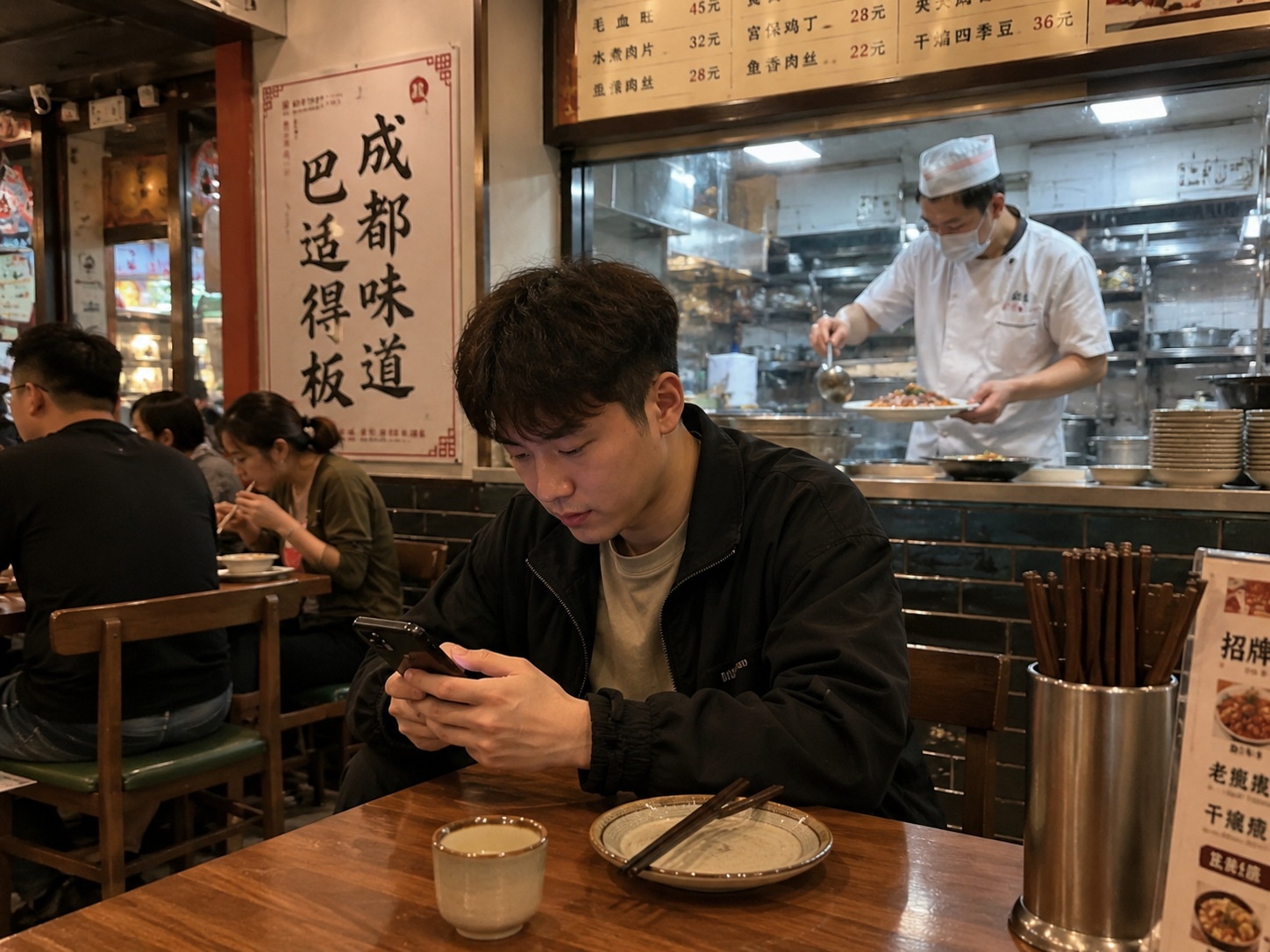
“I can tell the difference,” says Li Wei, a 28-year-old software engineer who eats out twice a week. “Hand-cooked food has a certain vitality, a slight char from the high heat. Pre-made food is… safe. It tastes exactly the same every time, which is both comforting and boring.”
Li Wei isn’t alone. A 2023 survey by a major Chinese consumer platform found that while 70% of consumers are open to pre-made dishes for their convenience, nearly 60% feel restaurants should clearly label them. The controversy lies in transparency. When a diner pays premium prices for “chef-specialty” food, they expect craftsmanship. When they receive microwaved trays disguised as gourmet meals, trust erodes.
Adapting to the New Reality
So, how do traditional chefs survive? They compromise, but strategically. Old Zhang’s restaurant now uses pre-made sauces for its most popular, high-volume dishes like spicy fish slices. This frees up his energy for the few items that still require manual skill: the hand-pulled noodles and the complex dry-pot vegetables.
This shift is changing the chef’s role from a pure artist to a quality controller. Modern food technology has improved significantly. Some pre-made dishes now use flash-freezing and nitrogen packaging to lock in freshness, attempting to replicate the “wok hei” (breath of the wok) that traditionalists cherish.
The Enduring Heart of Chinese Dining
Despite the industrialization of food, the social function of dining remains unchanged. In China, food is not just fuel; it is a language of care, celebration, and connection. No matter how convenient the pre-made option becomes, the desire for a shared meal prepared with intention persists.
Old Zhang still spends two hours every morning selecting his chilies. He argues that while the sauce can be bought, the ingredients cannot be rushed. “The machine can cook fast,” he says, pointing to the steam rising from his wok. “But it cannot care about the customer sitting in the front hall.”
In this tension between efficiency and authenticity, we see a microcosm of modern China. It is a society balancing rapid technological advancement with deep-rooted cultural values. The pre-made dish is not the death of tradition; it is an adaptation. And as long as there are chefs like Zhang who refuse to let go of the wok, and diners like Li Wei who still taste the difference, the soul of Chinese cuisine will endure.