

The Sunday Ritual: From Temple Fair to Kitchen Table
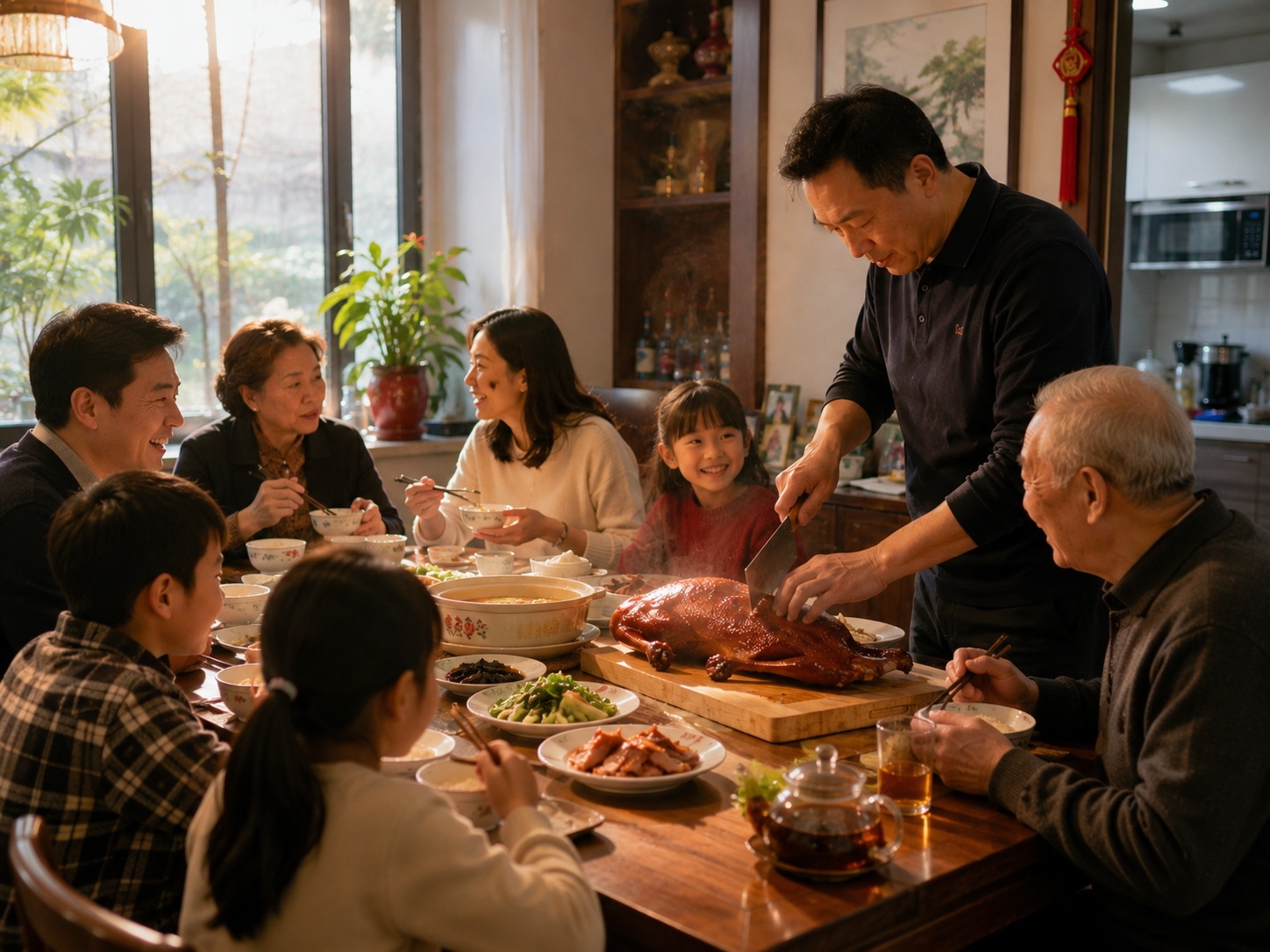
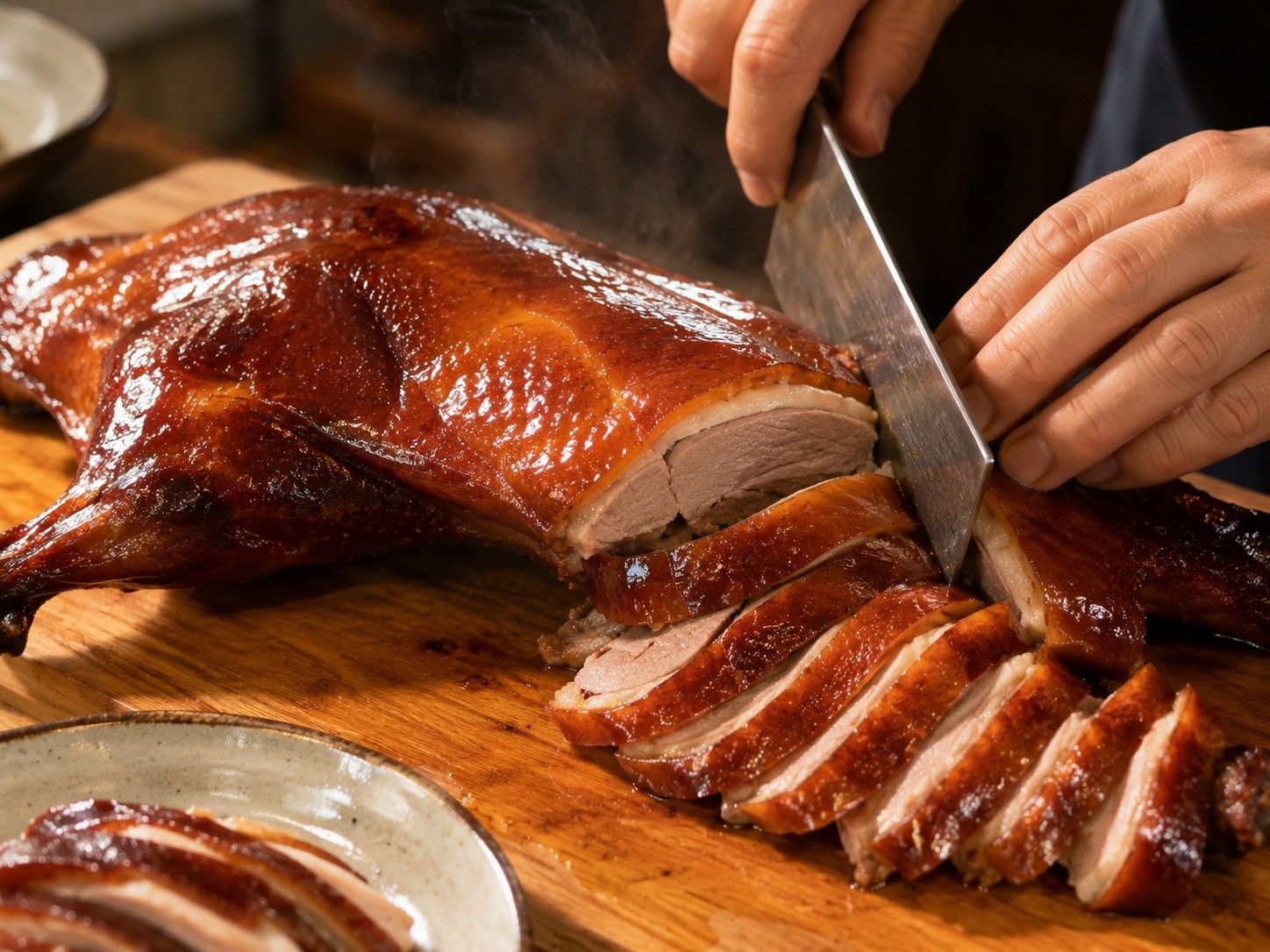
The air in the kitchen is thick with the scent of star anise and charred skin. It’s Sunday afternoon in Guangzhou, and Lin, a 35-year-old accountant, is carefully slicing a glossy, dark-red roast goose. The knife crunches through the crisp skin, revealing tender, juicy meat beneath. For his parents, this ritual used to be reserved for weddings or Lunar New Year. Today, it’s just another Sunday lunch.
In Guangdong, roast goose (shāo’é) has long been considered a “big dish”—expensive, labor-intensive, and symbolic of prosperity. Fifty years ago, buying a whole goose required saving up for weeks. But walk through any residential neighborhood in Guangzhou or Shenzhen today, and you will find that the gap between “banquet food” and “daily food” has nearly vanished. The goose on Lin’s table costs roughly 80-100 RMB ($11-$14), a price point that allows ordinary families to enjoy premium protein without breaking the bank.
The Rise of ‘Community Ovens’
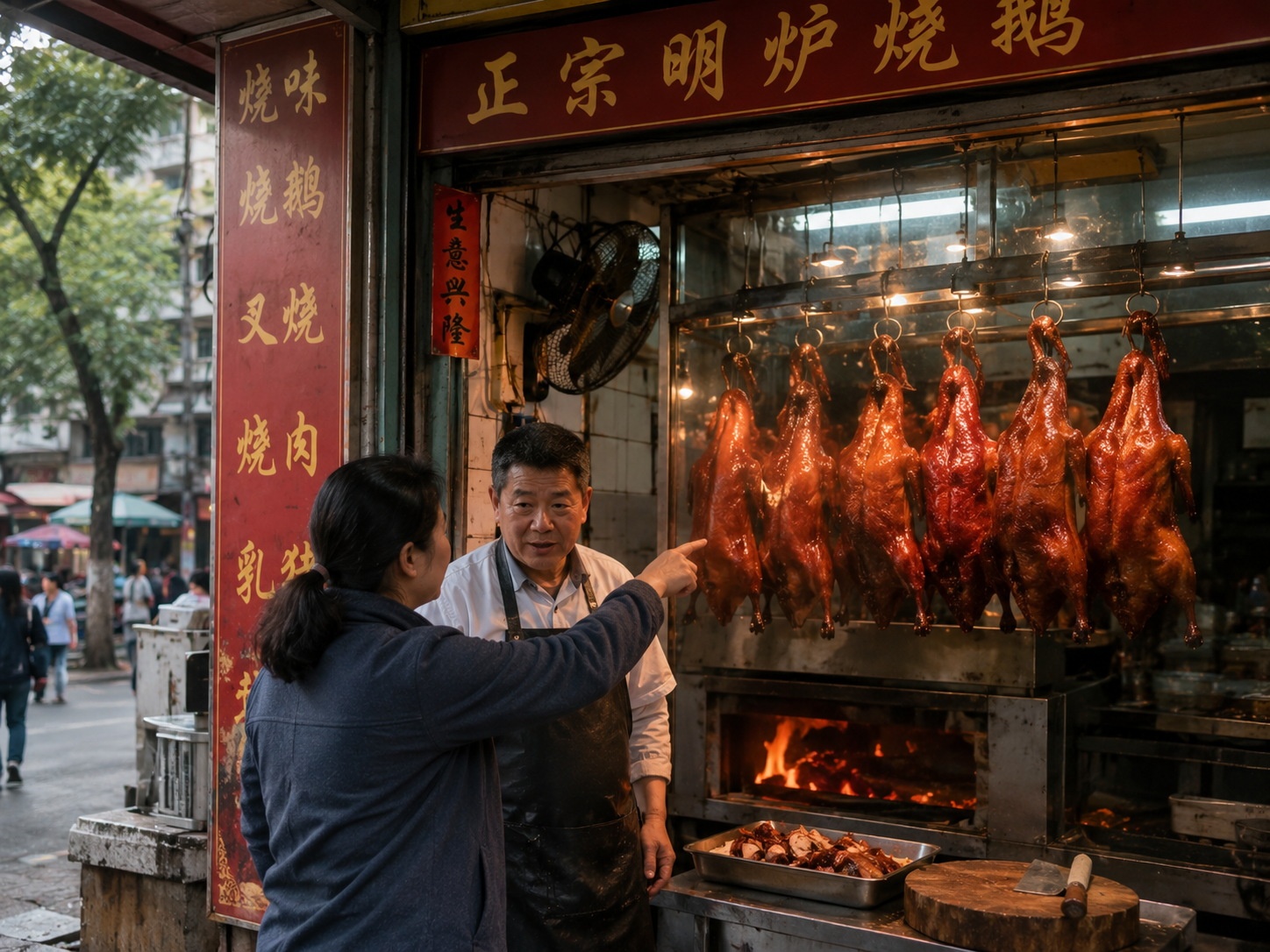
This shift isn’t accidental. It’s driven by what locals call “community ovens” (shèqū kǎoyá)—small, neighborhood-scale roasting shops that have replaced the high-end banquet halls of the past.
These shops are usually no larger than a garage, located on ground floors of apartment complexes or busy street corners. The owner, often an immigrant from neighboring provinces, tends to a large, open-front oven where geese hang like golden lanterns. The process is standardized but artisanal: marinated in a secret blend of five-spice and soy sauce, hung to dry, and roasted over charcoal or gas until the skin crackles.
The key to their success is accessibility. Unlike traditional restaurants that require reservations and formal dining, community ovens operate on a grab-and-go model. Workers on their lunch break, students after school, and elderly neighbors can buy a quarter or half goose to take home. The competitive market has driven prices down while quality remains high. For many, this is the new face of China’s consumer economy: efficient, localized, and deeply integrated into daily life.
A Taste of Economic Resilience
Some Western analysts talk about “consumption downgrade” in China, suggesting people are spending less. But in Guangdong, the reality is more nuanced. It’s not about spending less; it’s about spending smarter.
The roast goose industry exemplifies this resilience. While luxury goods sales may fluctuate, the demand for high-quality, affordable everyday food remains steady. Small businesses thrive by cutting out the middleman and focusing on volume. A single shop might sell 200 geese a day, relying on steady foot traffic rather than high margins per unit.
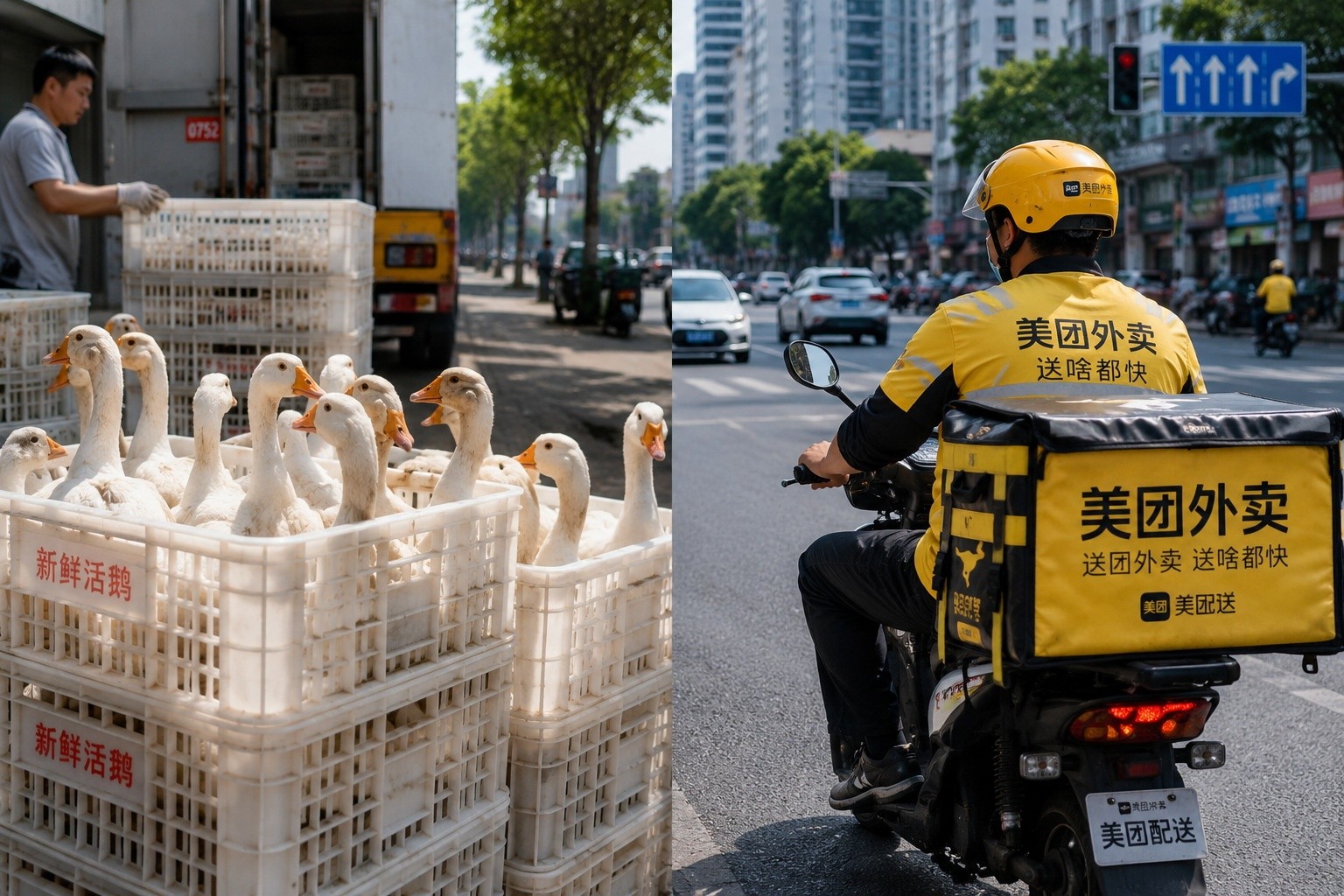
This model reflects the vibrancy of China’s grassroots economy. It’s a sector where innovation happens not in boardrooms, but in the management of supply chains and local logistics. Fresh geese are sourced from farms in surrounding counties, processed in central kitchens, and distributed to neighborhood ovens within hours. The result is a product that is fresher, cheaper, and more consistent than what you might find in a tourist-oriented restaurant.
Cultural Continuity in a Modern Context
Technology has also reshaped how this traditional food is consumed. Apps like Meituan and Ele.me allow residents to pre-order a specific cut of goose, specifying exactly how crispy they want the skin or how much fat they prefer. Delivery riders then whisk the warm meat to doorsteps within 30 minutes.
For overseas readers, this might seem like a purely utilitarian change. But for Guangdong families, it’s about preserving the ritual while adapting to pace of life. The goose is still carved with care at home; it’s still shared among family members; it’s still a symbol of abundance. The only difference is that the effort required to get it to the table has been minimized.
True cultural preservation doesn’t happen in museums or under glass cases. It happens in the smell of roasting skin on a Sunday afternoon, in the sound of a knife cutting through crisp skin, and in the quiet satisfaction of a family meal that bridges generations. In Guangdong, roast goose is no longer just a banquet dish; it’s a testament to how tradition adapts, survives, and thrives in the modern world.