

The Paradox of Speed and Distance
Li Wei, a 28-year-old tea farmer in the misty mountains of Guizhou province, used to spend his mornings packing fragile green tea leaves into cardboard boxes, hoping they would survive a six-hour bumpy bus ride to the nearest city. Today, he walks ten minutes to a local station where a sleek high-speed train (HSR) departs every twenty minutes. The same journey now takes 90 minutes. But more importantly, the time window for shipping his produce to Shanghai or Beijing has shrunk from two days to less than twelve hours.
For international observers accustomed to market-driven infrastructure decisions, this seems like an economic paradox. Why invest billions in building tunnels through jagged karst landscapes and bridges over deep valleys where population density is low? The answer lies not just in passenger mobility, but in the creation of a Unified National Market. In China, high-speed rail is no longer just a luxury for megacities; it has become the critical infrastructure for integrating remote economies into the national supply chain.

The Geography Challenge: Why ‘Remote’ is Relative
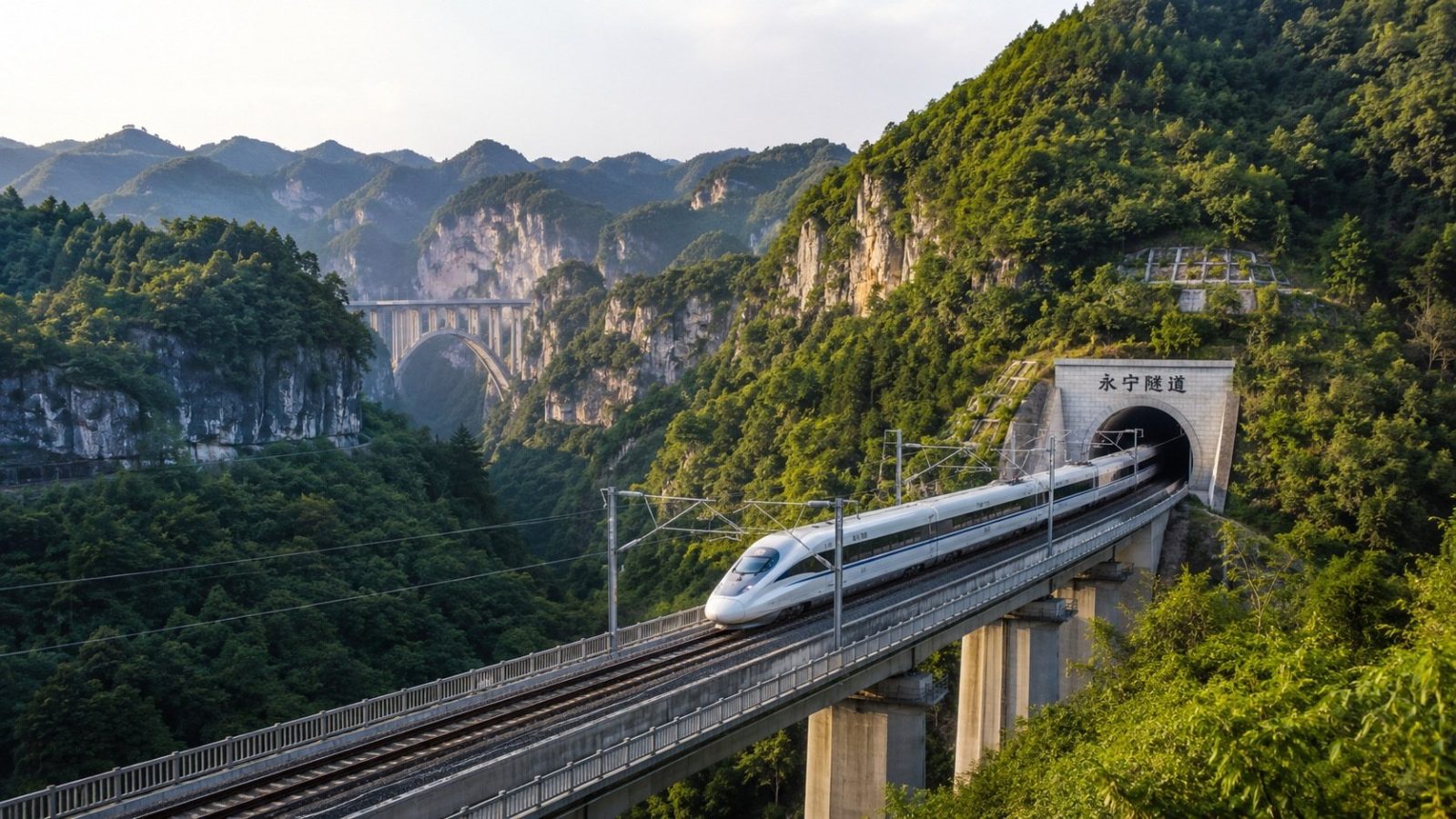
Southwestern China presents one of the most formidable engineering challenges on earth. The region is characterized by karst topography—limestone formations that create steep peaks and deep sinkholes. Building roads or rails here requires piercing mountains and spanning chasms.
In the past, this geography isolated communities for generations. A trip from a county seat to a provincial capital could take a full day, often limited by weather and road conditions. Today, the Guiyang-Kunming High-Speed Railway cuts through this terrain with 90% of its structure consisting of bridges and tunnels. It connects cities separated by distances comparable to those between New York and Boston, but in a landscape that is significantly more rugged.
This physical connectivity changes the value of time. For perishable goods like fresh seafood, exotic fruits, or medicinal herbs, speed is not a convenience; it is a prerequisite for market viability. By collapsing geographical distance, the rail network effectively equalizes access to national markets for rural producers.
Economic Logic: The ‘Last Mile’ of the Unified Market
The concept of a Unified Market in China refers to the removal of internal barriers—such as local protectionism, fragmented logistics standards, and infrastructure gaps—that previously hindered the free flow of goods and capital. High-speed rail acts as the high-velocity artery for this system.
While traditional freight trains carry bulk commodities like coal and steel, high-speed rail has recently expanded into HSR logistics (freight). This is particularly transformative for high-value, time-sensitive products. For example, local specialty fruits from Yunnan or Sichuan can now be harvested in the morning, shipped via HSR to major urban hubs by afternoon, and displayed in supermarkets across the country before dusk.
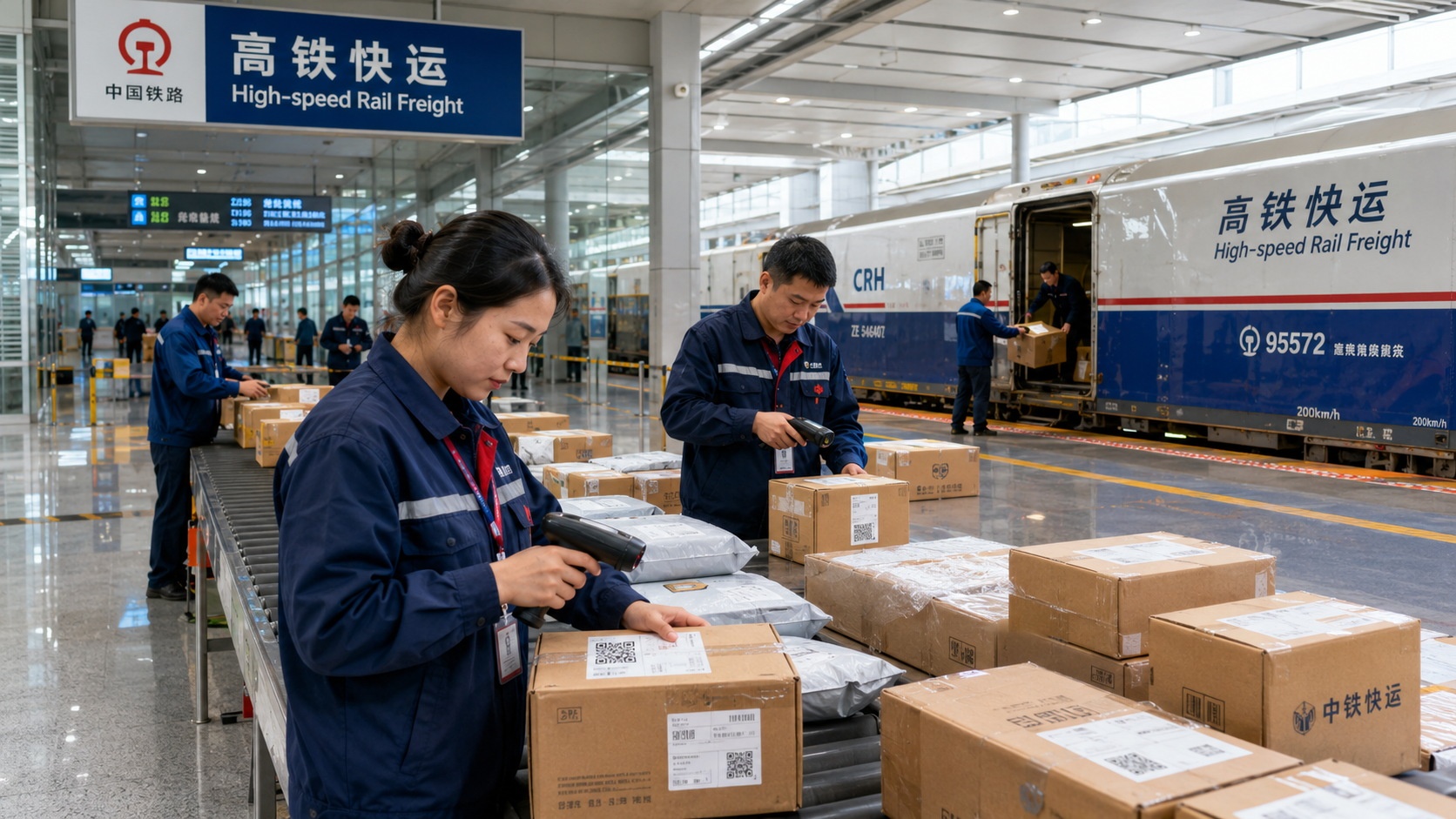
This integration reduces logistics costs significantly. In a fragmented market, goods often require multiple transshipments and suffer from poor cold-chain preservation. With a unified HSR network, logistics companies can offer predictable, next-day delivery services to previously inaccessible counties. For small and medium-sized enterprises (SMEs) in rural areas, this means they can compete with urban businesses on delivery speed, not just price.
Social Impact: Humanizing the Infrastructure
The impact of this logistics revolution extends beyond economics; it reshapes social mobility. Consider the story of Zhang Min, a former tech worker from Shenzhen who returned to his hometown in a remote county to start an e-commerce business. “When I left ten years ago, there was no stable internet and no reliable shipping,” he explains. “Now, the high-speed rail station is next to my warehouse. I can send samples to Beijing overnight and get feedback by morning.”
This trend is fueling what experts call the County-Level Economy. High-speed rail does not just extract resources from rural areas; it brings consumers in. Tourism has surged in regions that were once considered too difficult to reach. Local handicrafts, ethnic cuisine, and agricultural products are finding new markets online, powered by the physical reliability of the rail network.
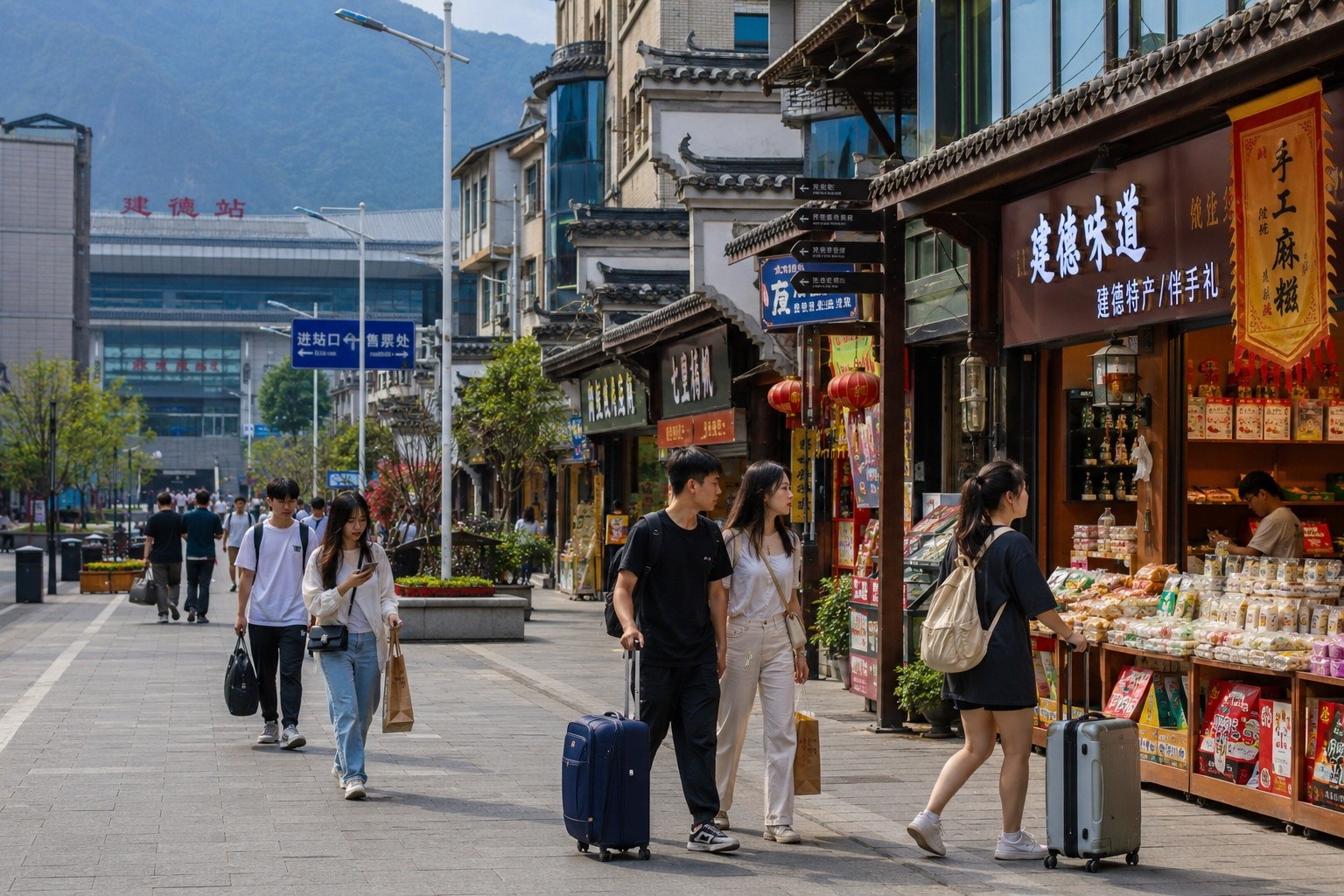
Skeptics often label such infrastructure as “white elephants”—expensive projects with low utility. However, ridership data tells a different story. In provinces like Guizhou and Yunnan, HSR stations are becoming new commercial centers. The foot traffic in these once-isolated towns has increased dramatically, supporting local restaurants, hotels, and service industries. The infrastructure is not empty; it is alive with daily commerce and travel.
Conclusion: Connectivity as Development
China’s approach to high-speed rail reveals a distinct development philosophy: infrastructure is not merely a byproduct of growth, but a catalyst for it. By extending the rail network into remote mountains, the country is actively bridging the urban-rural divide.
This model challenges the Western assumption that profitable infrastructure must be limited to dense, wealthy corridors. Instead, it demonstrates how strategic investment in connectivity can unlock the economic potential of peripheral regions. For the farmer in Guizhou or the entrepreneur in Yunnan, high-speed rail is not just a train; it is a lifeline to the broader economy.
As China continues to optimize its logistics network, the question for global observers is not whether these investments pay off financially, but how this model of connectivity-led development might influence future discussions on rural revitalization and equitable growth worldwide. The true miracle is not the speed of the train, but the inclusion of those left behind by geography.