
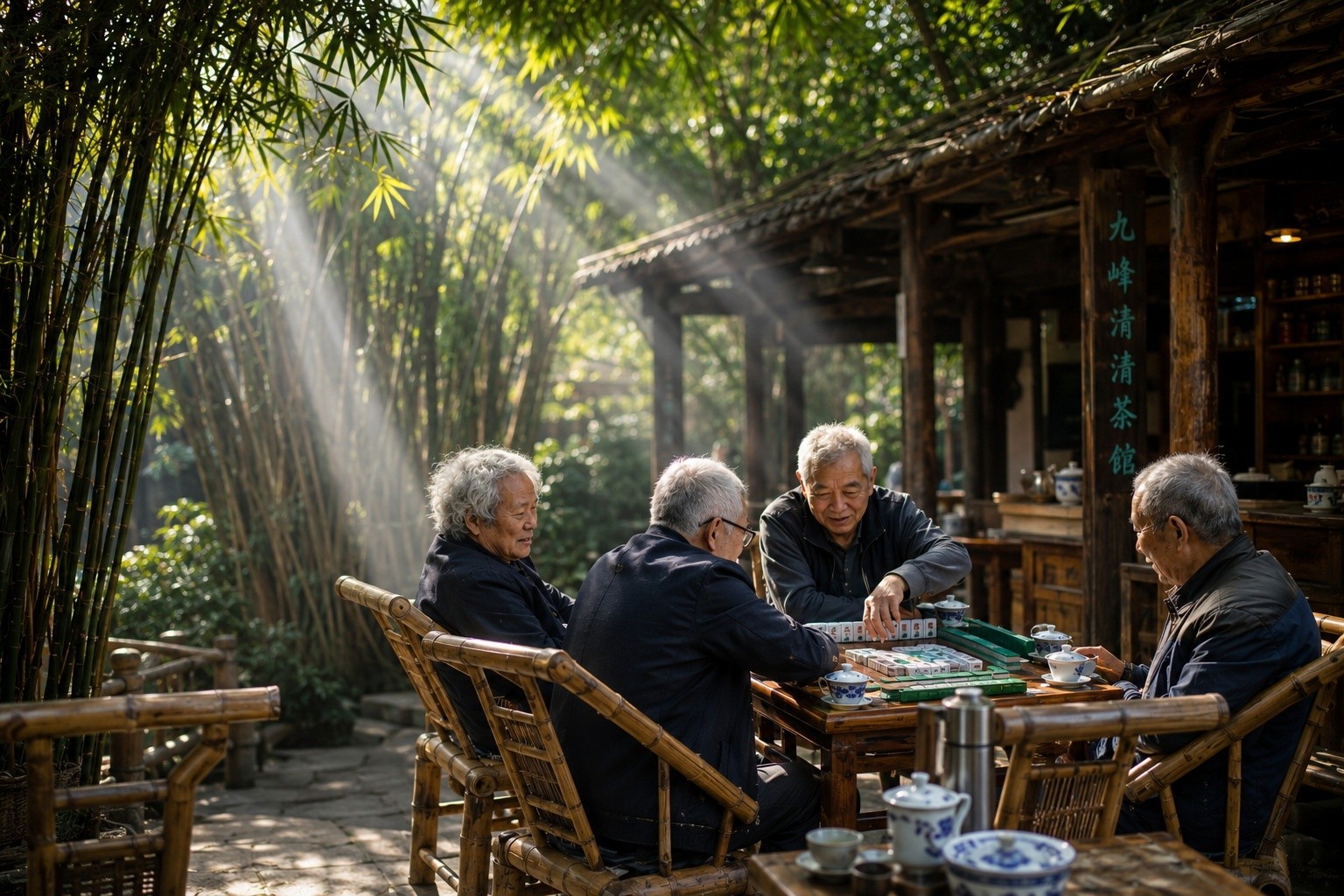

The Paradox of Doing Nothing
It started with a misunderstanding. I arrived in Chengdu with a packed itinerary, obsessed with visiting the pandas, the Jinli Ancient Street, and three different hotpot restaurants before dinner. My local friend, Li, just laughed. Put the schedule away,
he said. Today, we do nothing.
I thought he meant a nap. He meant something far more complex.
In China’s hyper-connected, fast-moving economy, Chengdu has carved out a different identity. While Shanghai and Shenzhen are often compared to New York for their speed and ambition, Chengdu is known for An Yi (安逸). It is difficult to translate directly. It means comfort, ease, leisure, and a certain spiritual contentment. But here, it is not just a feeling; it is a daily practice.
So, I checked into a small guesthouse near People’s Park and decided to spend three days in the city’s most iconic social space: the traditional tea house.
The Architecture of Slow Time
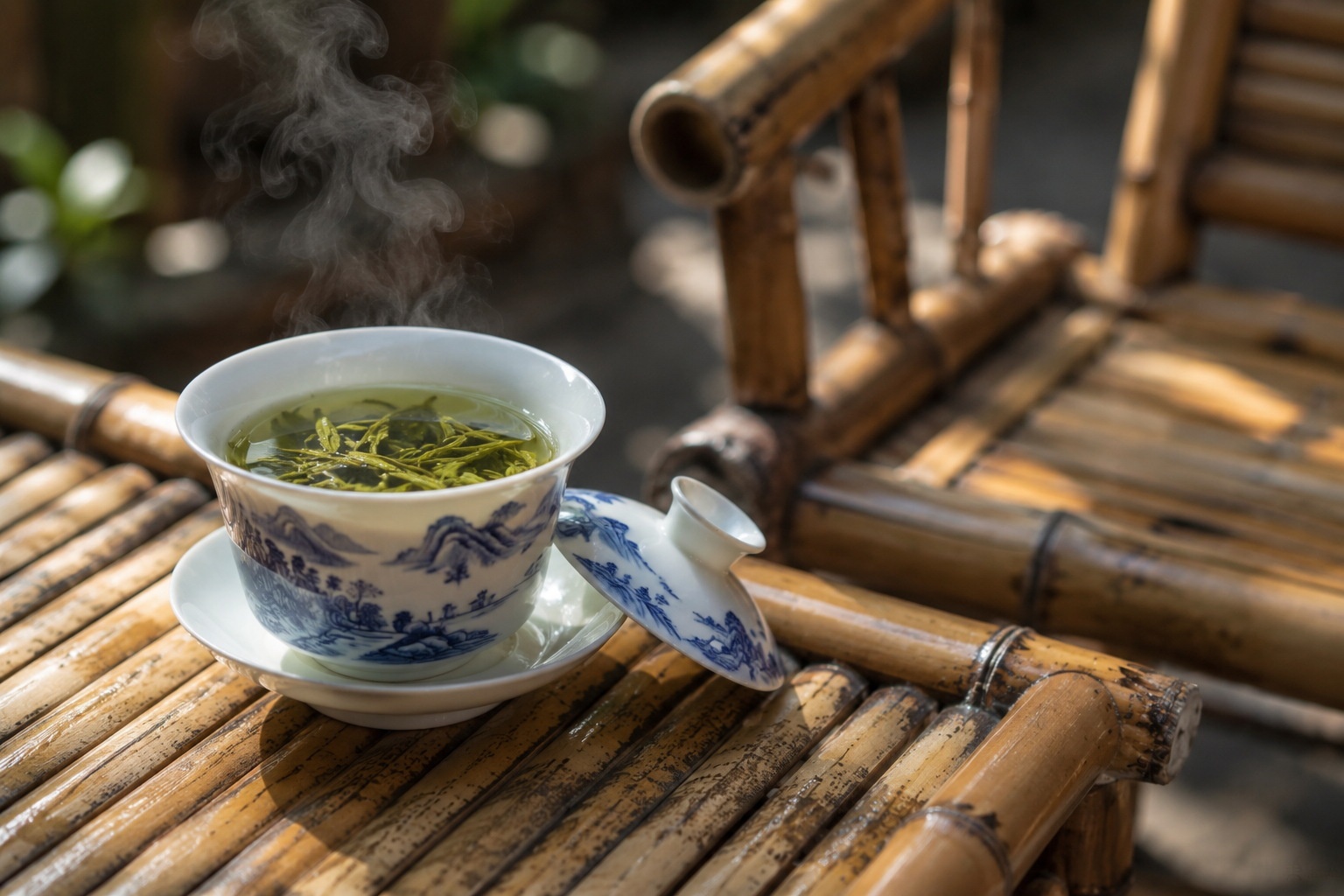
The first thing that strikes you is the furniture. There are no ergonomic office chairs or sleek cafe stools. Instead, there are hundreds of wobbly bamboo chairs and small, low wooden tables. You sit on the edge, slightly awkward at first, until your body adjusts to the rhythm.
I bought a ticket to Bashu Teahouse, a famous spot where the noise level is comparable to a stock exchange floor. But it’s a pleasant chaos. A waiter weaves through the crowd with a long-spouted copper kettle, pouring boiling water into tiny cups with surgical precision. The sound of water hitting bamboo and ceramic is constant.
Here, time is measured not in minutes, but in refills. One ticket usually covers unlimited tea for several hours. You order a cup of Gaiwan tea—a traditional lidded bowl—and you are expected to stay. Leaving after twenty minutes feels rude. The price is incredibly low, often less than the cost of a bottle of water in Western cities, but the currency you pay with is your time.
A Community Hub, Not Just a Cafe
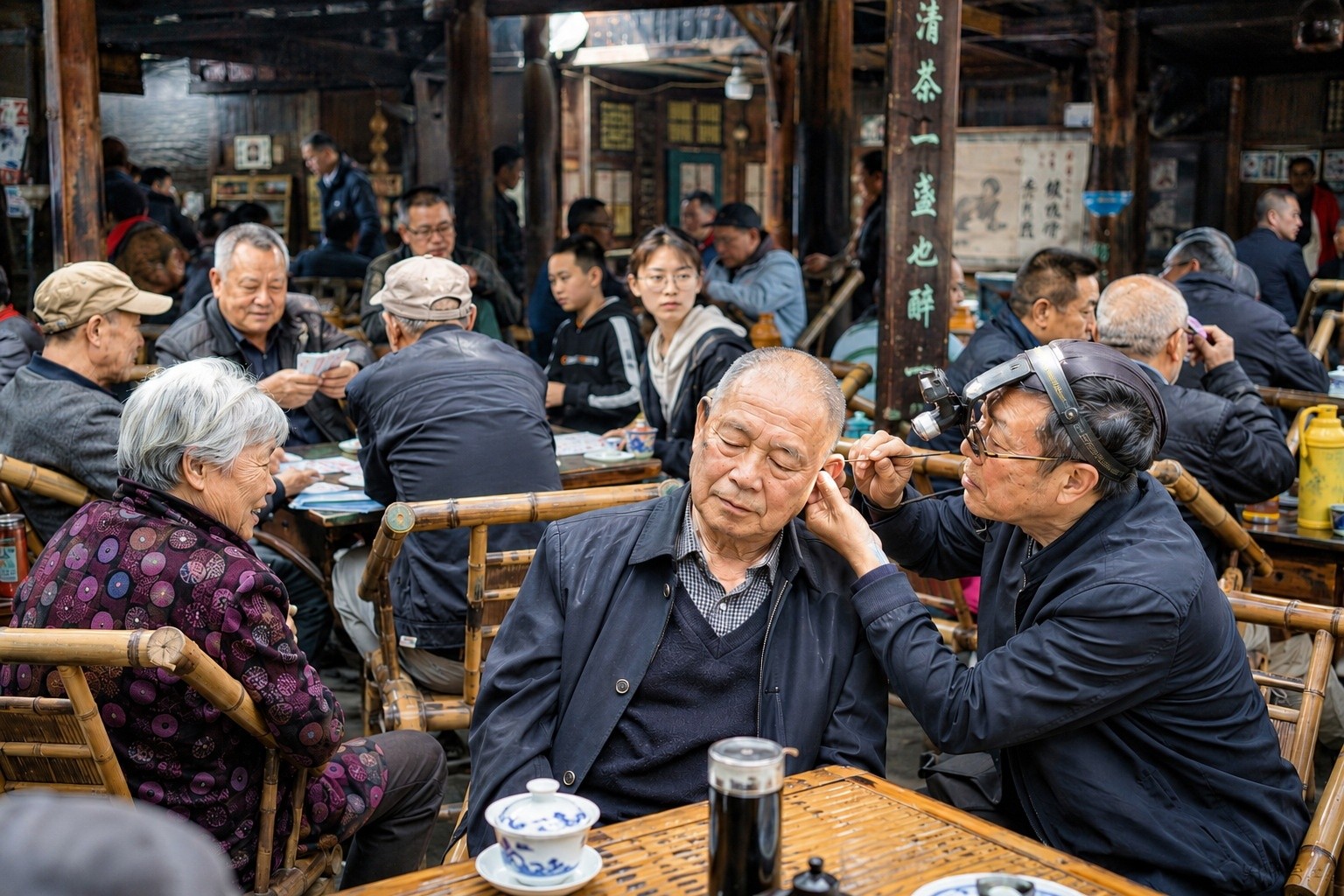
In many Western countries, cafes are places for remote work or quick meetups. In Chengdu, tea houses are the living room of the community. They function as unofficial town halls, matchmaking centers, and news outlets.
During my three days, I observed a fascinating social ecosystem. In one corner, a group of elderly men were deeply engrossed in a game of Mahjong, their hands moving with practiced speed, arguing playfully over tiles. In another, a young couple was having a serious business negotiation, their voices low but intense, surrounded by the noise. Near the entrance, an ear-cleaner with a specialized toolkit moved from chair to chair, offering a service that sounds bizarre to foreigners but is deeply relaxing for locals.
There were no Wi-Fi passwords posted on the wall. Most people weren’t glued to their screens. When I pulled out my laptop to answer emails, I felt a strange sense of guilt, as if I was violating a social contract. The air was thick with the smell of jasmine tea, damp earth, and human warmth.
Redefining Efficiency
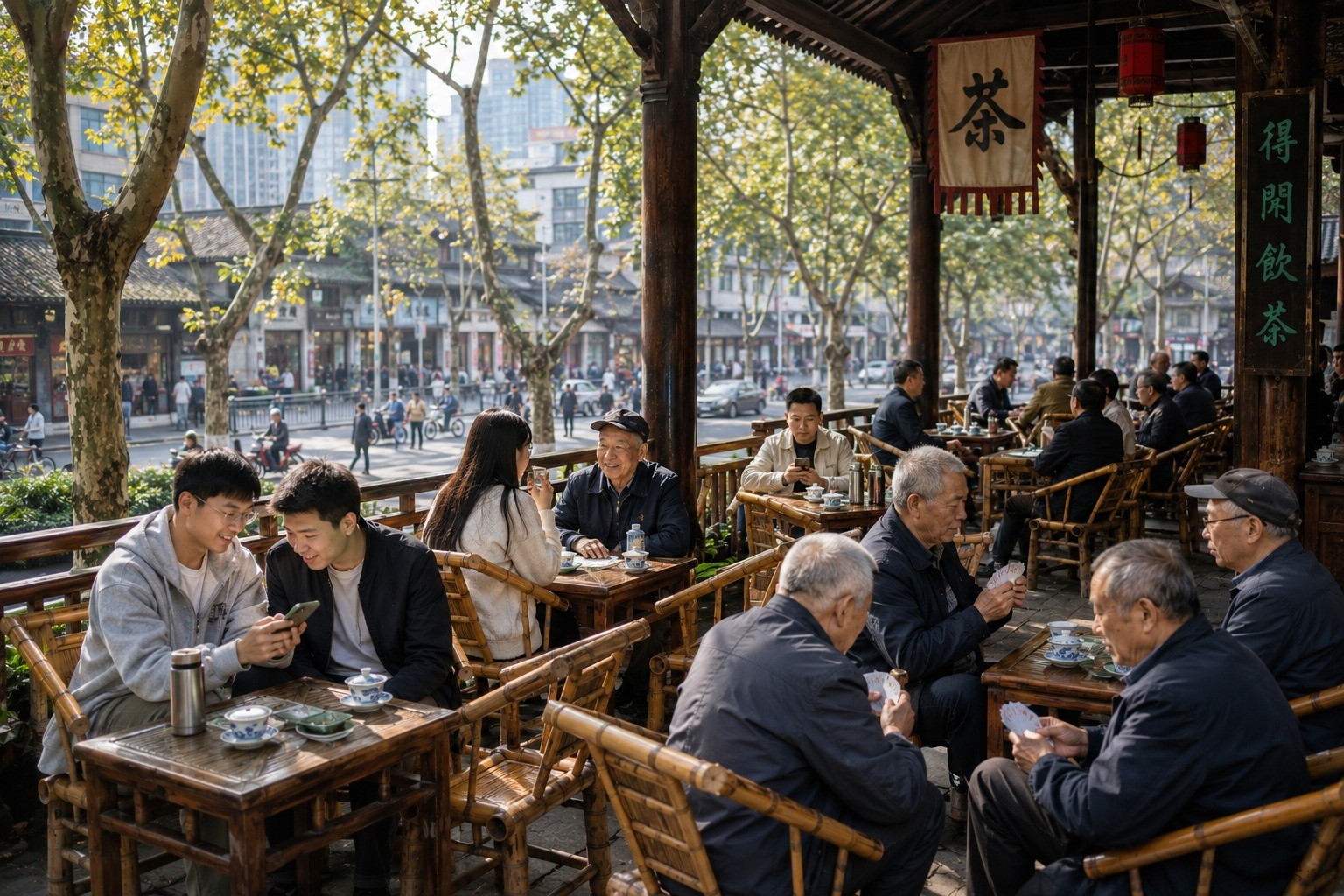
As an outsider used to the 996 work culture (9 am to 9 pm, 6 days a week) prevalent in many Chinese tech hubs, this slow pace felt alien. I kept checking my phone, wondering if I was falling behind.
But by the second day, something shifted. I noticed that the people sitting around me were not anxious. They were present. The tea houses are not about escaping reality; they are about engaging with it on a human scale. In a country where skyscrapers rise overnight and high-speed trains connect provinces in hours, these bamboo-seat sanctuaries offer a necessary counterbalance.
Locals explained that An Yi is not laziness. It is a strategy for sustainability. If you run at maximum speed all the time, you break. The tea house is where you recalibrate. It is a place where status is irrelevant; a CEO and a street cleaner might share the same bamboo chair, both waiting for the water to boil.
The Luxury of Presence
Leaving the tea house on the third day, I felt heavier, but in a good way. The mental clutter of my initial itinerary had dissolved.
We often think of luxury in terms of acquisition—expensive watches, rare wines, private jets. But in Chengdu, I discovered a different kind of luxury: the luxury of presence. The ability to sit still, to watch the steam rise from your tea, and to listen to the hum of your community without feeling the need to optimize every second.
For a world that is increasingly noisy and fragmented, this An Yi might be the most valuable export China has to offer. It’s not about stopping progress; it’s about remembering why we move forward in the first place. And sometimes, that requires nothing more than a bamboo chair and a cup of hot tea.