

The Steam and the Silence Breaker
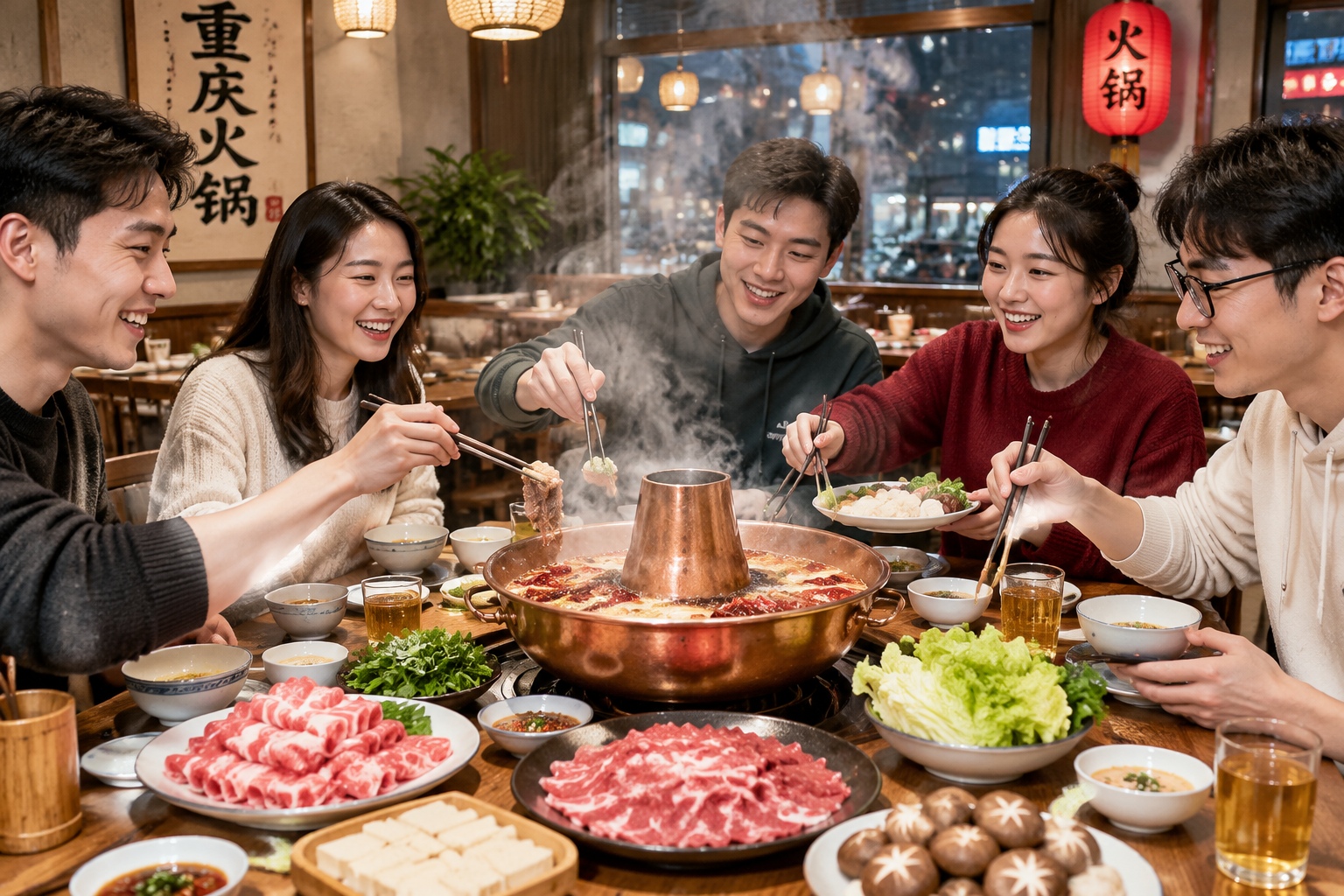
It is 7:30 PM on a Tuesday in downtown Beijing. The air inside ‘Old Street Hot Pot’ is thick with a mix of numbing peppercorns, beef fat, and garlic. At table four, three colleagues who have spent the last six months barely speaking to each other are now leaning over a single brass pot. Li, a project manager from Shanghai, uses long bamboo chopsticks to fish out a slice of tripe. He doesn’t eat it immediately; he dips it into his neighbor’s soy sauce bowl before placing it on the table. ‘Try this,’ he says, sliding the bowl forward. The tension that usually hangs in their boardroom meetings has evaporated, replaced by the rhythmic clinking of metal bowls and the hiss of boiling water.
Hot pot is not just a meal; it is a social equalizer. In China’s fast-paced urban environment, where professional titles often dictate conversation, the hot pot table operates on a different logic. The large communal pot sits in the center, acting as a neutral ground. Everyone stands or sits at the same distance from the fire. No one has a head of the table; everyone is an equal participant in the cooking process.
The Physics of Shared Dining
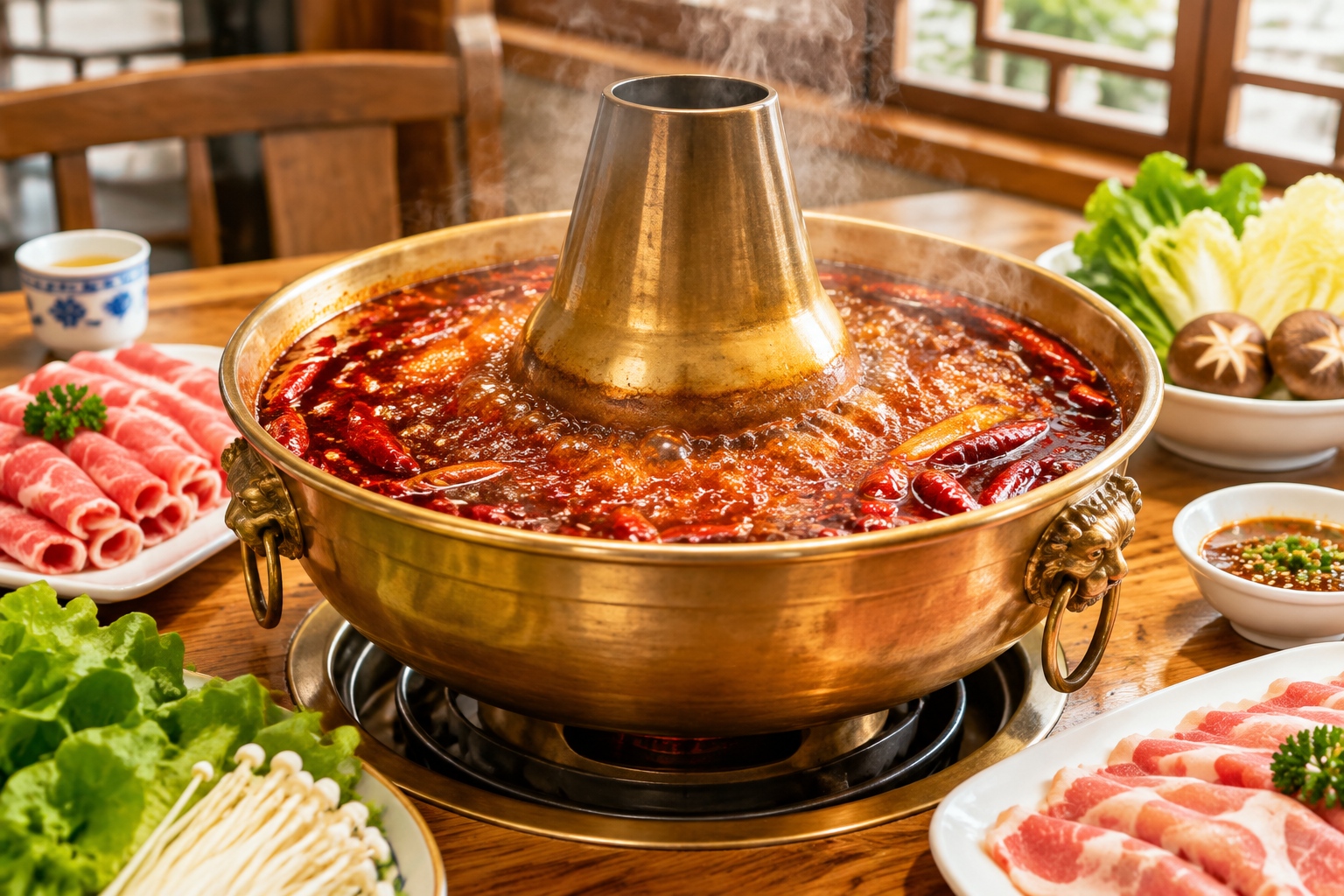
The mechanics of eating hot pot force interaction in ways that Western-style dining often does not. When you order dishes, they are raw ingredients: thin slices of lamb, clusters of enoki mushrooms, and cubes of tofu. It is up to each diner to cook them. This creates a natural rhythm of give and take.
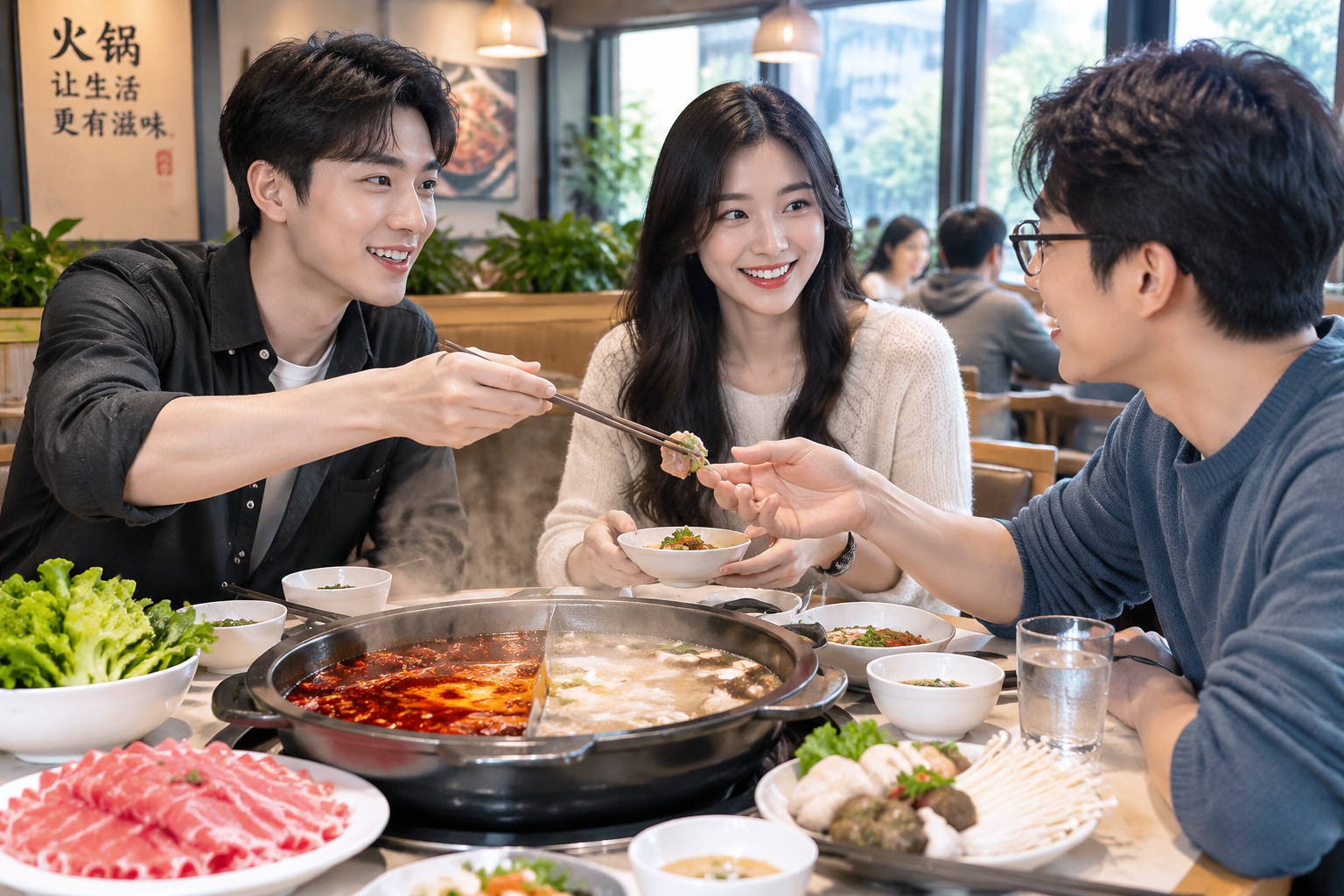
At table four, the youngest colleague, Xiao Zhang, has been working overtime for weeks. He looks tired, his eyes dark under the warm restaurant lights. Without thinking, Li notices and immediately dips a piece of tender beef into the spicy broth, waiting just ten seconds before handing it to Xiao. ‘You need energy,’ Li says simply. It is a small gesture, but in Chinese culture, feeding someone directly from your pot or sharing food from the communal bowl signifies deep care. There is no formality here. The act of cooking for another person breaks down the barriers of hierarchy that exist outside these walls.
Even strangers at adjacent tables often find themselves interacting. In many smaller hot pot joints in Chengdu or Chongqing, seats are tight. Neighbors might share condiment bases or ask for a lighter touch on the chili oil if they know someone is less tolerant of spice. The smell of the broth acts as a universal invitation to join the conversation.
Unmasking in the Steam
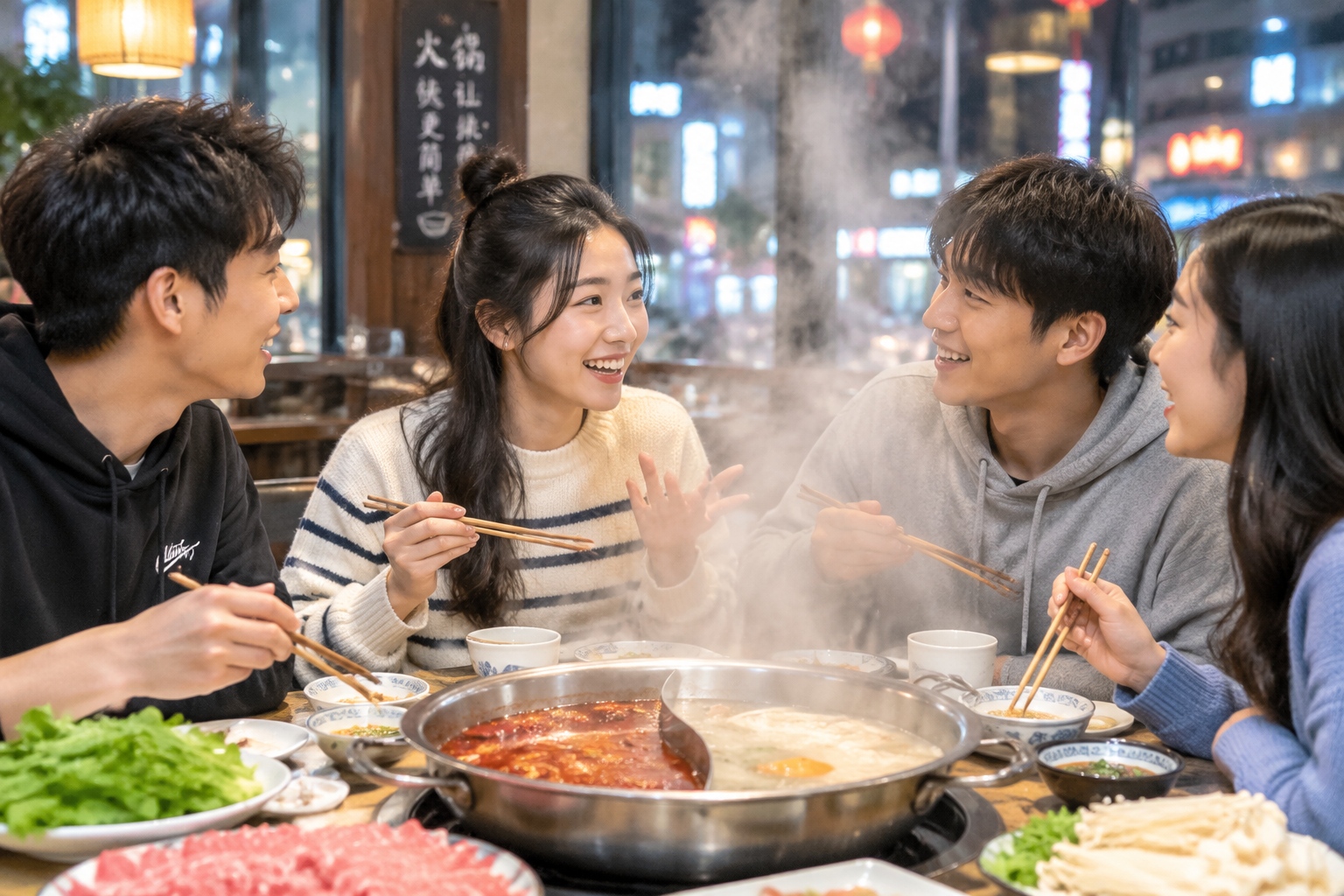
Why does hot pot make people talk? Part of it is the physical heat. The steam rising from the pot can be disorienting, forcing diners to lean in closer to see each other’s faces. This proximity naturally reduces social distance. Furthermore, the activity requires focus on the food, which paradoxically frees up mental space for conversation.
When you are busy picking out your favorite ingredients or managing the timing of a delicate fish ball, you aren’t performing. You aren’t curating your LinkedIn persona. The noise of the restaurant—the clatter of bowls, the laughter, the sizzling oil—creates a backdrop that allows people to lower their voices and share real stories. It is common to hear executives admitting they are overwhelmed by work or students confessing their fears about graduation right after finishing a bowl of meat.
For many young professionals in Shanghai, hot pot is the preferred venue for ‘venting.’ The intense flavors of the broth—spicy, sour, or salty—mirror the intensity of life. As one 28-year-old marketing director told me while wiping sweat from her forehead, ‘The soup is hot, but my problems are hotter. Here, I can just say it out loud.’
A Cultural Ritual Beyond Food
While the food is delicious, the true value of hot pot lies in its ability to foster connection in a rapidly changing society. In a country where digital communication often replaces face-to-face interaction, the communal pot serves as a vital anchor for human contact.
The ritual involves more than just eating. It starts with selecting ingredients from the refrigerated shelves, moving through the cooking process, and ending with cleaning up shared plates. This collective effort creates a sense of unity. Whether it is a family reunion during Chinese New Year or a casual team-building session on a Friday night, the hot pot table remains the stage where pretenses are shed.
As the broth reduces and the ingredients run out, the conversation often deepens. The meal ends not with a rush to leave, but with lingering chats over tea. In these moments, the Chinese social mask is removed. What remains is a group of people sharing warmth, food, and honest words in the steam.
Start the discussion at forum.chinacomes.com