
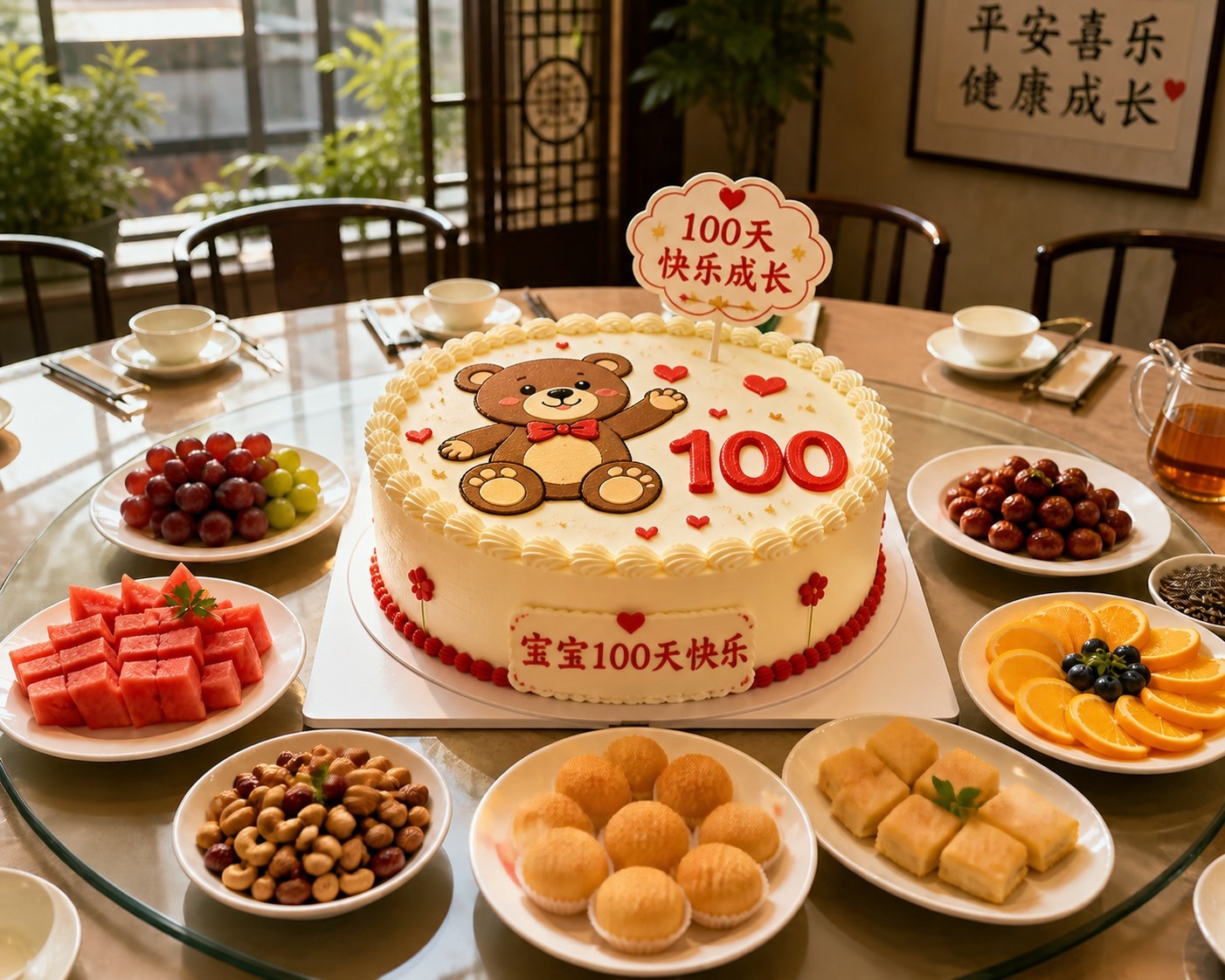

The First Hundred Days: A Major Milestone
If you have a Chinese friend or colleague who recently became a parent, you might hear about an upcoming “Bai Ri Yan” (百日宴), or the “100-Day Banquet.” In China, this is not just a casual get-together; it is one of the most significant celebrations in a newborn’s early life.
Historically, infant mortality was high. Surviving the first 100 days meant the baby had passed the most dangerous phase. Today, while medicine has improved drastically, the tradition remains a way for families to celebrate health, longevity, and the successful arrival of a new member. It is also a moment when the parents, especially the mother, are celebrated for their endurance.
Imagine walking into a private room in a bustling restaurant. The air smells of steamed fish and roasted duck. A large banner with the character “Bai” (100) hangs on the wall. You are not just invited to eat; you are invited to bless the child’s future. Here is how to navigate this lovely tradition with confidence.
What to Gift: Beyond the Obvious
In Western cultures, we often give a “baby shower” gift weeks before the birth. In China, gifts for the 100-Day Banquet are given after the baby is born. This allows guests to see what the parents actually need.
Safety First: Clothing and Essentials
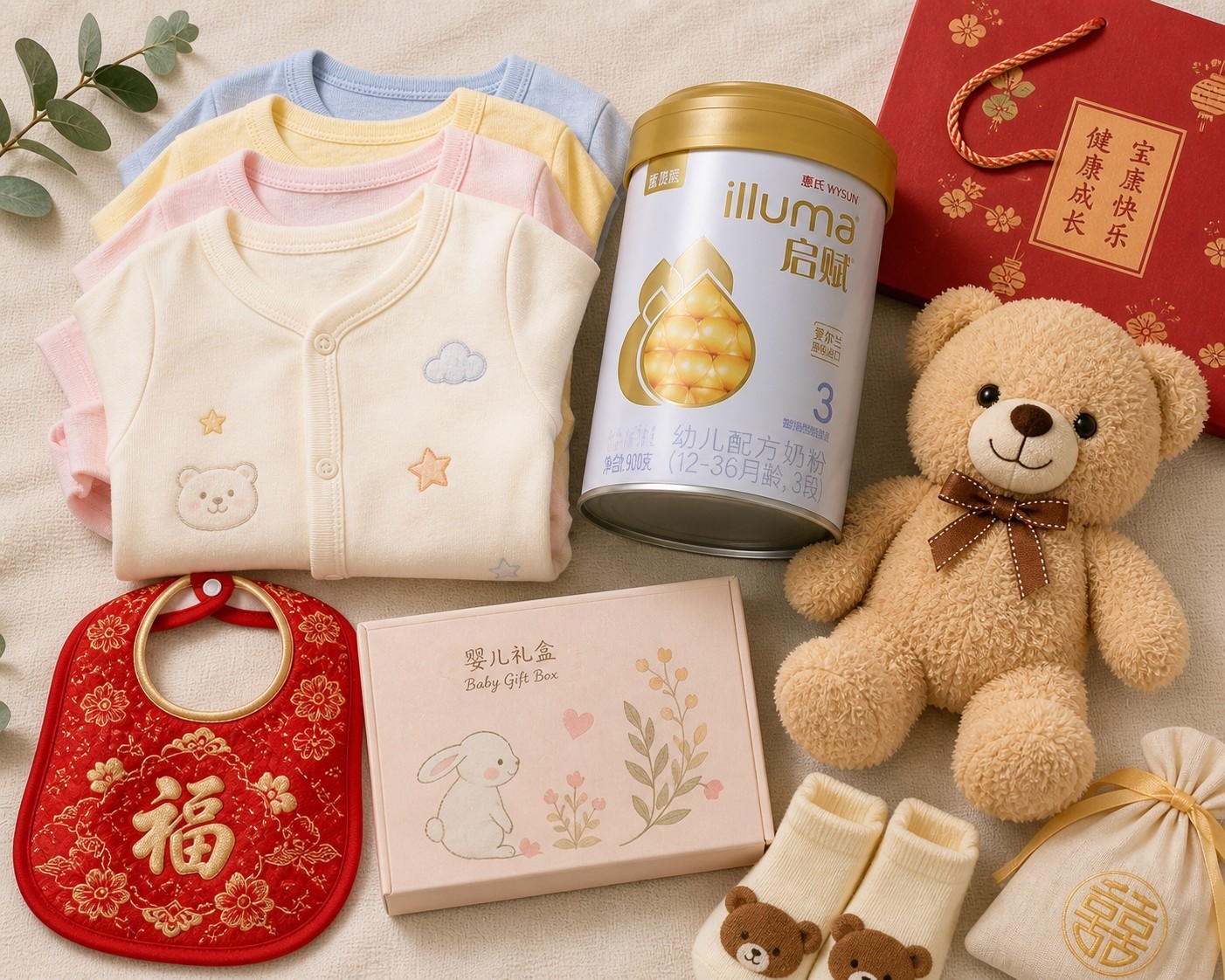
If you are unsure what to bring, baby clothes are a universally safe and appreciated choice. However, there is a nuance: choose items that are one size larger than the baby currently wears (e.g., 6-month or 9-month sizes for a 100-day-old). Chinese parents often keep these as “future gifts” because babies grow incredibly fast in China’s climate.
Stick to soft, breathable fabrics like cotton. Avoid overly flashy designs with loud colors unless you know the family’s preference. Pastel shades or simple patterns are best. Alternatively, high-quality milk powder or a set of premium baby wipes and diapers from a trusted brand are practical gifts that show you care about their daily well-being.
The Symbolic Choice: Gold and Longevity Locks
If you have a closer relationship with the family, you might consider a gold pendant, often shaped like a “Longevity Lock” (长命锁). In Chinese culture, gold symbolizes wealth and protection. The lock is meant to metaphorically “lock” the child’s life in place, guarding them against illness and bad luck as they grow up.
This is not just jewelry; it is an heirloom. Many families pass these down through generations. If you choose this route, keep the receipt handy, as sizes can be adjusted by jewelers later.
The Red Envelope (Hongbao) Etiquette
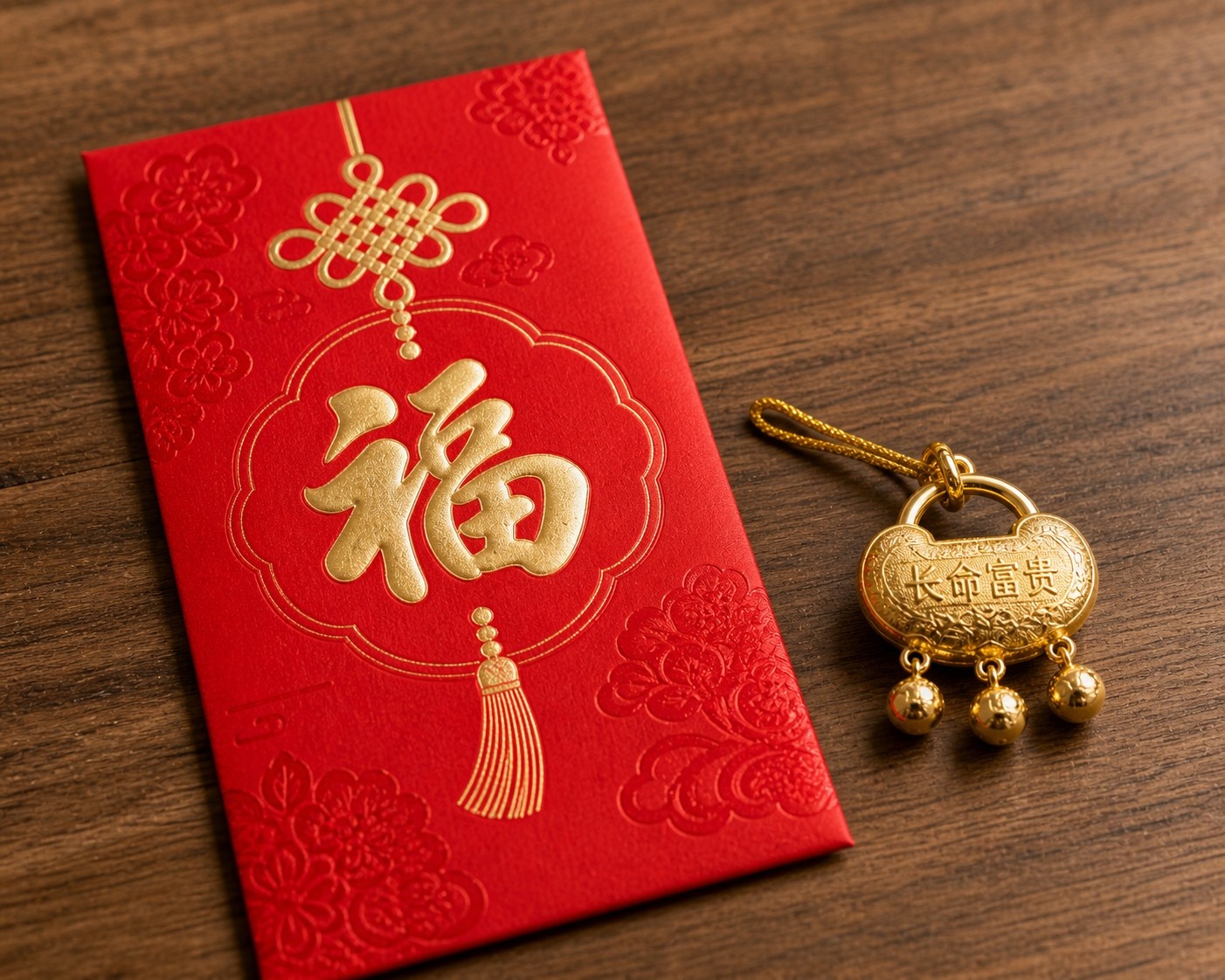
While physical gifts are nice, cash in a red envelope is the most common and often preferred gift at Chinese banquets. It gives the parents the flexibility to buy whatever they need most—be it diapers, baby food, or saving for education.
How Much to Give?
The amount depends on your relationship with the family and your local economic context, but here are some general guidelines:
- Acquaintances/Colleagues: A modest amount is appropriate. In many Chinese cities, amounts like 200, 400, or 600 RMB are common. Note that even numbers are preferred.
- Close Friends/Family: You might give 800, 1,000, or more. The number 8 is extremely lucky in China because it sounds like the word for “prosperity” (fa). The number 6 is also good, symbolizing smoothness.
Crucially, avoid the number 4. It sounds like the word for “death” and is considered highly unlucky. Similarly, avoid odd numbers, as gifts are typically given in pairs to symbolize double happiness.
The Red Envelope Itself
You must use a red envelope. Never give cash in a white or black envelope, as these colors are associated with funerals. You can buy pre-printed “Congratulating the Newborn” red envelopes at any convenience store or stationery shop near the restaurant. If you already have old ones from weddings, those are perfectly fine to reuse.
When and How to Give It
Do not wait until you leave. The best time is upon arrival, usually when you hand over your gift at the reception desk or directly to the parents if they are greeting guests at the entrance. Slide it into their hand with both hands as a sign of respect.
Navigating the Banquet: Behavior and Conversation
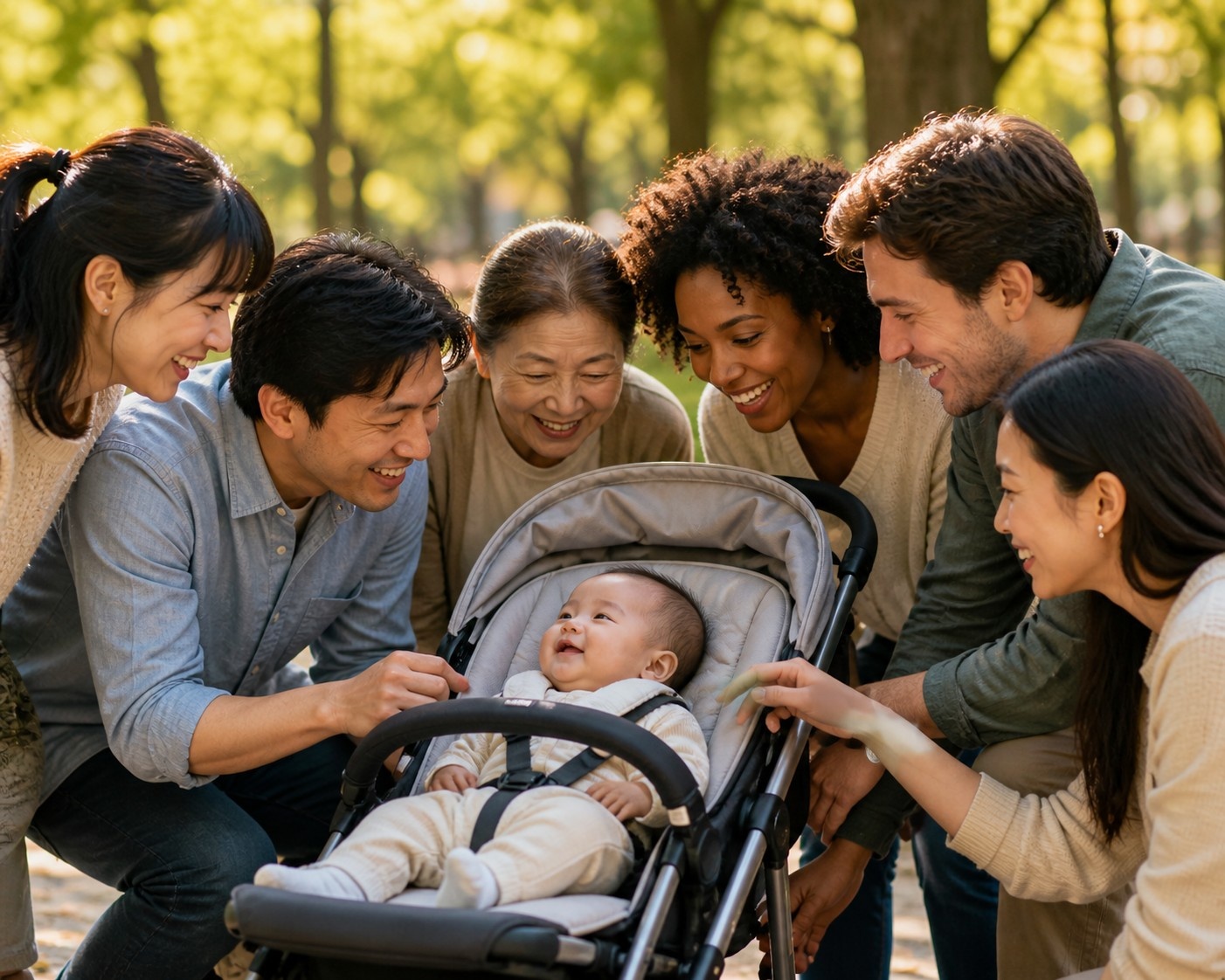
The atmosphere at a 100-Day Banquet is joyous but can be overwhelming if you don’t know the norms. Here are a few tips to help you fit in:
Praising the Baby
Chinese parents love to hear compliments about their children, but they often use specific phrases. Instead of just saying “He is cute,” try:
- “Look how healthy and strong he is!” (身体真棒)
- “He has the face of a lucky baby.” (很有福气)
Avoid commenting on negative traits, even jokingly. In Chinese superstition, speaking negatively about a child’s appearance or health might invite bad luck.
Talking to the Parents
Don’t forget the parents! The mother has just endured pregnancy and birth, and in many traditional families, she is still recovering. Ask how she is feeling and express your admiration for her strength. It is a thoughtful gesture that shows you understand the weight of their journey.
Conclusion: A Gesture of Connection
Attending a 100-Day Banquet is less about the cost of your gift and more about showing up to support a family in a joyous moment. Whether you bring a red envelope, a tiny pair of socks, or a gold lock, the act of presence is what matters most.
In China, these celebrations are deeply communal. They remind us that while a baby belongs to a family, their growth is watched and celebrated by the whole community. So, smile, offer your best wishes, and enjoy the feast. You are not just attending a party; you are becoming part of the child’s extended circle of care.