


More Than Just History
In a quiet corner of a co-working space in Shenzhen, Li Wei, a 32-year-old founder of an AI logistics startup, pauses during a frantic team meeting. Instead of reaching for his smartphone to check emails or market trends, he opens a worn copy of The Analects. He quotes Confucius: “When you see what is right and fail to do it, you lack courage.” It’s not a performative gesture; it’s the team’s code of conduct. This scene repeats in offices from Hangzhou to Beijing. For China’s new generation of entrepreneurs, ancient philosophy isn’t about nostalgia or academic study. It is a practical toolkit for survival in an era of volatile markets and intense competition.

The Engine of Execution: “Unity of Knowledge and Action”
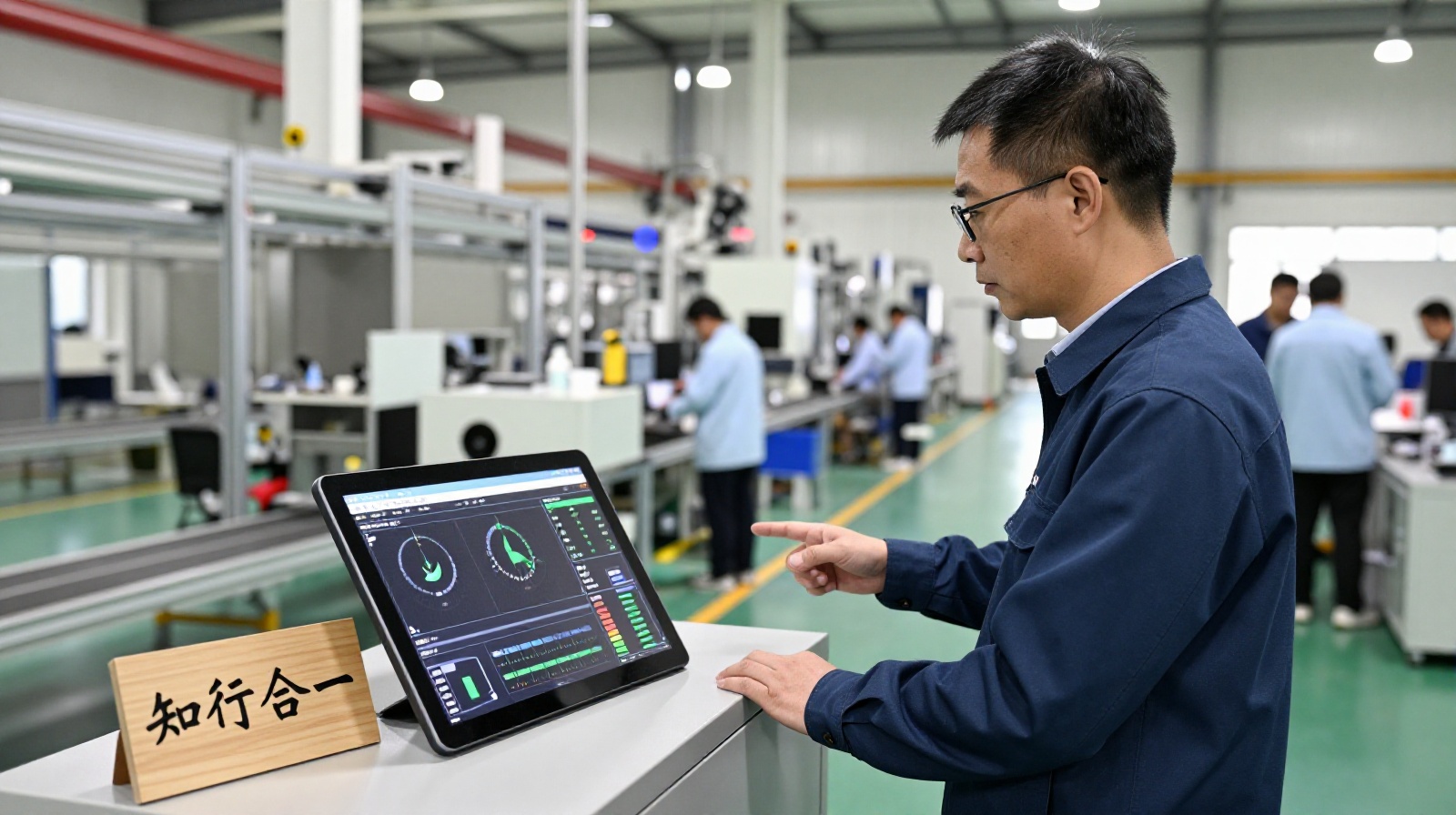
Perhaps the most influential concept imported from the 16th-century philosopher Wang Yangming into modern business is Zhi Xing He Yi, or the “Unity of Knowledge and Action.” In Western management theory, this often manifests as the gap between strategy planning and operational execution. In China, it has become a cultural mandate for speed.
At companies like Alibaba and Tencent, leadership training frequently references this principle. The logic is simple: you do not truly “know” a market opportunity until you have acted on it. This philosophy fuels the infamous “996” work culture (though increasingly debated) and the rapid iteration cycles seen in China’s software sector. When a product fails to resonate, the response isn’t weeks of analysis; it’s an immediate pivot based on real-world feedback. This agility allows Chinese tech giants to outpace competitors who rely on rigid planning horizons.
Inner Sage, Outer King: Ethics as Brand Strategy
The Confucian ideal of the “Inner Sage and Outer King” (cultivating inner virtue while ruling with benevolence) is finding a new life in Chinese corporate branding. As the global market scrutinizes supply chains and labor practices, domestic companies are turning to these ancient ethical frameworks to build trust.
Consider the rise of green energy firms in northern China. Many leaders explicitly cite Confucian stewardship of nature—viewing resources not as infinite commodities but as a legacy for future generations—to guide their sustainability strategies. This isn’t merely marketing; it shapes internal decision-making. When faced with trade-offs between short-term profit and long-term stability, the “Inner Sage” approach encourages leaders to prioritize resilience and reputation over quick wins. In an environment where trust is fragile, this ancient moral compass helps brands differentiate themselves in a crowded marketplace.

Finding Anchors in Uncertainty
To understand the personal impact of these ideas, we look at Chen Ya, a 29-year-old entrepreneur who runs a boutique sustainable fashion label in Shanghai. Her business operates on razor-thin margins in a global economy that feels increasingly unstable.
“The pressure is constant,” Chen admits over tea in her studio, surrounded by fabric swatches. “When investors pull out or supply chains break, panic sets in quickly.” She explains that during these moments of crisis, she turns to Wang Yangming’s emphasis on mental clarity and emotional resilience. “He taught us that the battlefield is within your own mind first,” she says. “If I can’t control my fear, I can’t lead my team through the storm.”
Chen’s experience reflects a broader trend among Chinese Millennials and Gen Z entrepreneurs. In a hyper-competitive environment where failure is public and rapid, ancient philosophy offers a psychological anchor. It provides a language to discuss stress, ethical dilemmas, and leadership challenges that feels more culturally resonant than imported Western management jargon.

A Living Toolbox
The presence of these texts on CEO desks is not an accident. In China’s current economic climate, marked by rapid industrial upgrading and shifting global dynamics, traditional wisdom offers a flexible framework for decision-making. It bridges the gap between high-tech ambition and humanistic values.
However, this is not about romanticizing the past. Ancient philosophy is being adapted, sometimes critically, to fit modern realities. Not every leader finds solace in these texts, and some argue that traditional hierarchies can clash with the flat structures needed for innovation. Yet, for many, the message remains clear: the wisdom of Confucius and Wang Yangming is not a relic to be admired from afar. It is a living, breathing part of how China’s business world navigates the future.