

Time Capsules on the Dinner Table
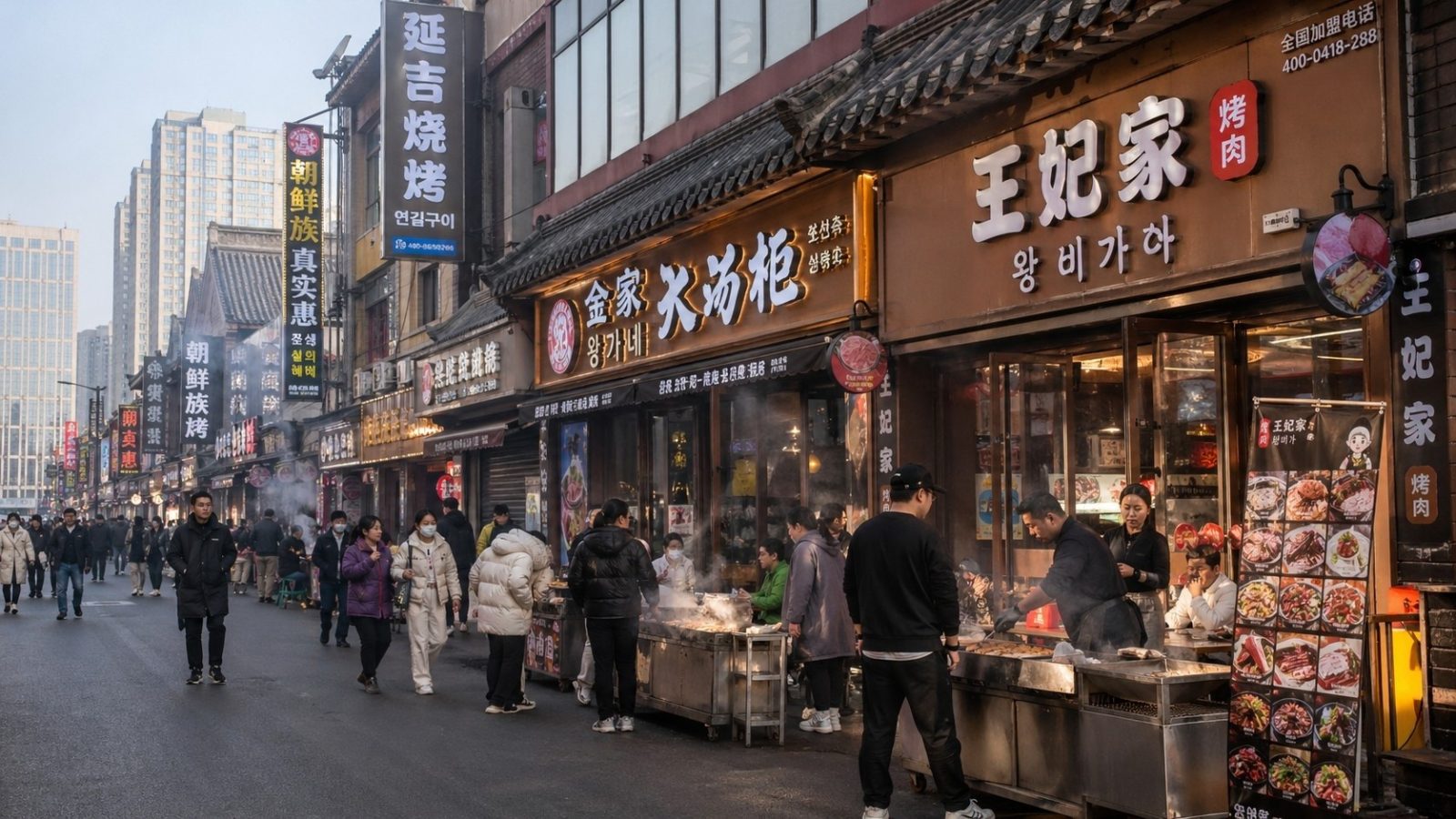
The air in Shenyang’s Heping District carries a distinct dual scent. On one side of the street, the warm, steaming aroma of wheat dough hints at hundreds of years of tradition; on the other, the smoky, savory smell of marinated beef and spicy kimchi signals a more recent cultural influx. This juxtaposition is not an accident of urban planning but the result of over a century of human movement.
For visitors, Shenyang might initially appear as merely another industrial city in Northeast China. However, to understand its true character, one must look past the heavy machinery and coal heritage to the dining tables where history is consumed daily. Food here acts as a time capsule, preserving the stories of migration, adaptation, and integration that have defined the region.
The Taste of “Chuang Guandong” (Braving the East)
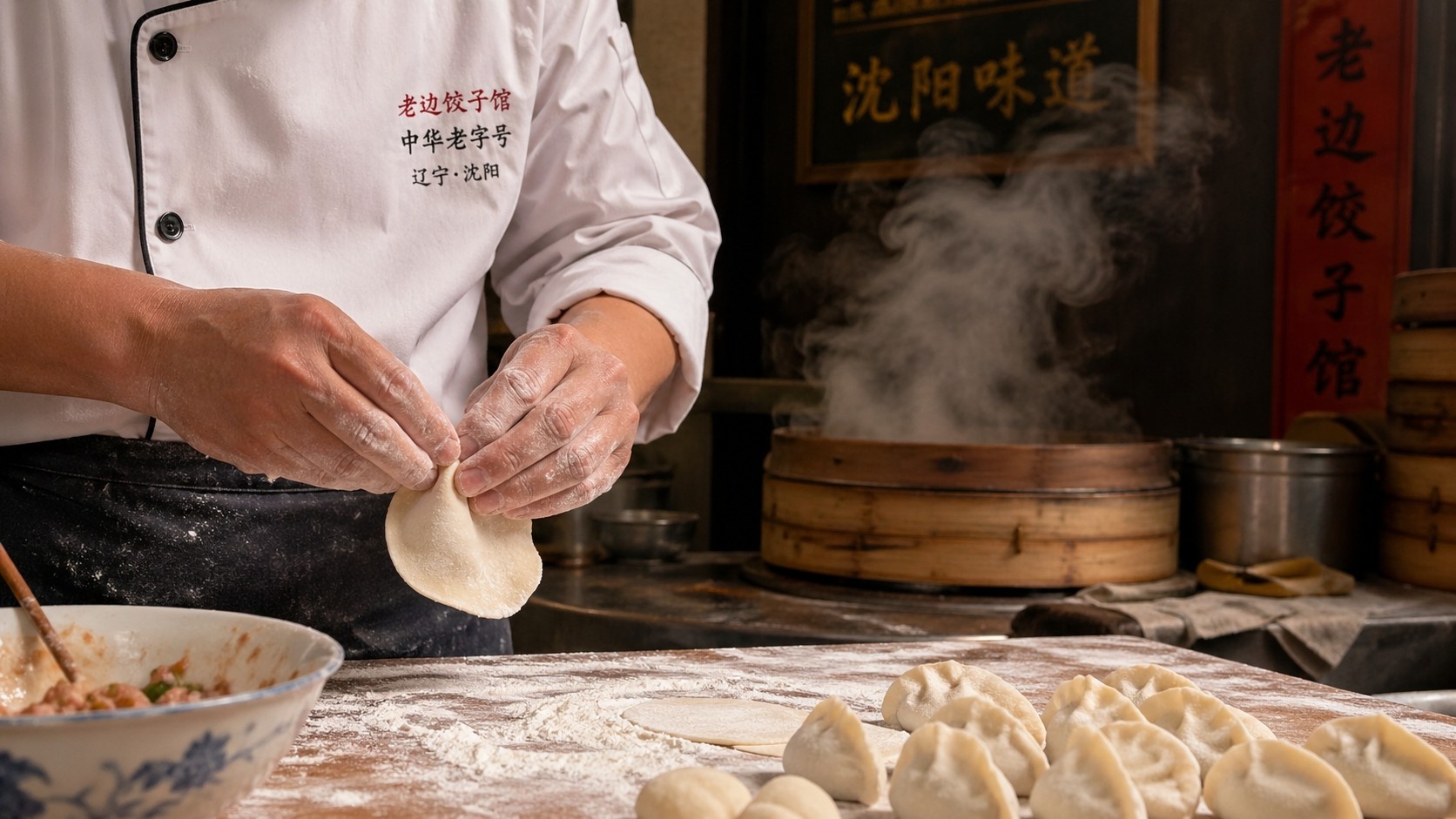
To understand why Shenyang tastes the way it does today, we must look back to the late 19th century. The city’s most famous culinary landmark, Lao Bian Dumplings (Lao Bian Ji Zi), is a direct descendant of the “Chuang Guandong” migration. During this period, millions of peasants from Shandong and Hebei provinces fled famine and political instability in northern China to seek fortune in the sparsely populated but resource-rich Northeast.
These migrants brought with them their culinary roots: wheat-based foods like dumplings, noodles, and steamed buns. In a region where rice was scarce and millet or corn were staples, these immigrants transformed the local diet. Lao Bian Dumplings, founded in 1829 but popularized during this migration era, represents this fusion. The dough-making techniques from Shandong met the hearty, cold-weather ingredients of Manchuria.
For the early settlers, making dumplings was not just about eating; it was an act of maintaining identity. Wrapping the filling in dough was a way to recreate the comfort of home in a harsh new environment. Today, locals still flock to these century-old shops not just for the taste, but to connect with a lineage of resilience that built modern Northeast China.
The Modern Flow: The Korean Wave in Xita
If Lao Bian Dumplings represent the first wave of internal migration, the Xita (West Pagoda) district represents the second. Located just a few kilometers from the city center, Xita is home to one of the largest ethnic Korean communities outside of Korea and China’s most significant concentration of ethnic Koreans.
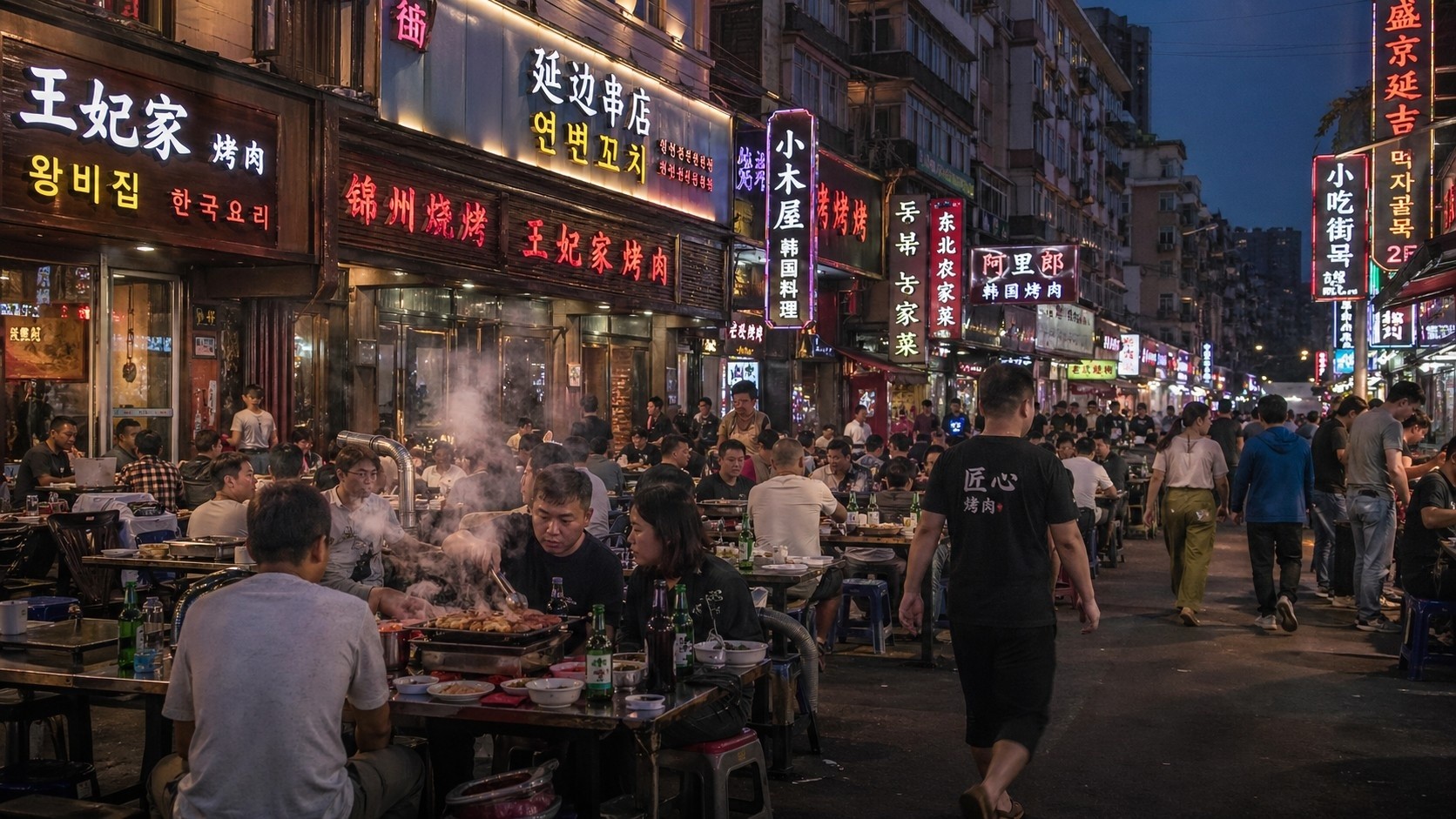
Walking down Xita Street feels less like being in Shenyang and more like stepping into Seoul. The bilingual signs (Chinese and Korean), the K-pop playing from local cafes, and the endless rows of BBQ grills create a unique urban landscape. Here, migration is not just history; it is a living, breathing economy.
Consider the story of Li Wei (a pseudonym), a 30-year-old entrepreneur who runs a trendy fusion restaurant in Xita. His family has deep roots in Yanbian, a Korean autonomous prefecture, but their journey is complex. “My grandparents moved to Shenyang for work decades ago,” he explains. “I grew up speaking both languages. My parents often traveled between Shenyang and Seoul for business.”
Li’s story reflects a broader trend: the blurring of boundaries. For young people in Xita, cultural identity is fluid. They might study in Korea, work in Shenyang’s tech sector, and maintain family ties across the border. The food they serve—Korean BBQ with local Northeastern twists like spicy chicken feet or cold noodles—is a testament to this hybridity. It shows how migration has evolved from seeking survival to seeking opportunity and cultural exchange.
The City’s Experiment in Inclusivity
Shenyang’s ability to host such diverse populations is not accidental. Over the past few decades, local policies have shifted from mere tolerance to active inclusion. In neighborhoods like Xita, public services have adapted to reflect the demographic reality. Public signage is increasingly bilingual, and community centers often employ staff who can navigate both Mandarin and Korean dialects.
This inclusivity extends to the younger generation. Z-世代 (Gen Z) residents in Shenyang are growing up with a normalized multicultural identity. It is common to hear code-switching in everyday conversations—Mandarin sentences peppered with Korean slang, or vice versa. This linguistic blending mirrors their social lives, where friends from different ethnic backgrounds gather for hotpot or BBQ without rigid cultural barriers.

However, this integration is not without its complexities. Gentrification in historic districts like Xita has raised questions about housing affordability for long-term residents. Yet, the overall trajectory remains positive. The city has managed to turn what could have been social friction into economic synergy. The migrant communities have become key drivers of Shenyang’s service sector and cultural tourism.
Reality in the Everyday
Shenyang challenges the monolithic stereotype of China as a homogenous society. Instead, it presents itself as a complex collage of histories, where every meal tells a story of displacement and belonging. From the wheat fields of Shandong that inspired the dumpling wrappers to the bustling markets of Xita that reflect globalized trade, the city’s palate is its history.
For international readers, visiting Shenyang offers more than just industrial tourism or historical site-seeing. It provides a window into how China absorbs and transforms new influences. By sitting down at a Lao Bian table or grilling meat in Xita, one does not just eat; one participates in an ongoing narrative of migration.
The story of Shenyang is still being written. As new waves of migrants—whether from other parts of China or abroad—continue to arrive, the city’s culinary and cultural landscape will undoubtedly evolve further. But the core lesson remains: cities are not static monuments; they are living entities that digest their histories one meal at a time.