

The Table is Already Boiling
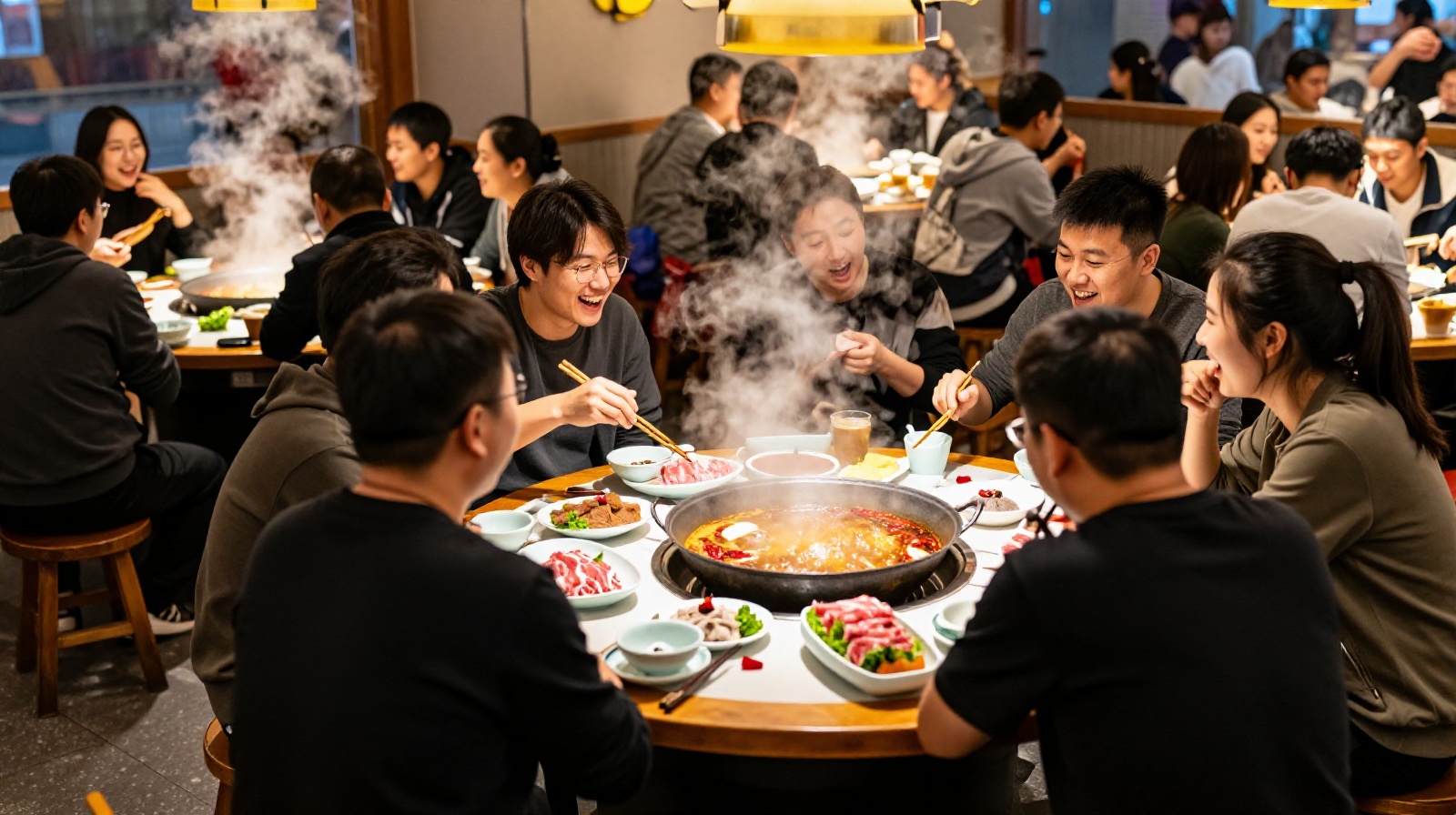
Imagine the scene: a round table with a steaming pot in the center, divided into two or more sections. Steam rises rapidly, carrying the scent of chili oil and star anise. Around you, friends are shouting over the noise to call the waiter for more ice water. This isn’t just dinner; it’s a social event where the food comes directly from the boiling broth to your bowl in seconds.
If you walk into a hot pot restaurant in Chengdu or Beijing and stare at a menu full of pinyin you can’t pronounce, you’ll feel the pressure. But here’s the secret: locals don’t read menus carefully either. They rely on patterns, habits, and a shared language of food that you can learn in ten minutes.
The Broth Logic: It’s Not Just Spicy
The first decision isn’t the meat; it’s the soup base (tangdi). In many Western countries, soup is a separate course. In China, the soup is the dish.
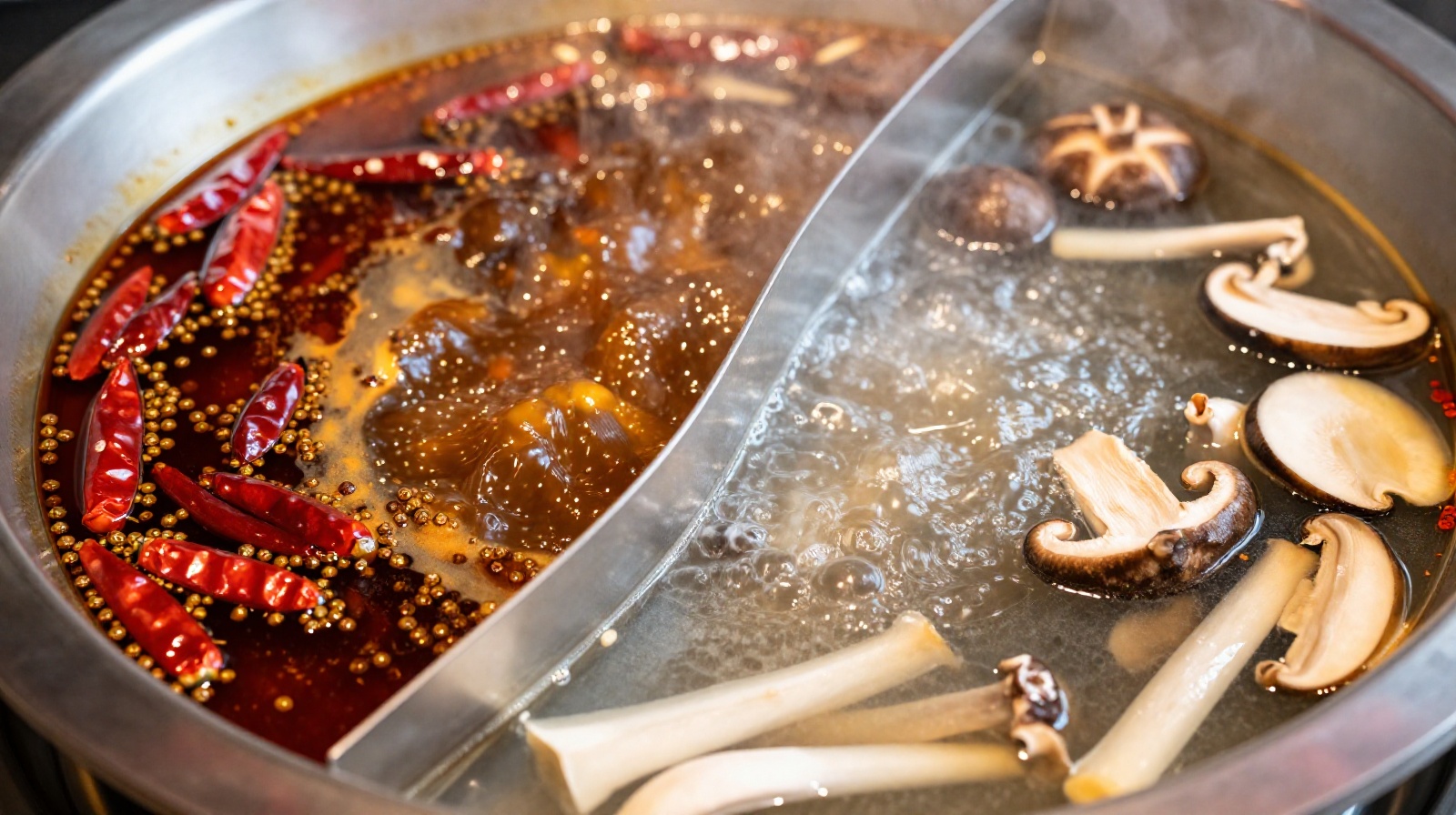
For beginners, the standard split pot (yuan yang guo) is your best friend. It divides the pot in half: one side spicy numbing (mala), the other mild and savory. But if you want to go full local, you need to know what each type tastes like:
- Classic Mala (Sichuan): A deep red sea of chili peppers and Sichuan peppercorns. It creates a tingling numbness on the lips that is addictive for locals but terrifying for first-timers.
- Tomato Broth: Thick, sweet, and rich. It’s like a warm hug in a bowl. Perfect for dipping tofu or eating noodles after the meat is gone.
- Mushroom & Bone Broth: A golden, clear liquid that tastes earthy and clean. This is the choice of health-conscious diners and those who want to taste the natural flavor of the ingredients without interference.
Why does this matter? Because in China, the broth defines the meal’s personality. If you order a spicy soup but eat only bland vegetables, you’re missing half the experience. Conversely, if your stomach can’t handle heat, asking for mushroom broth immediately signals to the waiter that you are smart.
Decoding the Menu: Strange Names, Familiar Textures
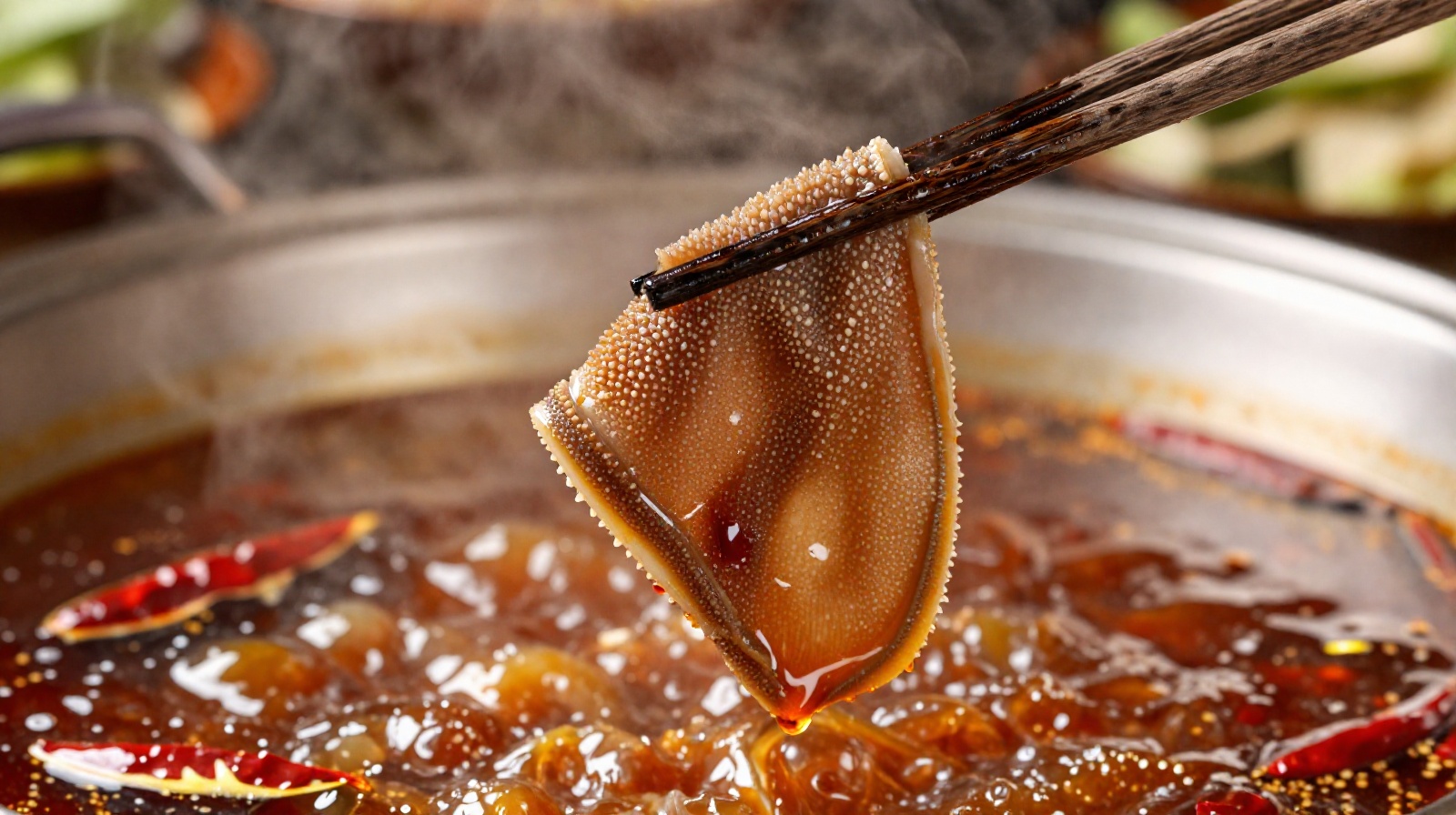
The menu will list ingredients with names that sound like a biology textbook. Mao du (tripe), Luan xian (shrimp paste), Gan chang (intestines). Don’t panic. Locals know these are not scary; they are prized textures.
The golden rule of hot pot is time. Unlike a steak where you cook it to a specific internal temperature, here, everything is about seconds. If you overcook tripe, it becomes rubbery and chewable only with difficulty. The local trick? “Seven dips, eight pulls.” You dip the raw slice into the boiling broth for seven seconds, then lift it out.
The Meat Hierarchy
You will see slices of beef labeled as “Hand-cut”. This means a butcher sliced it fresh in front of you. It cooks instantly and tastes sweet. If the menu offers “Frozen Rolls”, those are pre-sliced, machine-cut strips that hold their shape longer but lack that delicate melt-in-your-mouth quality.
For offal (organ meats), texture is everything. Thinly sliced beef tripe requires only 10 seconds. Thick pork belly needs a full minute to render the fat. If you see “Blood Curd” (dark, jelly-like blocks), do not boil it too long. It turns into hard rubber if overcooked. Just dip it briefly and enjoy its creamy texture.
The Sauce Philosophy: Your Own Flavor Lab
This is where you truly become local. In the West, sauce comes from a bottle. In China, you build your own at the table using a self-serve station.
There are three main styles:
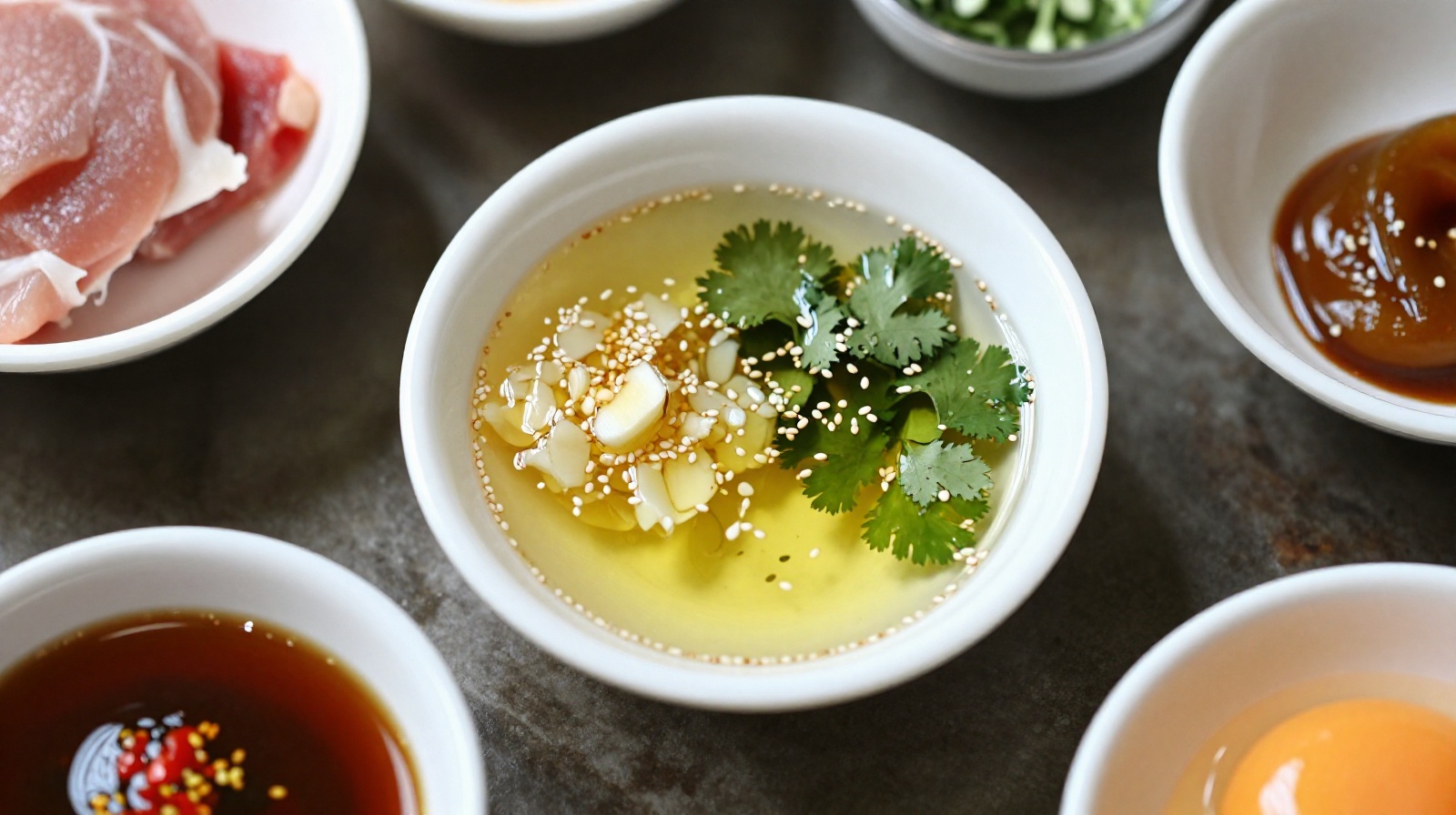
- The Sichuan Oil Dip (Youdie): The most common choice for spicy pots. Mix sesame oil with minced garlic, cilantro, and sometimes a splash of vinegar. The oil coats the ingredients, protecting your stomach from the chili heat while adding nutty flavor.
- Sesame Paste: Essential for northern styles like Beijing hot pot (using mutton). It’s thick, creamy peanut-sesame butter mixed with fermented bean curd and soy sauce. It creates a rich, savory coating.
- Dry Dip: A bowl of chili powder, sesame seeds, salt, and cumin powder. You dip the food directly into the dry mix for an intense, dry heat.
The secret? Don’t just copy your friend. Taste the broth first. If it’s too salty, add more oil or vinegar. If it’s too heavy, add cilantro to cut through. This is a conversation starter: “How do you make your garlic dip?”
Avoiding the Pitfalls
Even with a guide, new diners make mistakes. Here are the top three to avoid:
- Over-ordering: Hot pot is all-you-can-eat for some, but locals know that ordering too much leads to waste and a bloated stomach. Start small. You can always order more dishes if the table is empty.
- Boiling everything together: Don’t throw your vegetables into the same pot as raw meat at the same time. It ruins the broth flavor. Cook meat first, then vegetables, and save the noodles for last to soak up the savory soup.
- Ignoring the timing: If you are chatting and forget the tripe is boiling, it’s ruined. Keep an eye on your bowl. The best hot pot experience requires a bit of active participation.
Why It Feels Like Home
Ordering hot pot like a local isn’t just about eating; it’s about understanding the rhythm. It’s about knowing when to shout for more broth, how to share chopsticks without making noise, and realizing that the mess on the table is part of the celebration.
Next time you sit down with a steaming pot, skip the translation app. Look at your neighbor’s bowl, mimic their dipping motion, and trust your taste buds. The steam rising from the table is an invitation to join in. And once you master the art of the mala dip, you’ll never look at a menu the same way again.