
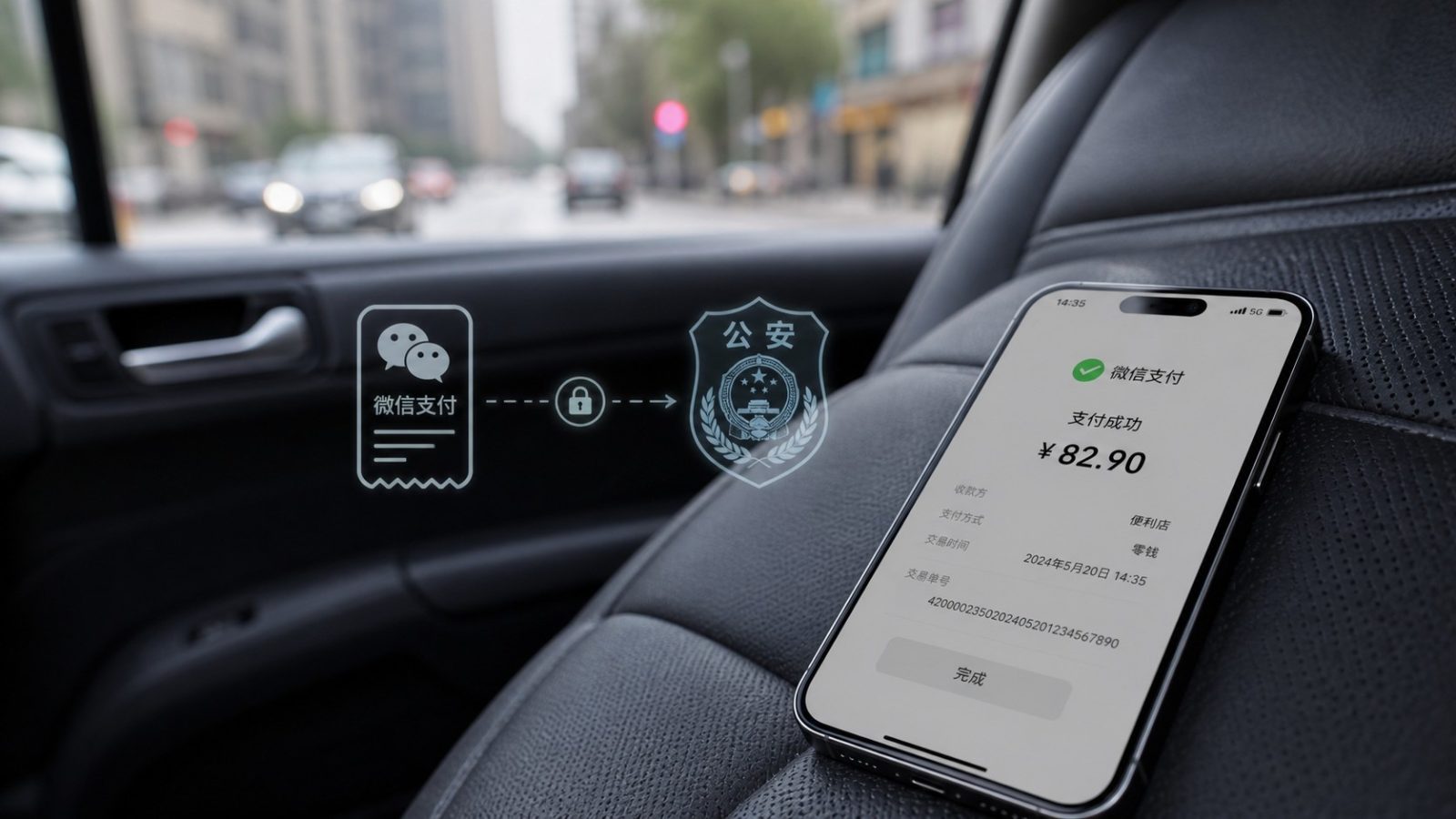

The Anxiety of the Forgotten Phone
Imagine this: You step out of a Didi (China’s largest ride-hailing platform) after a long day, only to realize your smartphone is still on the back seat. In many countries, this might be the end of the story. The car disappears into traffic, and you are left with nothing but a vague description of the driver and a license plate number.
In China, however, the process is different. Thanks to the deep integration of mobile payments, digital tracking, and public surveillance infrastructure, recovering lost items is often possible within hours, not days or weeks. This guide breaks down exactly how ordinary people in Chinese cities handle this situation using WeChat, platform apps, and local police.
Step 1: The Digital Trail via Payment Records
The most critical piece of evidence you need is not the physical phone, but the digital footprint left behind. In China, almost all taxi and ride-hailing transactions are conducted through mobile wallets like WeChat Pay or Alipay.

Immediately check your WeChat Payment history. Look for the transaction record associated with the ride. This receipt contains a unique order ID, the time of the trip, and often, the license plate number and the driver’s name. Even if you didn’t save the driver’s contact info, this digital record is your key to unlocking the platform’s customer service system.
Step 2: Leveraging Platform Customer Service
Navigate to the ride-hailing app (e.g., Didi Chuxing) or the WeChat mini-program where you booked the trip. Most platforms have a dedicated “Lost and Found” section. Enter your order ID, and the system will guide you through the process.
Here is how it works in practice: You submit a request to contact the driver. The platform acts as an intermediary, providing a virtual phone number or an in-app chat function so that neither party needs to reveal their real personal number initially. This protects privacy while facilitating communication.
If the driver answers and agrees to return the item, most cities have established “lost and found” exchange points at major subway stations or traffic police posts. The driver drops it off there, and you pick it up. Alternatively, for a small fee, drivers often use delivery services like SF Express to mail the item back.
Step 3: When the Platform Fails – Involving the Police
Sometimes, the driver may not answer, or the platform’s virtual number expires before you can make contact. This is where China’s public security infrastructure plays a crucial role.

Go to the nearest police station (Pai Chu Suo). Bring your ID and the payment receipt showing the license plate number. In Chinese cities, every ride-hailing vehicle is required to have an internal GPS tracker and often an internal camera or dashcam. The police have direct access to these databases through their internal systems.
With just a license plate number, officers can quickly identify the driver’s real identity and contact information from the traffic management database. In many cases, simply having the police make the call is enough to motivate the driver to cooperate, as drivers are heavily regulated and face penalties for refusing to return lost items of significant value.
The Hidden Power: City-Wide Surveillance
It is important to understand why this system works so efficiently. China’s urban areas are covered by a dense network of public security cameras (often referred to as “Skynet”). These cameras record traffic, pedestrian movement, and vehicle entry/exit points across the city.

If you can remember the approximate time you exited the car and the location, police can use these surveillance feeds to track the vehicle’s subsequent movements. For example, if you left the car at a business district at 8:00 PM, they can trace where it went next—whether it headed home, to another pick-up zone, or to a charging station. This level of granularity is rare in many other parts of the world due to privacy laws, but here it is a standard tool for solving daily crimes and lost items.
Practical Tips for Travelers and Locals
To maximize your chances of recovery:
- Save Your Receipts: Never delete ride-hailing payment records. They are your primary legal proof of the transaction.
- Act Fast: The sooner you report it, the easier it is to track the vehicle before it moves too far from your location.
- Be Polite but Firm: When communicating with drivers via platform tools, remain calm. Most drivers are honest and want to avoid trouble; aggression often leads to defensiveness.
In China, technology has not just changed how we pay or travel; it has reshaped how society handles everyday problems like lost property. It is a system that relies on data transparency and public infrastructure working in tandem.