

The Unexpected Seat at a Busy Hotpot Place
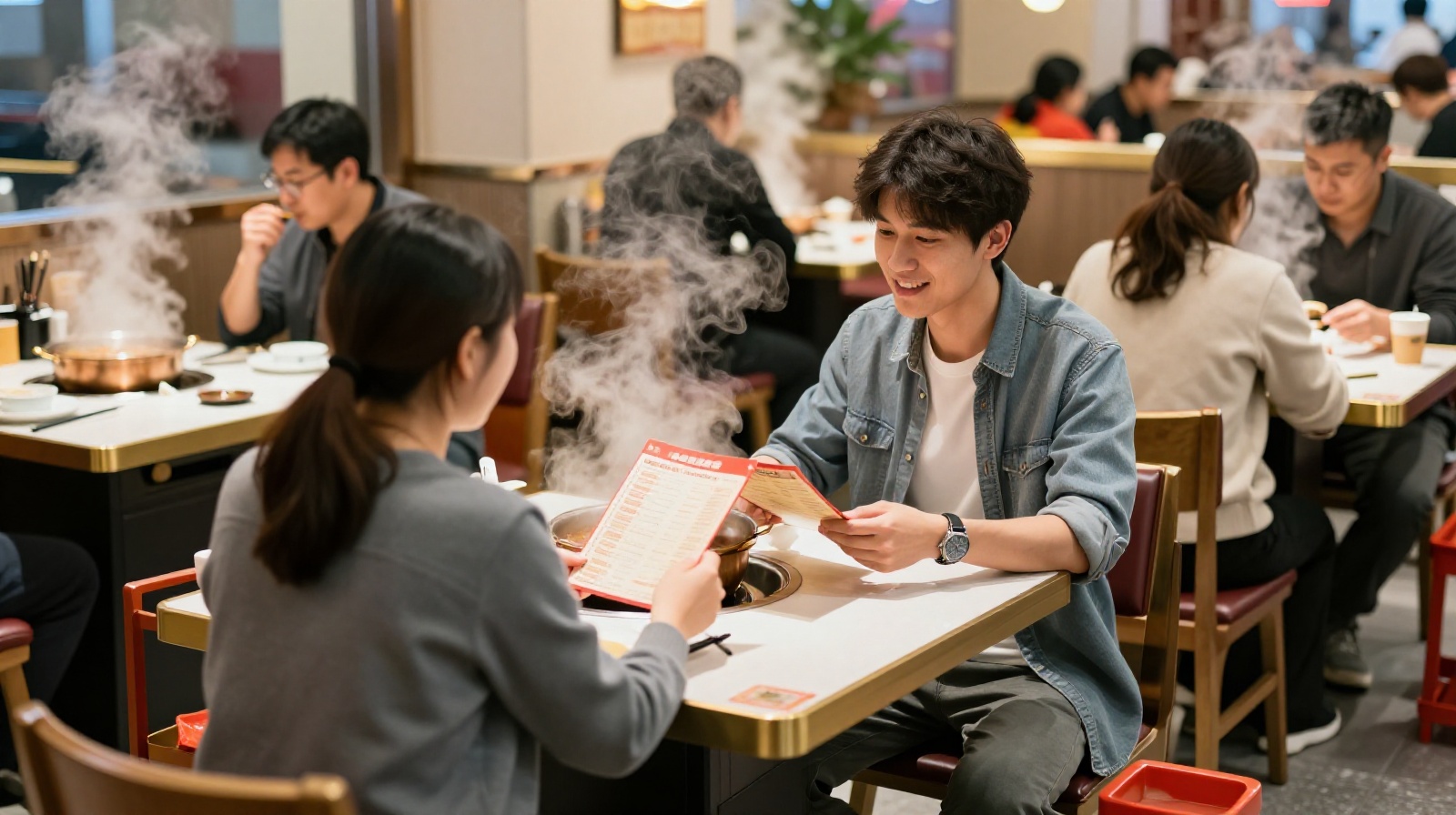
Saturday night in Chengdu. The air is thick with the scent of spicy beef broth and Sichuan peppercorns. Inside the restaurant, it is a sea of noise and clinking bowls. You are a couple, looking for a table. The hostess smiles apologetically and points to a two-top near the window.
But there is a catch. Another couple is already sitting there. The four of you squeeze in. The small table becomes a shared island. This is pin zhuo (拼桌)—the unspoken art of sharing a table with strangers in China.
A Social Contract, Not a Conversation Starter
If you are from a culture where dining alone or with others at a shared table feels intrusive, this moment might feel awkward. You might wonder: Do we talk? Do we make eye contact?
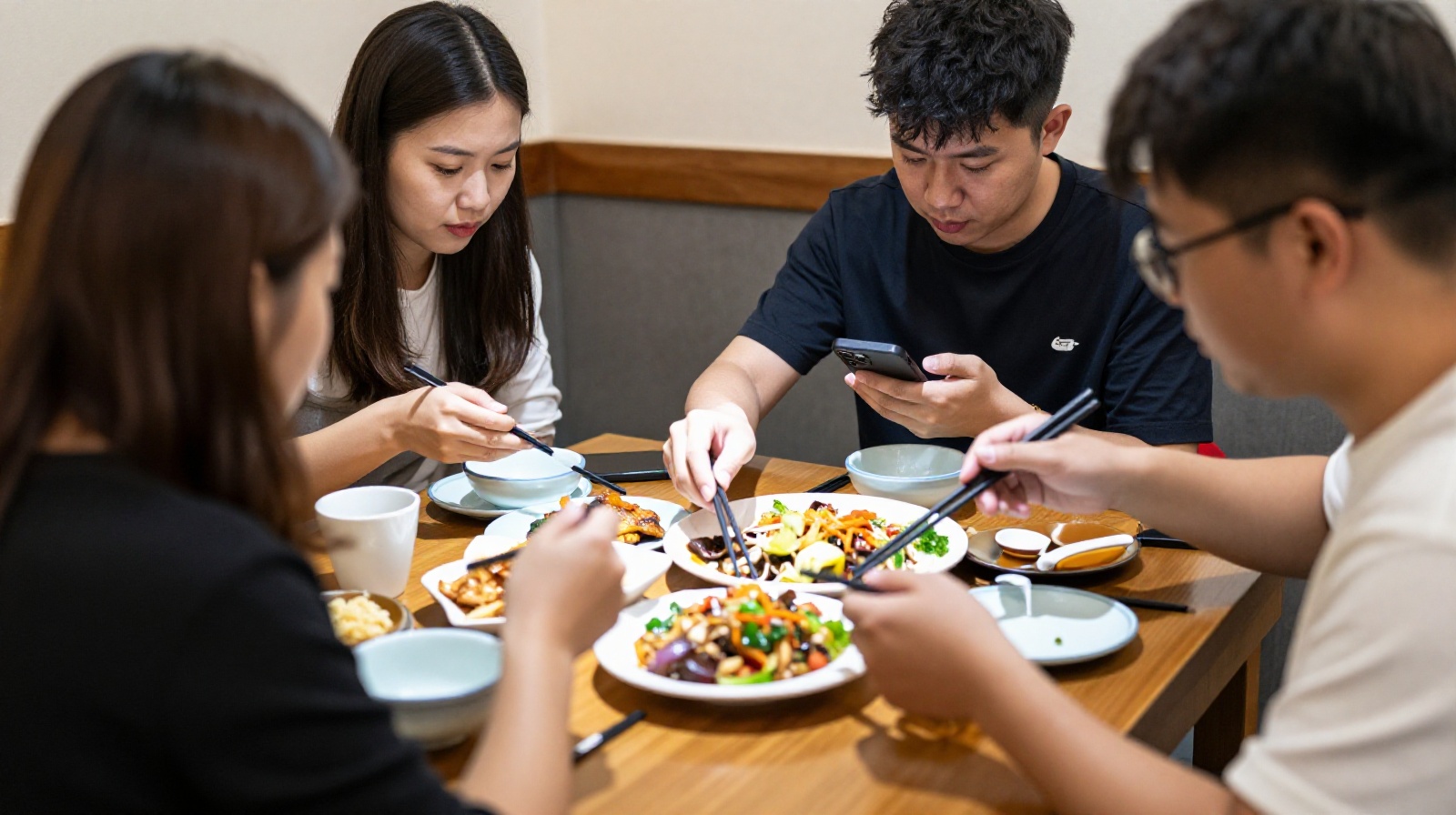
The answer is usually no. In most cases, pin zhuo operates on a principle of polite non-interference. The other diners are likely just as focused on their food as you are on yours. There is an unspoken rule: we share the physical space, but not our personal bubbles.
This is not rudeness. It is a sophisticated social boundary. In a country with a massive population and limited urban dining space, efficiency is valued over unnecessary small talk. The shared table becomes a functional unit, not a social one.
Why Do We Do It? The Logic of Efficiency
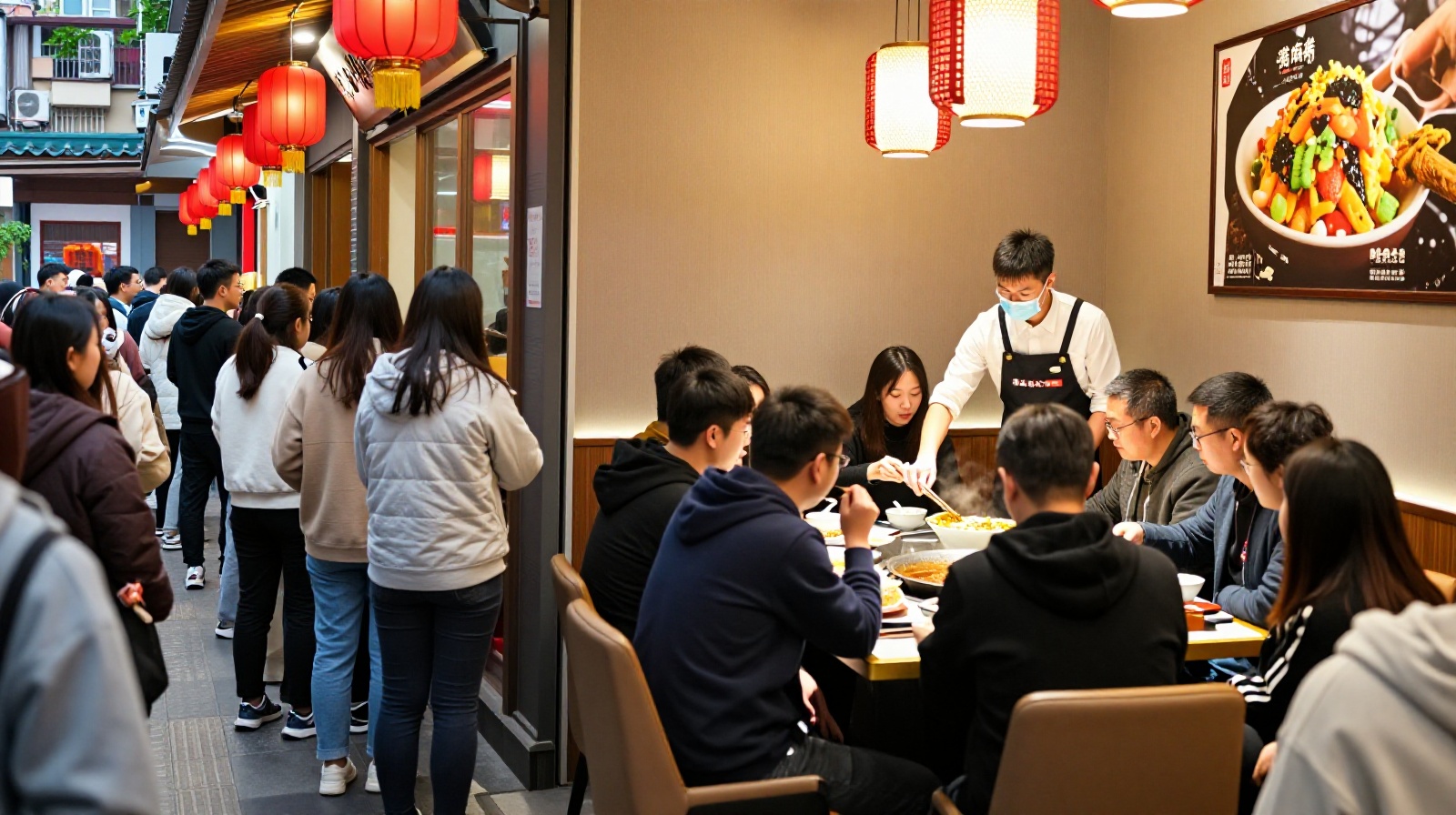
To understand pin zhuo, you have to look at the economics of Chinese dining. Popular restaurants in cities like Beijing, Shanghai, or Guangzhou often have wait times of one to two hours. To maximize revenue and serve more customers, restaurants operate with high “table turnover rates” (翻台率).
A four-person table that could seat eight for a short period is far more profitable than a table that sits empty while waiting for a larger group. It is a win-win:
- Restaurants serve more customers.
- Diners get a seat sooner.
How to Navigate the Etiquette
If you are a tourist or an expat in China and find yourself in this situation, here is how to handle it with grace:
1. The Silent Agreement
When you sit down, offer a slight nod or a polite smile. That is enough. Do not feel pressured to introduce yourself. If the other guests are chatting loudly or seem approachable, they might initiate conversation. If they are quiet, respect that silence. It is the default setting.
2. Watch Your Space
The table will be crowded. Be mindful of your elbows and your belongings. Keep your bags under the table or on the floor. Avoid reaching across the center line of the table; let the other guests reach for dishes from their side first. This spatial awareness is key to a comfortable experience.
3. The Bill
You will likely not share the bill. Each party pays for their own order. In the past, you might have asked the waiter to bring multiple checks. Today, it is seamless. You scan your QR code on WeChat or Alipay. The other guests do the same. There is no awkward counting of coins at the end.
The Hidden Warmth in Public Spaces
While pin zhuo seems cold and transactional, it reveals a unique aspect of Chinese urban life: comfort in proximity. Chinese people are generally very used to being close to others in public spaces—on subways, in elevators, and yes, at dinner tables.
This proximity does not automatically mean intimacy. You can share a table with someone for an hour and not know their name, yet feel a sense of shared humanity in the hustle. It is a pragmatic form of coexistence.
However, it is not always perfect. In extremely noisy or messy restaurants, the lack of privacy can be annoying. But in cleaner, more organized chains, pin zhuo is often seen as a sign of popularity and efficiency, not desperation.
When to Ask to Pin Zhuo?
Interestingly, the etiquette works both ways. If you are a solo traveler or a small group, and you see a table with empty chairs next to other diners, it is acceptable to ask, “Is this seat taken? Can we share?” (这边走,可以拼桌吗?). Most locals will gladly say yes. It helps them finish their meal faster if they are waiting for friends, and it gets you seated immediately.

Conclusion: A Lesson in Boundaries
Next time you find yourself squeezed into a two-top with strangers, take a breath. Observe the quiet rhythm of the other guests. Notice how they navigate the shared space with care. Pin zhuo is not just about saving space; it is a microcosm of modern Chinese social etiquette: efficient, respectful, and distinctly pragmatic. Enjoy your meal, mind your elbows, and embrace the unique texture of dining in China.