

The ‘Tuwen’ Culture: Printing on the Corner
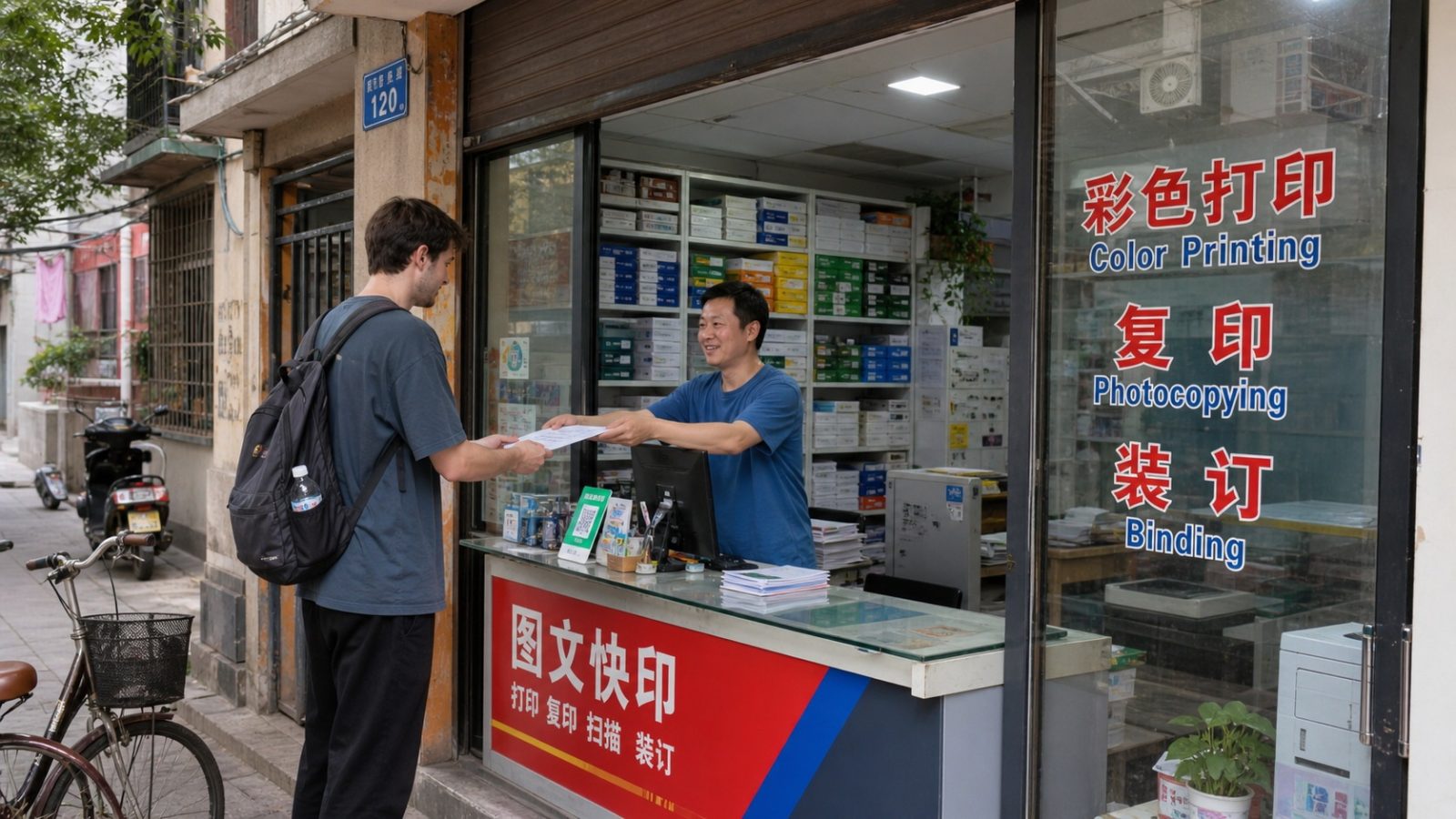
If you need to print a document in many Western countries, you might head to a FedEx Office, Staples, or a library. In China, the equivalent is the Tuwen (图文) shop.
“Tuwen” literally means “text and graphics.” These are not large, corporate franchises with bright neon signs and self-service kiosks. Instead, they are small, unassuming storefronts often tucked into residential buildings, next to noodle shops, or lining the streets of university districts.
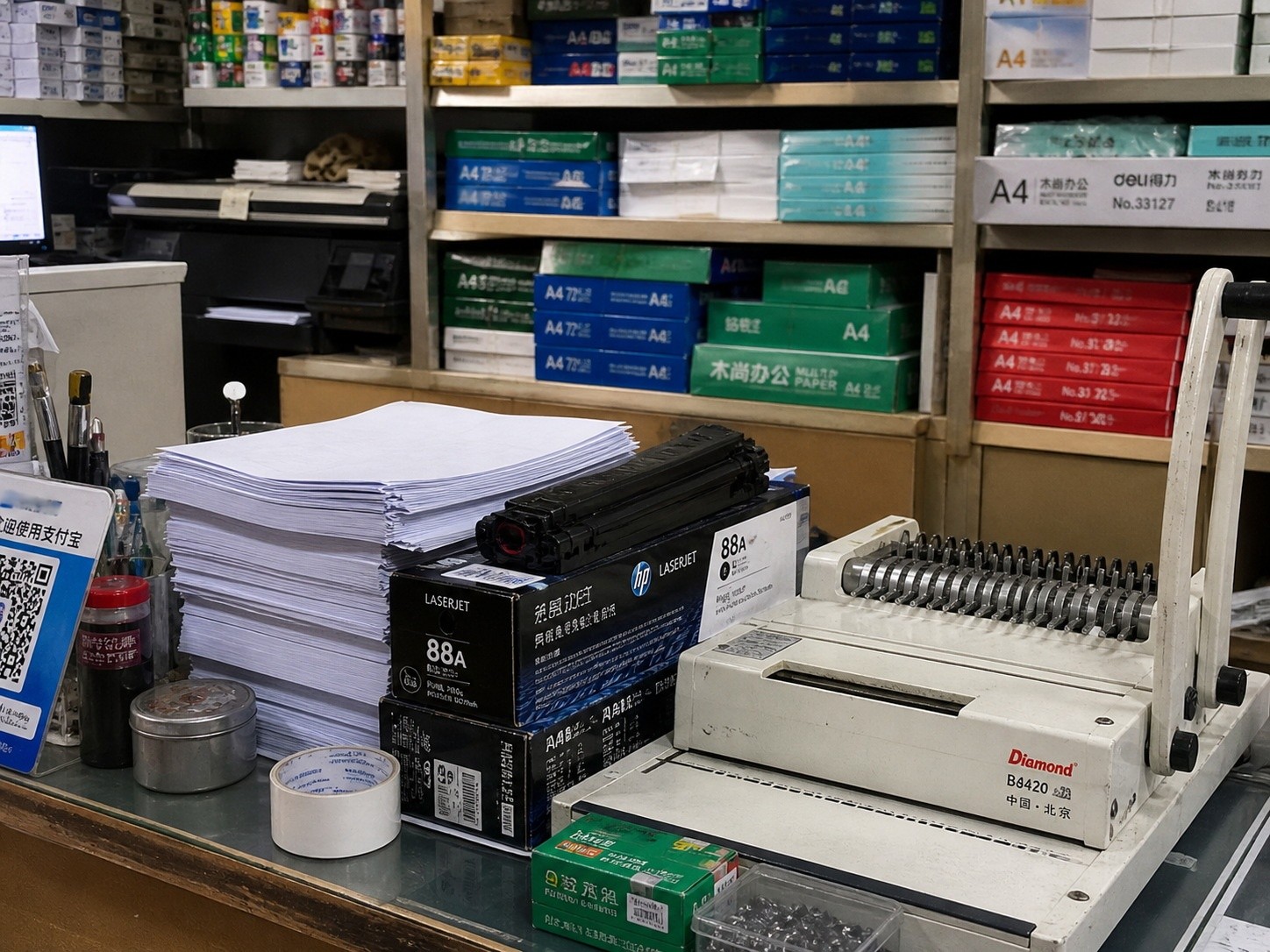
For a foreigner in China, walking into a Tuwen shop can be intimidating at first glance. The counter is usually piled with stacks of paper, toner bottles, and binding machines. A staff member sits behind it, staring at a computer monitor that looks like it hasn’t been updated since 2015. But this chaotic simplicity hides one of the most efficient and affordable service ecosystems in the world.
Why No Big Chains?
You might wonder why there are no massive print chains dominating the market like FedEx Office or Kinko’s in the US. The answer lies in China’s digital infrastructure and population density.
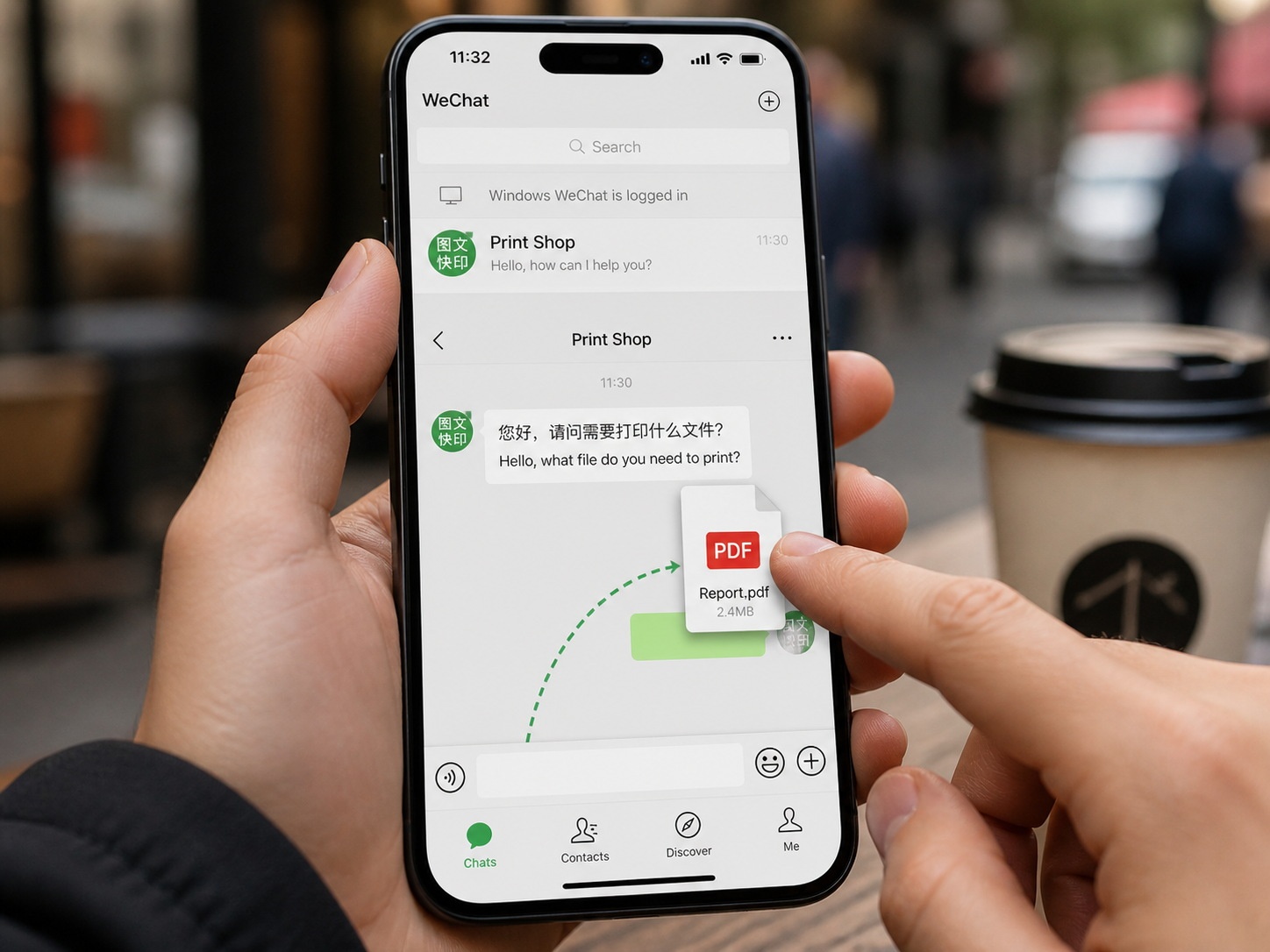
In the West, you often download a file from email or a cloud drive, walk to a store, and queue up. In China, the primary mode of communication is WeChat. Because almost everyone has WeChat, the “store” effectively comes to your phone. You don’t need to physically carry a USB drive or worry about file compatibility until you arrive at the shop.
Furthermore, the cost structure is radically different. In the US, printing might cost $0.15-$0.20 per black-and-white page due to labor and rent. In China, thanks to intense local competition and standardized digital workflows, prices can be as low as $0.01 to $0.03 per page for standard A4 paper.
How to Print: The WeChat Workflow
The process is surprisingly simple once you know the steps. Here is how it works in practice:
Step 1: Prepare Your File
Before you leave your home or office, ensure your document is ready. PDF is the universal standard. It ensures that fonts and layouts don’t shift when opened on a different computer. Word documents (.docx) are usually accepted, but PDFs are safer.
Step 2: Send via WeChat
Locate the shop’s WeChat ID or phone number. It is often written on a piece of paper taped to the door or window, or you can find it by asking nearby neighbors. Open WeChat, start a chat with them, and send your file.
If the file is large (over 100MB), WeChat might compress it. For high-quality prints, ask if they accept email or a transfer link via QQ/Tencent Docs. Most small shop owners are used to this and will guide you.
Step 3: Confirm Details
This is the most critical step. Don’t just say “Print this.” Be specific. Use simple English or broken Chinese if needed, but clarity is key. You need to specify:
- Color vs. Black & White: Say “Black and white” (黑白) for standard pages, or “Color” (彩色) for photos/graphs.
- Paper Size: “A4” is standard. “Letter size” (US paper) is less common but some shops can handle it if you ask.
- Sides: “Single-sided” (单面) or “Double-sided” (双面). Double-sided is usually cheaper and more eco-friendly.
- Binding: Do you need spiral binding (线圈装订), comb binding (胶圈装订), or just stapled? Most shops default to a simple staple in the corner unless asked otherwise.
Step 4: Pick Up
Once they confirm, pay via WeChat Pay. They will text you when it’s ready, usually within 10-20 minutes for standard jobs. Walk in, collect your document, and leave. No queues, no kiosks.
Quality, Privacy, and Special Cases
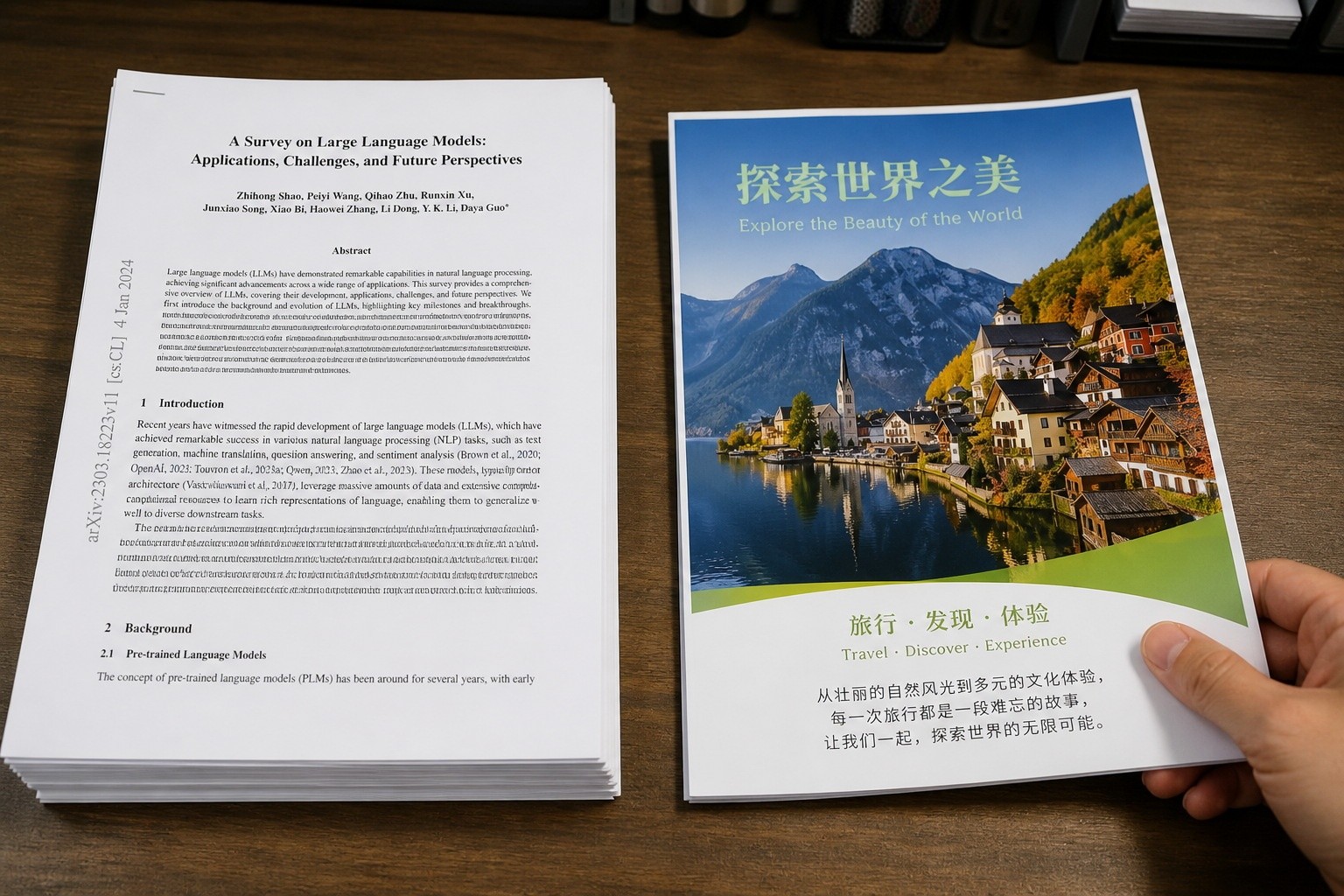
Is the quality good? For everyday documents, reports, or thesis drafts, yes. The machines are often industrial-grade laser printers that produce crisp text. However, for photo-quality color prints, you might want to specify “high-quality photo paper” (照片纸), as standard glossy paper can feel cheap.
Privacy Concerns
A common question is: “Does the shop owner see my files?” Technically, yes. The file passes through their computer. However, for most tourists and students printing boarding passes or lecture notes, this is rarely an issue. If you are printing sensitive legal or financial documents, it’s safer to print at a hotel business center or use a reputable chain like Starbucks (which offers basic printing via apps in some cities).
Urgent Jobs
Tuwen shops are incredibly fast. If you have an urgent need, mention “urgent” (急件) when sending the file. They will often prioritize your job over others on the queue.
The Bottom Line
The Tuwen shop is a testament to China’s hyper-local service model. It removes friction from daily life. You don’t need to hunt for USB drives or wait in line. You send a message, pay digitally, and walk out with your document minutes later.
For foreigners, mastering this simple workflow is one of the most practical steps toward feeling “at home” in China. It turns a potentially stressful administrative task into a frictionless part of your day.