

Waking Up in a Living Fortress
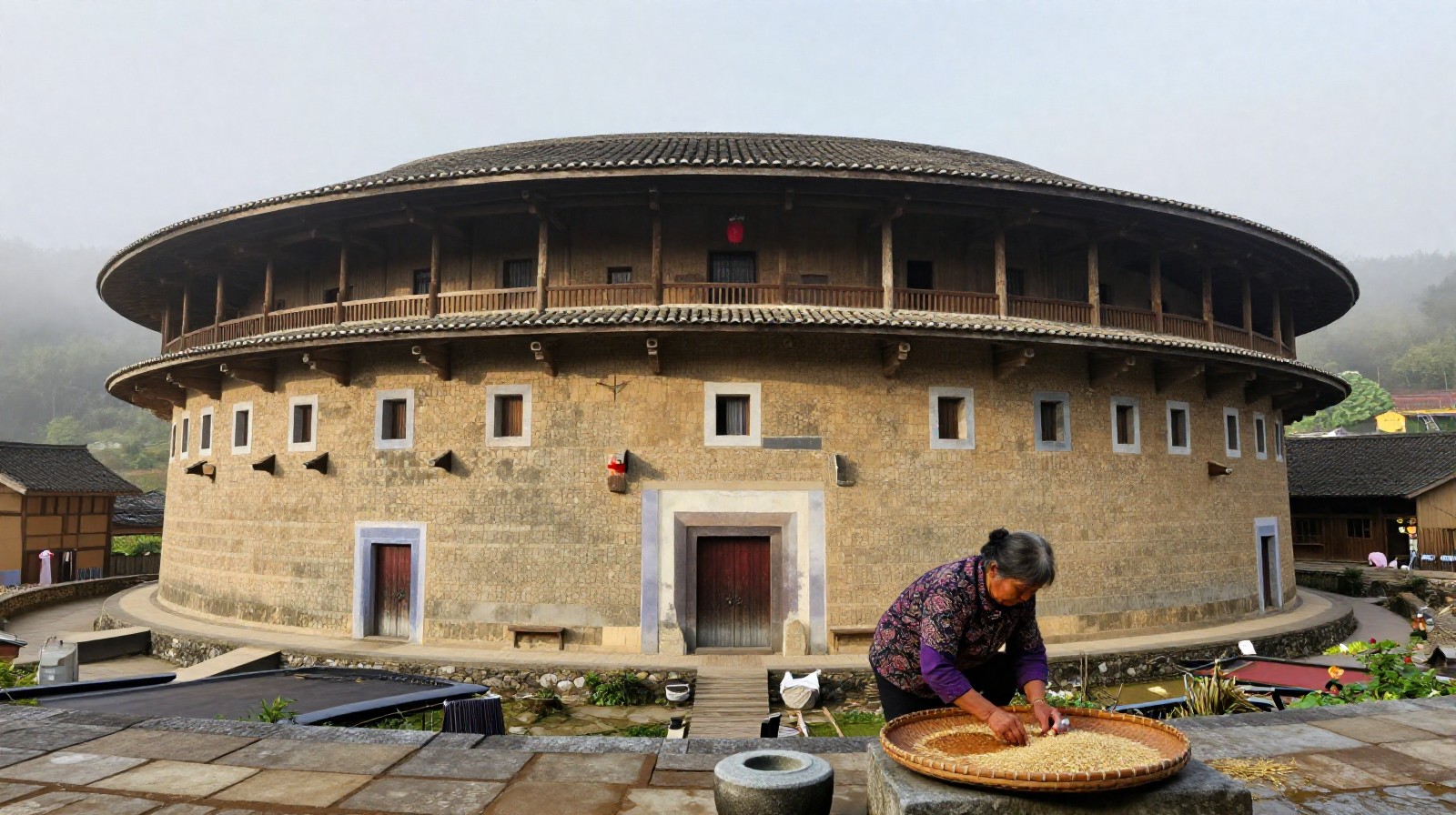
The morning light doesn’t just enter; it floods the central courtyard of the Tulou, illuminating dust motes dancing above the stone washbasins. At 6:30 AM on a misty Tuesday in Yongding, Fujian, there is no reception desk, no key card beep, and no breakfast buffet line. Instead, I sit on a wooden bench outside Unit 47, watching Mrs. Lin, an elderly resident in her seventies, kneel to scrub rice grains from a woven bamboo tray. The air smells of wet earth, wood smoke, and the faint, sweet scent of brewing tea.
My room is not a modern hotel suite but a refurbished apartment on the second floor of this 300-year-old fortress. Built in 1720, this Tulou was originally designed as both a home for over 80 families and a military stronghold against bandits. Today, it houses about 40 residents who have returned to live there while others rent out rooms to the few travelers seeking refuge from the tourist crowds of nearby Wuyuan or Zhangzhou.
Inside the Circle: Daily Life and Shared Spaces
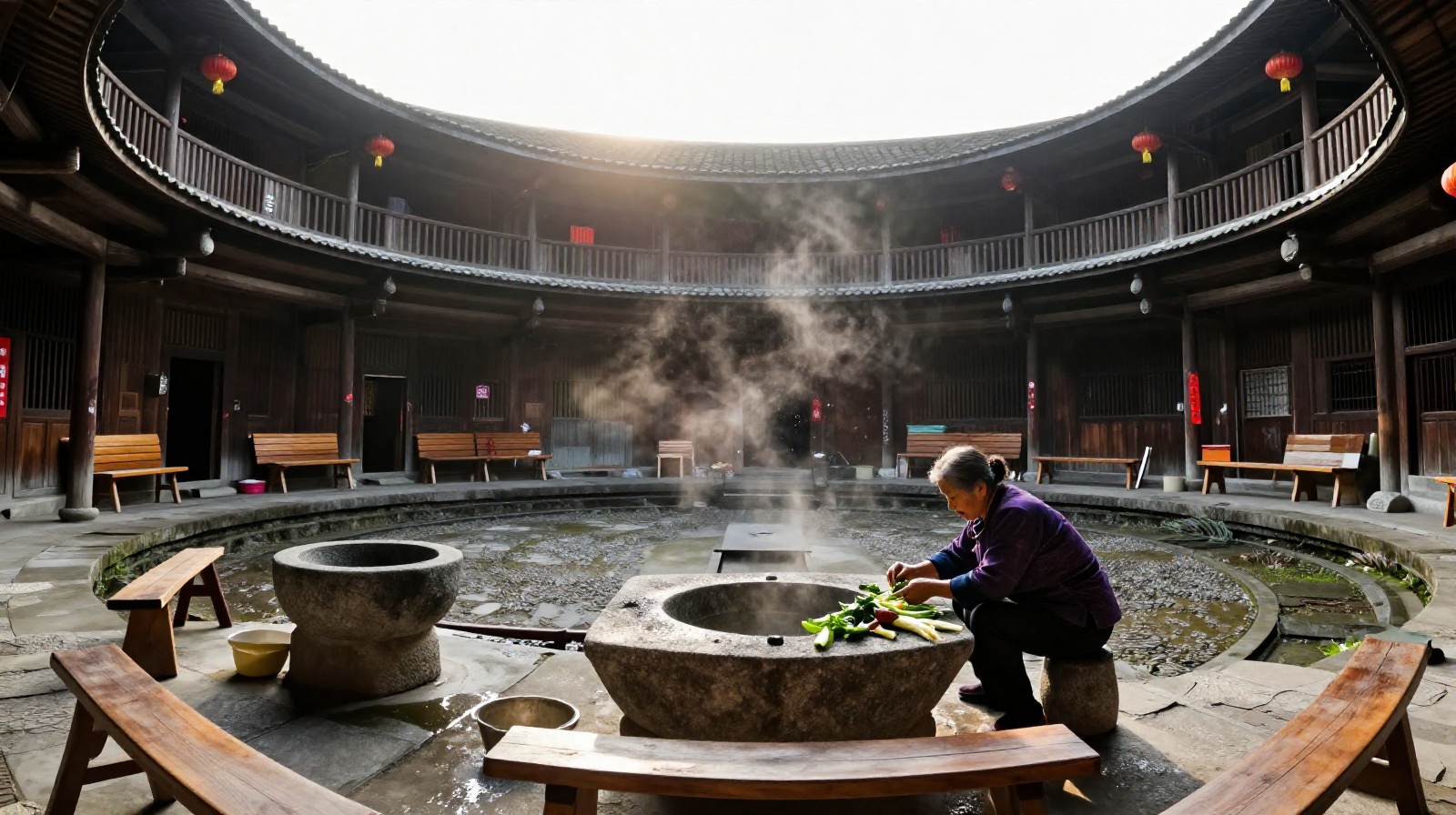
The structure itself is a marvel of engineering. The walls, nearly two meters thick, are made of rammed earth mixed with sticky rice flour and bamboo strips—a recipe that has kept them standing for three centuries. Inside, there are no corridors in the Western sense; rooms open directly onto the central gallery that circles the courtyard.
This layout forces a communal rhythm. In the evening, I joined Mrs. Lin and her neighbors in the common kitchen area near the main gate to prepare dinner. We chopped vegetables together on a low wooden table, chatting about local weather and the price of pork. This is how Hakka life works: privacy is a luxury; community is the default.
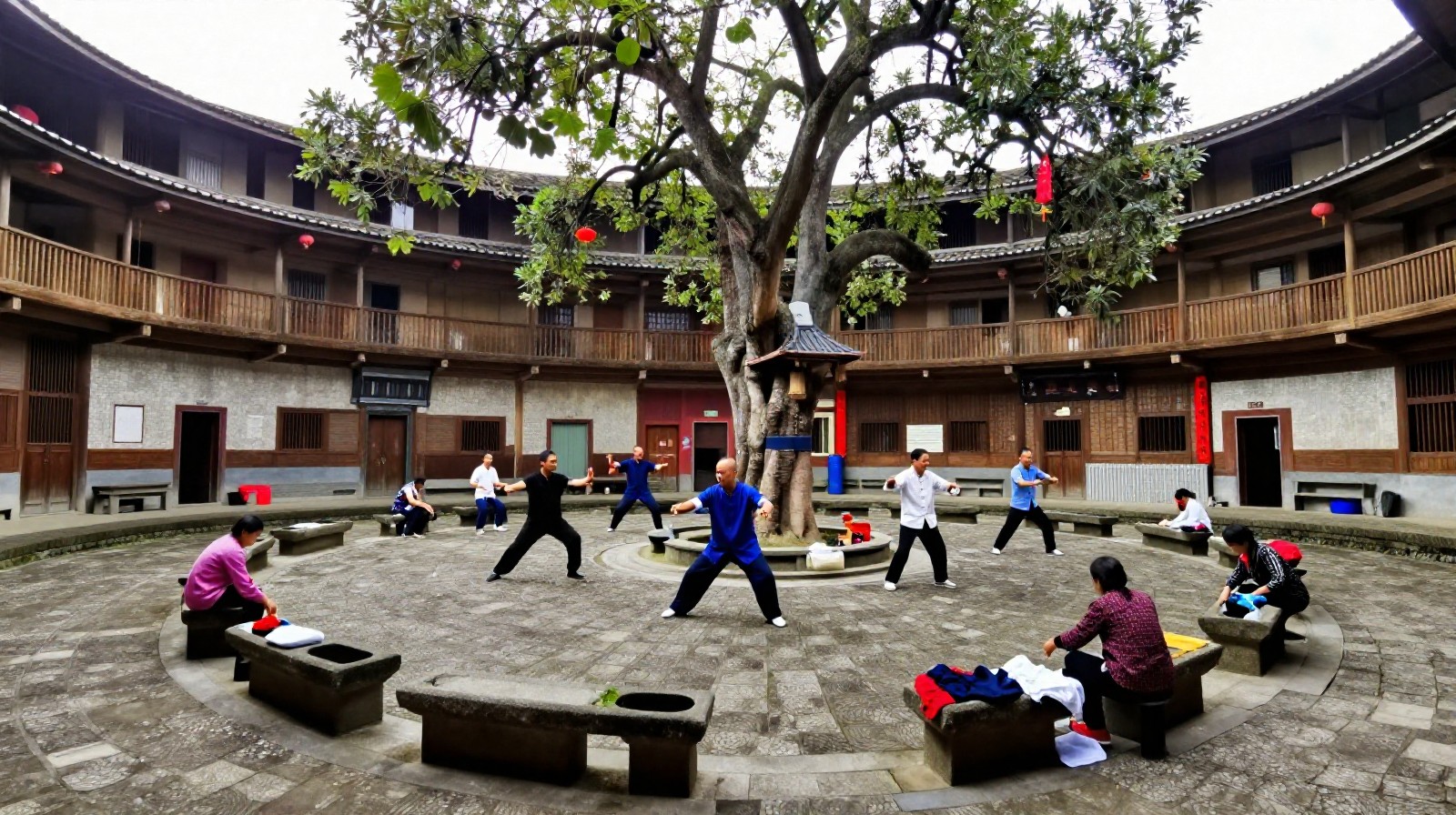
Every Saturday morning, the courtyard transforms. The men gather for Tai Chi under the old elm tree, while women wash clothes in the stone basin at the center. It is not a staged performance for cameras. It is the quiet, unscripted choreography of a village that has survived war, famine, and modernization by sticking together.
Separating Fact from Film
Many visitors come to Fujian expecting the iconic Tulou they saw in Crouching Tiger, Hidden Dragon. They arrive at the famous “Earth Flower” (Hongkeng) or other heavily commercialized sites where souvenir shops line the entrance and tour groups shuffle through in unison.
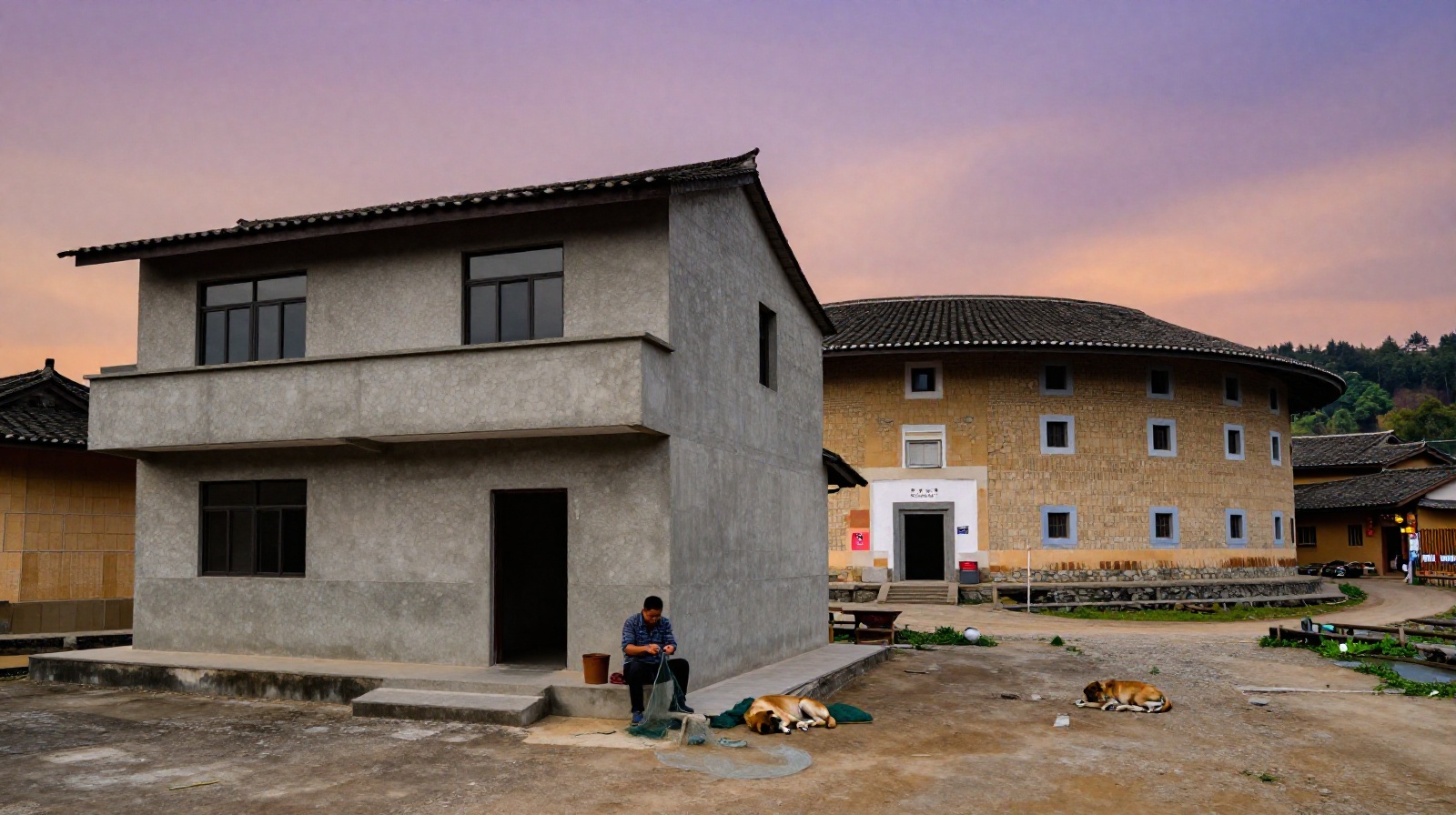
But this village offers a different reality. I walked past the main gate to find a cluster of newer concrete houses where the younger generation lives, while the original Tulou remains the heart for the elders. There are no acrobatics shows here. No vendors selling plastic kites or fake antiques. Just a man mending his fishing nets on the porch and a dog sleeping in the sun.
Architecture as Survival
The Tulou was born from necessity. Its circular design deflects wind and earthquakes, while the lack of windows on the ground floor prevented bandits from entering. The thick earth walls act as natural air conditioning, keeping rooms cool in summer and warm in winter.
Today, these structures face new challenges. Many younger Hakkas prefer modern concrete homes with indoor plumbing and better insulation. Maintaining the rammed-earth walls is expensive and labor-intensive; a single crack can let in rain and compromise the whole structure. Yet, for those who stay, the Tulou represents an identity that cannot be replicated.
As I left the village at dusk, the sky turned a deep purple. A few lights flickered on inside the hollow center of the building, casting warm shadows against the dark earth walls. It felt less like visiting a museum and more like stepping into a story still being written.