
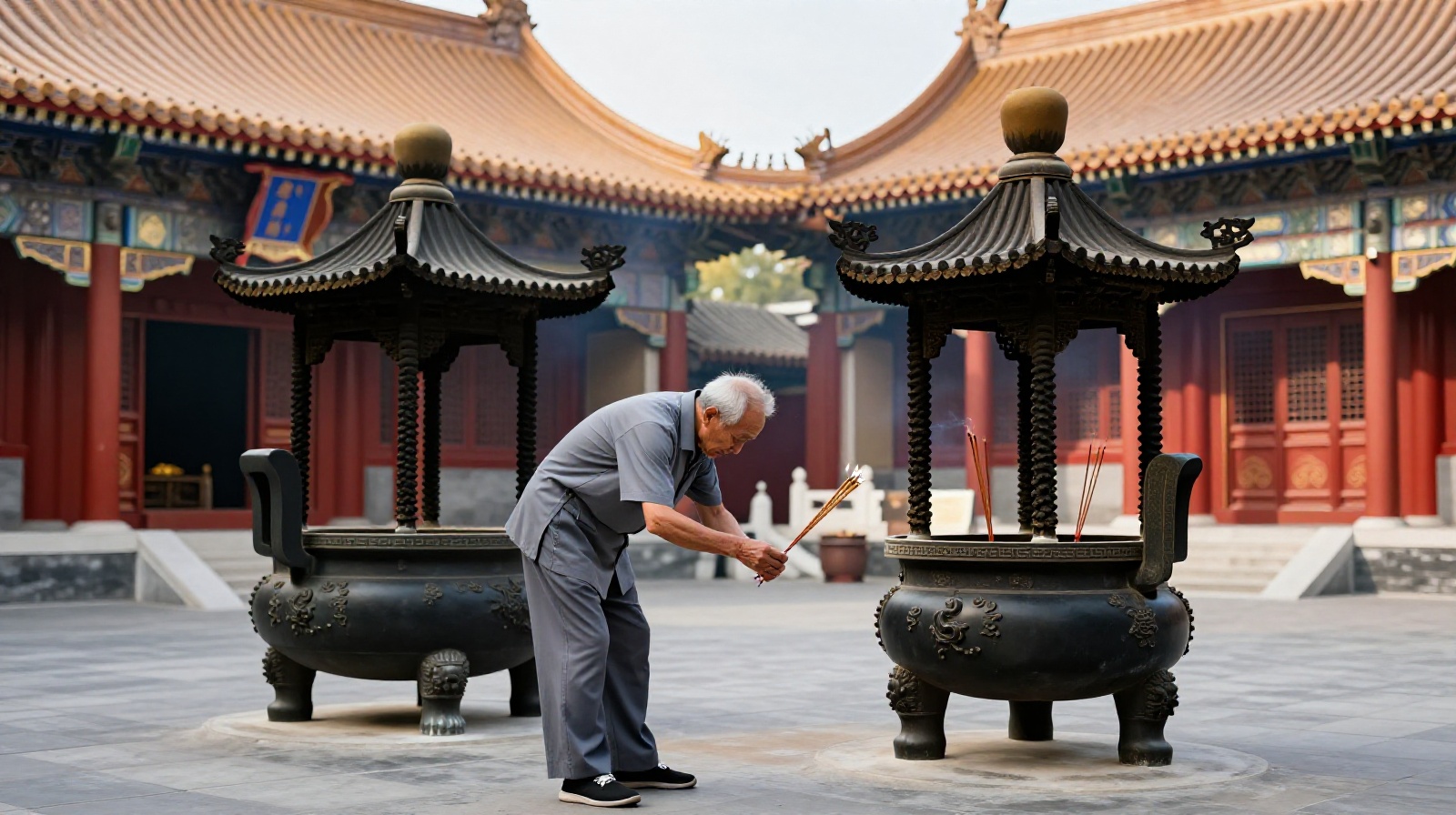

More Than a Place of Worship
The air inside any major Chinese temple carries a distinct weight. It is thick with the scent of sandalwood and pine, layered over the cool stone floors that have been worn smooth by centuries of footsteps. For many visitors, entering these spaces can feel intimidating. The rituals seem complex, the hierarchy of deities confusing, and there is an unspoken fear of making a mistake.
But here is the reality: Chinese temples are not just religious centers; they are vibrant community hubs. On weekends, you will see elderly people practicing Tai Chi in the courtyards, families buying snacks at nearby stalls, and young professionals seeking a moment of quiet away from the city noise. The etiquette here is less about strict dogma and more about basic respect—acknowledging that this is a sacred space for others.
Stepping Over Thresholds
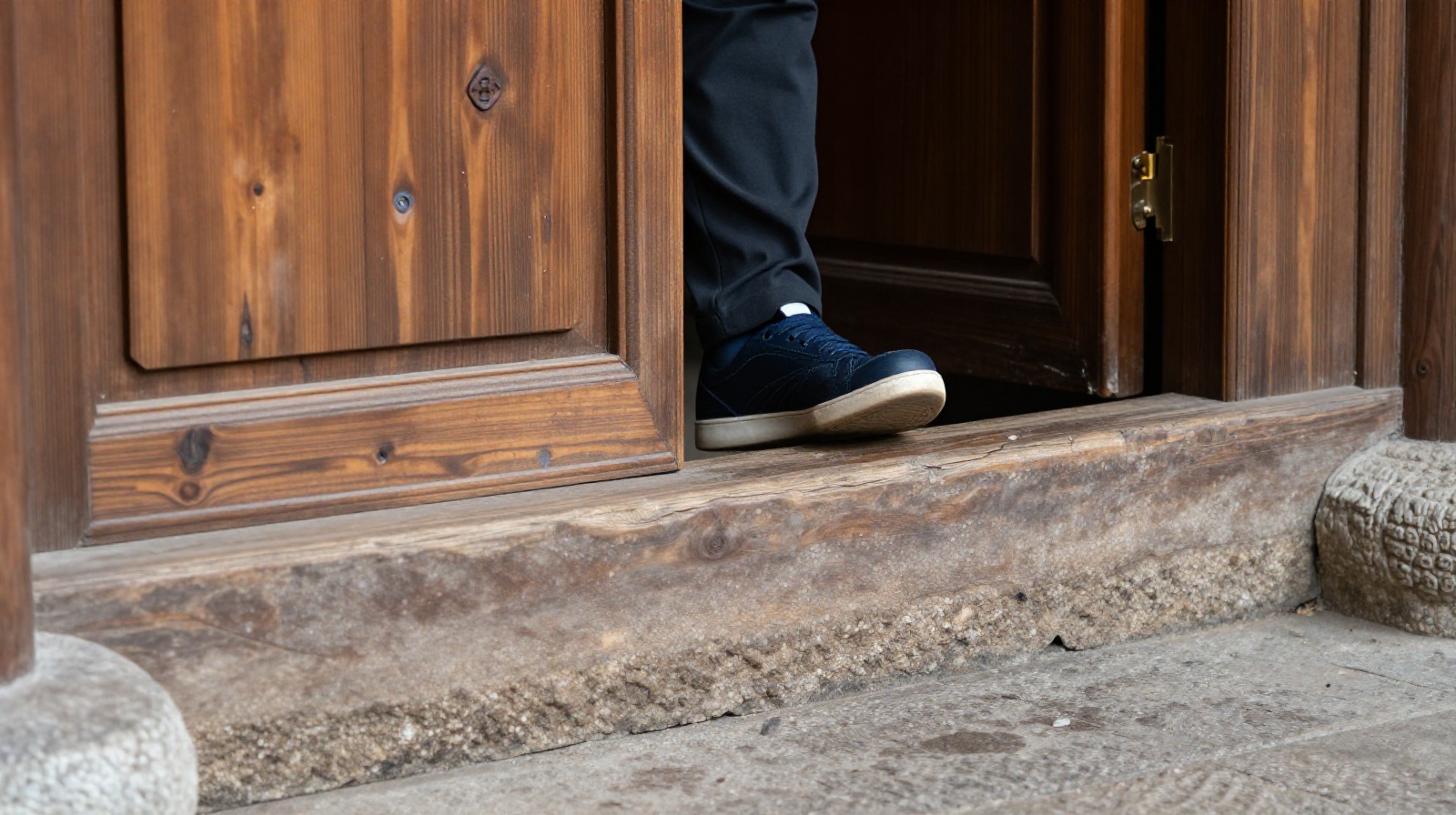
Your first interaction with temple architecture happens at the door. In traditional Chinese buildings, doors do not have frames; they are simply open spaces between pillars. Therefore, you should never step directly on the wooden or stone threshold. Doing so is considered disrespectful to the building’s spirit and, by extension, the deities inside.
Instead, lift your legs and step over it cleanly. There is an old folk custom regarding which foot leads: men are traditionally advised to lead with their left foot, women with their right. This stems from ancient symbolism where the left side was associated with yang (masculine/active) and the right with yin (feminine/receptive). Today, this rule is soft but still widely observed. If you forget, simply stepping over without touching the wood is what truly matters.
The Art of Burning Incense
Incense burning is the primary way visitors make an offering or a wish. It is not about “buying” favor from gods with smoke; it is a meditative act, a way to focus your mind and express gratitude.
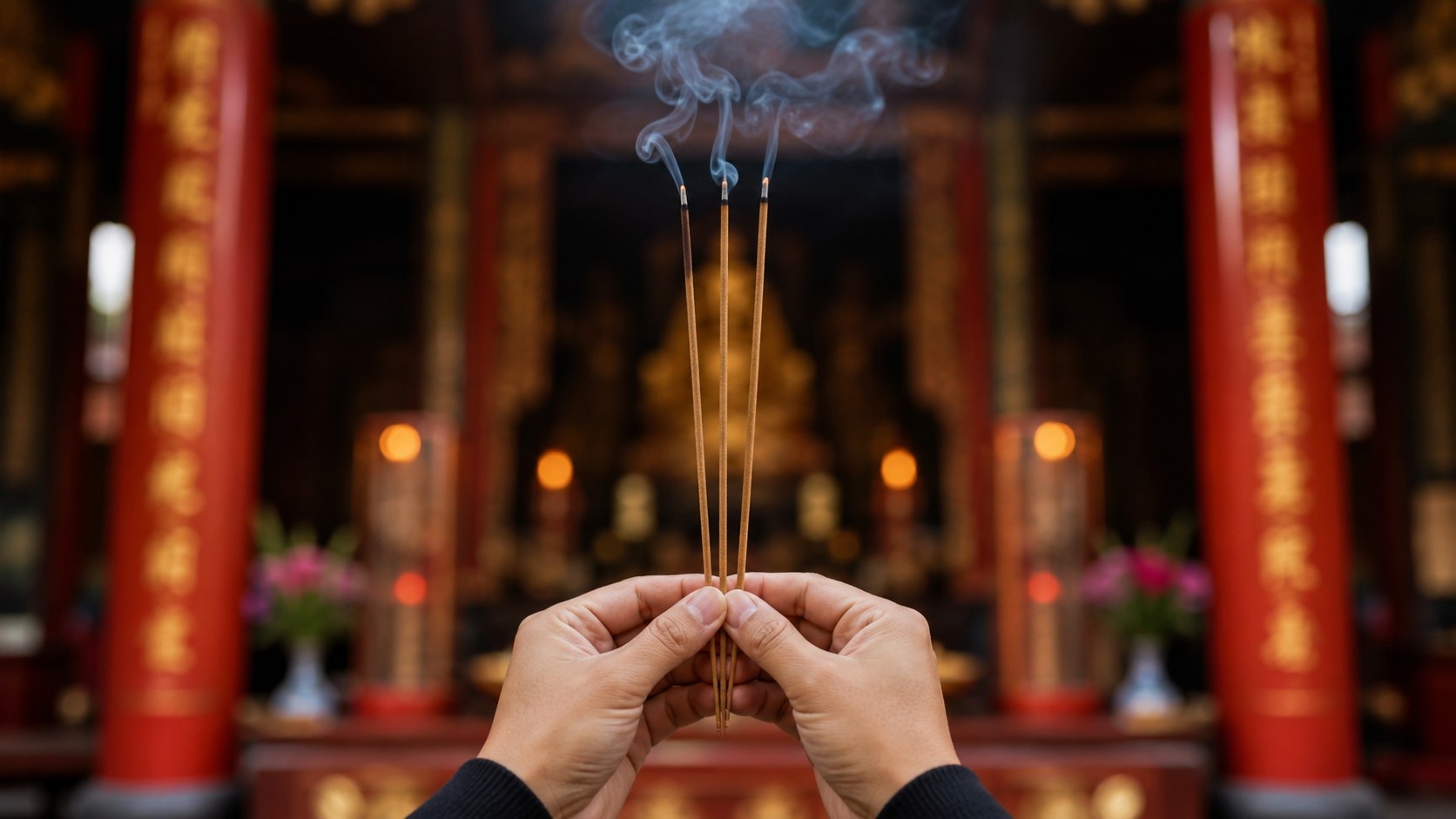
When you purchase incense—usually sold in bundles of three sticks at temple entrances—handle it with care. Hold the bundle with both hands. A common practice is to use your left hand to hold the main stick (the left side being considered “pure” in many traditions) while your right hand supports or lights it, though using two hands for everything is perfectly acceptable and shows maximum respect.
Lighting the Incense
If there are pre-lit incense burners provided by the temple, use them to light your sticks. If you must use a lighter or match, do so gently. After lighting, if the stick smokes rather than flames, never blow it out with your mouth. Blowing is seen as impure in this context. Instead, gently wave your hand away from your body to extinguish the flame.
Holding and Bowing
Hold the incense sticks vertically at chest height, directly in front of your forehead. This gesture places the offering between you and the deity, symbolizing a direct line of communication. Before moving toward the main altar, pause and bow once. This acknowledges the space and centers your intention.
When approaching the large bronze censer in the center of the hall, place the sticks into the sand or ash. You can aim for three sticks (representing past, present, and future; or Buddha, Dharma, and Sangha) or just one if you prefer simplicity. Straightness is preferred over crookedness, but do not stress if they lean slightly.
Modern Donations: The Digital Gongxiang
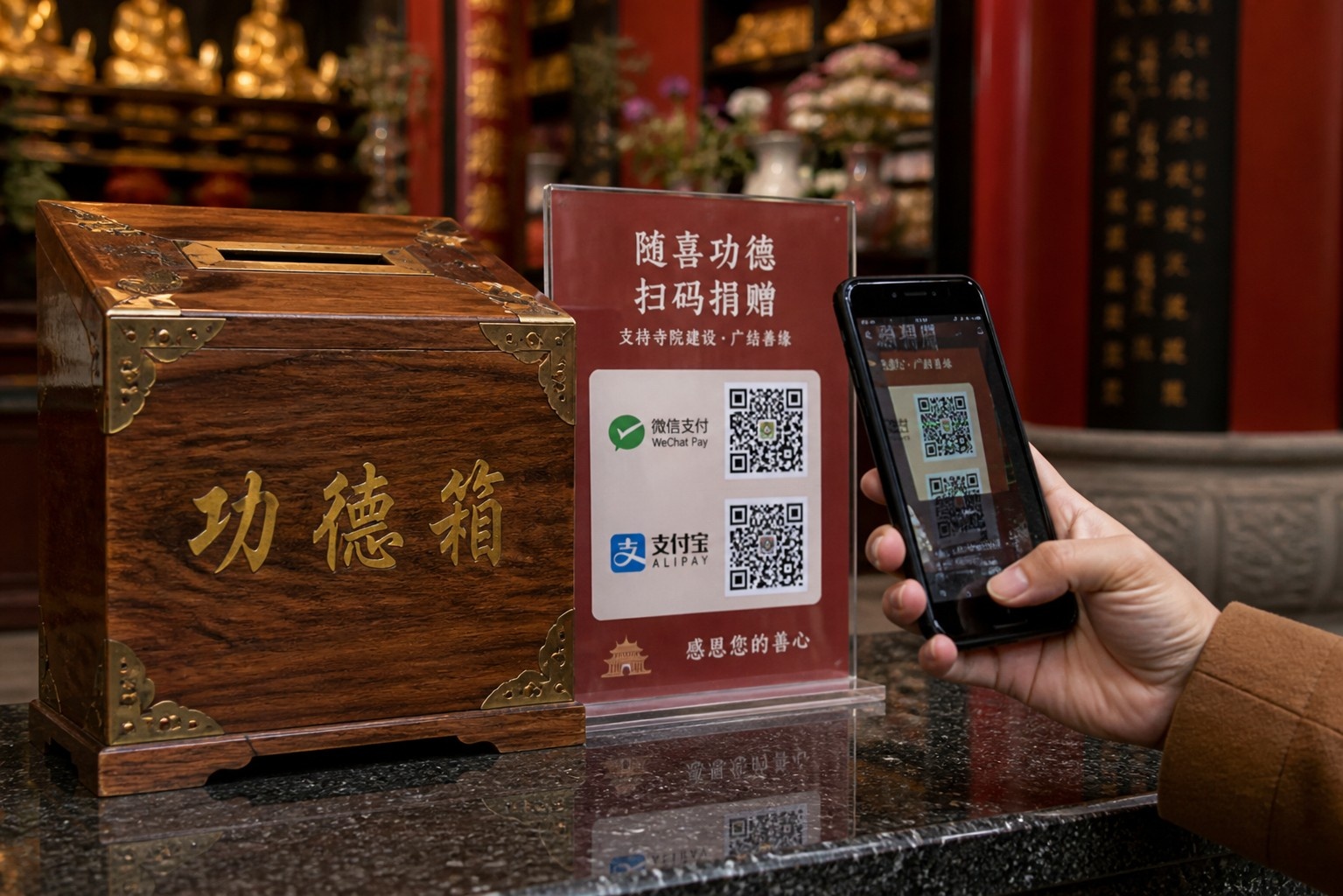
You will notice that the old wooden donation boxes (gongxiang) are now often accompanied by printed QR codes for WeChat or Alipay. Do not be surprised. Chinese temples have rapidly adopted digital infrastructure to manage maintenance and charitable works.
Donating is entirely voluntary. This concept, known as “suixi gede” (following your joy), means you give what you feel moved to give, whether that is 1 yuan or 100 yuan. There is no expectation for tourists to donate heavily. If you wish to contribute, scanning the code and entering a small amount is perfectly appropriate. If you prefer not to donate, simply offering a respectful bow as you leave is sufficient.
Behavior Inside the Halls
Inside the main halls, keep your voice low. Many visitors whisper or speak in hushed tones. Photography policies vary: some temples allow it without flash, while others prohibit cameras entirely to preserve the sanctity of the statues. Look for signage or ask a monk if unsure.
Dress modestly. While not always strictly enforced in tourist-heavy areas, wearing clothes that cover your shoulders and knees is a sign of respect. Avoid overly revealing attire, loud patterns, or clothing with offensive slogans.
Conclusion
Navigating Chinese temple etiquette does not require memorizing ancient scriptures. It requires observation, patience, and a basic sense of courtesy. By stepping over thresholds, handling incense with care, and respecting the quiet atmosphere, you align yourself with the local customs. You are not just observing a ritual; you are participating in a living cultural tradition that connects millions of people to their heritage.