

The Smell of Ash and Bamboo
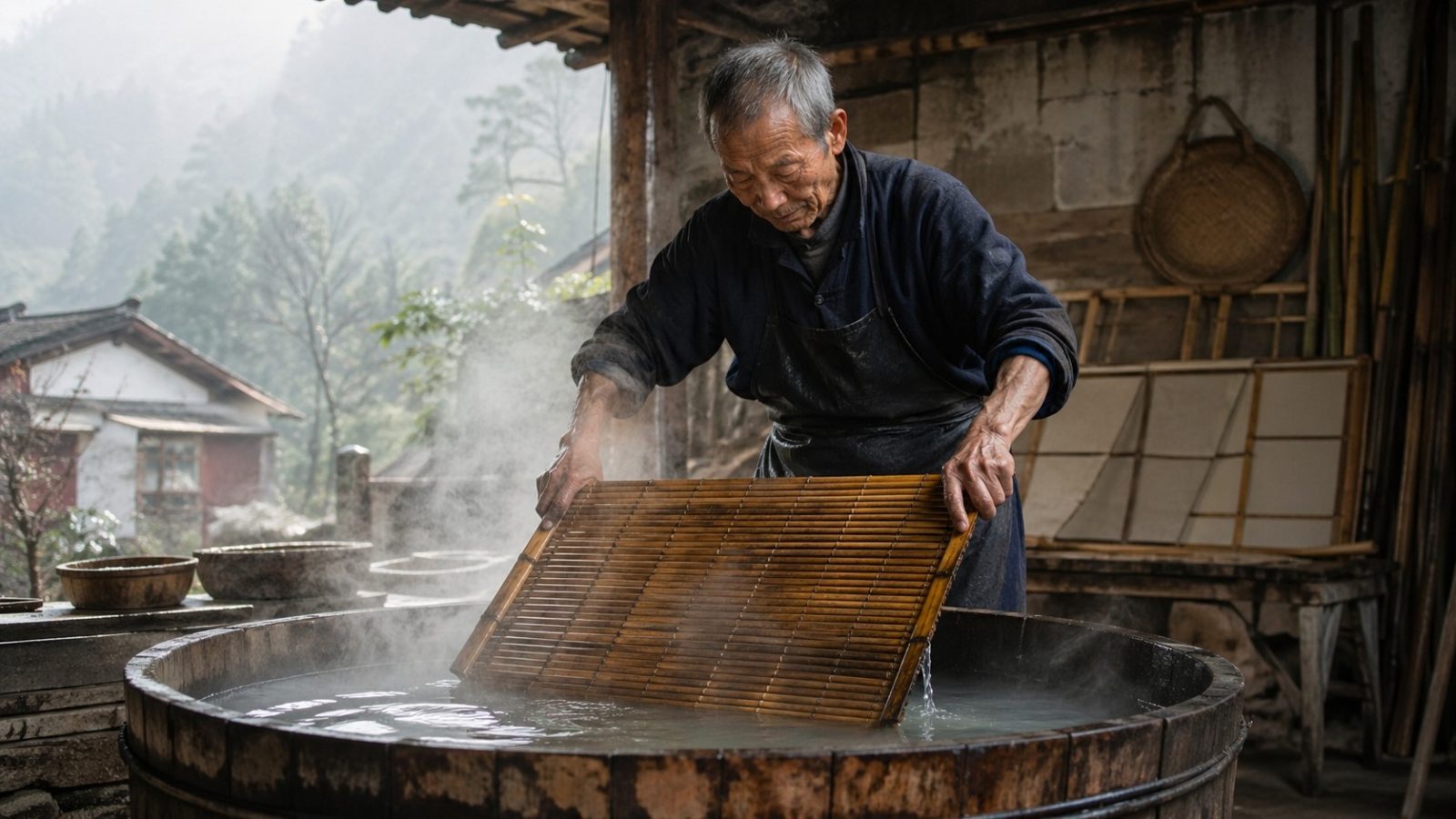
It is just past dawn in the village of Zhang, nestled deep within the misty mountains of Jiangxi Province. The air is thick with the scent of burning wood and wet bamboo fibers. Li Guohua, 68, stands knee-deep in a wooden vat filled with boiling water. He moves slowly, his hands calloused and stained dark green from years of handling natural dyes and plant pulp.
“The machine makes paper fast,” Li says, dipping a fine bamboo screen into the slurry. “But it cannot make paper that breathes.”
Li is one of the last few masters of this specific type of handmade paper in the region. For centuries, his family has crafted sheets so delicate they can be used for restoring ancient calligraphy or printing traditional ink paintings without smudging. Today, as automation sweeps through every corner of Chinese industry, Li’s workshop remains a quiet island where time seems to move differently.
A Thousand Steps in One Sheet
The process of making this paper is not magic; it is grueling patience. It begins with harvesting bamboo shoots from the nearby hills, selecting only those with the perfect age and thickness. The stalks are chopped, soaked in an alkaline solution made from rice straw ash for weeks, and then beaten by hand into a fibrous pulp.
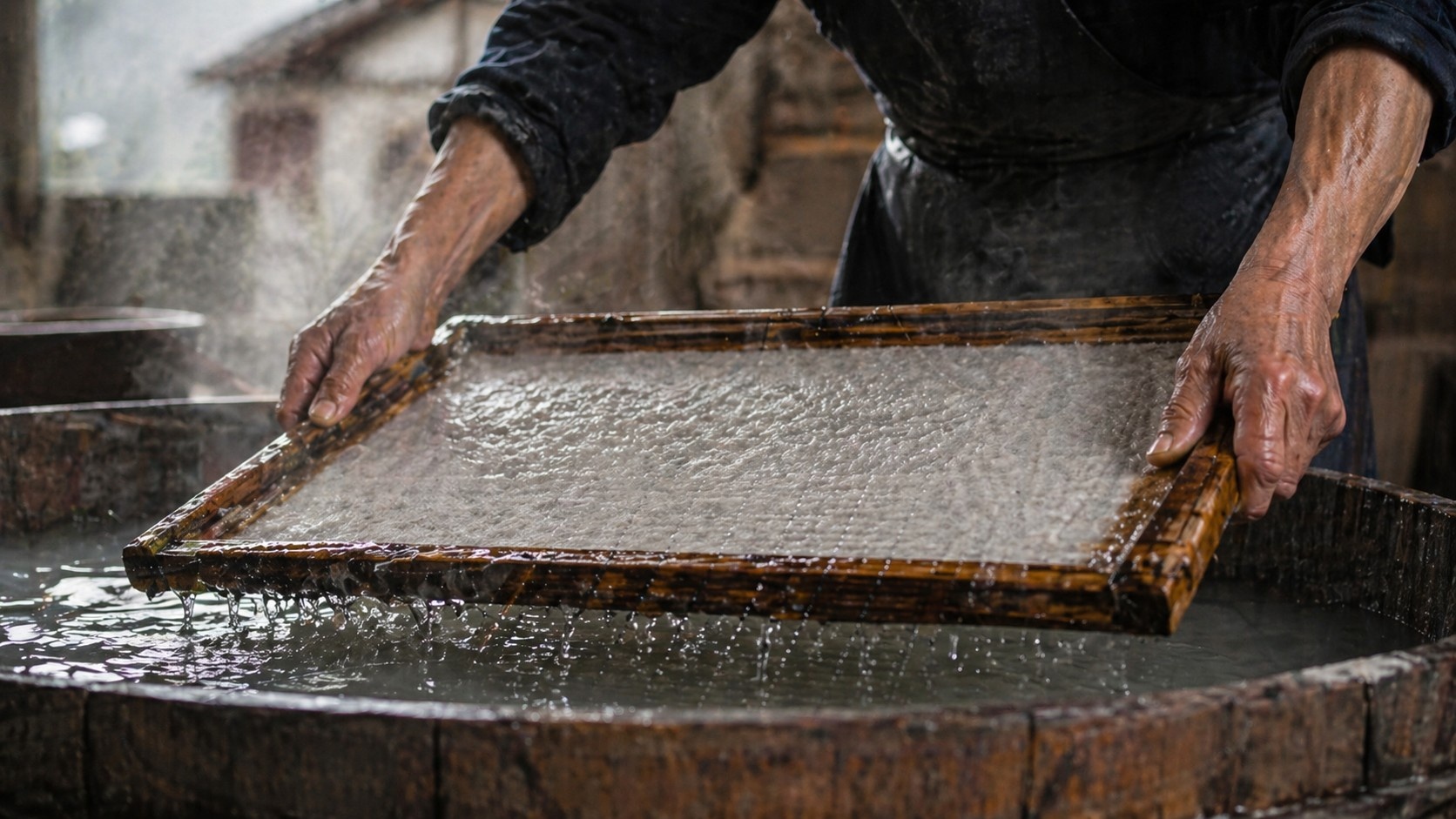
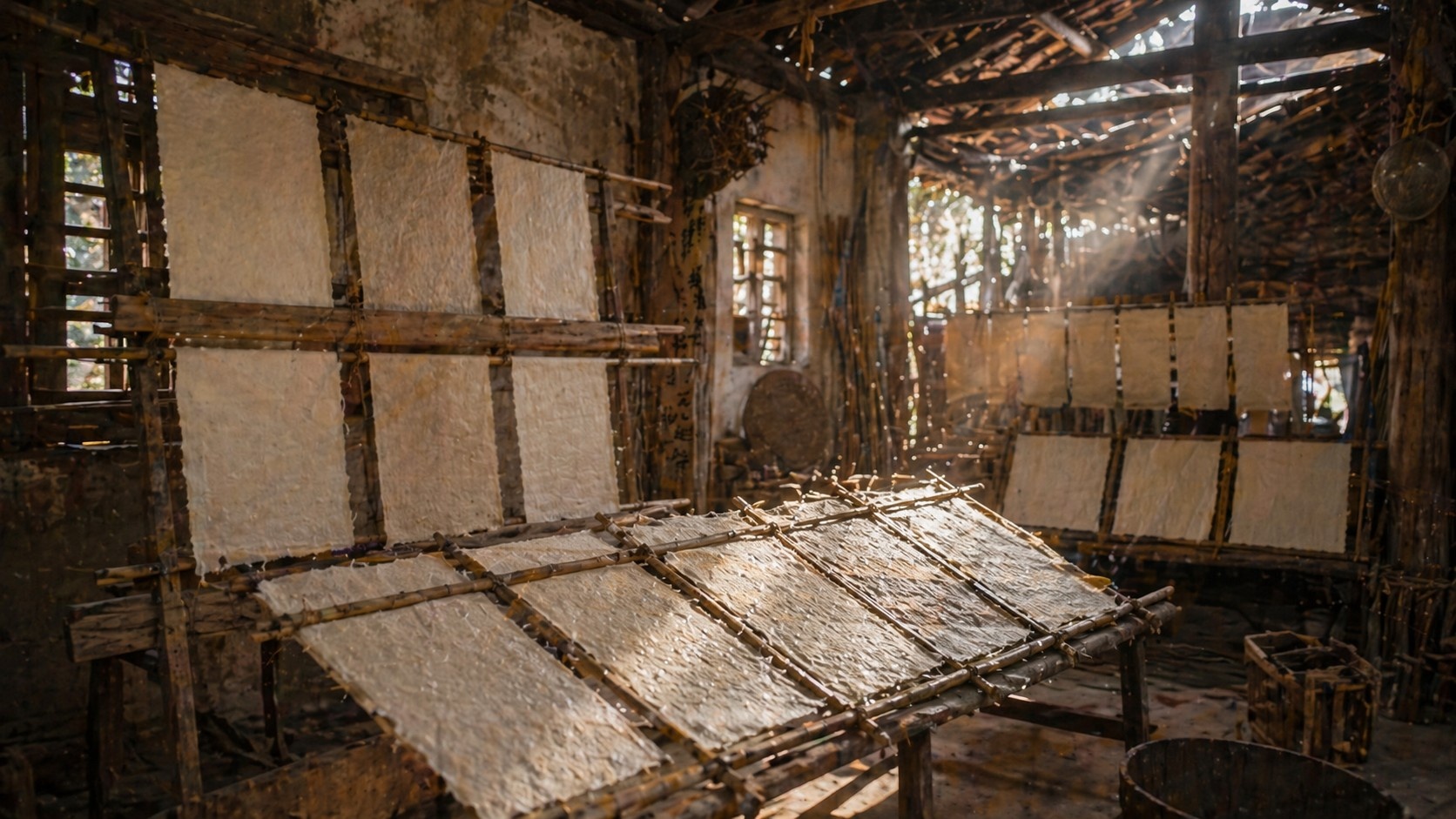
“One sheet takes three days to dry naturally,” Li explains, lifting the screen slowly from the vat. Water drips rhythmically as he shakes the frame left and right. This rhythmic motion is crucial; it ensures the fibers interlock evenly, creating a texture that no machine can mimic. The wet pulp is then transferred onto cloth drying boards, where it sits under the sun or near a fire until it becomes translucent and stiff.
This labor-intensive method means Li produces only about 20 sheets a day. A single mistake—a tear in the fiber or an uneven layer—ruins the whole batch. In an era of mass production, this inefficiency is a luxury few can afford. Yet, for artists who demand the perfect grain and absorbency, machine-made paper simply cannot compete.
Why Machines Can’t Replace This
In modern China, where we buy smartphones by the millions and print documents in seconds, why does anyone still want handmade paper? The answer lies in its texture and soul. Unlike uniform factory sheets, every piece of Li’s paper has unique variations—tiny bumps, slight color shifts, and a tactile warmth that changes how ink interacts with the surface.
Calligraphers say this paper “holds” the brushstroke; painters find it captures the subtle flow of ink like water on stone. It is not just a material; it is a medium for cultural memory. When a restoration expert uses this paper to repair a Song Dynasty painting, they are using the same technique their ancestors used 800 years ago.

The New Generation Returns
For a long time, Li worried his craft would vanish with him. His own children grew up in the city, preferring office jobs over the back-breaking work of the workshop. But recently, something unexpected has happened.
A group of young designers and artists have started visiting Li’s village. Some come to study; others bring their own projects. Among them is Chen Wei, a 26-year-old graphic designer who quit his job in Shanghai to spend six months learning the craft. “I didn’t want to just design on screens,” Chen says, carefully pressing a sheet of paper onto a drying rack. “I wanted to understand where the texture comes from.”
These young people are not just preserving history; they are reinventing it. They use Li’s handmade paper for luxury packaging, bookbinding, and even modern art installations. The price is high, but the market has responded. People in Beijing, Shanghai, and even overseas collectors are willing to pay a premium for something that carries a human story.

A Living Legacy
Li Guohua does not see himself as a museum exhibit. He is a practitioner. When he dips his screen into the vat, he feels a connection to the generations before him who did the exact same thing under similar conditions. The bamboo in the water today is the same kind of plant that grew here a thousand years ago.
As the sun sets over the mountains, Li folds the last sheet of the day. He knows the challenges ahead: rising costs, fewer young people willing to learn, and the constant pressure of modern life. But he also sees the hope in Chen’s hands and the fresh interest from the younger generation. The paper is no longer just a tool; it has become a bridge between the ancient past and a vibrant future.
In a world that moves faster every day, there is something profound about slowing down to make one sheet of paper by hand. It reminds us that some things are worth taking time for, and that tradition, when kept alive by real people, remains a powerful force.