
The Counter Where Time Stands Still
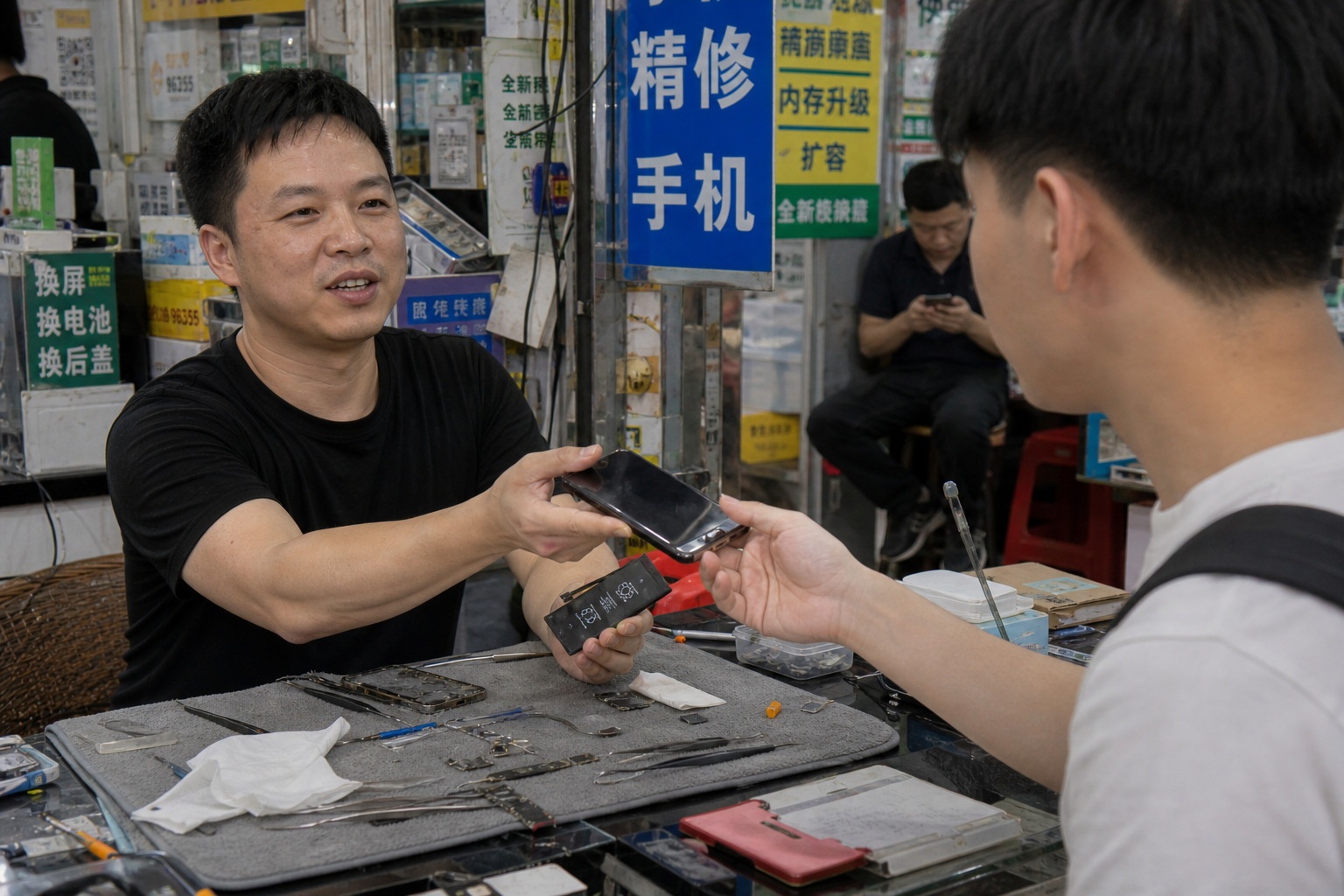
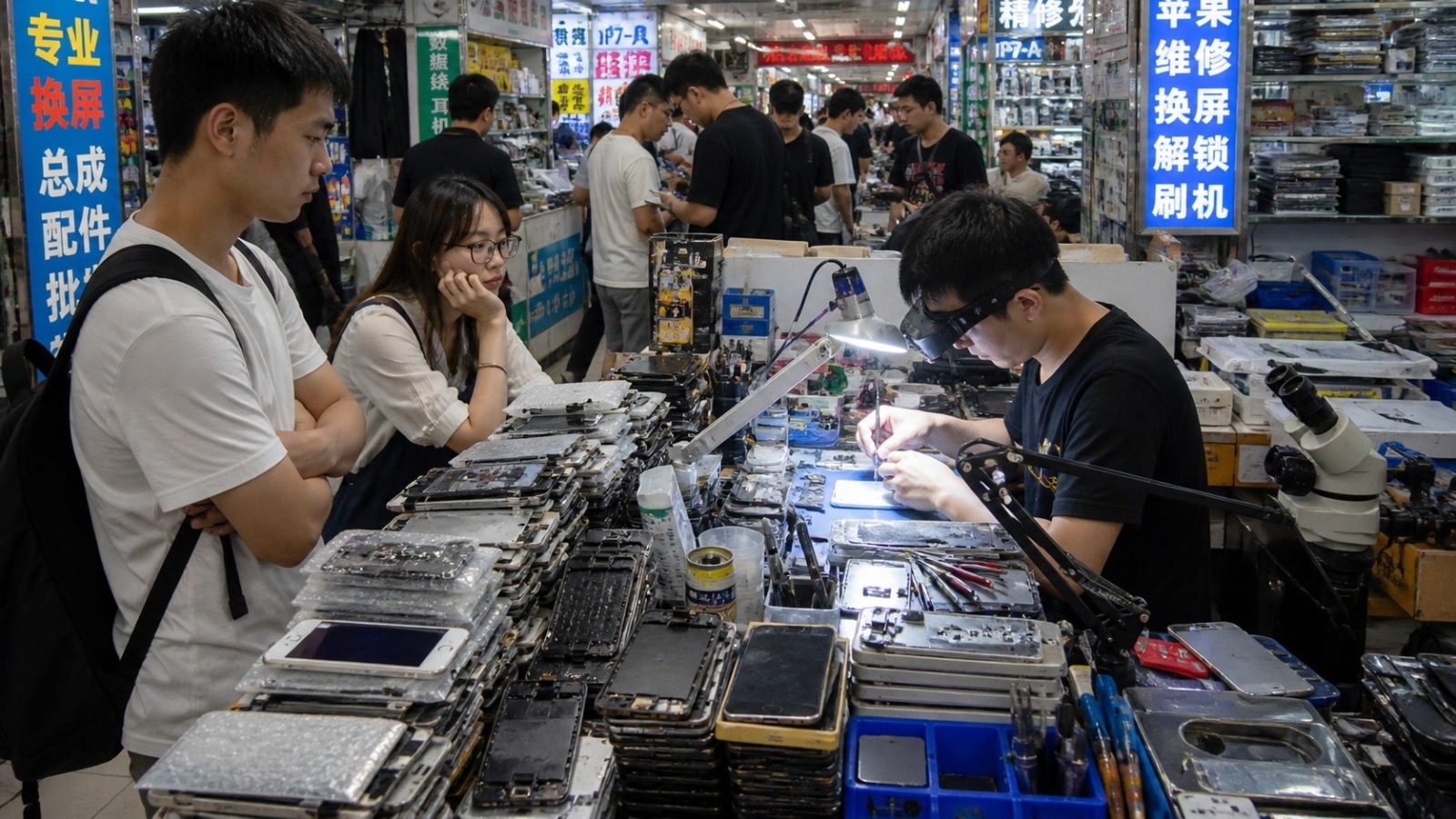
It is 3:00 PM on a humid Tuesday in Shenzhen. Under the flickering fluorescent lights of Huaqiangbei Electronics Market, the air smells faintly of soldering iron flux and hot plastic. On a narrow counter cluttered with tiny screws, magnifying lamps, and piles of disassembled phone components, Master Li adjusts his loupe.
He doesn’t look up as I place my shattered iPhone 12 on the glass mat. “Screen or battery?” he asks, already reaching for a heat gun. “Both,” I say. He nods, a gesture that costs nothing but saves me hundreds of dollars. In less than twenty minutes—while I wait at a nearby noodle shop—he will restore my device to working order.
This is the reality of mobile repair in China: fast, cheap, and surprisingly skilled. It stands in stark contrast to the official after-sales service centers where waiting lists stretch for weeks and replacement costs often exceed 50% of the phone’s value.
The Anatomy of a Quick Fix
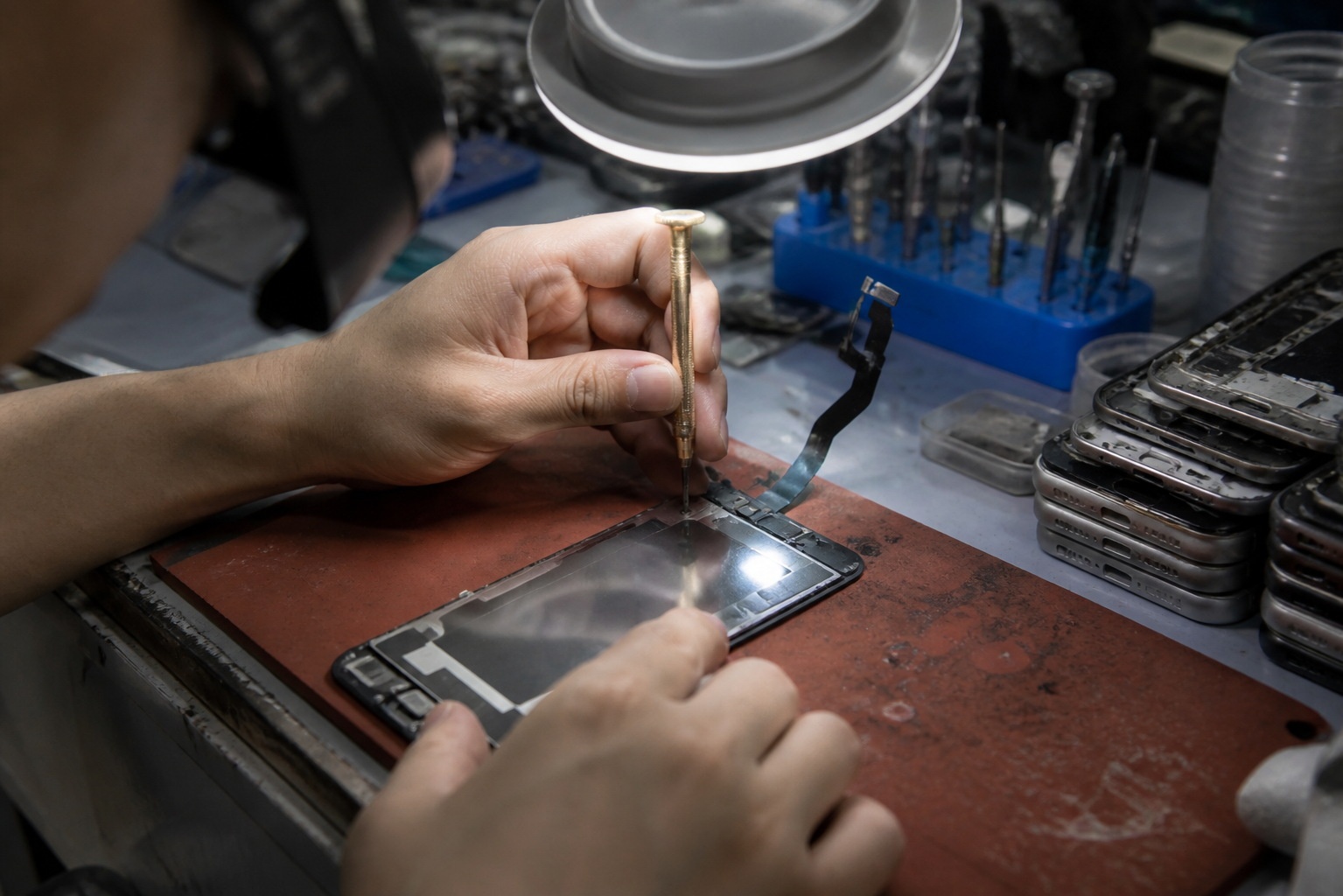
Watching Master Li work is like watching a magician perform close-up tricks, but with precision tools instead of cards. He starts by heating the back glass to soften the adhesive. With a thin metal pick, he slides under the panel, separating it from the frame without cracking the camera module.
The process is methodical. He disconnects the ribbon cables, removes the old screen, and cleans the residue with alcohol wipes. Then comes the installation: aligning the new display, pressing it into place, and reattaching the components. His hands move with a muscle memory developed over ten years of identical tasks.
What strikes me most is the variety of parts available. Stacks of LCDs, OLEDs, batteries, and charging ports are sorted by phone model in simple plastic bins. A customer can choose between an “original extracted” part (removed from another broken phone) or a high-quality third-party replacement for a fraction of the price.
Why Repair Is Still King
In many Western countries, right-to-repair legislation is still being fought for. In China, it’s simply how things work. The barrier to entry for repair is low because supply chains are hyper-localized. You can buy a new screen in the same building where you get it installed.
For ordinary Chinese consumers, this accessibility changes behavior. A cracked screen is an inconvenience, not a financial disaster. This pragmatism extends beyond phones. Laptops, tablets, and even high-end cameras are routinely fixed rather than discarded.

Bargaining: The Unspoken Rule
While prices in these stalls are generally transparent, there is always room for negotiation, especially if you’re buying multiple items or paying cash. A polite inquiry about the “best price” can save 10-20%. However, be wary of quotes that seem too good to be true; extremely low prices often indicate refurbished parts passed off as new.
The Risk: Knowing What You Get
Not all repairs are created equal. The biggest risk is receiving a refurbished screen with lower brightness or touch sensitivity. To mitigate this:
- Ask for the source: Inquire if the part is original, OEM, or third-party.
- Check before you leave: Test all functions—Face ID, True Tone, camera focus—while the technician is still working.
- Keep your old parts: Some technicians may swap out good components (like cameras) for lower-quality ones. Request to keep your original back glass or internal modules if you are concerned.
A Culture of Fixing
This street-side repair culture reflects a broader Chinese pragmatism. In a society that values resourcefulness and efficiency, throwing away a perfectly functional device because of a minor flaw feels wasteful. It’s not just about saving money; it’s about maintaining what you have.
As I collect my fully repaired phone from Master Li, he hands me back my old battery with a shrug. “Keep it,” he says. “It’s still useful for other things.” In that moment, the transaction feels less like a commercial exchange and more like a community ritual—a small act of resistance against a disposable world.