

The Queue That Never Ends
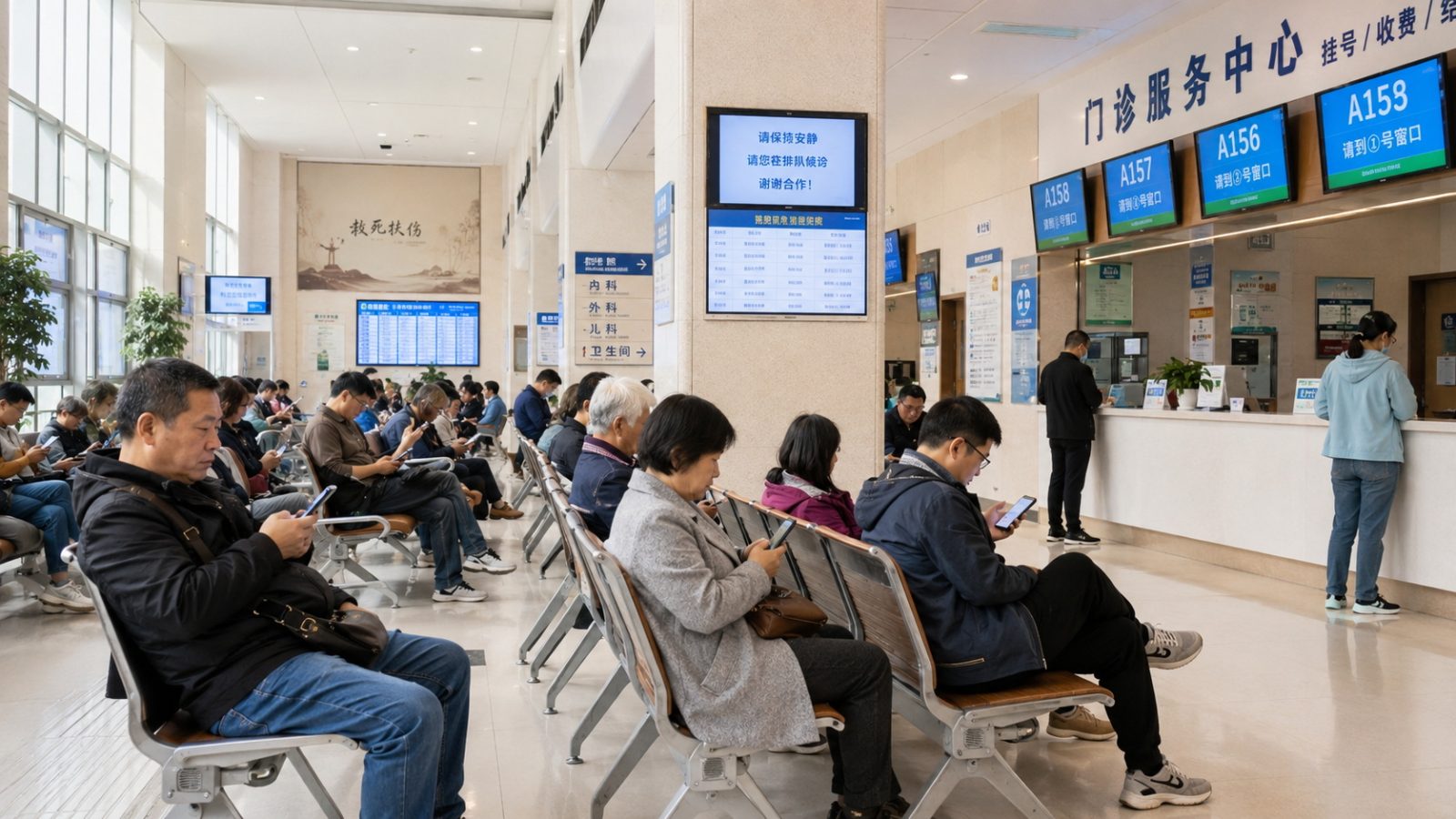
Walk into any major hospital in a Chinese city, and you will hear it before you see it: the hum of hundreds of people waiting. The scene is familiar to anyone who has visited China’s public healthcare system. Patients sit on narrow plastic chairs, clutching paper slips, staring at digital screens that display numbers far ahead of them.
For years, this was just how things worked. You registered, waited for a doctor, got a prescription, then stood in another line to pay. Only after payment could you go get your medicine or schedule an MRI. The process felt fragmented and exhausting.
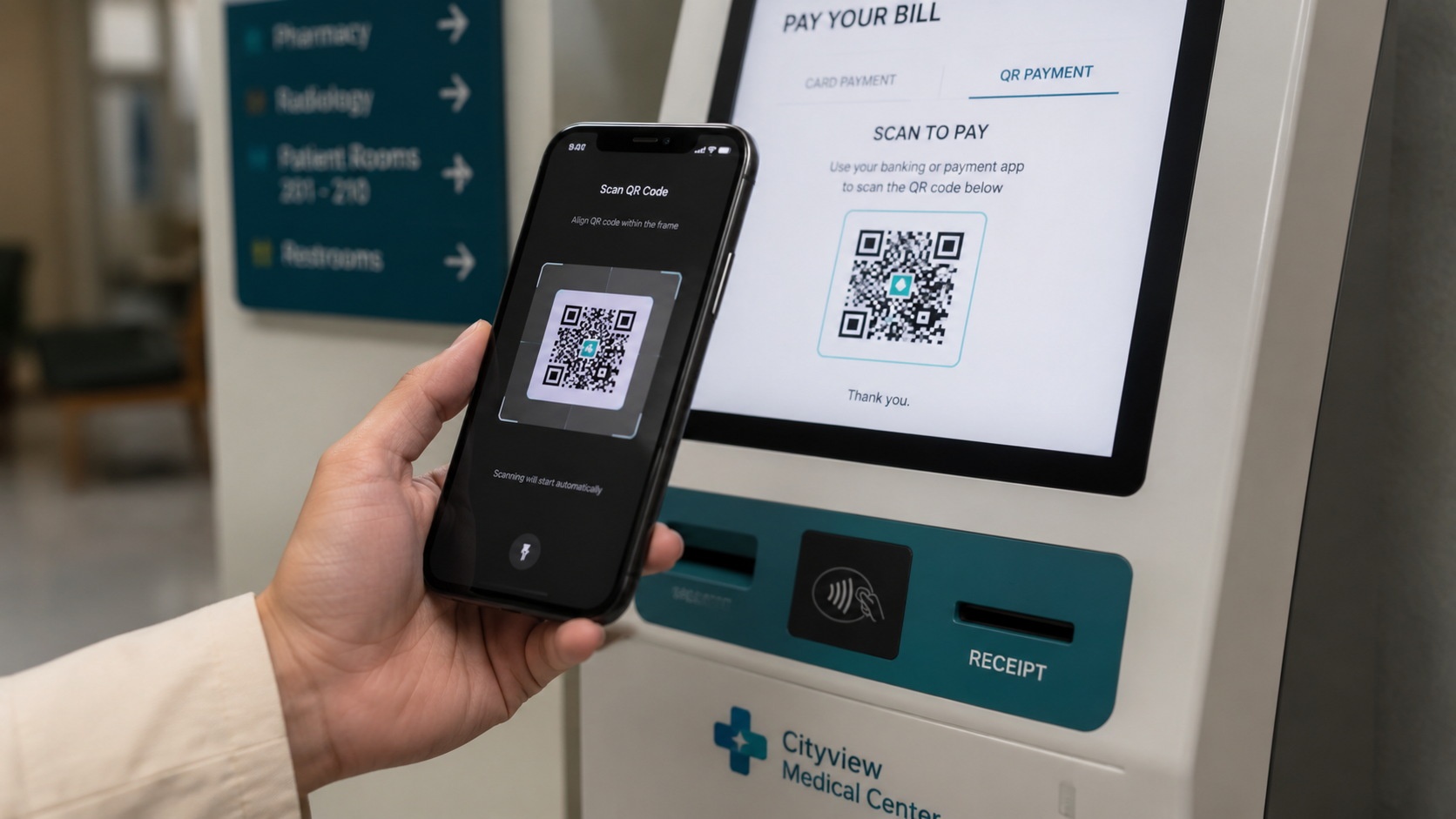
But if you look closer at the hands of those waiting, something has changed. Most people aren’t holding cash or even paper receipts anymore. They are looking at their phones. A simple scan of a QR code often replaces the entire payment counter experience.
How It Actually Works
The shift isn’t magic; it’s infrastructure. China has integrated its medical billing systems with mobile payment platforms, primarily Alipay and WeChat Pay. For a user, the difference is like moving from filling out paper forms to using an app that remembers your details.
Here is the typical flow for a local patient:
- Binding the Hospital: Before visiting, or upon arrival, users open Alipay and search for the specific hospital’s official mini-program. They link their electronic health insurance card (a digital version of the physical card issued by the government).
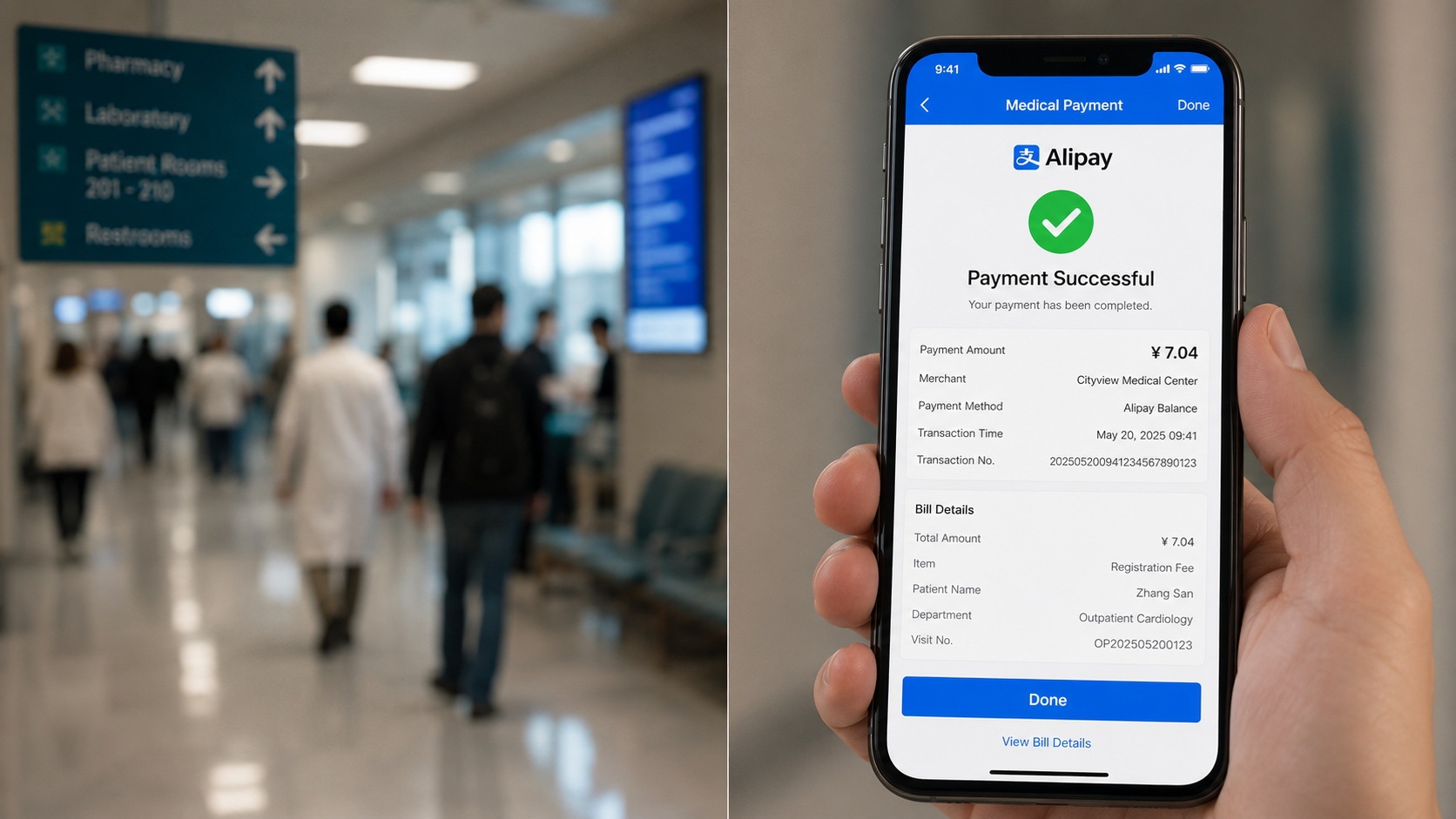
- Consultation & Payment: After seeing the doctor, instead of walking to a cashier, they receive a notification on their phone. They check the bill details in the app and click “Pay.”
- Insurance Settlement: If the user has public health insurance (Yibao), the system automatically calculates what the insurance covers and what the patient owes. The patient only pays the remaining balance, instantly.
This is called Zhenjian Zhifu, or “in-consultation payment.” It turns a process that used to take two hours into one that takes thirty seconds.
More Than Just Paying
The convenience doesn’t end when the money leaves your account. One of the biggest frustrations in traditional healthcare is waiting days for test results, only to rush back to the hospital to pick up a physical printout.
With Alipay’s medical mini-programs, lab results and imaging reports are uploaded directly to the app within hours. You can review them at home, share them with family members via chat, or even show them to another doctor if you seek a second opinion. The information lives in your pocket, not in a file folder.
Why This Happened So Fast
You might wonder how a country with such a large population managed to digitize its healthcare billing so quickly. It wasn’t just about technology; it was about necessity and policy.
Public hospitals are chronically overcrowded. Long queues for payment created bottlenecks that slowed down the entire system. By pushing payments online, governments reduced physical congestion in hospital lobbies. For the government, it was a way to manage efficiency. For patients, it was a relief from the chaos.
This integration is part of China’s broader push toward a “Smart City” ecosystem. Public services—from paying parking tickets to booking park entry—are increasingly moving into super-apps like Alipay. It creates a unified digital identity for daily life.
A Guide for Foreigners
If you are visiting China as a tourist or expat, this system can seem intimidating. Your bank card doesn’t automatically work with Chinese hospital systems. However, the gap has closed significantly in recent years.
Here is how to make it work:
- Bind an International Card: Alipay now supports linking major international credit and debit cards (Visa, Mastercard, etc.). You can do this in the app under “Bank Cards.” Note that for transactions over 200 RMB, there is a small service fee, but most medical bills fall below or slightly above this threshold.
- Use Alipay Tour Pass: For short-term visitors, Tour Pass allows you to preload money into an e-wallet. It simplifies the process because you don’t need to worry about cross-border transaction limits during the appointment.
- Ask for “Alipay” or “WeChat Pay”: When checking out, always ask if they accept mobile payment. Most major hospitals do. Some smaller clinics might still prefer cash or domestic bank cards, but this is becoming rare in urban centers.

The Human Experience
Sometimes, technology feels cold. But in a hospital setting, speed is kindness. Every minute saved on payment and paperwork is a minute a doctor can spend with a patient, or a family member can spend resting.
For locals, skipping the line is just normal. For foreigners, mastering it feels like unlocking a secret level of Chinese life. It transforms a stressful experience into a manageable one. The next time you find yourself in a Chinese hospital, don’t look for the cashier window first. Look at your phone. You might be surprised by how quiet the queue really is.