

Behind the Code, Beyond the Cave
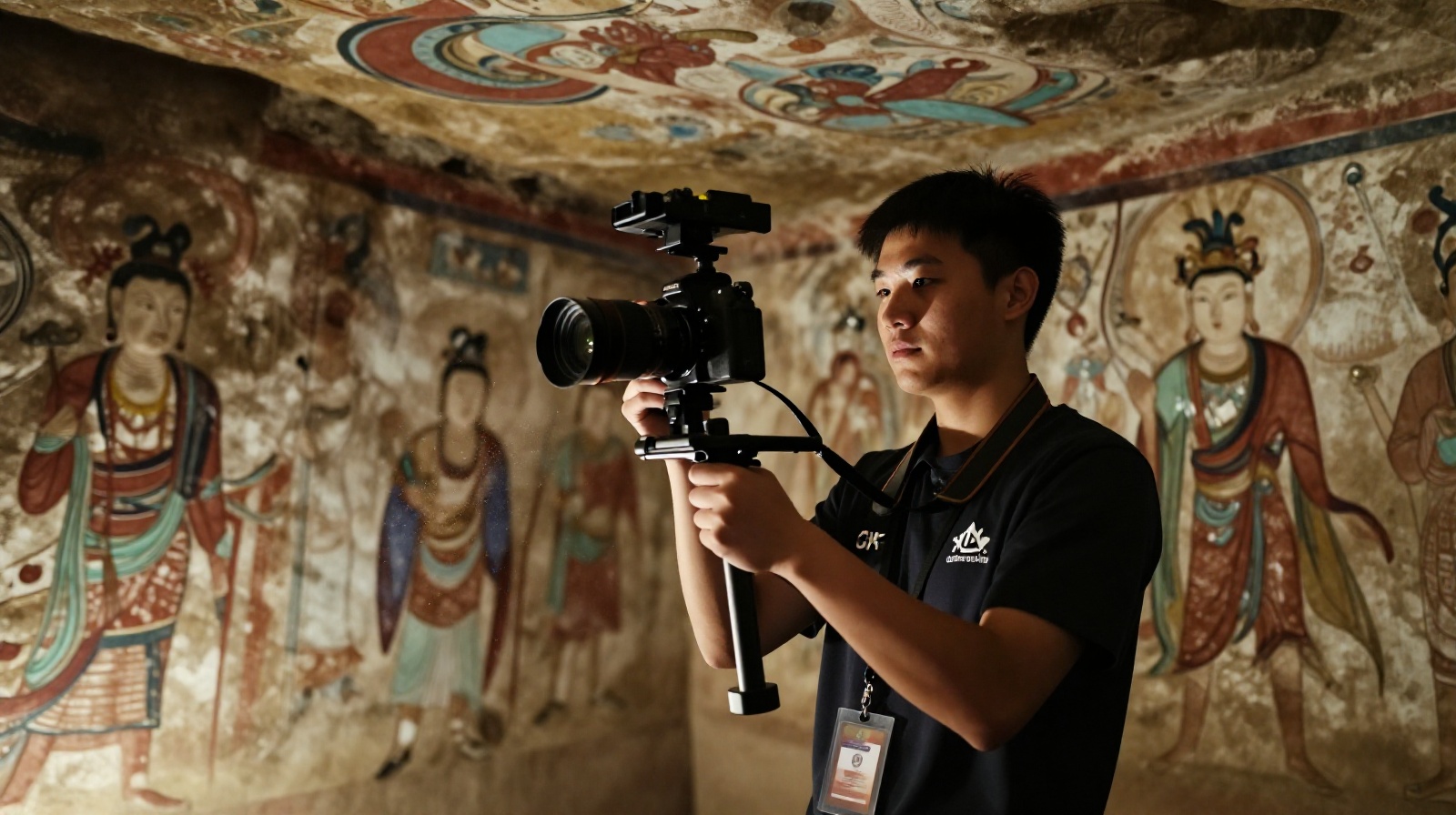
If you’ve ever wondered what it looks like to “digitize” history, stop imagining a sterile laboratory. Instead, picture a dimly lit cave in the Gobi Desert, where the air is thick with dust and silence. Here, 24-year-old volunteer Lin Wei holds a camera rig heavier than his head, standing perfectly still for forty minutes. He isn’t painting. He isn’t praying. He is capturing light.

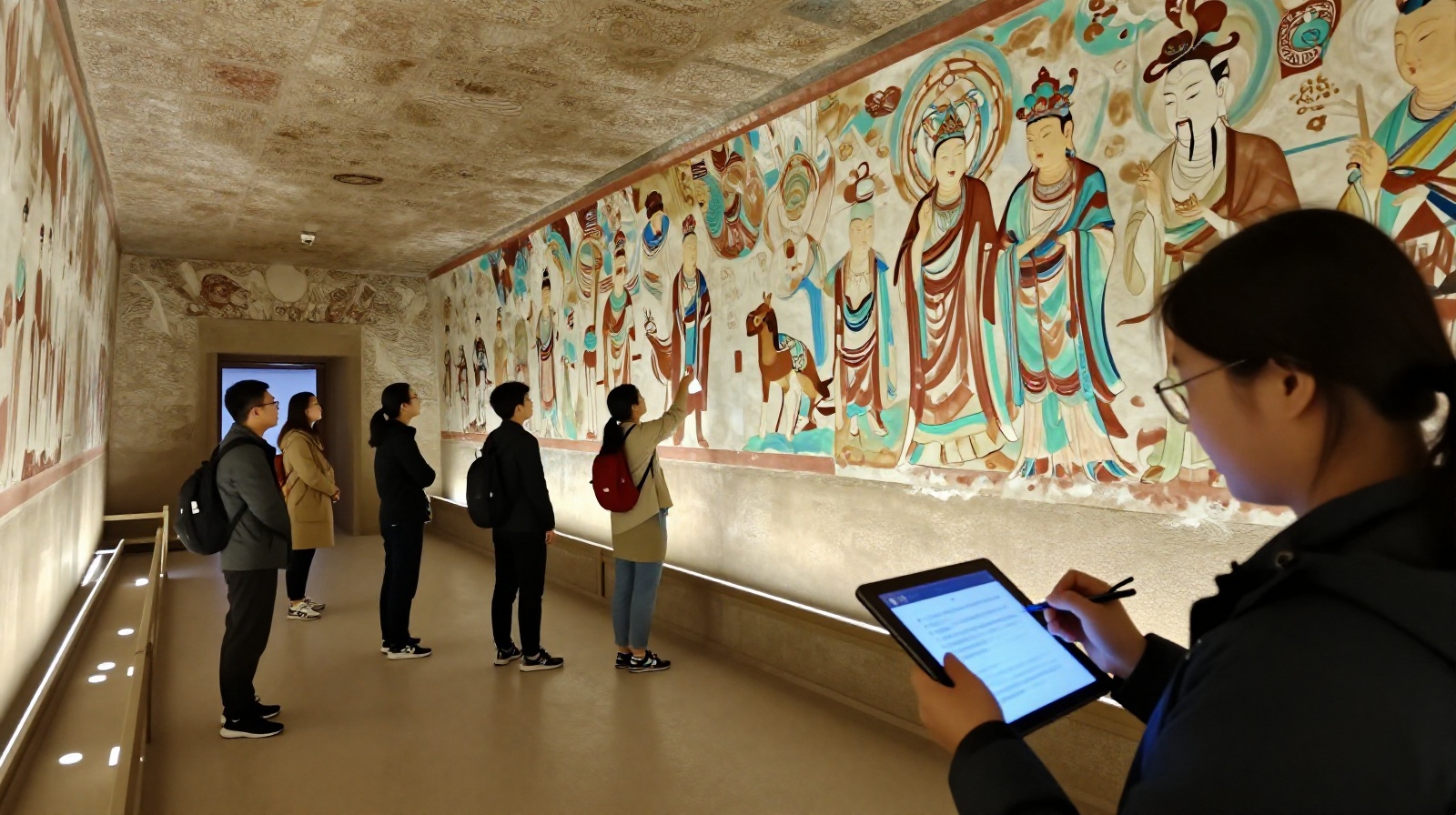
This is the reality of the “Digital Dunhuang” project at the Dunhuang Academy. While tourists outside wait in long queues to catch a glimpse of the Mogao Caves—often limited to just a few minutes per cave due to strict preservation rules—a different kind of pilgrimage is happening inside. It’s led by young volunteers, often called “digital monks,” who are bridging the gap between ancient art and modern technology.
Why Physical Preservation Isn’t Enough
To understand why these volunteers matter, you first need to understand the fragility of the murals. The Mogao Caves contain over 45,000 square meters of wall paintings and more than 2,000 colored sculptures. Created between the 4th and 14th centuries, they are masterpieces of Buddhist art.
But time is relentless. Humidity from visitors’ breath, microscopic dust in the wind, and even the natural aging of organic pigments cause irreversible damage. Every second a tourist spends inside accelerates this decay. The Dunhuang Academy realized that physical preservation alone cannot stop entropy.
The solution? Digital archiving. By creating ultra-high-resolution digital twins of every mural, the academy ensures that even if the physical walls crumble in five hundred years, the art remains intact for future generations.
Meet the “Digital Monks”
Lin Wei is a typical example of this new wave of guardians. A graduate student in photography from Lanzhou University, he joined the volunteer program two summers ago. His routine is grueling: 10-hour shifts inside caves that often lack electricity, relying on portable power banks and flashlights.
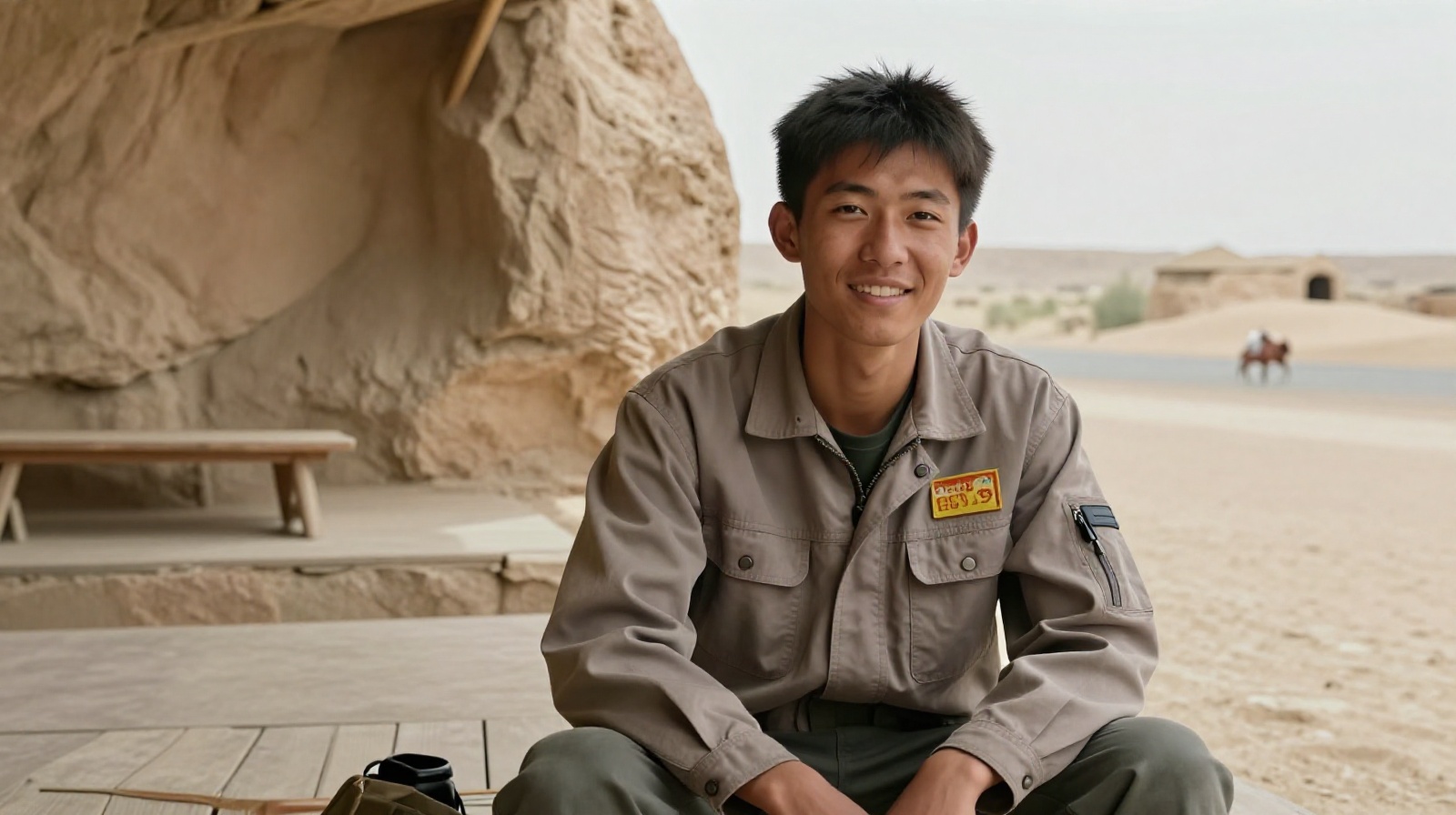
“It’s not romantic like it looks in movies,” Lin laughs during a break. “Most of the time, I’m just adjusting color calibration cards under weak light. One tiny shift in white balance can ruin hours of work. But when you see how the brushstrokes reveal the artist’s hand from 800 years ago… it feels like touching history.”\p>
Another volunteer, Sarah Chen, a computer science major from Shanghai, focuses on data processing. She doesn’t enter the caves as often. Instead, she works in cool, air-conditioned offices back at the academy headquarters, stitching together thousands of images into seamless 360-degree panoramas.
Sarah’s motivation is different but equally deep. “I grew up with smartphones and social media,” she says. “But my grandparents talk about Dunhuang like it’s a dream they once had. I want to build a bridge so that people in New York or London can experience this beauty just as vividly as someone sitting here in the dust.”\p>
Demystifying the Technology
The term “Digital Dunhuang” might sound like a marketing slogan, but the technology is rigorous and precise. Volunteers don’t just take photos; they capture multispectral images.
This means shooting the same mural under different light spectrums—visible light, ultraviolet, and infrared. Why? Because some pigments reflect UV light differently, allowing researchers to see original sketches beneath layers of soot and age that are invisible to the naked eye. It’s like giving archaeologists x-ray vision.
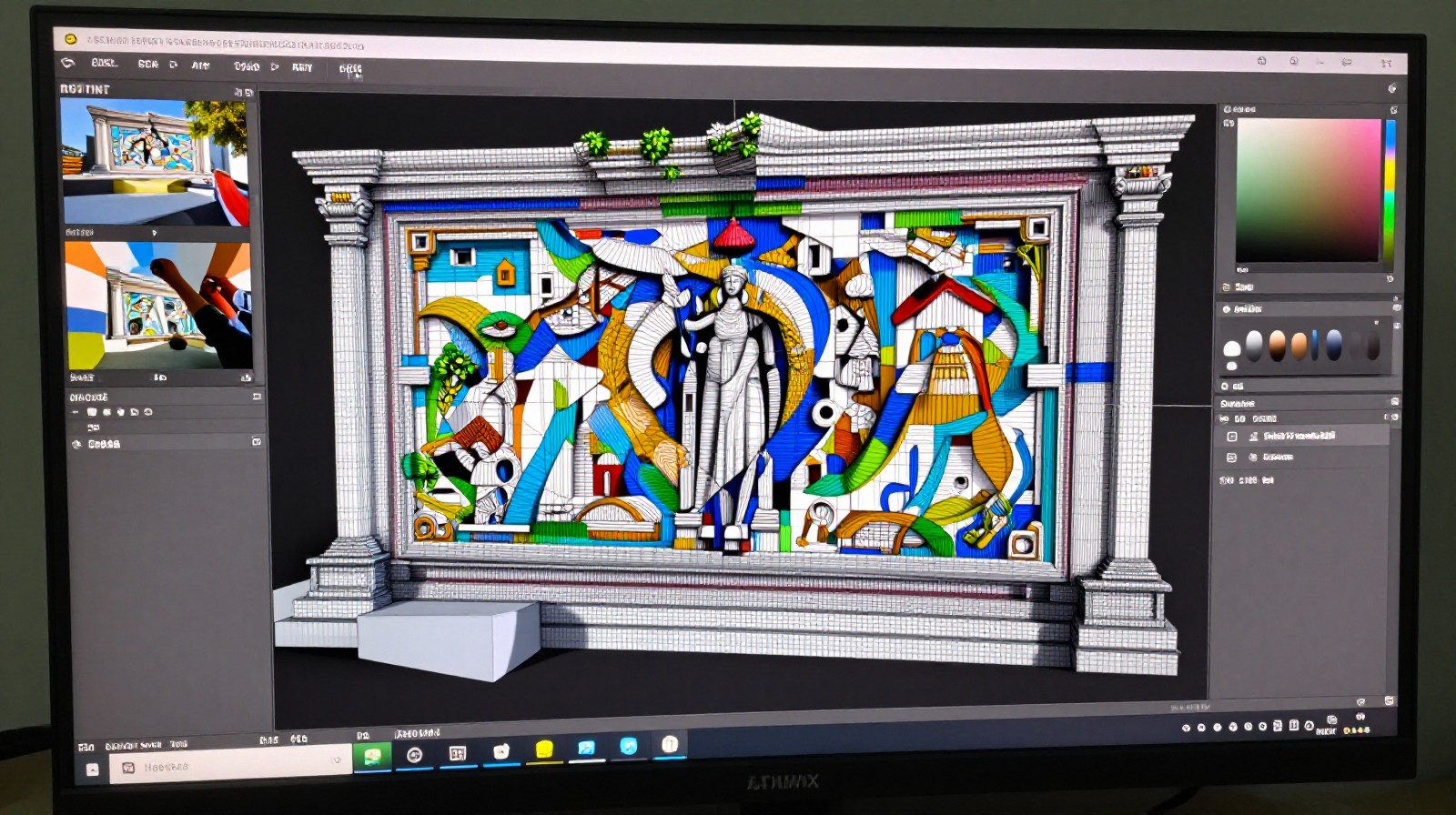
This data fuels the “Digital Dunhuang” website and mobile apps, which offer virtual tours of caves closed to the public. For researchers worldwide, it provides a detailed map for restoration projects. If a section of a mural begins to flake off in reality, scientists can compare it against the digital baseline to monitor changes in real time.
A Global Connection
The impact of this work extends far beyond the desert walls. For many young Chinese, digitizing heritage is a way to reclaim cultural confidence without falling into nationalism. It’s about sharing beauty, not claiming ownership.
When a student in Paris clicks through a virtual tour of Cave 285, or an art historian in Tokyo studies high-res scans of flying apsaras (celestial musicians), the conversation changes. Dunhuang stops being a distant, exotic relic and becomes a living part of global cultural dialogue.
“People ask if we’re afraid that digital copies will make people stop visiting,” Lin says. “I think it’s the opposite. The digital version is an invitation. It makes you want to see the real thing, even if you can only stay for five minutes.”\p>
Guardians of the Future
In a world obsessed with the new, these young volunteers are dedicating their energy to the old. They aren’t trying to freeze history in amber. Instead, they are ensuring that ancient stories continue to be told, seen, and felt.
As long as there are people willing to stand still in the dark for hours, capturing light pixel by pixel, the murals of Dunhuang will never truly fade.