
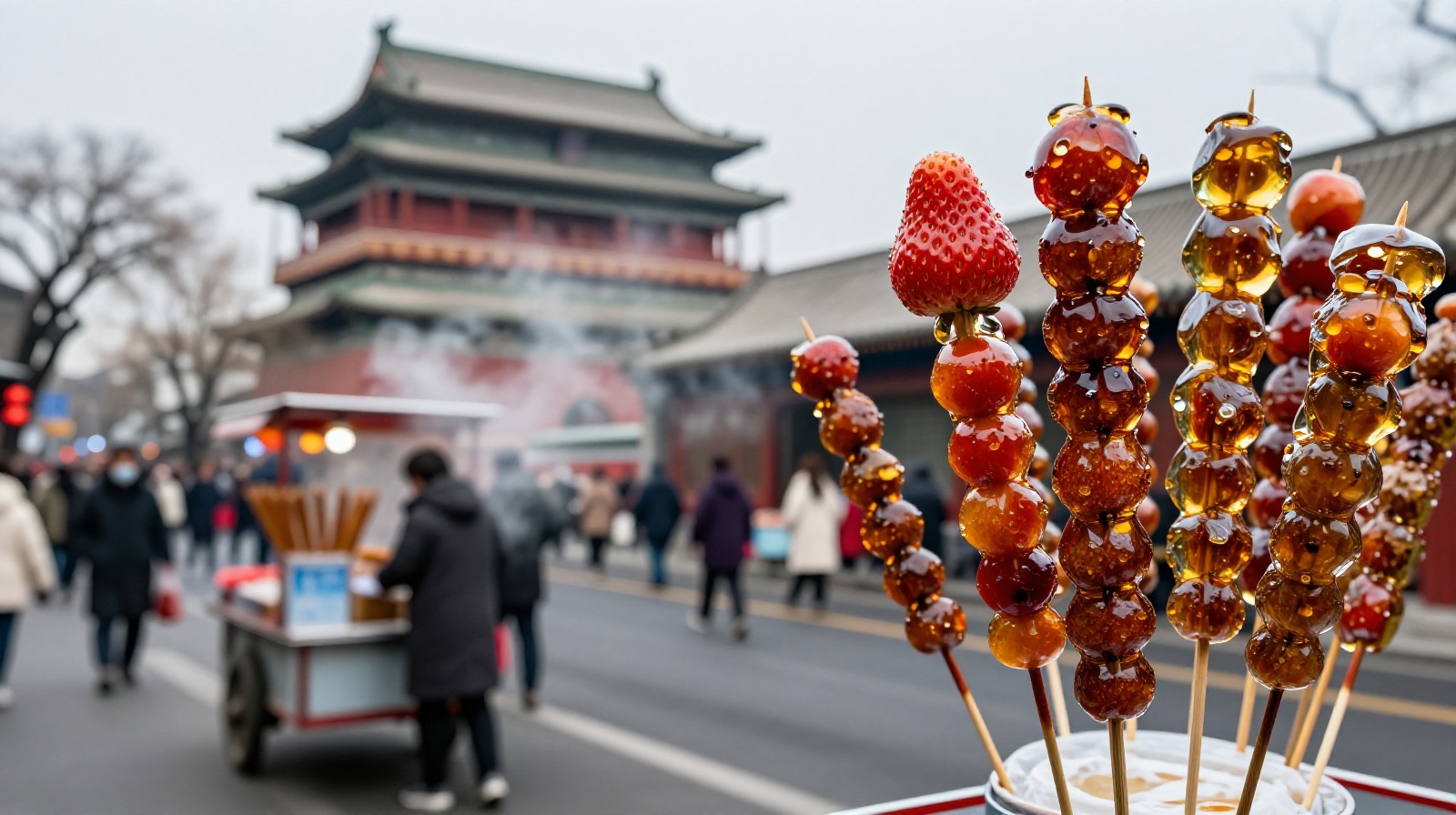

More Than Just Frozen Fruit
If you ask a foreigner about Beijing’s winter, they might mention the Great Wall or the Forbidden City. But for locals, the season is defined by a specific crunch and a burst of tart sweetness: Tanghulu. Walking down a street in December, the sight is unmistakable—a long wooden stick skewering bright red hawthorn berries, coated in a glass-like shell of amber sugar.
For decades, this was a simple treat sold by elderly vendors on corners. The experience was binary: either you loved the sharp contrast between the crispy sugar and the sour fruit, or you hated it. It was a taste deeply rooted in memory, not innovation.
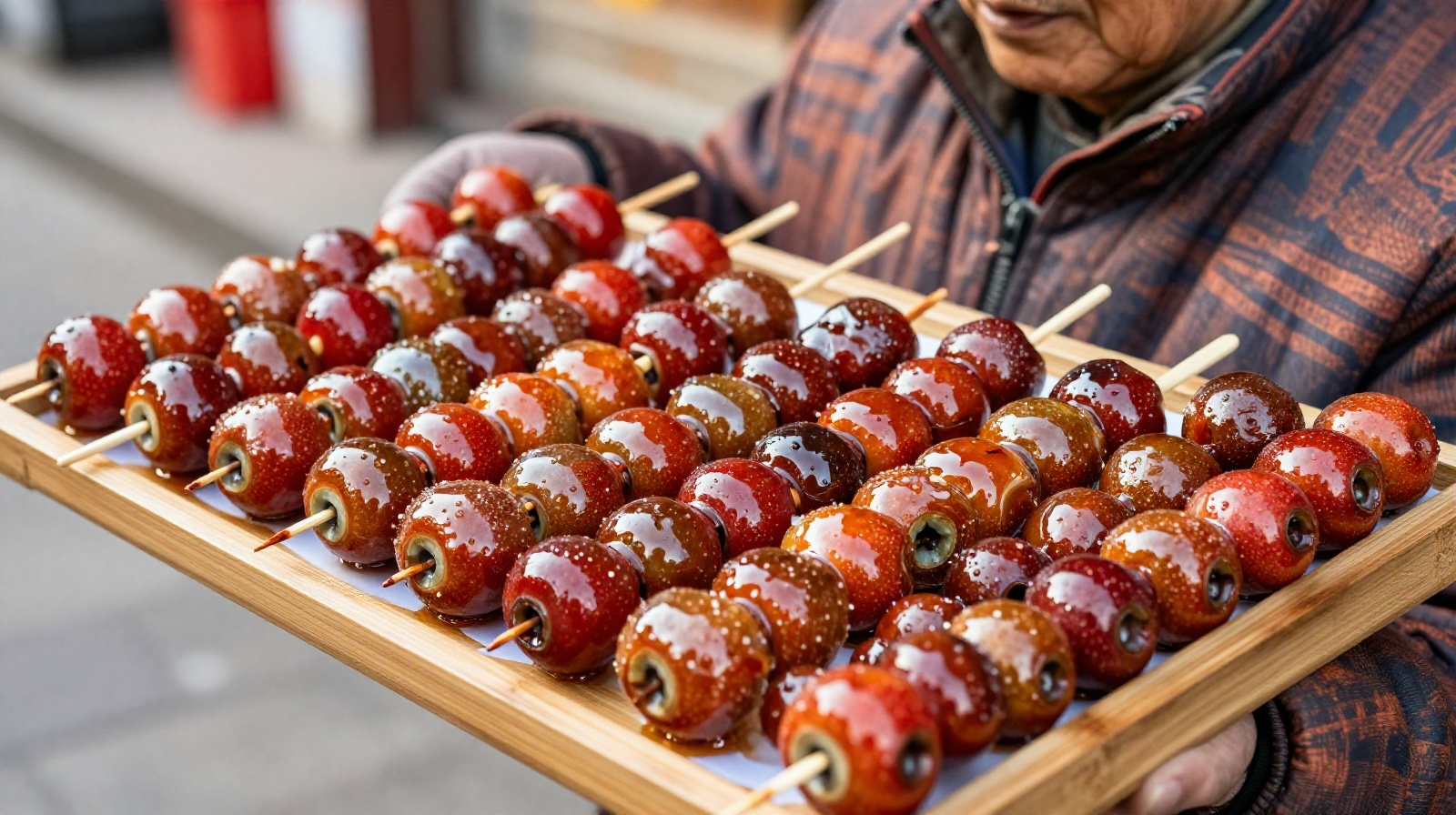
The Texture That Stuns
Understanding Tanghulu requires understanding its texture. The magic lies in the sugar coating. Vendors boil rock sugar until it melts into a golden liquid, then dip the fruit with practiced speed. As the mixture hits the cold winter air, it hardens instantly into a brittle, transparent shell.
Biting into one is an auditory experience first. There is a distinct crack, followed by the explosion of tart juice that cuts through the sweetness. The traditional hawthorn berry is intensely sour, often with a bitter core, which balances perfectly with the pure sugar glaze. It’s not just food; it’s a sensory shock that wakes you up in the freezing cold.
From Tradition to Viral Trend
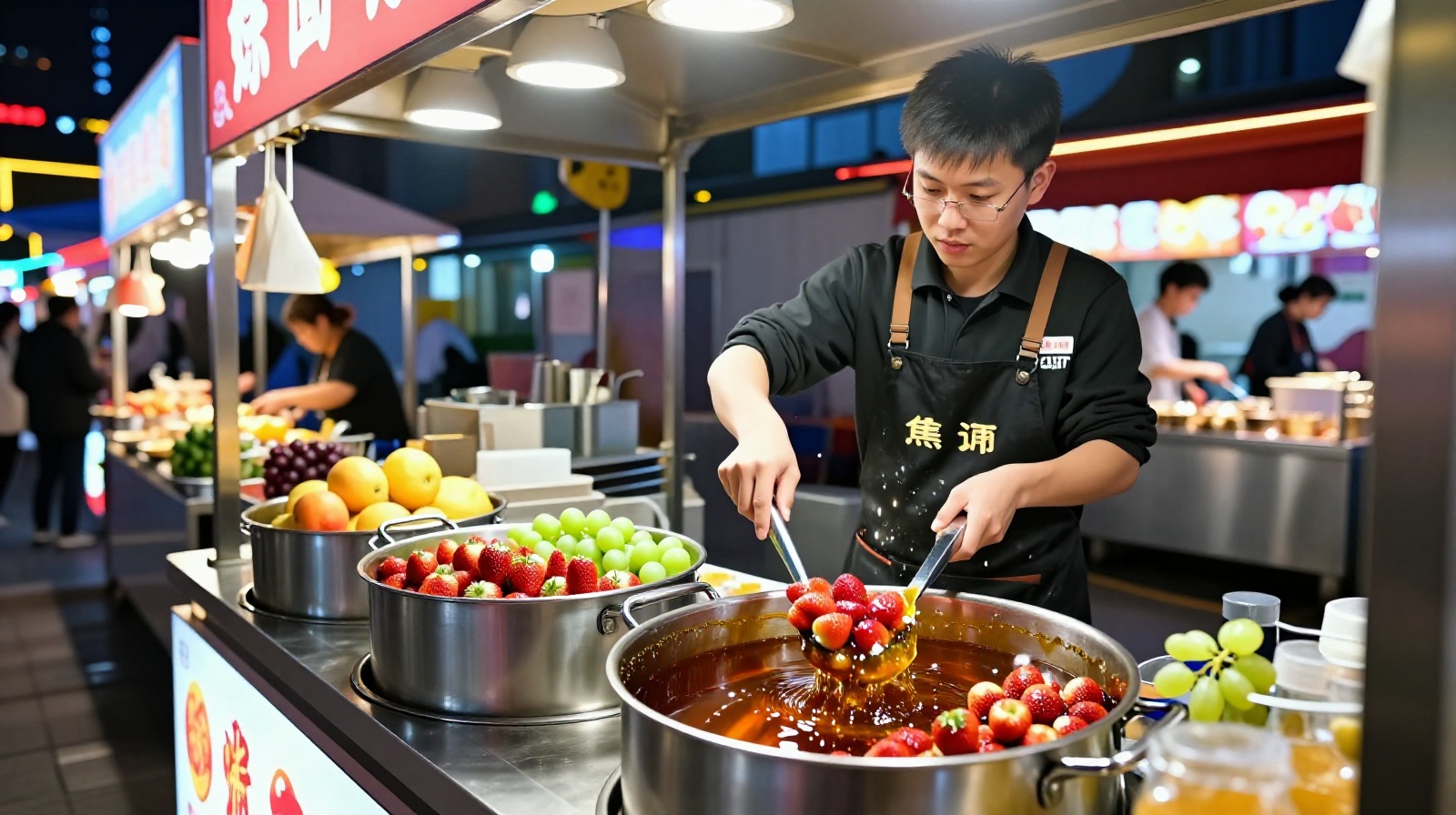
But today, if you walk through trendy districts like Sanlitun or Haidian in Beijing, you won’t just see hawthorns. You will see strawberries dipped in sugar, green grapes wrapped in a sweet shell, and even slices of pineapple.
The phenomenon has gone further. Young vendors are now experimenting with everything. We have seen Tanghulu made with blue cheese (a bold choice), spicy crayfish tails, mochi balls, and even pieces of fried tofu or pork ribs. The concept is simple: skewer it, dip it, sell it.
The ‘Roll Everything’ Culture
Why the sudden explosion of flavors? It reflects a broader trend in Chinese youth culture known as juan (involution) meeting creativity. Young entrepreneurs are looking for low-cost ways to enter the market, and Tanghulu offers the perfect canvas.
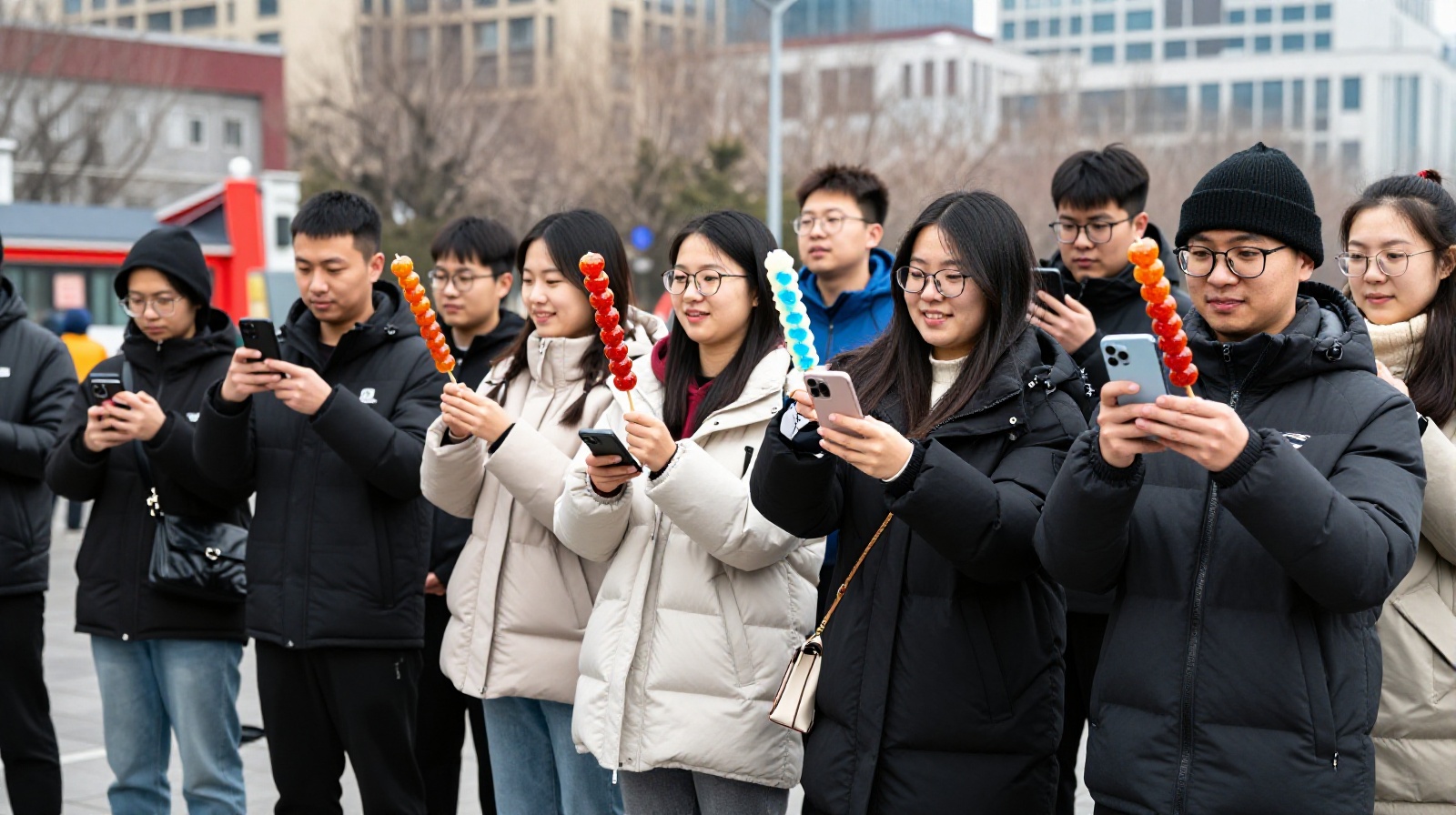
In 2023 alone, social media platforms were flooded with videos of people queuing up for ‘Crayfish Tanghulu’ or ‘Milk Tea Boba Tanghulu’. The visual appeal is undeniable—the bright colors against the grey winter sky make it an instant photo opportunity. It’s no longer just a snack; it’s content.
This innovation hasn’t alienated traditionalists either. Many shops now offer both classic hawthorn and experimental flavors side-by-side. Customers often buy three or four sticks, trying one for nostalgia and the others to see what new absurdity is trending this week.
A Global Appetite
The evolution of Tanghulu is also reaching beyond China’s borders. In cities like London, New York, and Sydney, Chinese students and young professionals are opening ‘Tanghulu Bars’ that cater to a curious international crowd.
Visitors from Europe or America often start with the traditional version but quickly move on to trying strawberries or even exotic fruits they’ve never seen before. The price point remains accessible—usually just a few dollars for a stick of four to five pieces—making it an easy impulse buy.
A Sweet Glimpse into Modern China
Tanghulu tells a story that goes beyond sugar and fruit. It shows how traditional Chinese culture is not static; it adapts, evolves, and embraces the new without losing its core identity. The stick of candy remains the same, but what’s on it changes with the times.
For the ordinary person walking down a Beijing street, this evolution is just part of daily life. It represents a society that values creativity, speed, and fun. As you watch a vendor dip a skewer of blue cheese into sugar, you aren’t just seeing food; you’re witnessing a culture that refuses to be defined by the past alone.