

When the Pot Boils, the Ice Flows
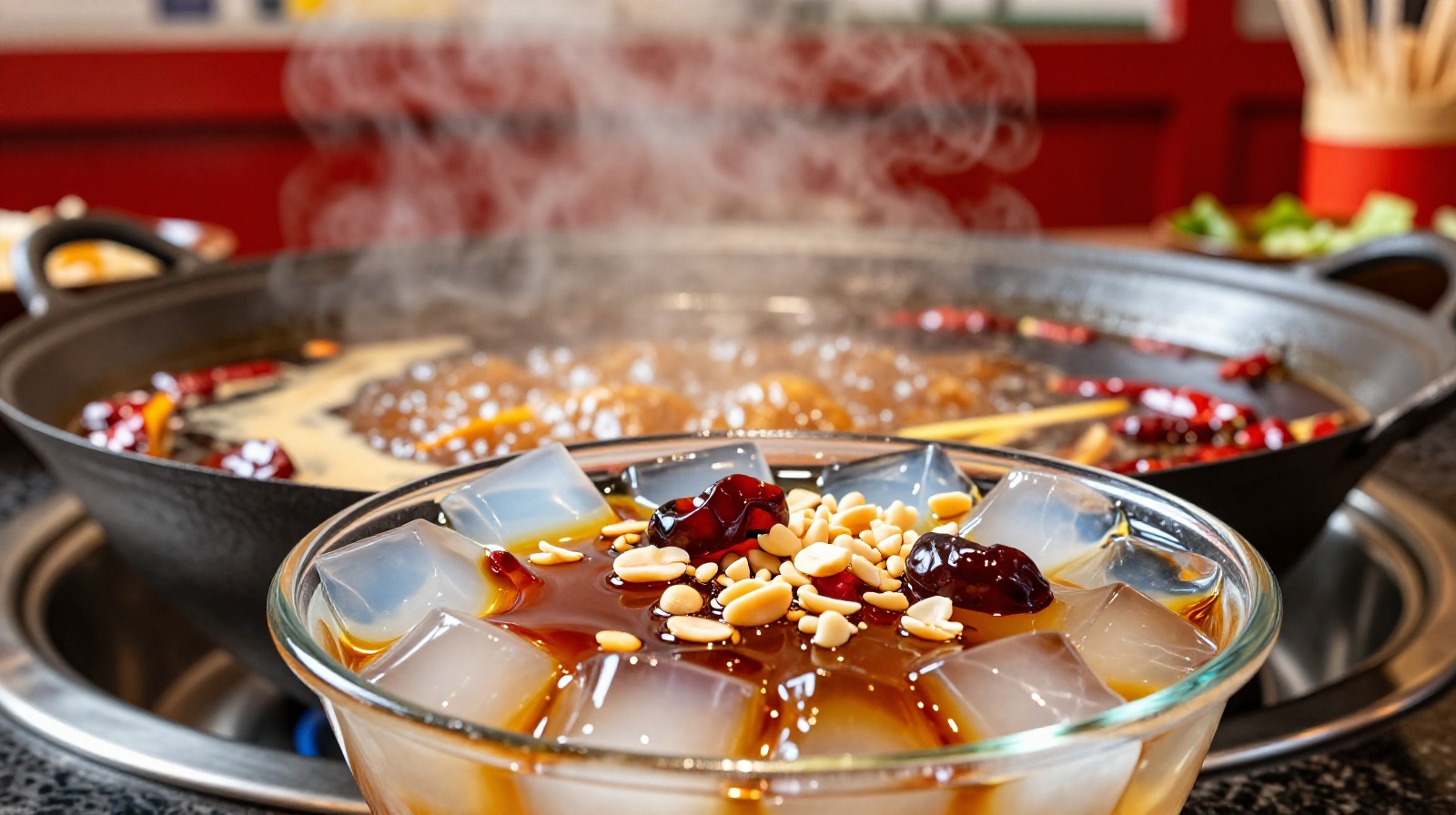
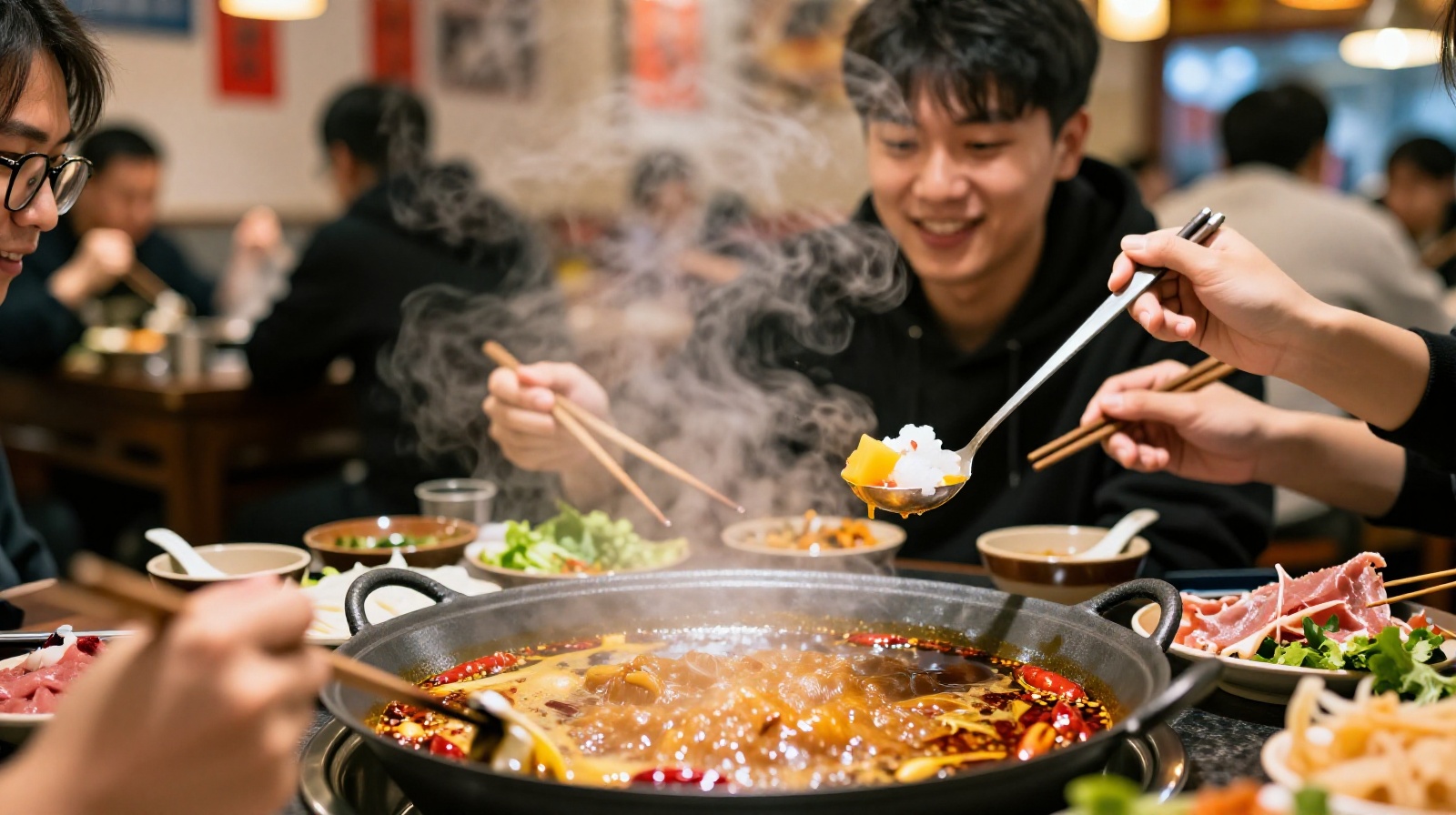
The air in a Chongqing hot pot restaurant is thick with steam and the scent of chili oil. Around me, locals wipe sweat from their foreheads while slurping noodles drenched in numbing peppercorns. It’s a scene that feels almost aggressive in its intensity—the heat rising from the pot matches the humidity outside. But then, the relief arrives: a small bowl of Bingfen.
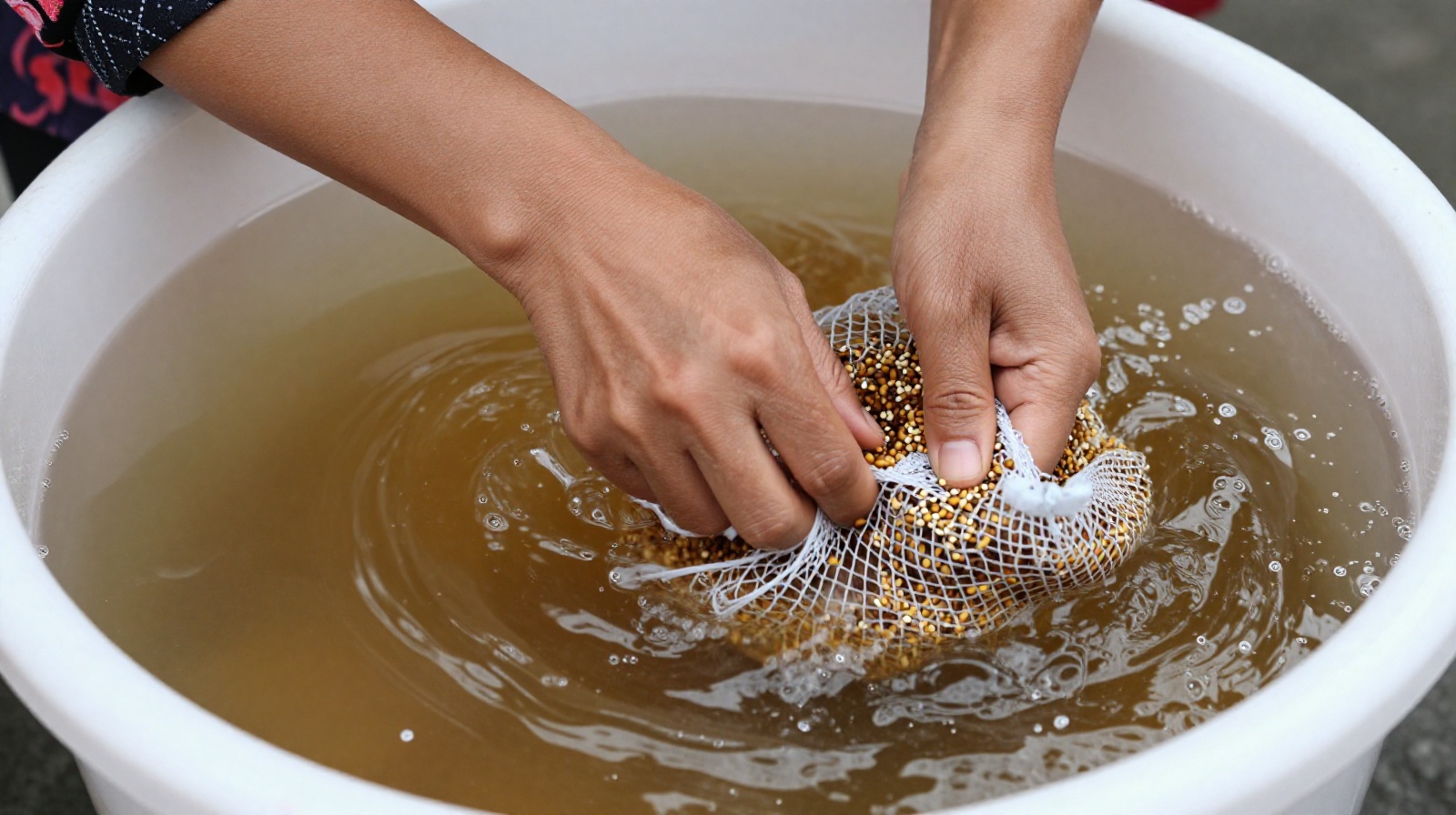
Bingfen (literally “ice powder”) is not just a dessert; it is a survival tool for summer. Originating in Sichuan and Chongqing, this translucent jelly has been the go-to counterbalance to spicy hot pot for over a century. It starts with the seeds of the *Euryale ferox* plant (often called water chestnut or fox nut), which are rubbed by hand until they release a sticky, white liquid. This liquid is mixed with lime water and allowed to set into a gelatinous block that looks like clear ice.
The Art of the Rub
Watching a street vendor make Bingfen is a performance in itself. They hold the seed bag—a net-like cloth filled with seeds—and rub it vigorously back and forth inside a large bucket of water. With each motion, slimy threads form, swirling into the water until the liquid turns from clear to cloudy white. It’s an old-school method that requires no electricity, just rhythm and strength.
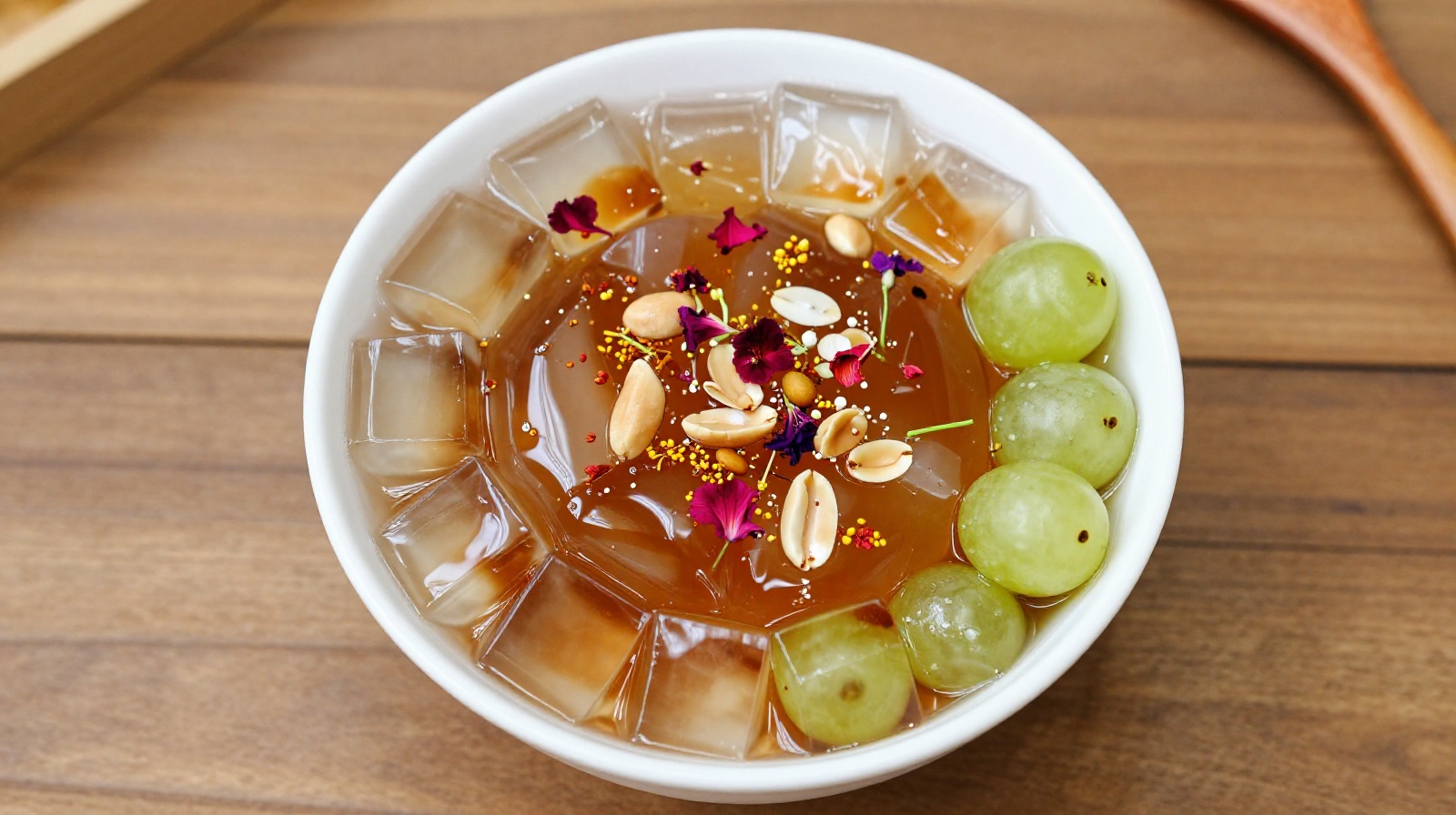
Once the jelly sets in a tray, the vendor cuts it into small cubes or shaves it into snow-like flakes. The texture is the star: cool, bouncy, and incredibly smooth against the tongue. But Bingfen is rarely served plain. It’s a canvas for toppings that add crunch and sweetness.
In my local neighborhood shop in Chengdu, I’ve watched customers pile their bowls high with brown sugar syrup, which caramelizes slightly in the heat of the bowl. There are chunks of red osmanthus flowers, crunchy peanuts, sweet grapes, dried longan, and sometimes even a scoop of creamy ice cream on top. The contrast is immediate: the cold, slippery jelly meets the sticky, aromatic syrup.
Fire Meets Ice: A Culinary Philosophy
Why does this specific combination work so well? It’s not just about taste; it’s about temperature regulation. Sichuan cuisine is famous for *ma la*—a numbing and spicy sensation caused by the high concentration of chili and Sichuan peppercorns. This creates a burning heat that can overwhelm the mouth.
Bingfen acts as an instant reset button. The cold jelly absorbs the residual spice, while the neutral texture dilutes the oiliness from the hot pot broth. It’s a physiological balance: the body cools down, and the palate is refreshed to take another bite of spicy beef or duck intestines. This “fire and ice” dynamic is central to Sichuan dining culture.
It’s also deeply functional in the climate. Summer temperatures in these regions often exceed 35°C (95°F). Eating something icy isn’t a luxury; it’s a necessity for comfort during a meal that generates its own internal heat.
From Streets to Global Tables
Decades ago, you could only find Bingfen on street corners or in small, bustling alleyway eateries. Today, it has traveled far beyond the Yangtze River basin. In Beijing and Shanghai, upscale dessert shops offer premium versions with fresh fruit and artisanal syrups. Even internationally, as Chinese cuisine spreads, Bingfen is appearing on menus from New York to London.
What makes it so adaptable? Unlike complex dishes that require specific ingredients or techniques, Bingfen’s base is simple: water, seeds, and lime. The creativity lies in the toppings, which can be adjusted for any budget or flavor profile. It represents a democratization of dessert—accessible, refreshing, and deeply rooted in local tradition while remaining open to innovation.
Next time you sit down for a spicy meal in China, look for the ice-cold bowl waiting on your table. It’s more than just sugar water; it’s the quiet hero that makes the fiery adventure possible.