

The First Light of the Morning
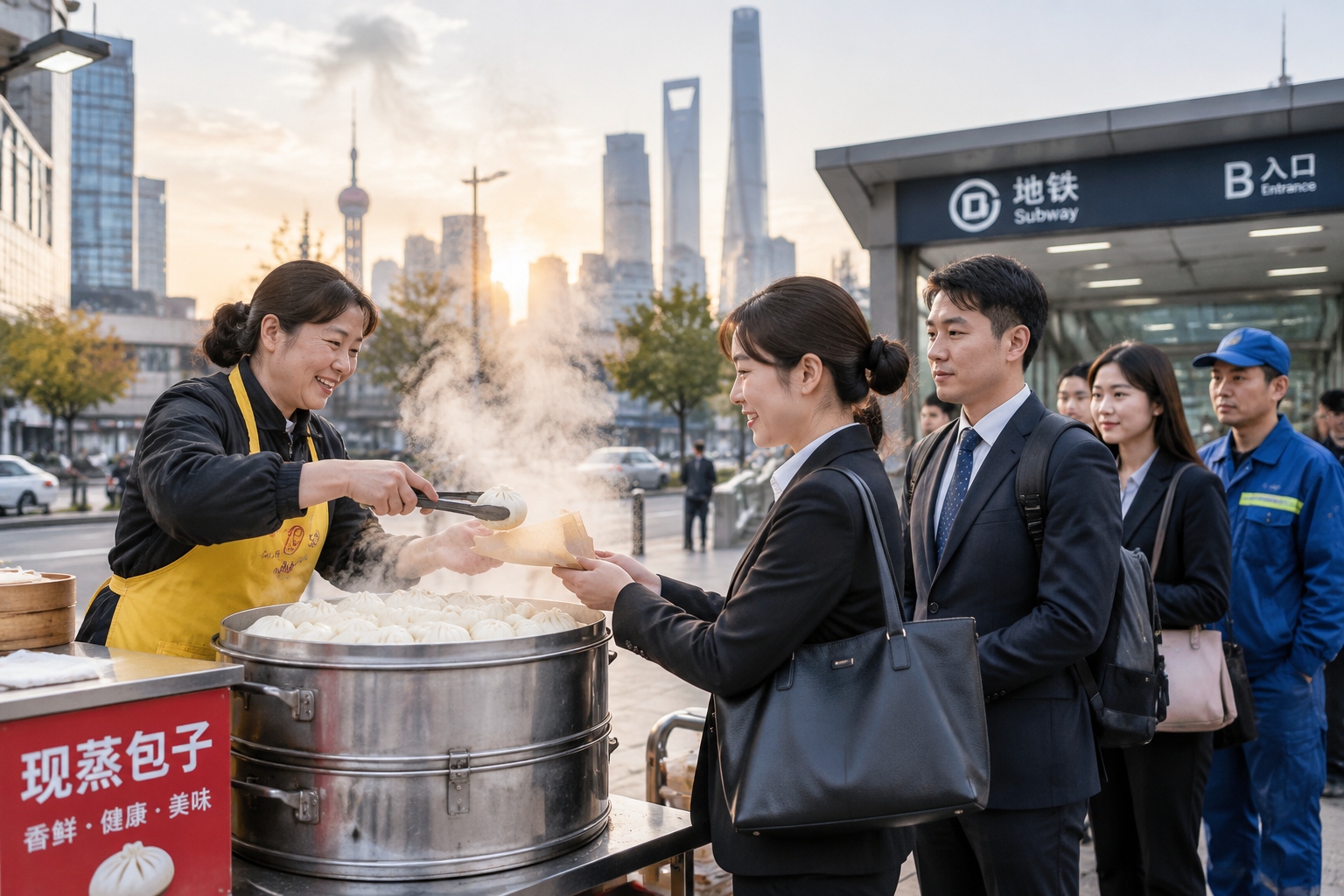
At 6:15 AM in Beijing’s Chaoyang District, the city is still half-asleep. But on a corner near the subway entrance, steam billows from a large metal steamer like a miniature cloud. A woman in her fifties, wearing a bright yellow apron over a faded jacket, moves with practiced speed. She grabs a bun filled with pork and chives, places it in a paper bag, takes 3.5 RMB (about $0.50), and hands it to a young man in a suit who is already checking his phone.
There is no sitting down, no chatter about the weather. This transaction takes eight seconds. For the millions of people rushing from dormitories to office towers, this 8-second interaction is the most critical part of their morning routine. The steamed bun, or baozi, is not just food; it is the grease that keeps China’s megacities running.
More Than Just Cheap Food: An Economic Necessity
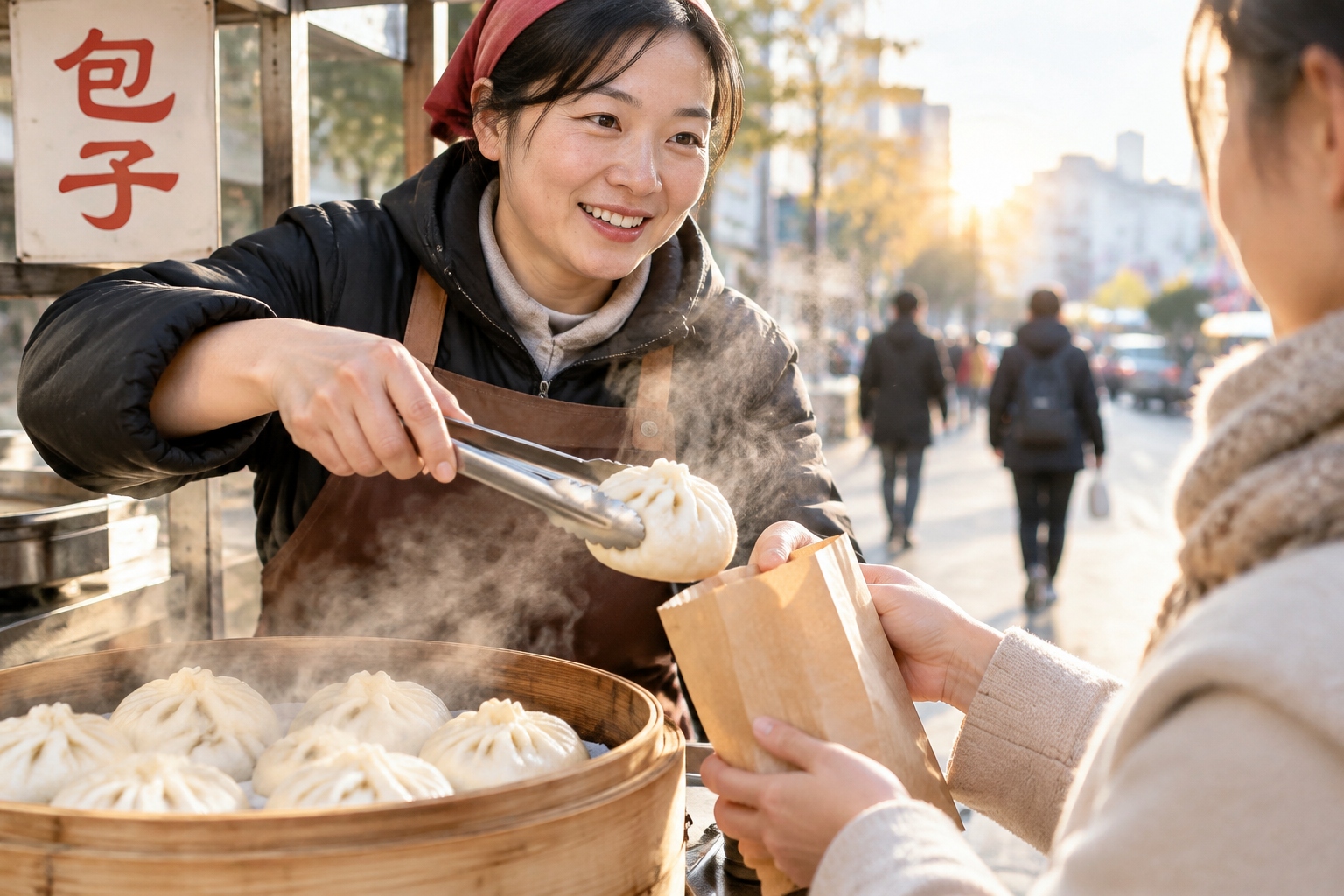
A street vendor serves customers at dawn in a busy Beijing neighborhood, illustrating the speed and efficiency of morning breakfast stalls.
To an outsider, $0.50 might seem like a bargain for a meal. But in China’s high-cost urban centers, where rent consumes a huge portion of income for migrant workers, this price point is non-negotiable. A recent survey by the National Bureau of Statistics indicates that while average disposable income has risen, the cost of living in tier-1 cities has kept pace, squeezing the margins for daily necessities.
For a delivery rider earning roughly 6,000 to 8,000 RMB ($850-$1,100) a month after expenses, or a factory shift worker making slightly less, skipping breakfast is not an option due to cost, nor is spending $5 on a coffee and sandwich. The baozi represents the only viable caloric bridge between waking up and starting work. It is the ultimate expression of economic pragmatism.
The Speed of Steam: Efficiency as a Service
The magic of the baozi lies in its production speed. Unlike Western fast food chains that rely on pre-packaged, reheated items, these street vendors prepare thousands of buns fresh every night. The process is synchronized with the city’s pulse.
Vendors like the woman mentioned earlier operate a system honed over decades. They know exactly how many pork buns, vegetable buns (often cabbage and egg), and red bean buns to steam based on the neighborhood demographics. A single steamer can hold 100 pieces. Within minutes of opening, the queue forms. The efficiency is staggering: one vendor can serve up to 300 customers in an hour without breaking a sweat.
This speed mirrors the broader Chinese service economy. It is not about “fast food” as defined by Western standards—greasy burgers and fries—but about logistical efficiency. The bun is portable, warm, filling, and digestible, designed for consumption on a crowded subway train or while walking to a bus stop.
A Symbol of Resilience in a Changing City
The ubiquity of the baozi stall tells a story of urban transformation. As cities like Shanghai and Shenzhen undergo “urban renewal,” many old street corners are being paved over for wider roads or modern malls. Yet, these small steamers persist.
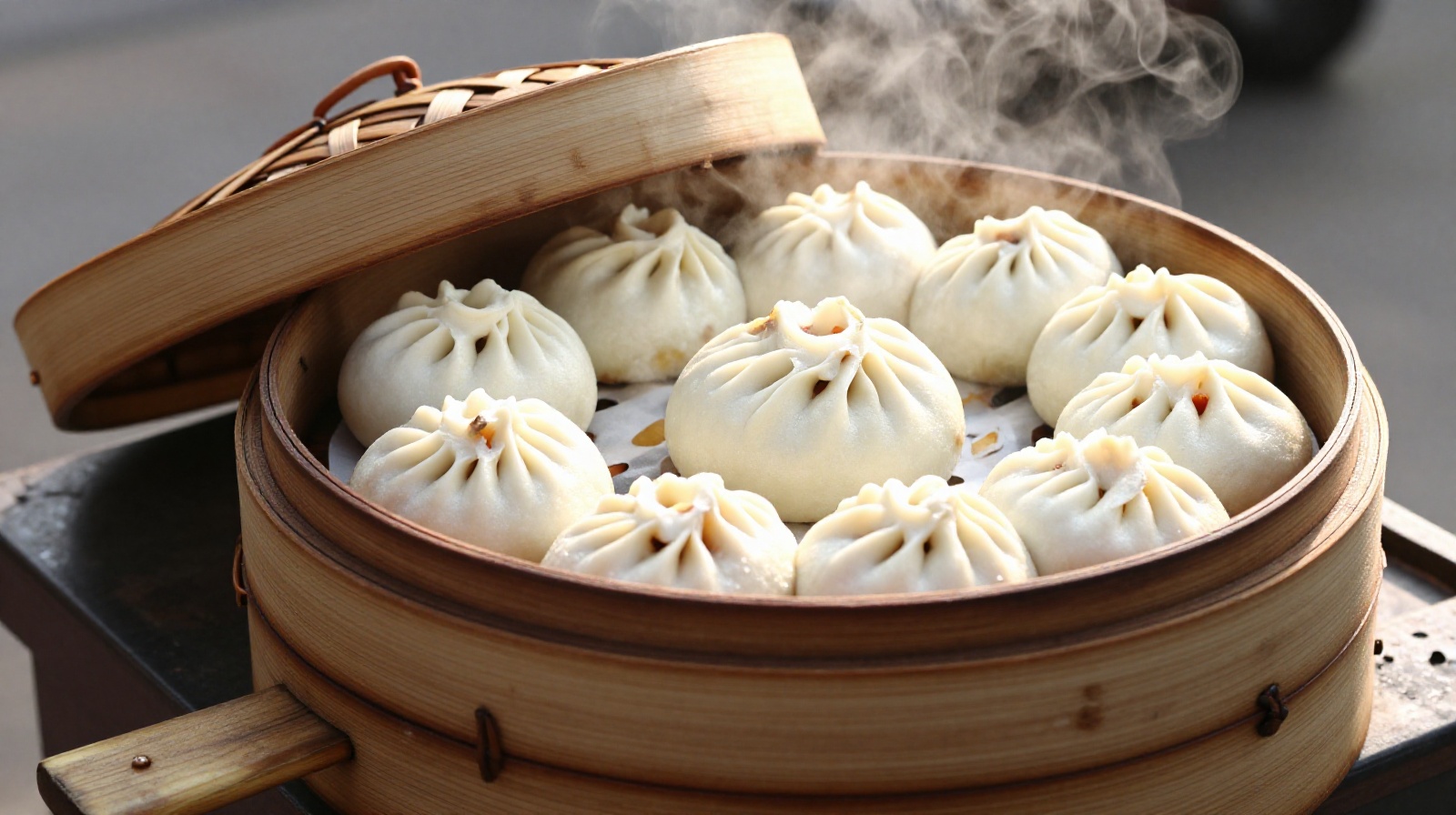
Close-up of steaming baozi in a traditional bamboo basket, highlighting the texture and variety of fillings available at street stalls.
They represent a counter-narrative to the gleaming skyscrapers. While high-end cafes charge $6 for a latte, the baozi remains a tether to the city’s working roots. For young professionals, eating a bun is not just about hunger; it is an acceptance of the daily grind and a shared identity with the millions of others in the same rush hour.
The Future: Rising Costs and Urban Pressure
However, this resilient system faces real challenges. The cost of raw materials—flour, pork, fuel for gas burners—has risen steadily over the last few years. Inflation is subtle but pervasive; a vendor might raise prices from 3 RMB to 4 RMB ($0.55 to $0.60), a move that is almost imperceptible in global headlines but significant for their customers.
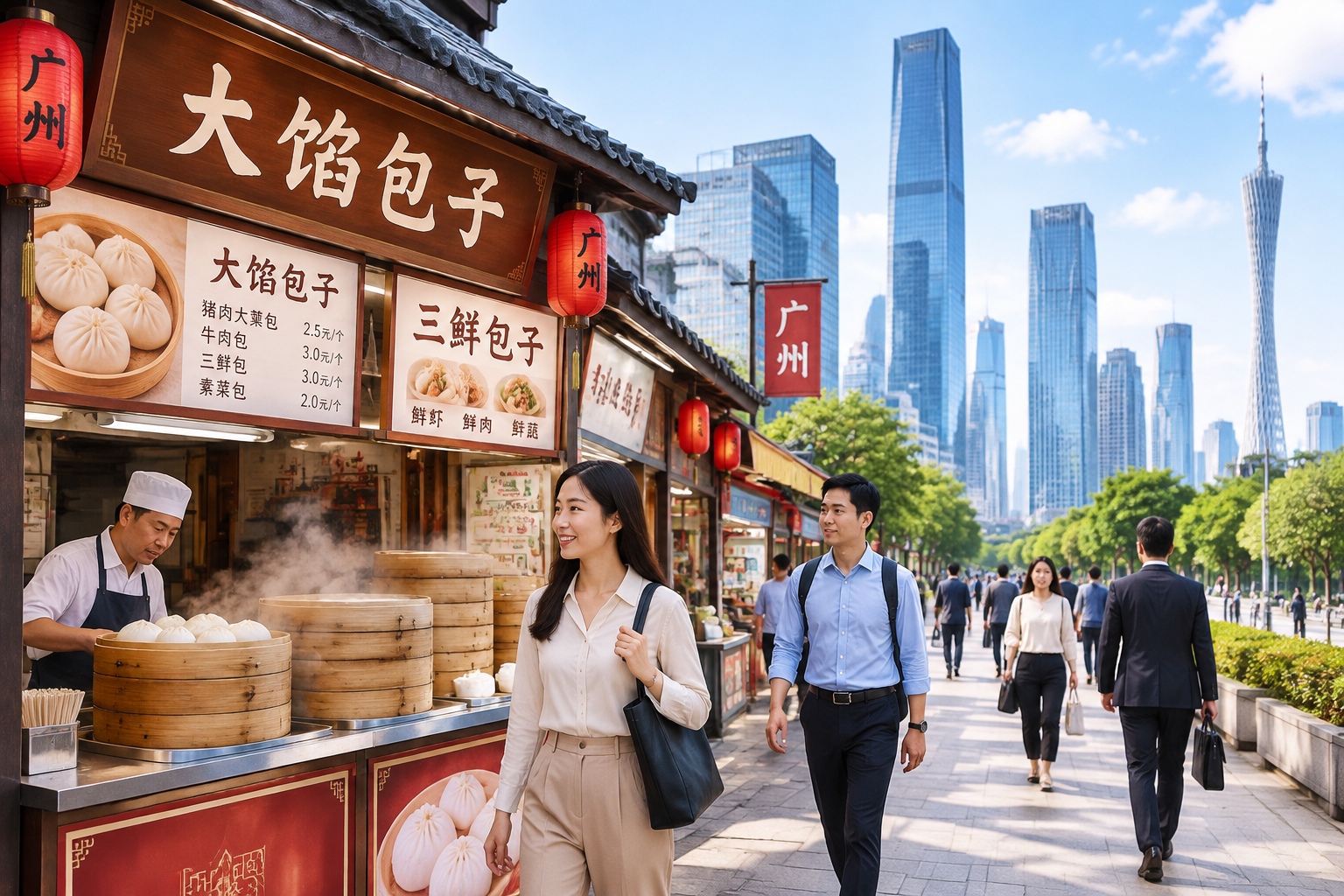
A wide shot of a bustling morning market in Guangzhou, showing the contrast between traditional street food vendors and modern city infrastructure.
Furthermore, stricter urban hygiene regulations and land-use policies are squeezing the physical space available for these stalls. Many cities are moving street vendors into designated “night markets” or indoor zones, which can increase operational costs and reduce the spontaneous convenience that defines the morning rush. If the price crosses a psychological threshold—say, $1 per bun—the entire ecosystem could shift, forcing workers to seek cheaper, less nutritious alternatives.
Yet, for now, the steam still rises at 6:00 AM. The baozi remains a testament to China’s ability to provide essential services at scale, keeping the engines of its megacities turning with a simple, affordable, and delicious bite.
Start the discussion at forum.chinacomes.com