


The Myth vs. The Reality
Before we left the apartment, my friend Liang asked a question that has haunted Western media narratives for decades: “Is it going to be impossible? Do I need to bribe anyone or beg officials in long queues?”
I laughed and opened my phone. “No bribes,” I said. “And no queues either. In fact, you’ll probably finish this before your coffee gets cold.”
This interaction highlights a massive disconnect between the outdated image of China’s bureaucracy—often painted as slow, opaque, and rigid in Western media—and the reality experienced by millions of entrepreneurs daily.

Day 1: The One-Stop Digital Window
Liang wanted to start a tech consulting firm in Shanghai. Under old systems he read about online, this might have involved visiting five different government buildings over months. Today, it begins on a laptop.
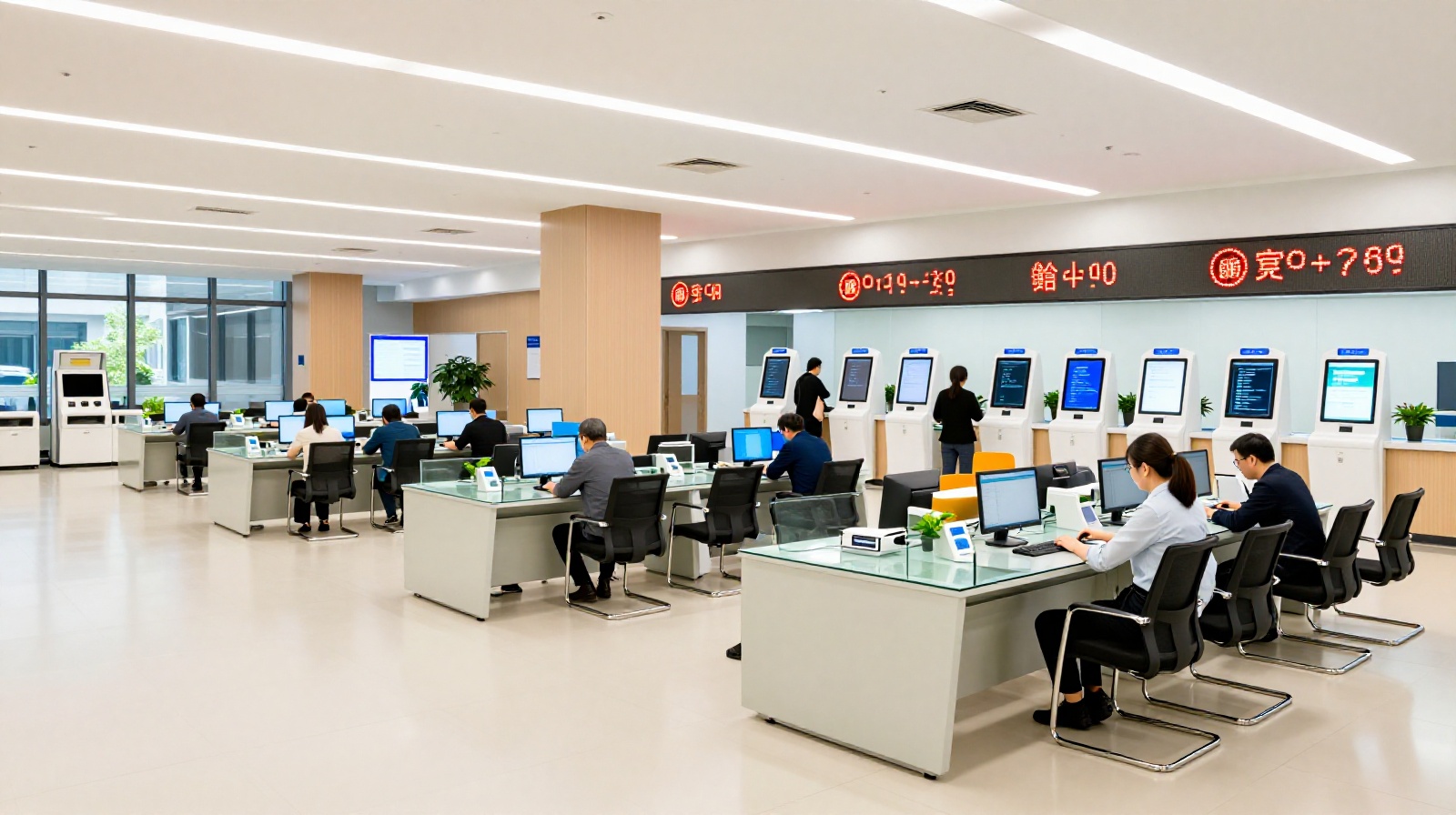
We logged into the local “One-Stop Service Platform,” a centralized digital portal that integrates tax, business registration, and social security. The interface is intuitive, similar to popular e-commerce apps he might already use. We typed in the company name, selected an industry code, and uploaded our ID scans.
The system instantly checked for duplicate names and verified document validity using AI algorithms. Within 20 minutes of starting, we received a notification: “Application Accepted.” The entire process took less time than filling out a tax form in many Western countries.
Day 2: Parallel Processing
The real magic happened while Liang went for lunch. In the traditional model, departments worked sequentially: you finish with Business Administration, then wait weeks to go to Tax, then Health, then Fire Safety.
China’s “Fang Guan Fu” (decentralization, delegation of power, and improved government services) reform changed this completely. We enabled “parallel processing.” While the system was validating our business license application, it simultaneously routed data to the tax bureau for a virtual tax filing number and to the public security department for the official company seal carving.
These processes were running in tandem, not one after another. When Liang returned from lunch, his phone buzzed. The digital license was issued, and a notification confirmed that the physical metal seal had been carved and delivered to our designated mailbox or could be picked up at the nearest community center.
A Small Hiccup: Human Flexibility in Digital Systems
Of course, no system is perfect. At 4 PM on Day 2, we hit a snag. The AI flagged an address discrepancy in our lease agreement—a minor formatting issue that didn’t match the property registration database.
Instead of rejecting the application or sending us back to a physical office to fill out paper forms, the system triggered a “human intervention” flag. A real government officer, working remotely from their desk, called Liang within 30 minutes.
She didn’t lecture him on regulations. She simply guided him through a video call, asked for a photo of the lease via WeChat (China’s ubiquitous super-app), and manually updated the backend database. Within an hour, the flag was cleared. This blend of automated efficiency and human empathy is the new standard.

The Logic Behind the Speed
Why did this happen in three days? It wasn’t luck. It is the result of a deliberate, systemic overhaul known as the “Fang Guan Fu” reform, which has been rolling out nationwide since 2015.
The government’s goal was clear: reduce the cost of doing business to stimulate innovation. By integrating data silos—where tax, market regulation, and public security previously operated in isolation—they created a seamless flow of information. This is not just about “good service”; it is about economic necessity. China needs private entrepreneurship to drive growth, and bureaucracy cannot be the bottleneck.
Data from the National Development and Reform Commission shows that the time to register a business in major cities has dropped from over 20 days to under 3 days on average. The number of required documents has been cut by more than half in many provinces.
Not Everywhere, But Moving Fast
It is important to note: this experience reflects the reality in Tier-1 and Tier-2 cities like Shanghai, Shenzhen, Beijing, and Hangzhou. In remote rural areas or for highly regulated industries (like pharmaceuticals or finance), processes can still be complex.
However, the trajectory is clear. The “digital government” infrastructure built during the pandemic has become permanent. Mobile apps now handle everything from paying utility bills to applying for visas. The friction that once defined interactions with the state in China is rapidly disappearing.
Conclusion: Efficiency as a Feature
When Liang received his physical business license and seal three days after our first coffee chat, he looked at me with genuine surprise. “I thought this was supposed to be hard,” he admitted.
The narrative that China is bogged down by red tape is no longer the full story. For millions of young entrepreneurs, bureaucracy has become a background service—fast, invisible, and surprisingly human. The challenge now for observers is not to question if change is happening, but to understand how deeply this new efficiency is embedded in the fabric of daily economic life.