
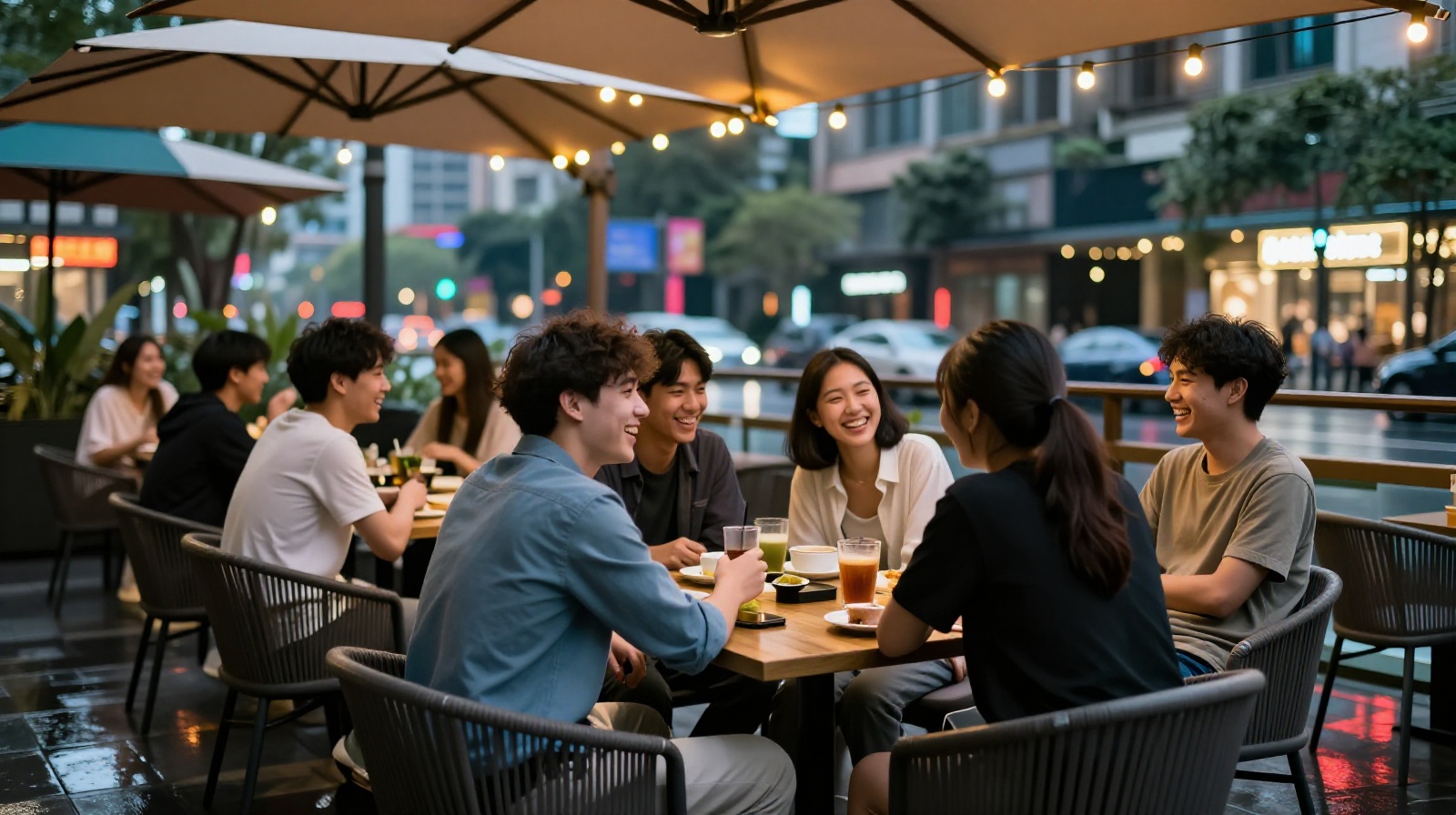

7:00 PM on a Friday Night
The rain in Chengdu smells like wet earth and spicy chili oil. It is 7:00 PM on a Friday, and the narrow alleyway behind Taikoo Li isn’t empty. Under the warm glow of string lights, people are gathering outside a small, unmarked door. Inside, the air is thick with the sound of laughter and clinking glasses. This isn’t a secret meeting; it’s just another night for Chengdu’s queer community.
For many young Chinese who have moved to this southwestern capital, the city feels different. In Beijing or Shanghai, being openly gay often means navigating a complex mix of professional caution and social reserve. Here, in Chengdu, the atmosphere shifts. A couple holding hands on the subway doesn’t draw stares; they are simply commuters sharing a carriage.
More Than Just Tolerance
To understand why Chengdu has become a haven, you have to look beyond the nightlife. The city’s culture is built on xiuxian—a deep-rooted appreciation for leisure and slowing down. For centuries, locals have prioritized enjoying life over rigid social conformity.
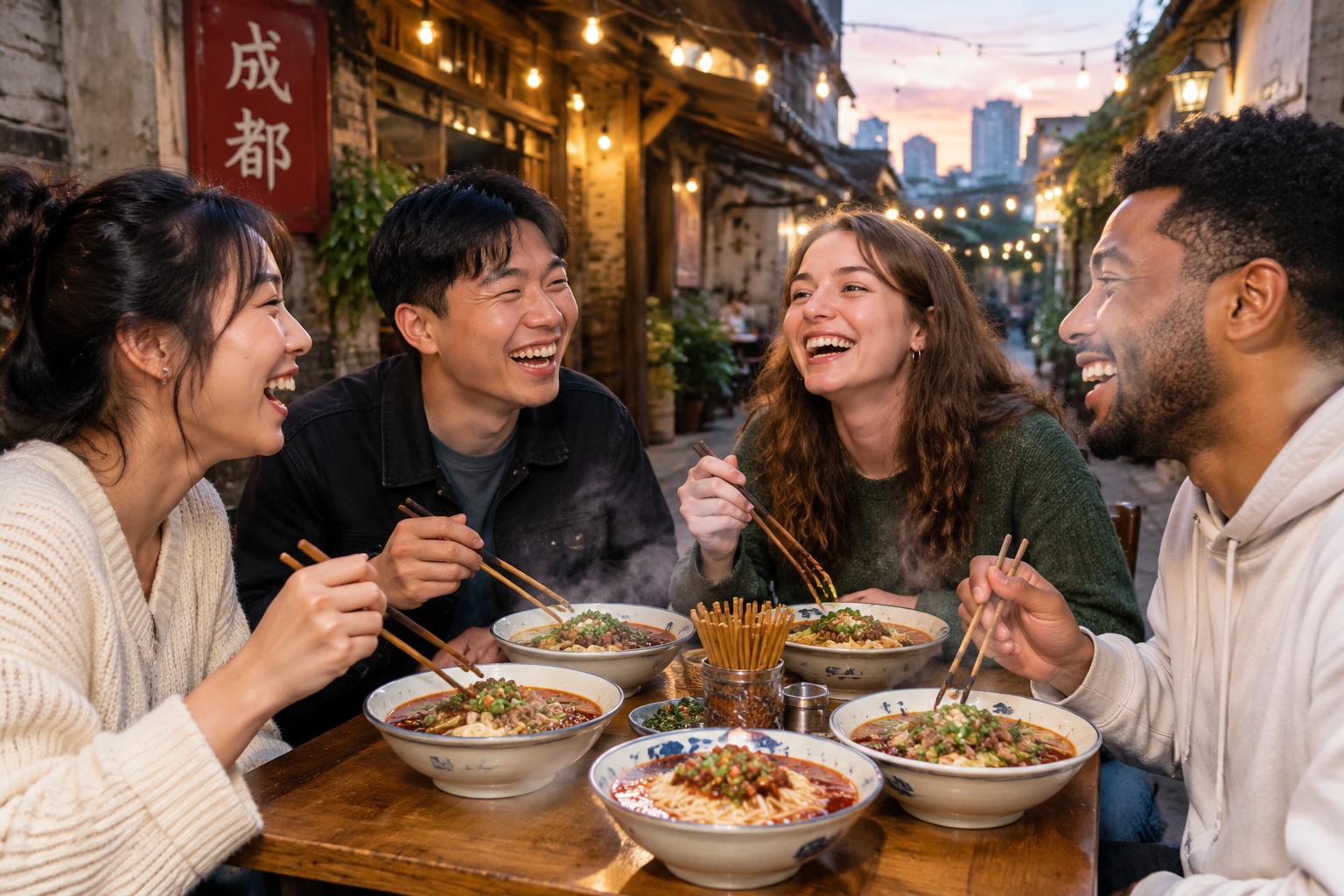
A diverse group of friends laughing at an outdoor table in a Chengdu alleyway at dusk.
This cultural DNA extends into how the city treats its residents. “We don’t ask questions,” says Lin, 28, who works in graphic design and has lived in Chengdu for five years. “If I want to walk down the street with my boyfriend, no one cares. People here value comfort over judgment.” This mindset is not just about being nice; it’s a pragmatic approach to living that makes diversity feel natural rather than disruptive.
The Economic Engine of Openness
Chengdu isn’t just culturally relaxed; it’s an economic powerhouse with a unique personality. As the tech and creative industries boom, the city attracts young talent from across China who are seeking not just jobs, but lifestyles that fit their values.

A modern co-working space in Chengdu where diverse groups of people collaborate on laptops.
Unlike cities with intense pressure to conform to traditional family expectations for career advancement, Chengdu offers a different social contract. The city’s rapid urban development has created vibrant public spaces—parks, cafes, and community centers—that serve as neutral ground for everyone. In these spaces, identity becomes secondary to shared interests.
A Different Pace of Life
For Li, a 30-year-old software engineer who came from a more conservative province, the move to Chengdu was life-changing. “In my hometown, I had to hide my relationship,” she explains. “Here, I can meet friends at a park on Sunday morning without checking if anyone is watching.”
The city’s nightlife reflects this freedom. Queer bars and cafes are often tucked away in residential neighborhoods, indistinguishable from any other local spot until you know where to look. This lack of spectacle makes the integration feel deeper. It’s not about being a tourist attraction; it’s about daily life.
Why Chengdu?
The contrast with other megacities is stark. While Shanghai and Beijing offer high-end LGBTQ+ events, they can sometimes feel like bubbles surrounded by traditional pressure. Chengdu offers something different: a pervasive sense of safety that permeates the entire city, from the bustling subway stations to quiet neighborhood streets.
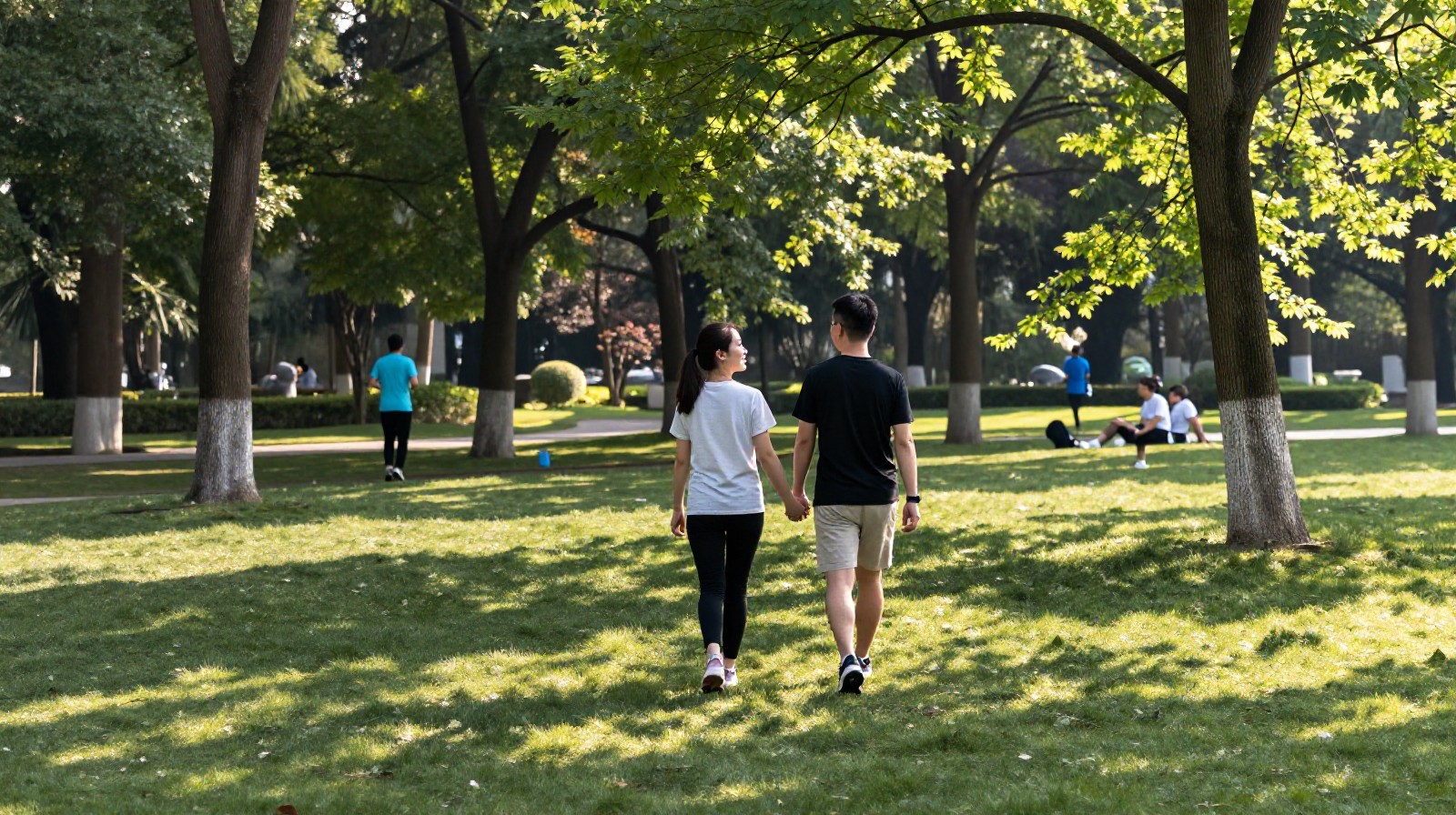
A couple walking hand-in-hand through a park in central Chengdu during the afternoon sun.
For many young people, this is the deciding factor. When choosing where to build their lives, they aren’t just looking for salary; they are looking for a place where they can breathe. Chengdu’s unique blend of historical openness, economic opportunity, and a culture that prioritizes personal happiness has created a rare environment in China.
The Future of Inclusion
This doesn’t mean there are no challenges. Like any major city, Chengdu faces issues with privacy and occasional social friction. However, the trajectory is clear. The city is becoming a model for how a Chinese metropolis can embrace diversity without losing its local soul.
As the sun sets over the Jinjiang River, the lights of the city flicker on. In the bars and parks, the community continues to thrive, not in spite of the city’s norms, but because of them. Chengdu proves that safety for queer individuals isn’t a policy achievement; it’s a lifestyle choice made by millions.
Start the discussion at forum.chinacomes.com