

4:30 AM: The Sizzle Before the Rush
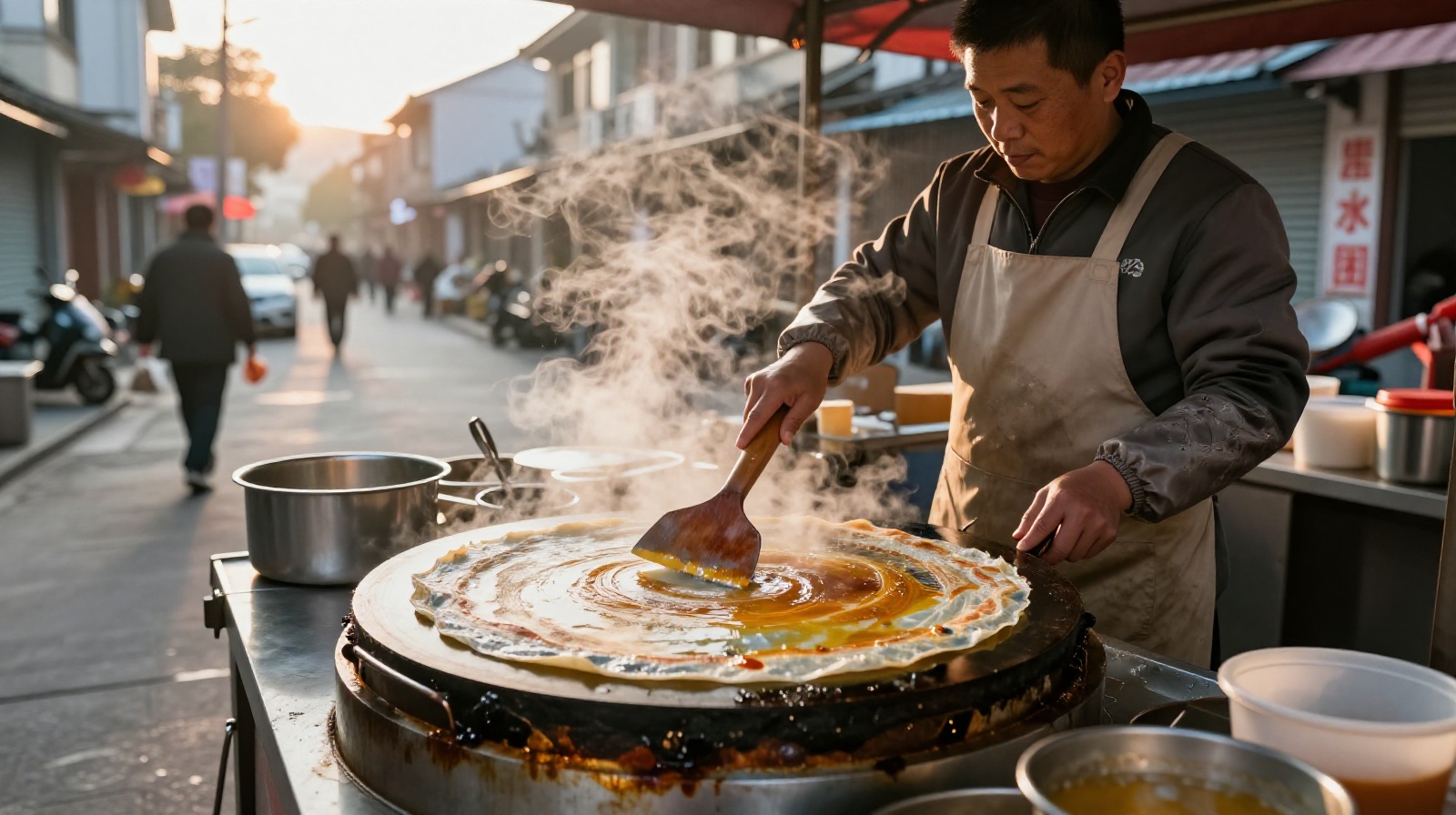
The air is still cool, hovering around ten degrees Celsius, when the first smell hits you. It’s not coffee or toast; it’s the sharp, savory scent of scallions hitting hot oil on a cast-iron griddle. At 4:30 AM, in a quiet residential neighborhood just outside downtown Shanghai, a small metal cart is already humming to life.
Li Wei, 52, wipes down his station with a damp rag. His hands move with the muscle memory of twenty years. He doesn’t check a phone or read a news app yet. The city is asleep, but for Li and three hundred others like him, the day has already begun.
This is the Jianbing ritual. Every morning, from Beijing to Guangzhou, millions of Chinese people start their day with this single street food item. It is the most common breakfast in China, a culinary anchor that holds together the chaotic rush of modern urban life.
The Art of Speed and Precision
At 5:15 AM, the first customer arrives: a university student in a hoodie, eyes still heavy with sleep. She doesn’t order; she just stands there, watching the performance.
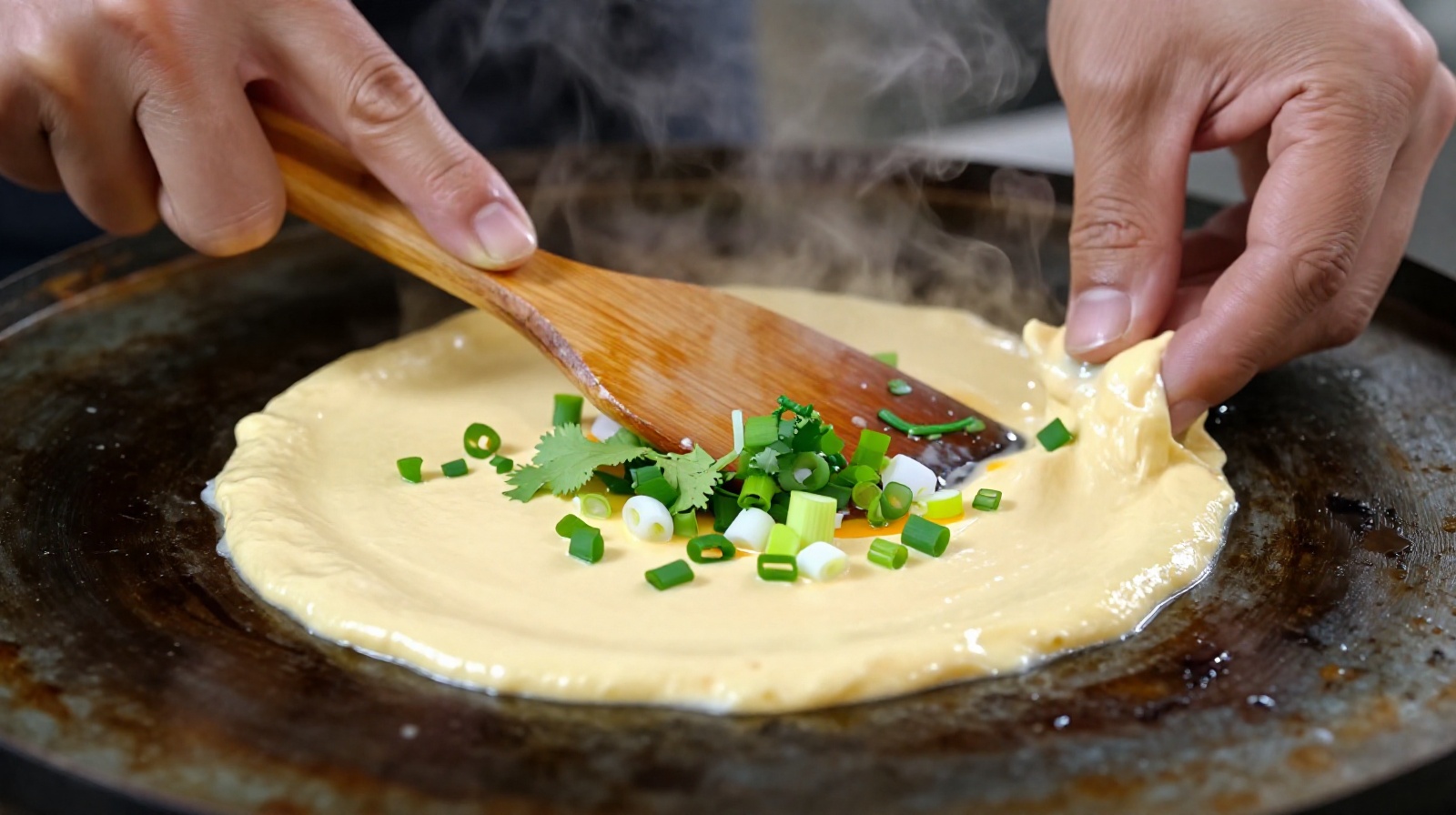
Li cracks an egg onto the hot iron surface with a sharp tap. The yolk bursts instantly. In one fluid motion, he uses a wooden T-shaped scraper to spread the batter into a perfect circle. The sound is like a drumbeat: sizzle, scrape, flip.
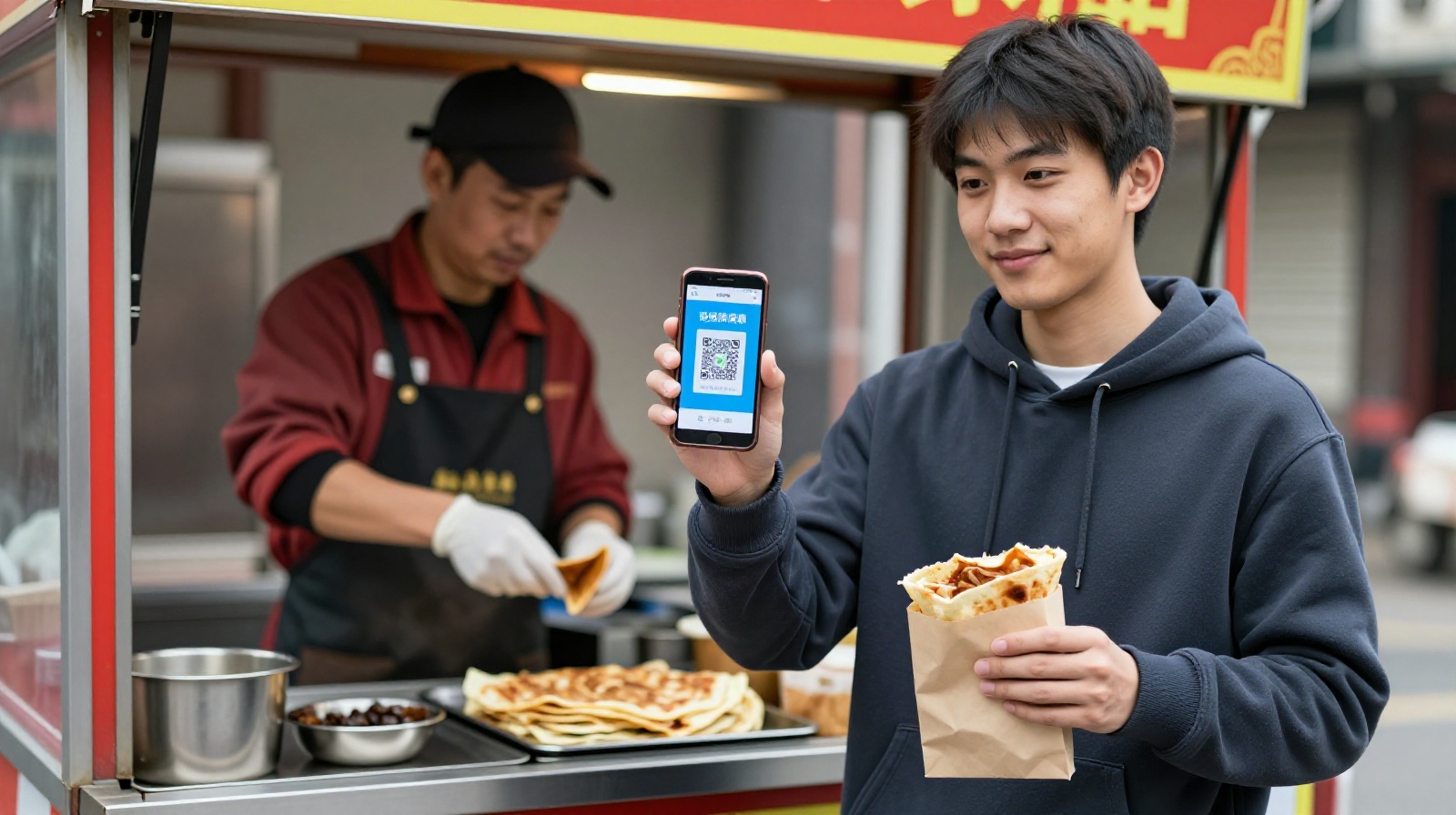
He sprinkles chopped scallions and cilantro over the wet egg. Then comes the sauce—achi or hoisin mixed with chili oil—a dark glaze that coats everything. Next, he tosses in a crispy fried cracker (baocui) or a soft wonton skin, depending on what the customer wants. The crepe is folded in half, then into a triangle, and slipped into a paper bag before the second customer even steps up.
Why This Matters: More Than Just Food
In the West, breakfast often feels like a leisurely affair or a health-conscious ritual. In China, for most workers and students, it is about survival and efficiency. The Jianbing cart is a marvel of logistics. It delivers calories, protein, carbohydrates, and flavor in under 90 seconds.
The price reflects this reality. A standard Jianbing with egg costs about 6 to 8 RMB (roughly $1 USD). For the average daily wage earner or student, it is an affordable fuel source that can be eaten while walking to a subway station or sitting in a crowded office breakroom.
The scene outside Li’s cart tells a story of social change. You see retirees buying one for themselves, young professionals checking emails on their phones while waiting, and school kids being dropped off by parents. The cart acts as a neutral ground where different generations of Chinese life intersect over a shared meal.
From Street Corner to Digital Age
The way people pay has changed, even if the cooking method hasn’t. Ten years ago, customers fumbled for small change coins. Today, almost everyone uses WeChat Pay or Alipay on their smartphones. You see teenagers holding up phones with QR codes while the vendor nods and continues flipping batter.
Yet, the technology doesn’t replace the human touch. The taste still depends entirely on Li’s hand. No machine can perfectly replicate the texture of a cracker that is both crunchy and soft inside, or the exact balance of sauce that only comes from years of intuition.
The Comfort in the Routine
For many, the Jianbing is a symbol of home. It is consistent. No matter how much the city changes—the new skyscrapers going up, the old neighborhoods being demolished—the taste remains the same. The crispy texture and the savory sauce provide a sense of stability in a rapidly shifting environment.
As the sun rises over the skyline, the line at Li’s cart begins to thin. By 7:30 AM, the rush is over. Li packs up his cart, wipes the griddle one last time, and heads home to sleep before heading out for his next shift or simply resting.
This morning ritual is a quiet testament to the rhythm of China. It isn’t about grand technology or futuristic dreams; it’s about the millions of small moments that make life go on. The sizzle of the pan, the steam rising into the cool air, and the satisfied nod of a customer walking away with their breakfast—it all adds up to a very human picture of modern Chinese life.