
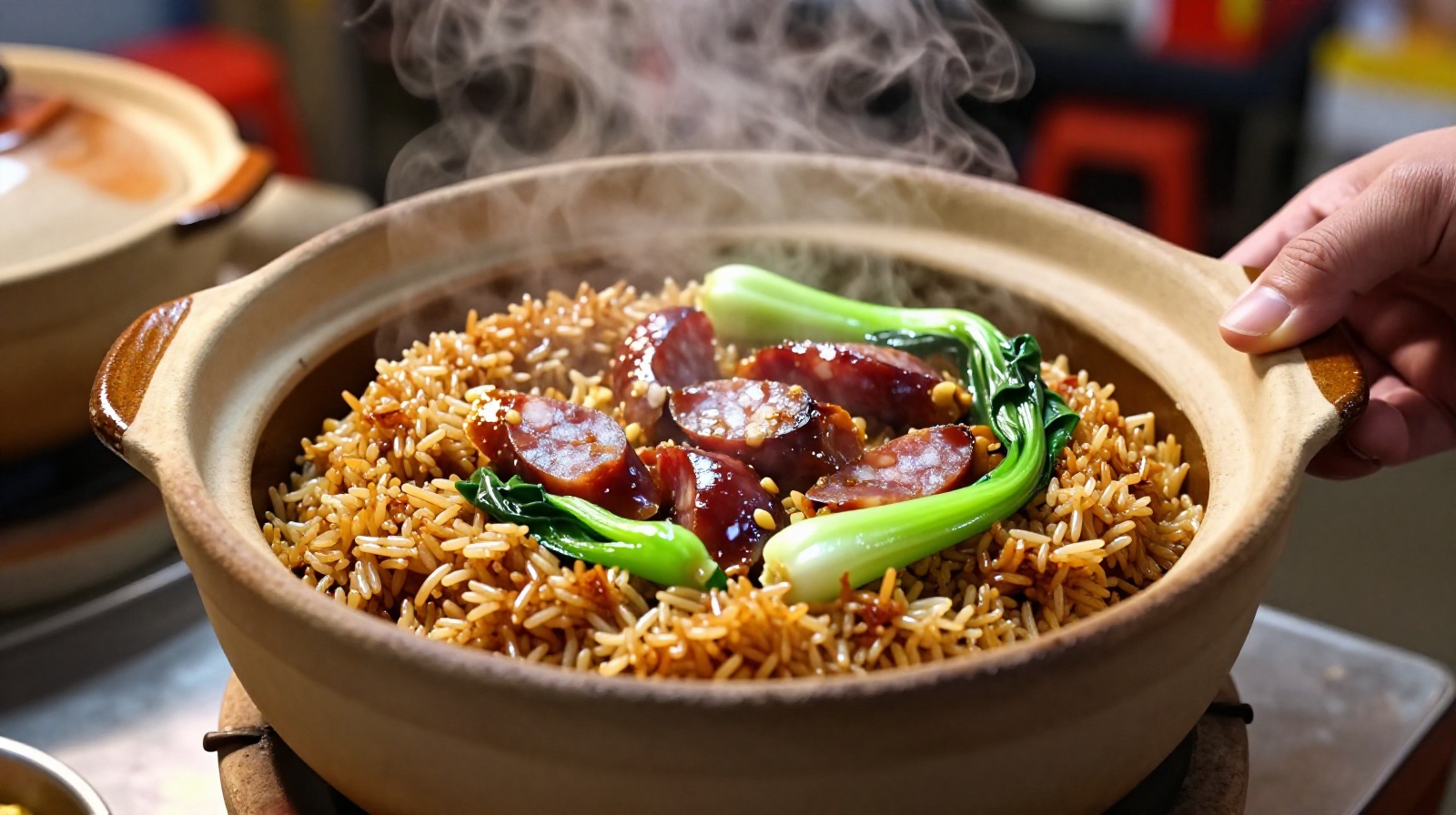

The Sound of Crisp
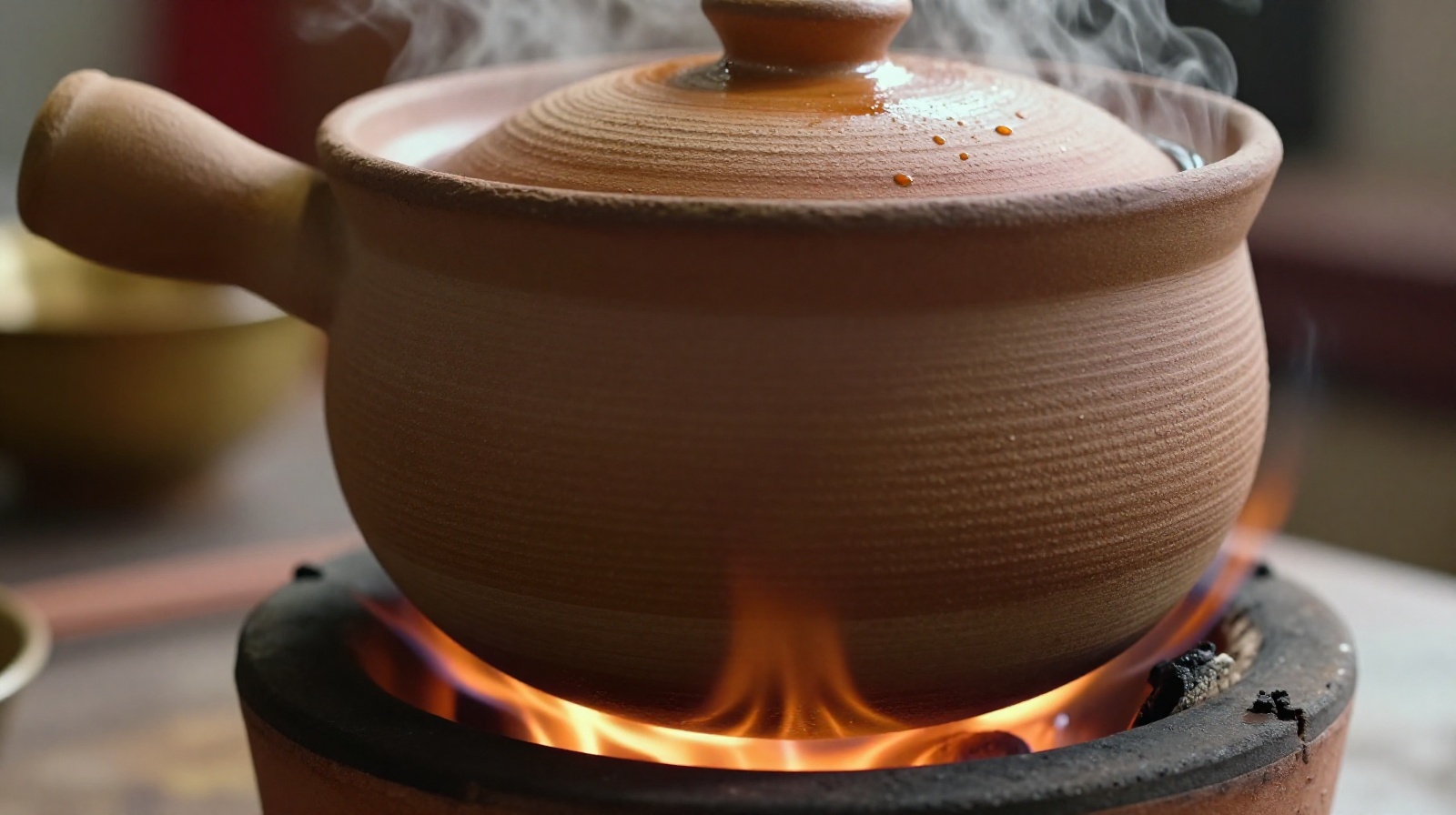
It is 6:30 PM in a narrow alleyway in Guangzhou. The air smells of charred pork fat, soy sauce, and damp earth. A cook stands over a gas burner, the flame licking the bottom of a rough, unglazed clay pot. There is no timer here, only the sound.
Listen closely. At first, it’s a gentle simmer as water boils off. Then, a subtle crackle begins—the sound of rice grains fusing and browning against the hot ceramic. Finally, a sharp, rhythmic pop-pop-pop echoes through the street. That is the sound of guoba, the crispy rice crust that defines this dish.
To an outsider, it might look like simple comfort food: sticky rice topped with chicken, sausage, or preserved vegetables. But in China, particularly in the south, the hunt for the perfect golden-brown layer is a serious art form. It requires patience, precise heat management, and a willingness to accept failure.
The Clay Pot Difference
Why can’t this be made in a stainless steel wok or an electric rice cooker? The answer lies in thermodynamics and tradition. Clay pots are porous and thick. They absorb heat slowly but retain it intensely, creating the perfect environment for that distinct texture.
When the cook pours the raw rice and water into the pot, the temperature rises unevenly at first. As the bottom layer reaches a critical point around 180°C (356°F), the starches caramelize. In a metal pan, heat is distributed too evenly; in an electric cooker, it is too gentle. Only the clay pot allows the bottom to burn slightly while keeping the top fluffy and tender.
A Calendar on the Table
This dish is more than just lunch or dinner; it is a marker of time. In Chinese culture, food is deeply linked to the traditional solar calendar. During the cold winter months, baozai fan (claypot rice) becomes a staple because the clay pot retains heat longer, keeping the meal warm for hours.
In the summer, lighter versions with duck or fish are preferred. The choice of ingredients often aligns with Traditional Chinese Medicine (TCM) principles. Eating ‘heating’ foods like lamb in winter helps balance the body’s energy against the cold air. Conversely, ‘cooling’ ingredients like mung beans or certain vegetables are chosen to counteract summer heat.
When a family gathers around a clay pot, they aren’t just eating; they are participating in an ancient rhythm. The smell of the cooking rice triggers memories of childhood winters and shared meals. It is a tangible connection to the seasons that many modern urbanites have lost in their fast-paced lives.
The Ritual of Pouring
There is a specific moment when the dish is finished, one that transforms it from food into theater. The cook lifts the heavy lid, releasing a cloud of steam that carries the scent of roasted soy sauce and sesame oil.
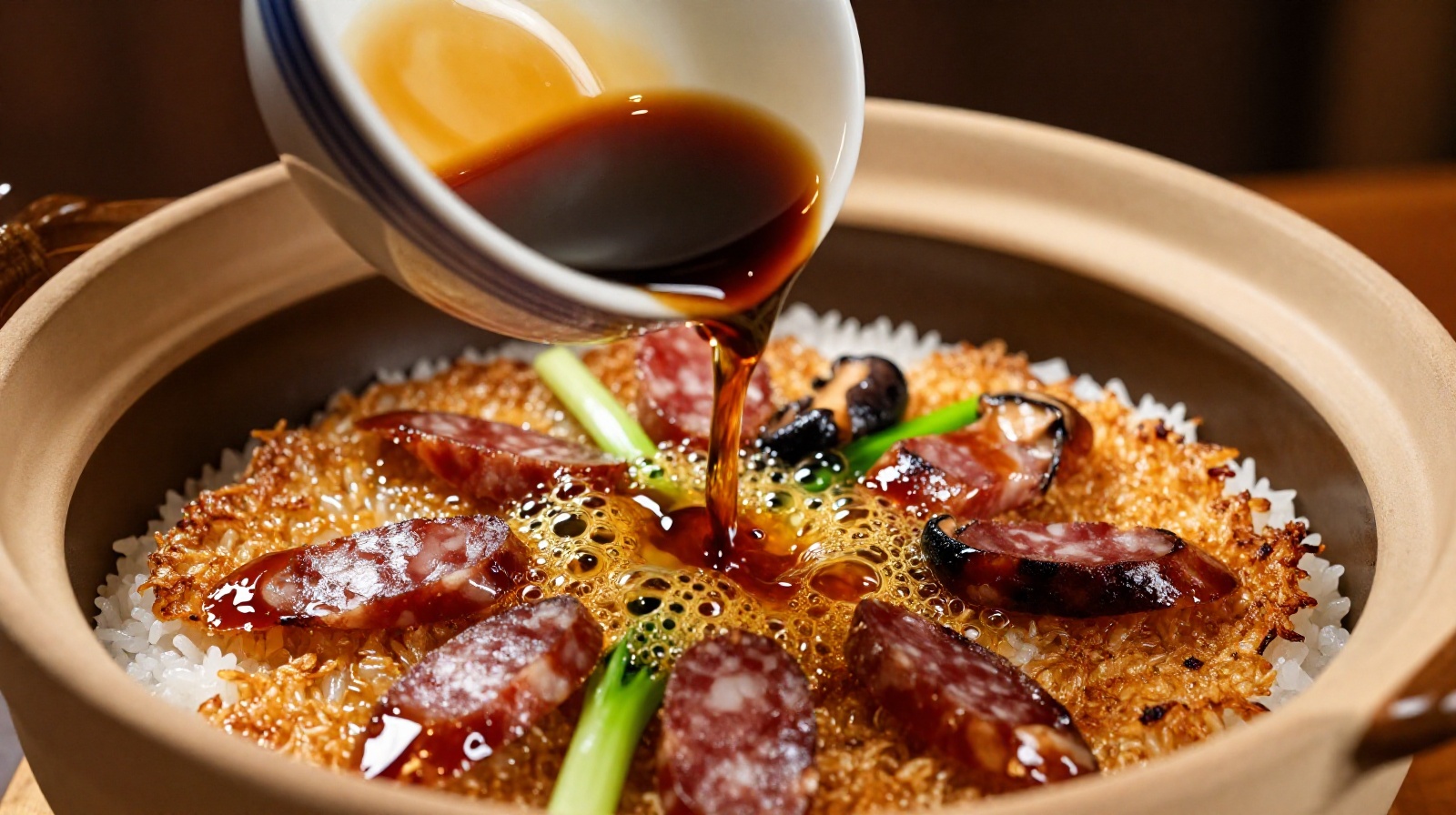
Then comes the pour. A small bowl of pre-mixed sauce—often soy sauce, oyster sauce, and sugar—is drizzled over the rice. It sizzles violently as it hits the hot crust, creating a new layer of flavor that penetrates every grain. In many restaurants, this is the moment when customers lean forward, eyes fixed on the bubbling pot.
More Than a Meal
In today’s China, where high-speed rail and delivery apps dominate daily life, baozai fan remains a stubbornly traditional staple. It represents a slower pace, a tactile experience that cannot be rushed.
For the cook, it is about mastery. For the diner, it is about the anticipation of that first bite: the crunch of the crust giving way to the soft rice beneath. In a world of digital screens and instant gratification, the clay pot offers something rare: a moment where you must wait for the fire to do its work.
It is a reminder that even in the most modern cities, the old ways still have a place on the table, warm and waiting.