
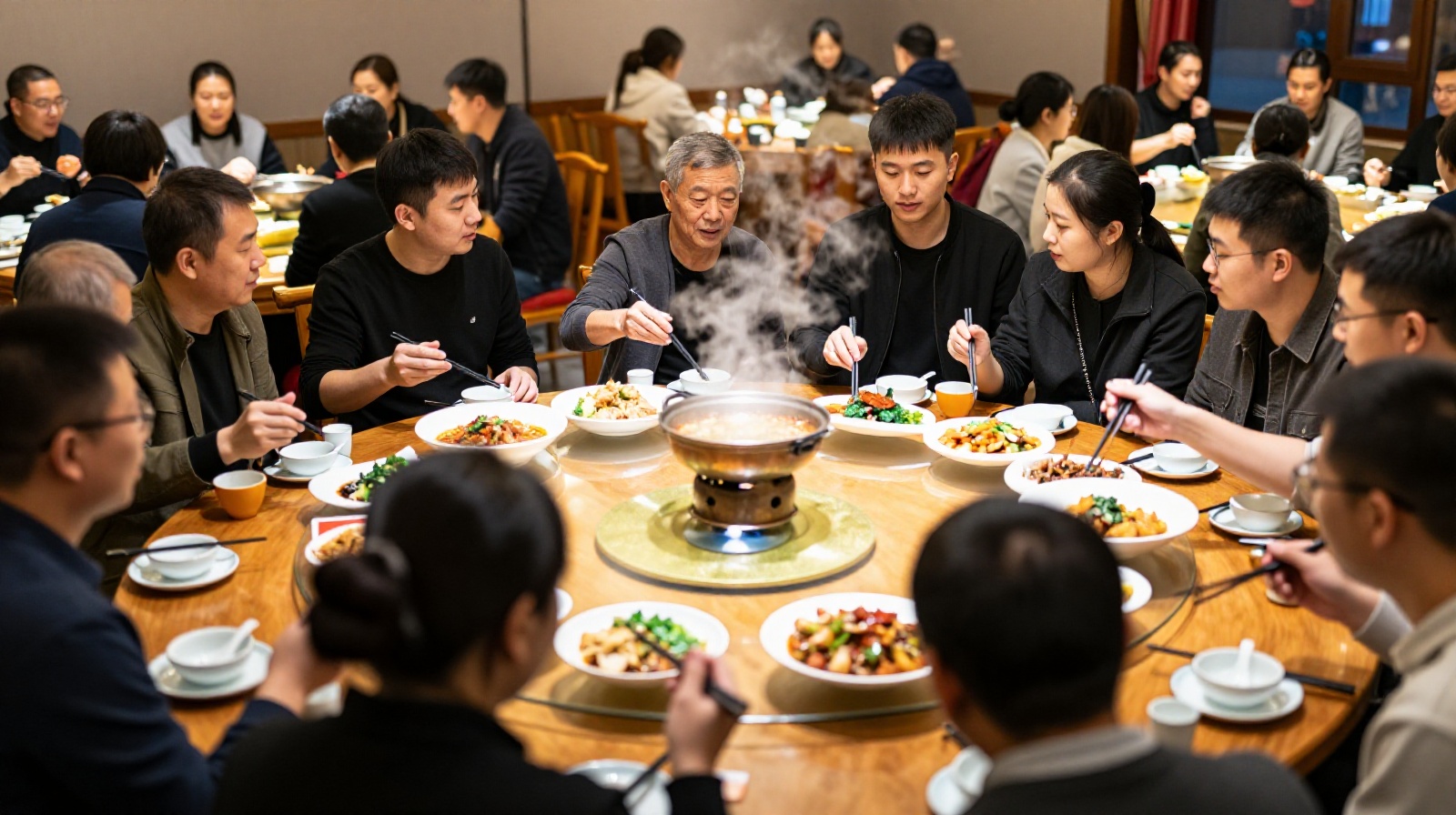

The Moment the Wheel Spins
It’s 7:30 PM on a Friday in downtown Beijing. The air is thick with steam from a bubbling hotpot and the clatter of chopsticks against ceramic bowls. At a round table of eight, a young man reaches for a dish of braised pork belly on his left. His hand hovers. He waits.
Why? Because the plate is moving. The person across from him just gave the Lazy Susan (the revolving tray) a gentle nudge to bring the main course within reach. If he grabs it now, he steals the spotlight—and likely the piece—from the guest of honor sitting two seats away. In Chinese dining culture, the Lazy Susan is not merely a kitchen gadget; it is the silent conductor of a complex social symphony.
For visitors from cultures where individual plates are the norm, this round table dynamic can feel chaotic or even aggressive. But once you understand the unwritten code, the spinning plate becomes a window into how Chinese society values harmony, hierarchy, and collective experience over individual desire.
The Golden Rule: Never Steal the Center
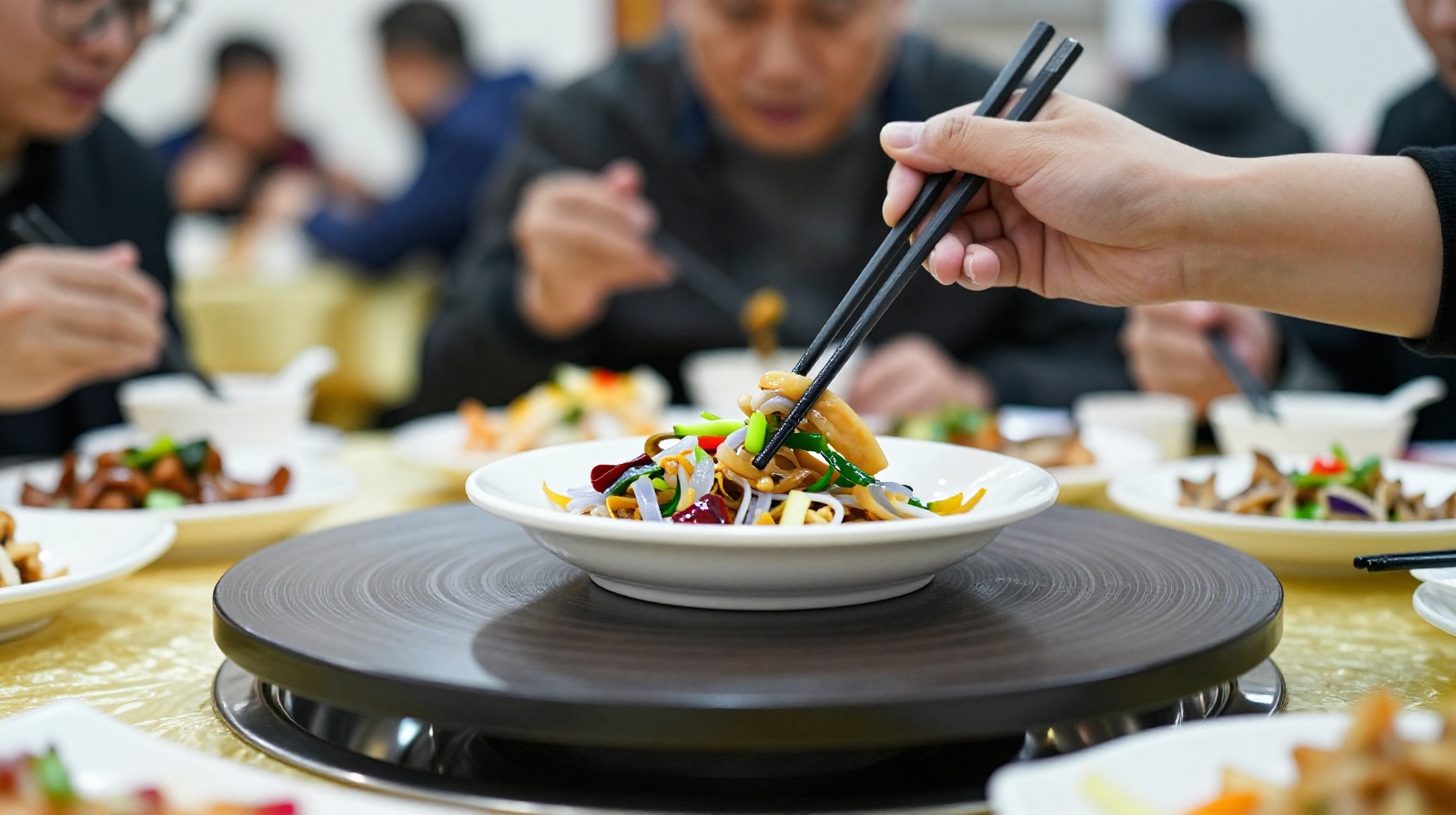
The most critical rule is simple but easily overlooked by outsiders: Never rotate the table while someone else is actively eating from a dish.
This isn’t about politeness; it’s about preventing disaster. Imagine the scene: A grandmother is delicately picking out a piece of fish with her chopsticks. Suddenly, the table spins. The fish lands on the other side of the bowl, or worse, onto someone else’s plate. That is a faux pas that can offend an entire family.
So, how do you know when to move? Wait for a natural pause—a moment when everyone has just finished chewing, put down their chopsticks, and perhaps exchanged a toast. This brief silence is the green light. The host or the eldest person usually initiates the first rotation, signaling that it’s time to shift focus to the next course.
Reading the Room: Hierarchy on the Plate
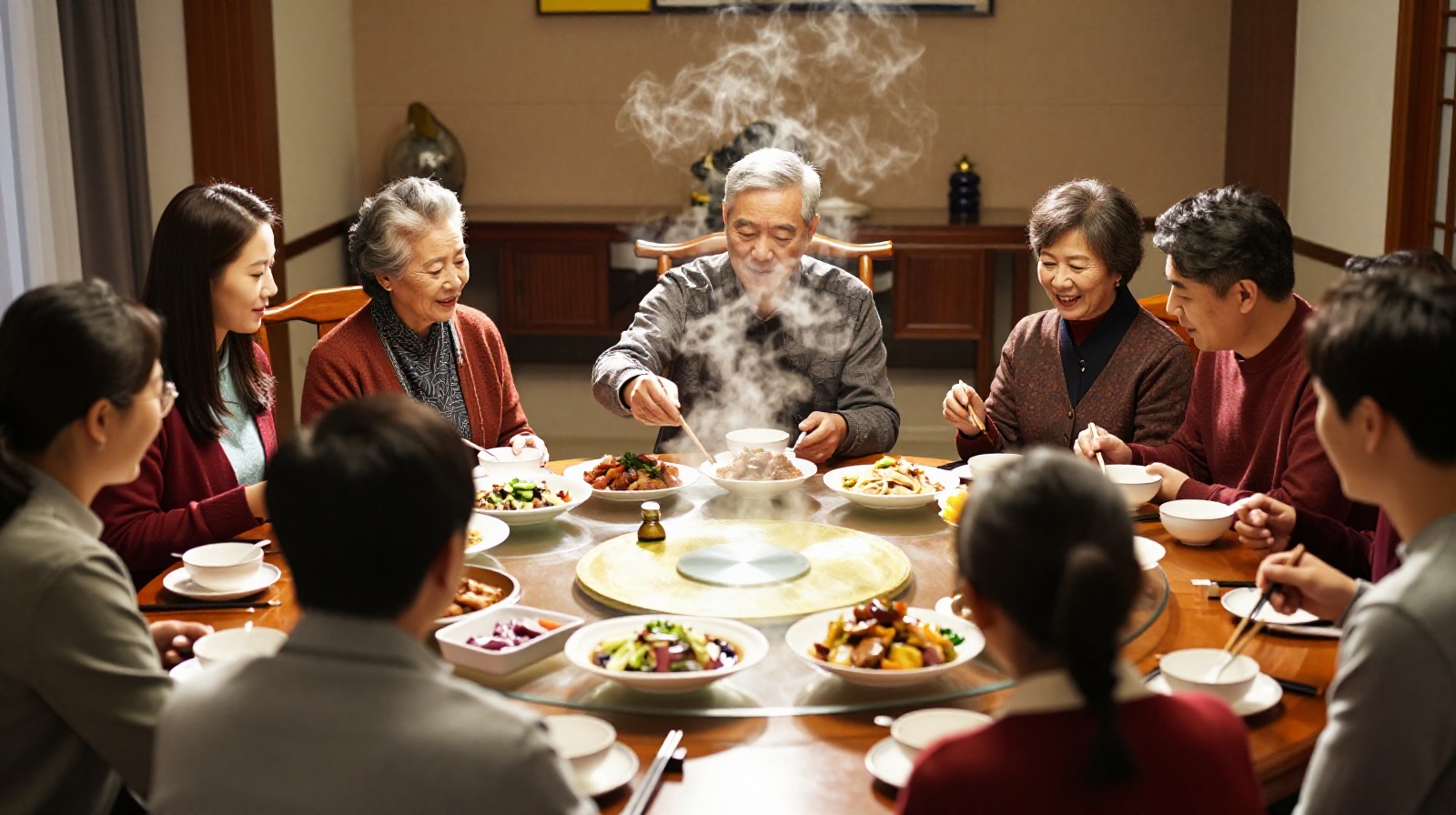
The table seating arrangement is a map of social status. In traditional settings, the seat facing the door (the “head” of the room) belongs to the most senior person or the main guest. The seat directly opposite them is for the host.
Here’s where the spatial game gets interesting. You want to serve the dish in front of the head of the table first. If you are younger, you should rotate the Lazy Susan so that the best dishes land in front of your elders before you touch anything yourself. This act of service is a non-verbal way of saying, “I respect you.”
There is also a subtle directional rule: Avoid rotating the table so that a dish spins directly past someone’s face. It feels intrusive, like throwing food at them. Instead, aim to stop the rotation when the dish is closest to the person who needs it most—often the host or the eldest guest.
The Art of the Reach: Space and Etiquette
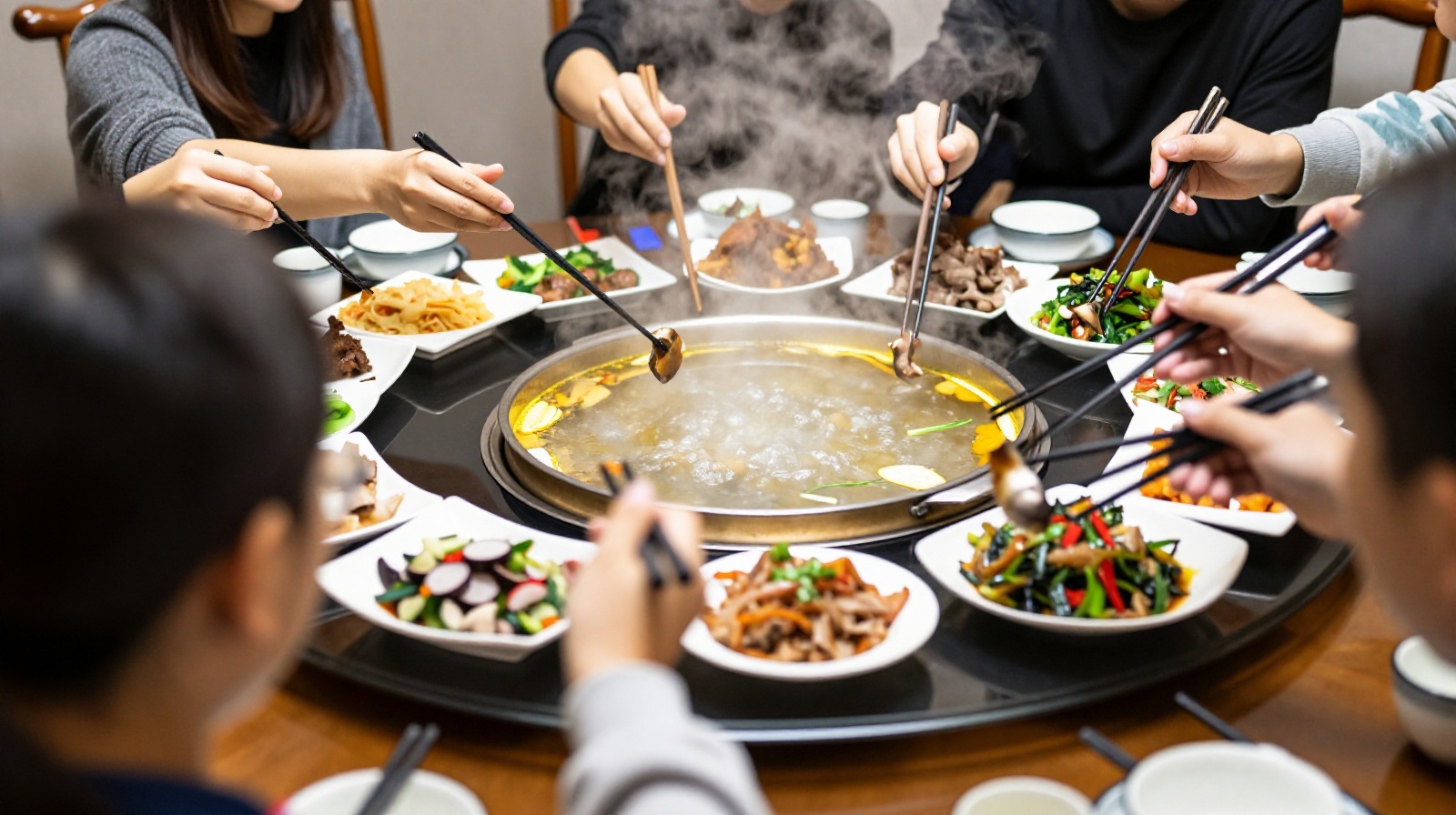
On a round table, distance is relative. A dish might be six feet away from you but right in front of your neighbor. The goal is to take what you need without creating a “traffic jam” around the wheel.
If a delicious-looking steamed crab sits at the far end of the table, and it’s not your turn to serve, do not stretch your arm across three other people’s plates. Wait for the host to rotate it closer, or wait until the dish naturally stops near you. If you must reach, keep your movements small and quiet. The sound of clinking metal on ceramic or the scrape of a bowl against the table can disrupt the harmony.
In modern business dinners, this rule is often relaxed slightly but still observed strictly among elders. In casual family gatherings, however, the pressure to be perfect is lower; everyone just wants to eat together. But the underlying logic remains: the group eats first, the individual follows.
Modern Shifts: From Rigid Ritual to Shared Joy
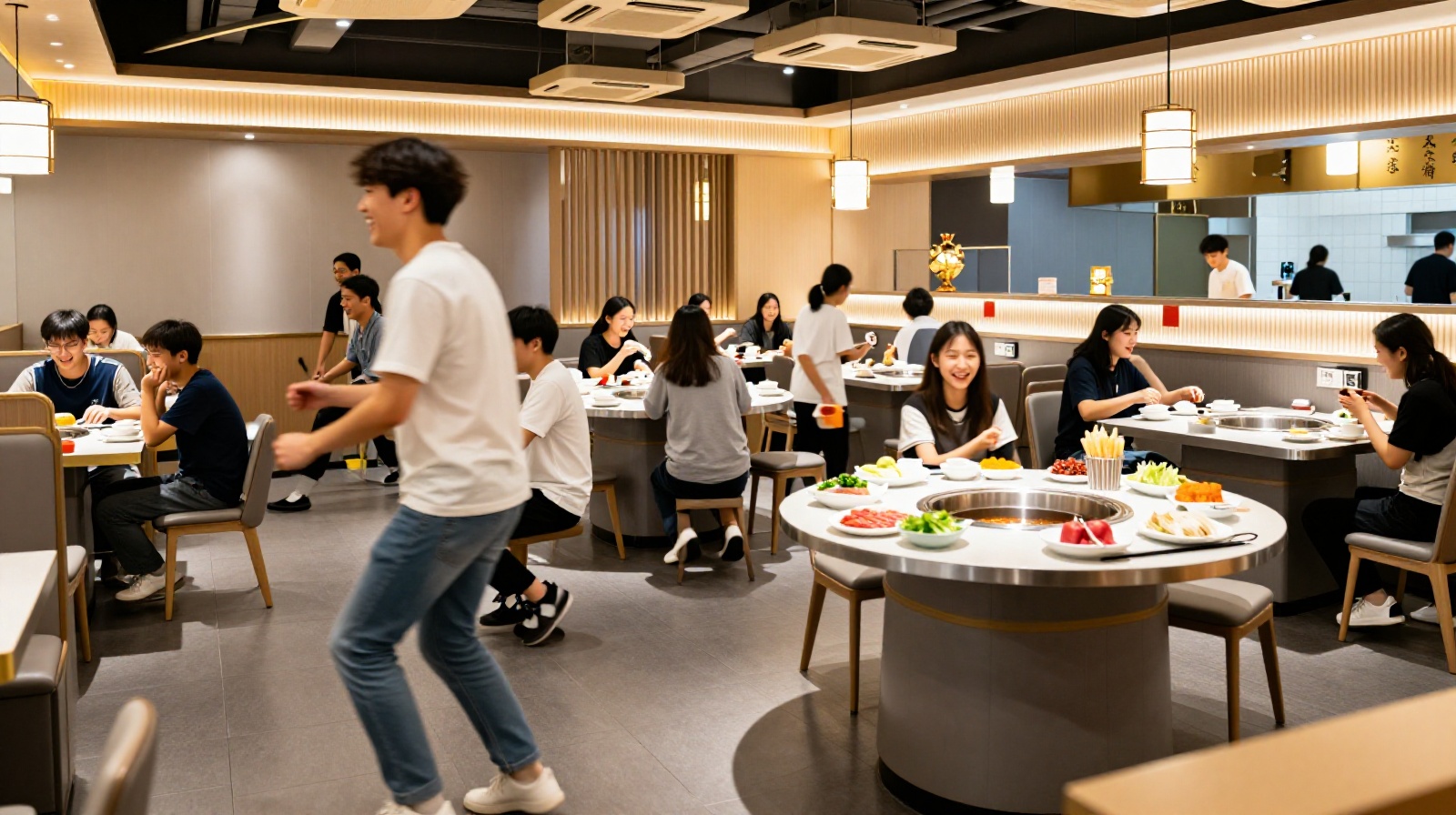
As China modernizes, these rules are evolving. In trendy hotpot chains or casual street food stalls in Shanghai or Chengdu, you might see young people spinning the table faster, grabbing whatever catches their eye, and laughing loudly.
The strict hierarchy is less visible among university friends or colleagues who consider each other equals. However, even in these relaxed settings, the core principle holds: Don’t spin while someone else is eating.
For foreign business people, navigating this can be tricky. If you are hosting a Chinese client, follow their lead. Let them rotate first. Offer to serve the main dishes to your guests before serving yourself. This small gesture signals that you understand and respect their culture, which builds trust faster than any contract clause.
For travelers, think of the Lazy Susan as a conversation starter. Ask your hosts, “Is there anything I should know about how to use this?” Most Chinese people will smile, happy to explain their traditions to an interested outsider. It shows that you care not just about the food, but about the people eating it.
The spinning plate is more than a mechanism; it’s a physical manifestation of the Chinese social contract. It says: We move together. We share resources. We prioritize the collective rhythm over our individual hunger. Mastering this dance turns a confusing meal into a moment of genuine connection.