
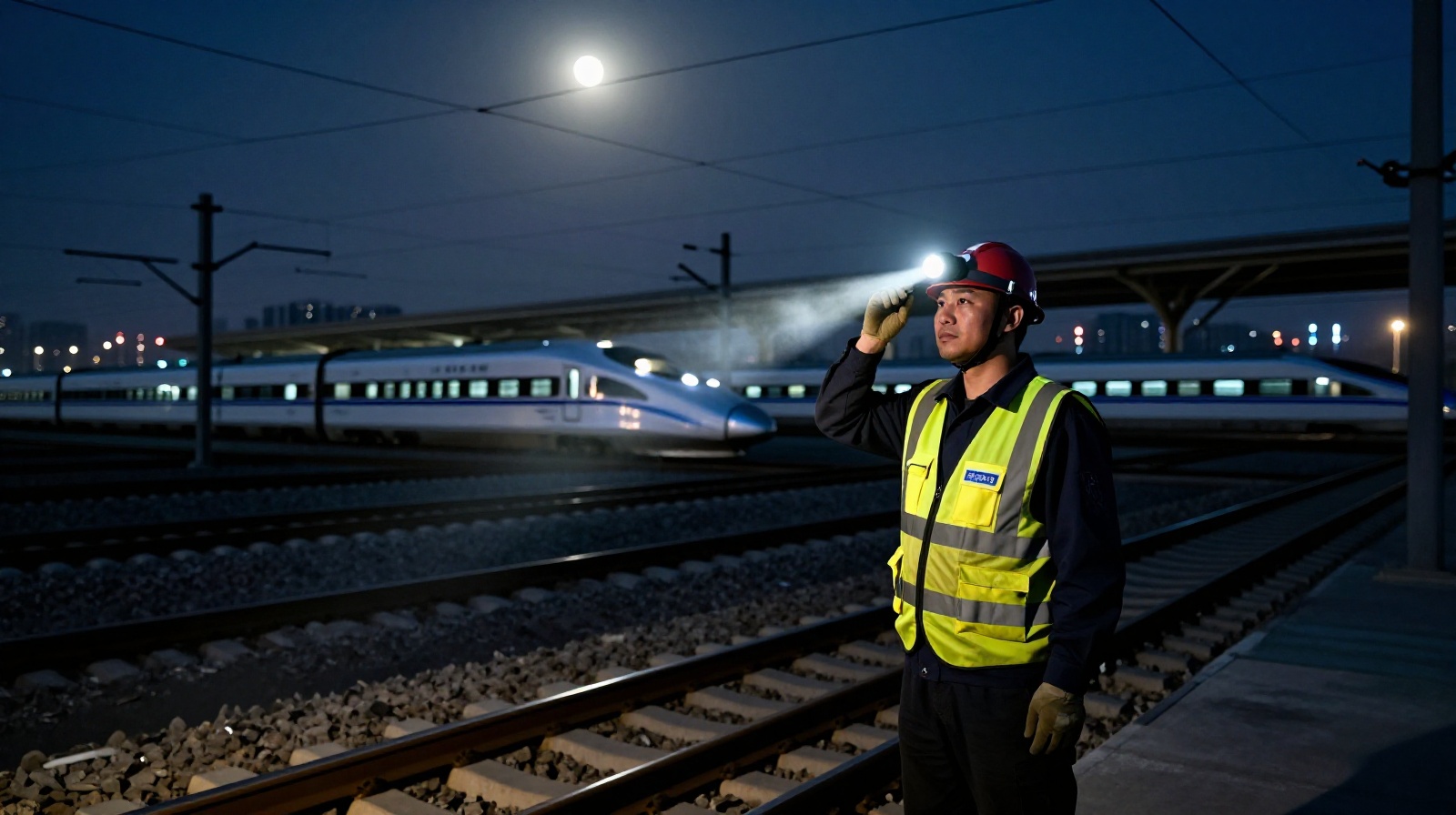

The Silence Before the Storm
It is 1:45 AM in Hefei. The massive high-speed railway station, usually a roar of announcements and rushing crowds, is now a cavern of shadows. The only sound is the rhythmic *clack-clack* of metal on metal as a maintenance train crawls slowly along the tracks.
Li Wei pulls his heavy wool cap lower over his ears. At 38, he has spent fifteen years walking these lines. His headlamp cuts a sharp cone through the darkness, illuminating dust motes dancing in the cold air. The temperature is near freezing, but Li doesn’t shiver. He knows the drill.
“The line must be perfect,” he whispers to his partner, Chen, who is checking the signal lights fifty meters ahead. “If we miss a hairline crack, the train tomorrow morning could derail.” This is the unspoken rule of China’s high-speed rail: speed demands silence, and safety demands vigilance.
A Walk Through the Infrastructure
Li and Chen are part of a specialized inspection team. Their job isn’t to fix broken trains; it’s to prevent them from ever breaking down. Every night, between 12 AM and 4 AM, they walk roughly four kilometers along the Beijing-Shanghai high-speed corridor.
Inspecting the Invisible
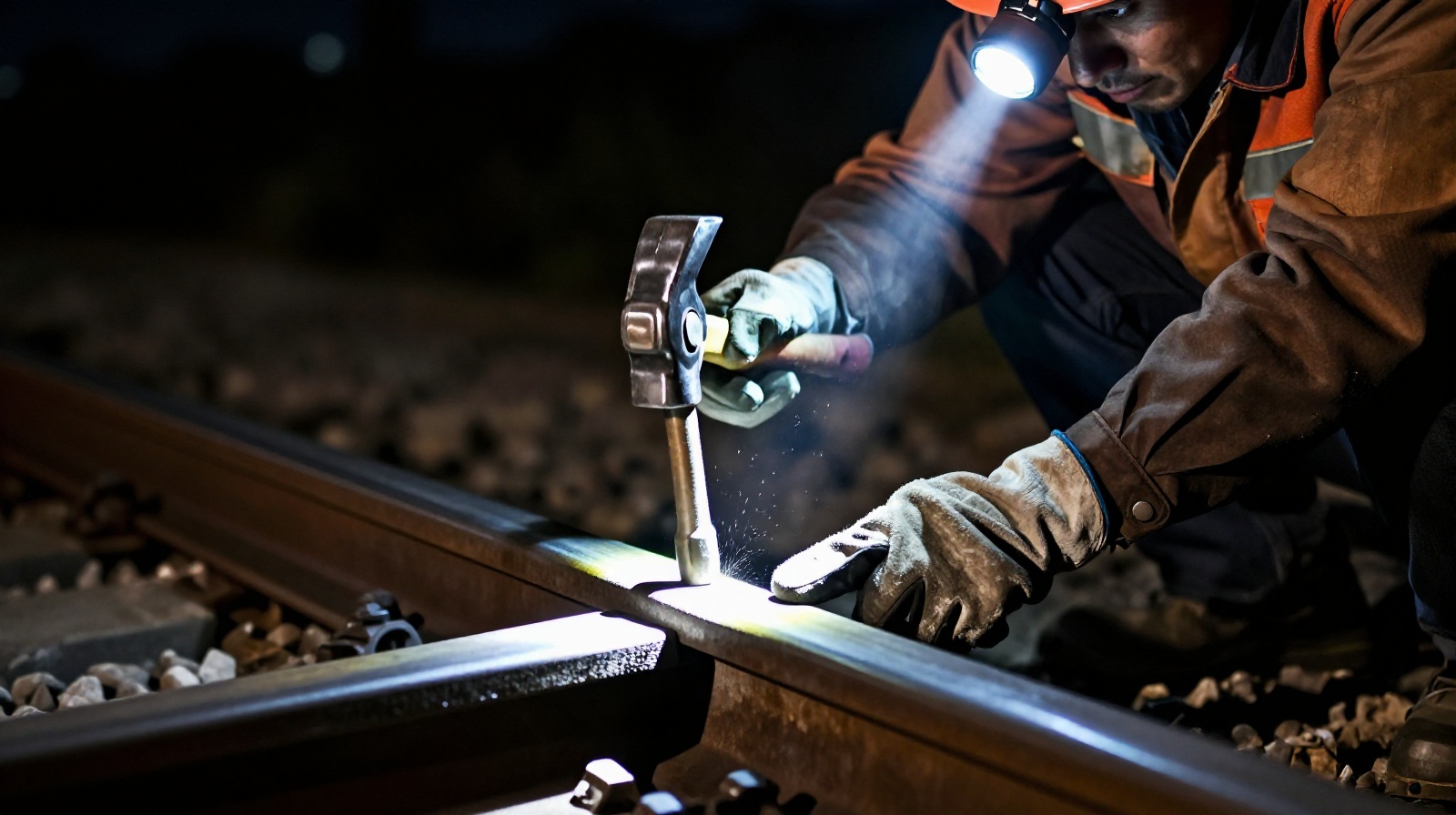
The track looks solid under Li’s boots, but the danger lies in what you can’t see. He stops to tap a specific joint in the rail with a specialized hammer. The sound is crisp—a clear *ping* means good; a dull *thud* suggests a loose bolt or a hairline fracture.
Next, he checks the sensors embedded in the ballast (the stones under the track). These devices monitor temperature, vibration, and alignment. A single misaligned sensor could cause a train to slow down or stop unexpectedly. Chen uses a handheld tablet to scan QR codes on each sensor, verifying data transmission in real-time.
“Look at this one,” Chen points out. The LED on the device is blinking green. “Stable.”
Their pace is deliberate. They aren’t rushing. In the high-speed era, a mistake of a few centimeters can mean disaster. They move like detectives hunting clues in a crime scene, their headlamps sweeping across the steel rails, the concrete sleepers, and the overhead power lines.
The Weight of Responsibility
Working at night brings unique challenges. The cold seeps through thick jackets, and the wind howling between the bridges can be deafening. There are no crowds to distract them, only the vast emptiness of the countryside or the distant glow of a city skyline.
“Sometimes I wonder if anyone knows we’re here,” Li admits as they pause near a bridge support. “We don’t get credit for being perfect. We just don’t want to be on the news when something goes wrong.”
This sentiment reflects a broader reality in China’s infrastructure sector. The public sees the gleaming trains and the punctual schedules, but rarely the human cost of maintaining them. For Li and his colleagues, safety is a moral duty, not just a job requirement.
The Morning Promise
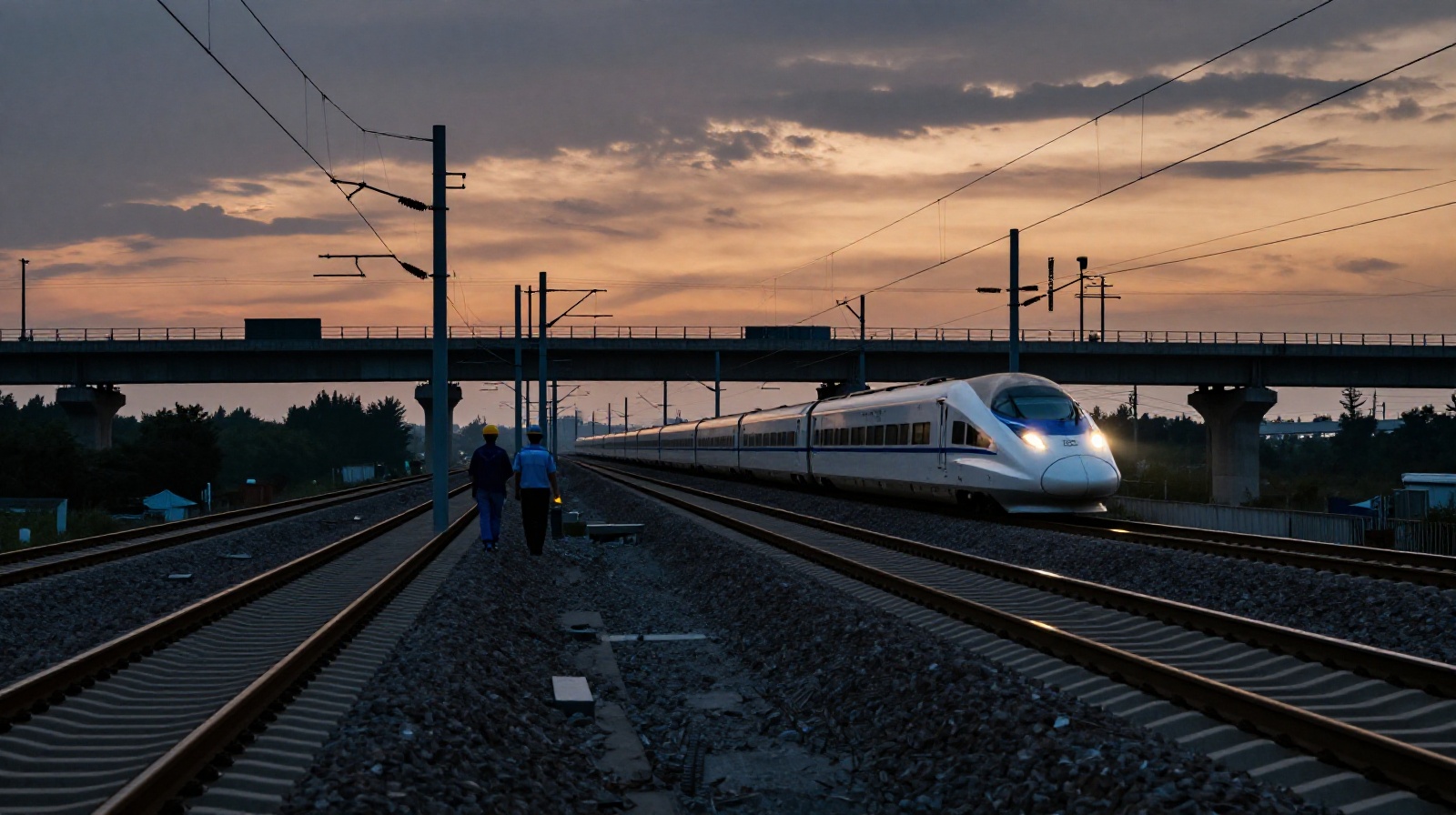
By 4:00 AM, the sky begins to turn a deep indigo. The team packs up their tools, checking one last time that every bolt is tight and every sensor is reporting correctly. They clear the tracks, ensuring no debris remains.
The first sign of morning isn’t the sun, but the arrival of the maintenance train, which paves the way for the day’s traffic. Then comes the silence again, waiting for the first passenger train at 6:30 AM.
Li watches from the side of the track as the headlights of a high-speed train cut through the dawn. It glides past without a single jolt, reaching speeds of 350 km/h (217 mph). The passengers inside are likely sleeping or checking emails, unaware that an hour ago, two men stood in the freezing dark, ensuring this journey would be safe.
“That’s our reward,” Li says, a small smile breaking through his cold-weather gear. “They get to their destination on time. We got to go home.”
In China, where high-speed rail connects cities and lives at a breathtaking pace, these midnight guardians are the quiet engine that keeps it all running.