

The Reality Check: Beyond the Lake
Hangzhou is often sold to tourists as a place of misty West Lake and ancient tea plantations. But if you ask a local where the city’s real heartbeat lies, they won’t point to the scenic spots. They’ll point to a steam-filled alley in Gongshu District or a neon-lit entrance of a trendy bistro.
For years, the narrative was simple: fine dining is for business deals and special occasions; street food is for the poor. That assumption collapses the moment you step into modern Hangzhou. Here, the line between “humble” and “luxury” is blurring faster than a QR code scanning speed.
The Morning Rush: A Local’s Guide to Street Markets
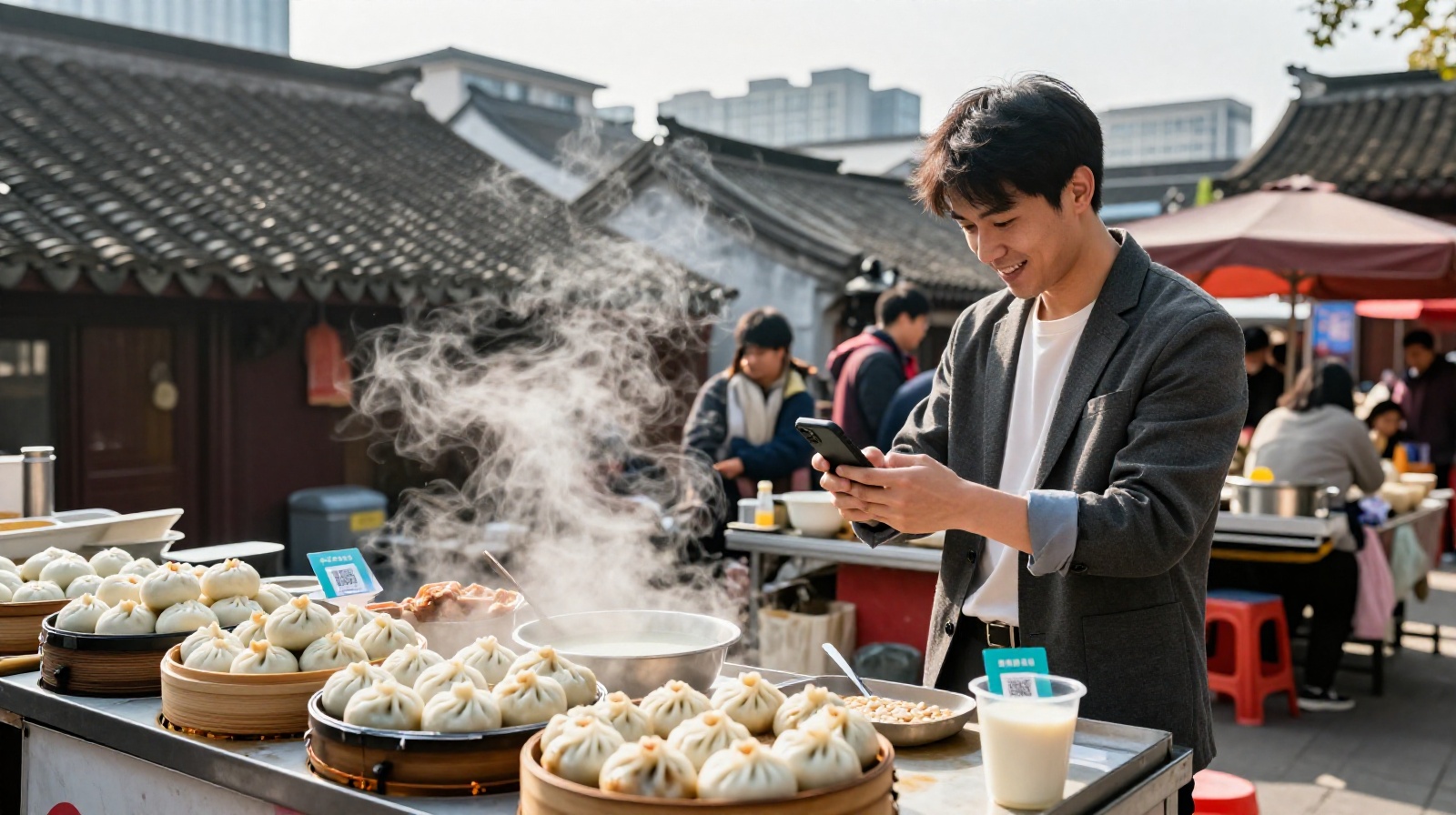
At 6:00 AM in the Gongshu District, the city isn’t waking up quietly. It’s roaring with the sound of woks clanging and vendors shouting. This is where the real Hangzhou begins.
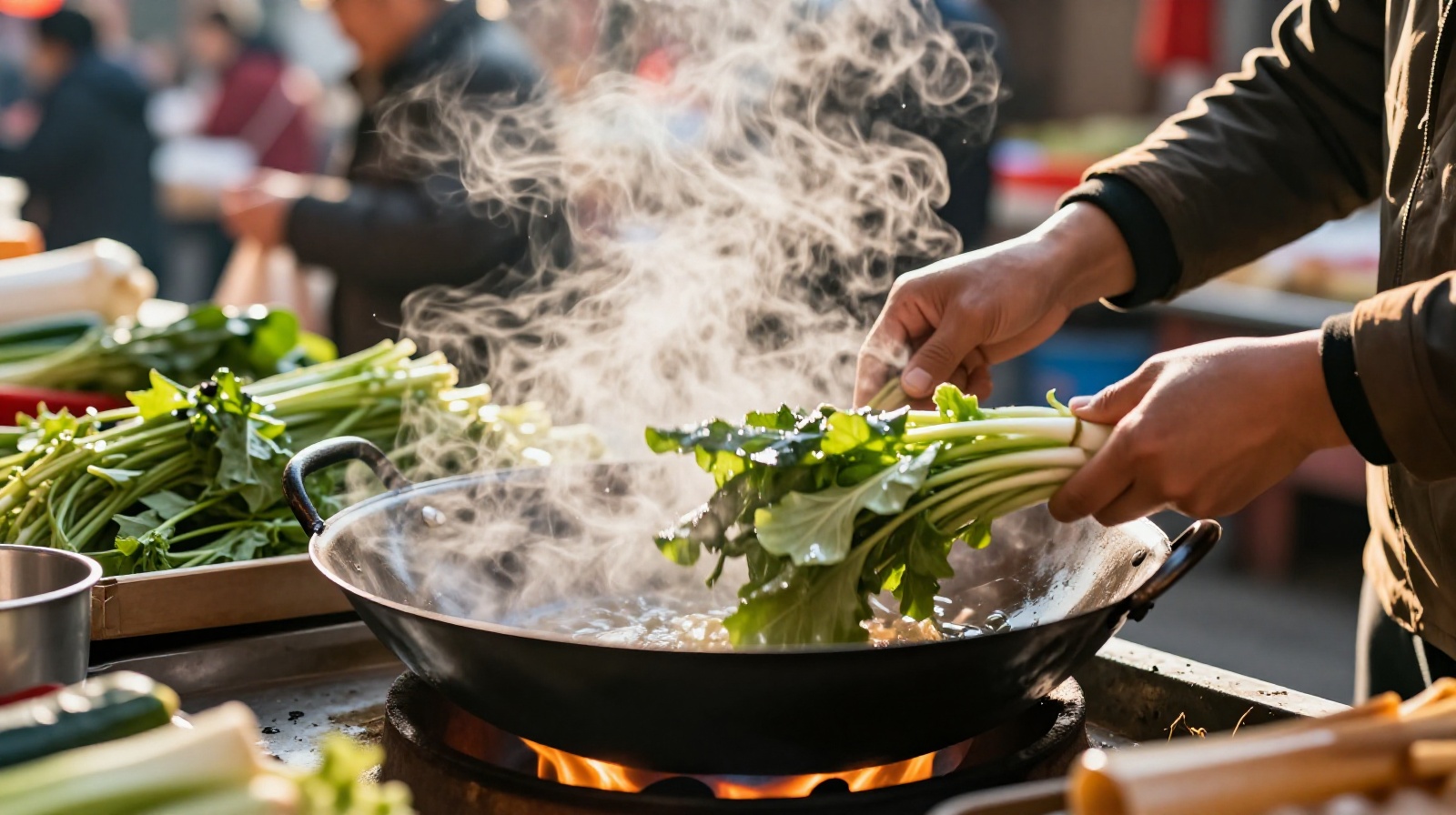
I watched a young office worker, still in his suit but loosening his tie, stop at a stall selling Shengjian mantou (pan-fried pork buns). He didn’t hesitate to bargain over the price of a few extra scallion pancakes. In these markets, freshness isn’t just a buzzword; it’s a negotiation tactic. A vendor might say, “Look at this radish! It was pulled from the ground two minutes ago.” You can see it in their hands—the calluses and the speed.
Forget expensive breakfast buffets. For millions of working families, a meal here costs less than a dollar. The social ritual isn’t about status; it’s about efficiency and community. Everyone knows everyone. The auntie selling tofu pudding is your neighbor; the uncle grilling skewers remembers how you take your tea.
Tech Meets Taste: Digital Payments in Every Alley
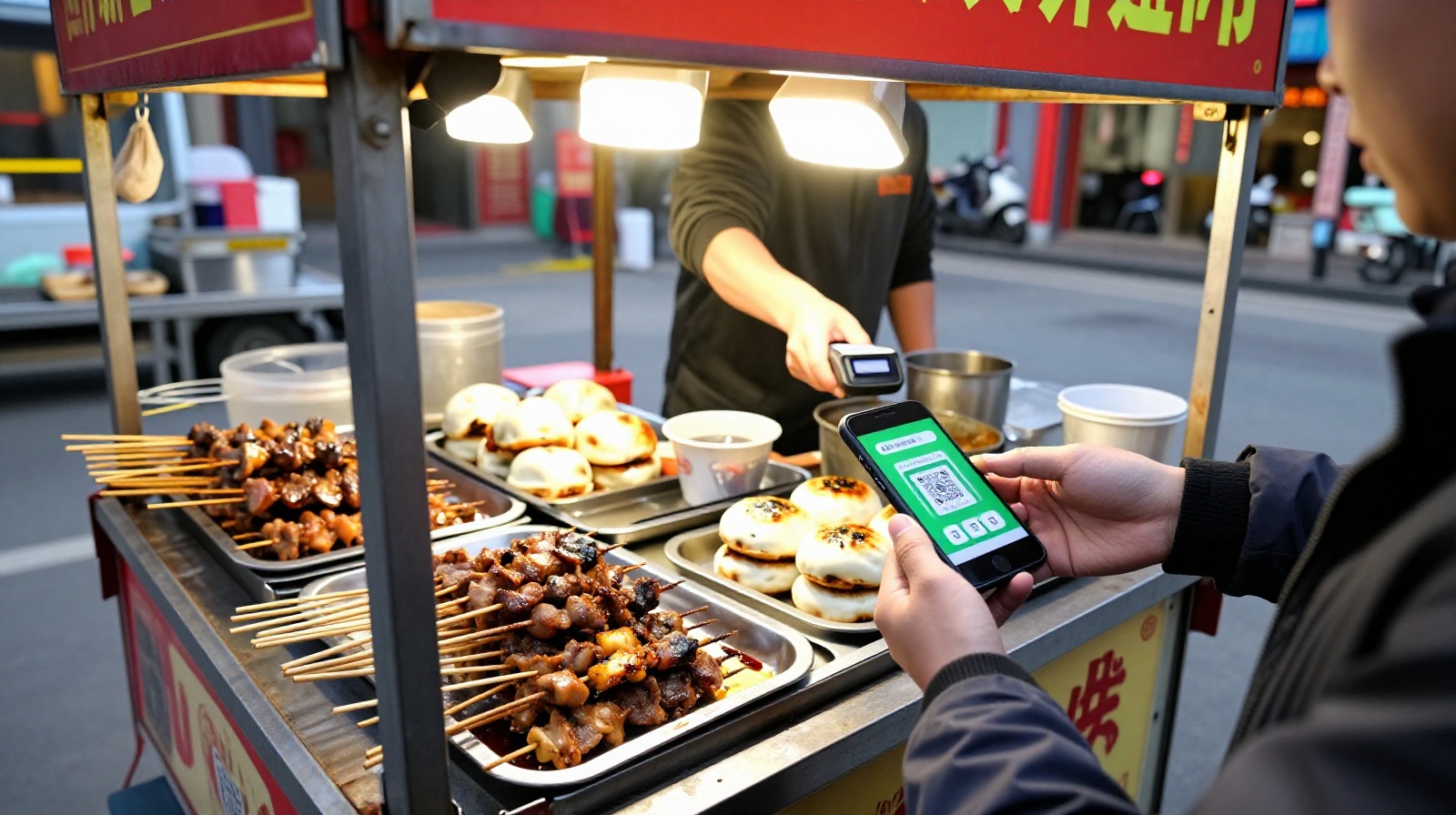
Here is where the “cashless China” myth becomes a daily reality. You stand before a steaming cart, and instead of fumbling for coins or bills, you simply pull out your phone.
WeChat Pay or Alipay? It doesn’t matter; both work instantly. The vendor scans a static QR code printed on a piece of laminated paper taped to the side of their cart. It’s a jarring contrast: the old-world smell of charcoal and oil, paired with the silent, digital chime of a completed transaction.
This isn’t just convenience; it’s a cultural shift. The elderly vendor who once feared technology now manages her inventory via an app on her tablet. The street food ecosystem in Hangzhou is so integrated that you could argue the city runs on code as much as it runs on rice noodles.
The Fine Dining Experience: Tradition vs. Modernity
So, what about those fancy restaurants? I visited a place like Jingxi, known for its elevated take on local cuisine. The expectation was an intimidating menu with prices that make your eyes water and waiters who treat you like royalty.
The reality was different. Yes, the bill is higher, but it’s not exclusive to the ultra-rich anymore. Locals book tables here for birthdays or after successful project launches. But what do they order?
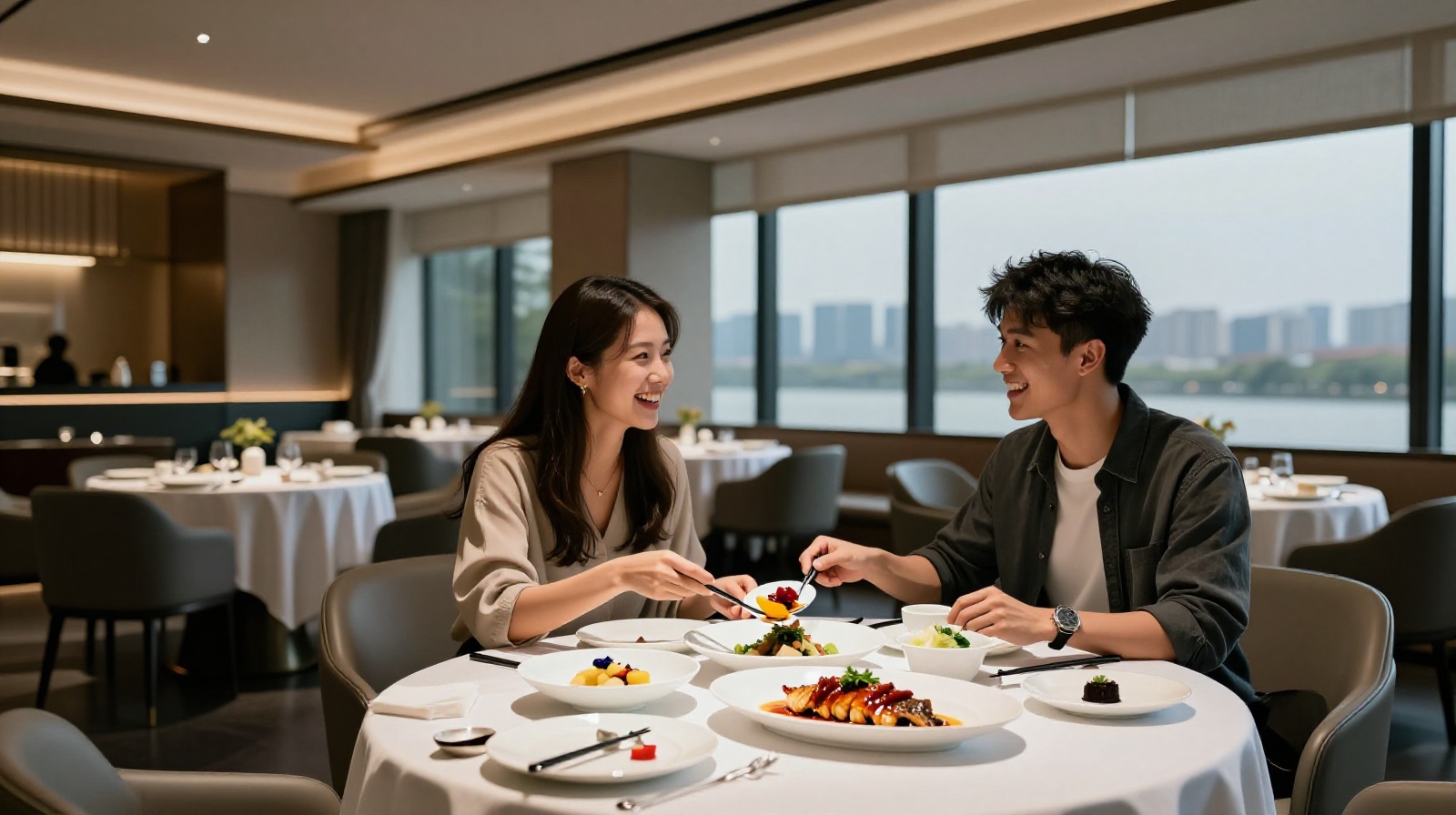
Surprisingly, many stick to classics—Carp in Vinegar Sauce or West Lake Vinegar Fish—but presented with a modern twist. The chef might use sous-vide techniques on traditional ingredients. It’s not about rejecting the street; it’s about elevating the home taste. You see young couples celebrating promotions, laughing, and sharing dishes family-style. The “luxury” here is less about gold leaf and more about the quality of the space and the story behind the dish.
Generational Shifts: Where Do Young Hangzhouites Eat?
If you want to know where the future of food lies, don’t look at the Michelin guide. Look at Xiaohongshu (Little Red Book), China’s version of Instagram.
Young Hangzhouites are obsessed with “hidden gems.” They use apps to find street stalls that have been around for 50 years but haven’t changed their name yet. There is a growing trend called “street-to-table,” where chefs take the bold, spicy, and savory flavors from night markets and reinvent them in upscale dining rooms.
Delivery apps show us this clearly. A single household might order dumplings from a street stall for lunch and book a reservation at a fine restaurant for dinner. The boundaries are porous. The young generation doesn’t see street food as “cheap” and fine dining as “classy.” They see them as different tools for the same goal: enjoying life.
A City Tasted Through the Eyes of Its People
Hangzhou is not a city that chooses between tradition and modernity. It eats both. The steam from the morning market rises into the glass facade of a high-tech office building. The smell of charcoal-grilled skewers mixes with the scent of expensive tea.
Food here is not just fuel or a status symbol. It is the most honest reflection of daily life, technological adaptation, and social change. Whether you are paying with cash (rare now) or scanning a code in a bustling alley, or sitting in a quiet room sipping slow-cooked soup, you are tasting the real Hangzhou.
Don’t just visit the museum. Go to the market. Try the street food. Then, maybe, treat yourself to that fancy dinner. That’s how you understand the city.