
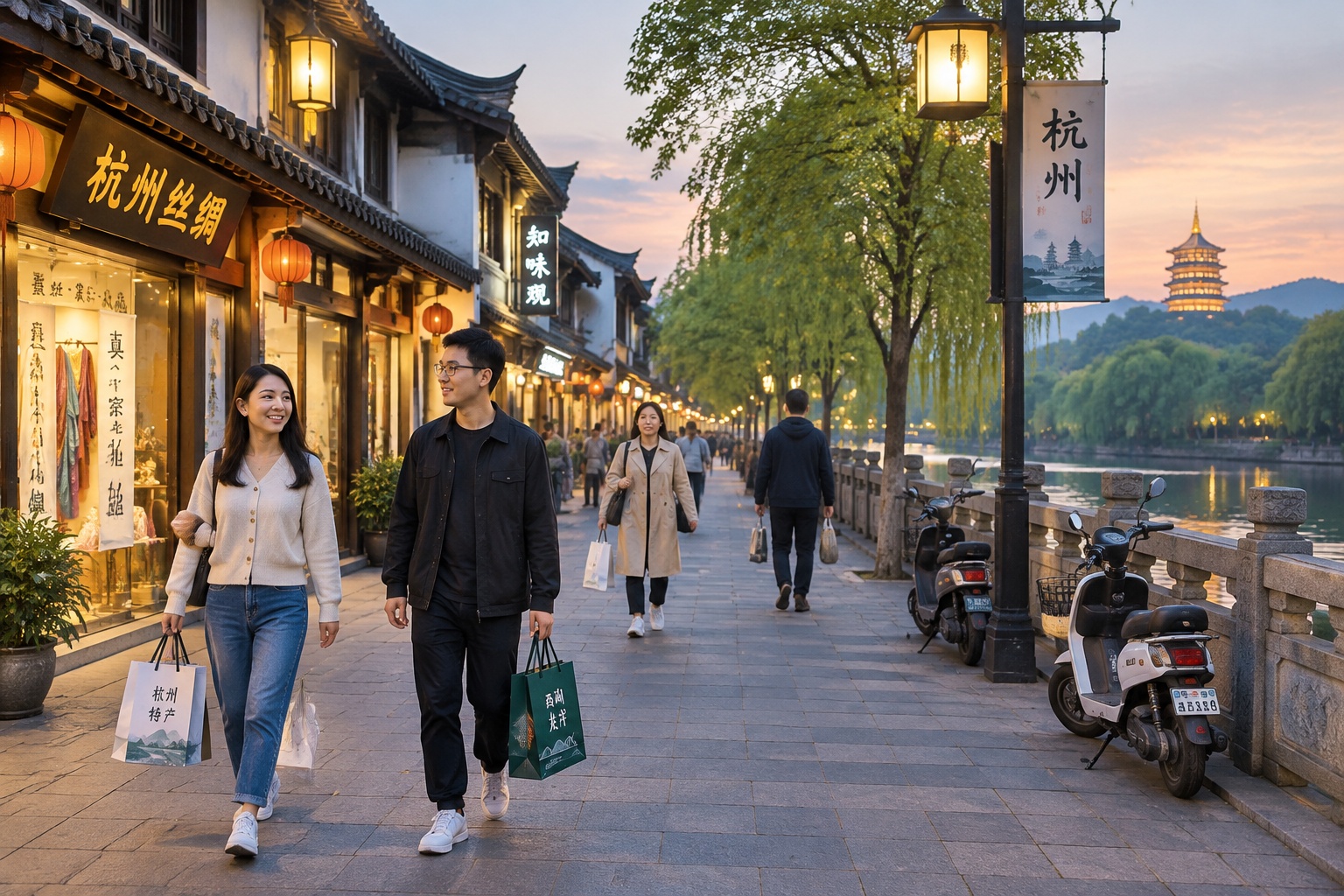

When the Sunset Fades, the Real City Wakes Up
It is just past 7:30 PM. The golden hour at West Lake has passed. A tour group of twenty tourists finishes their guided photo session near the Broken Bridge, chatting in English and snapping selfies before boarding a shuttle bus. As they disappear around the corner, the roar of camera shutters vanishes. In its place comes the low hum of electric scooters accelerating away from the curb, the sizzle of oil hitting charcoal grills, and the quiet murmur of locals returning home.
This is the moment Hangzhou reveals itself to those who know where to look. While travel brochures promise ancient temples and shimmering lakes, the city’s true heartbeat beats in its alleyways after dark. For the millions of residents here, tourism is a daytime event. Once the crowds thin out, the local rhythm takes over—a rhythm driven by digital convenience, micro-leisure, and small-scale commerce.
The Digital Pulse: How Technology Powers the Evening
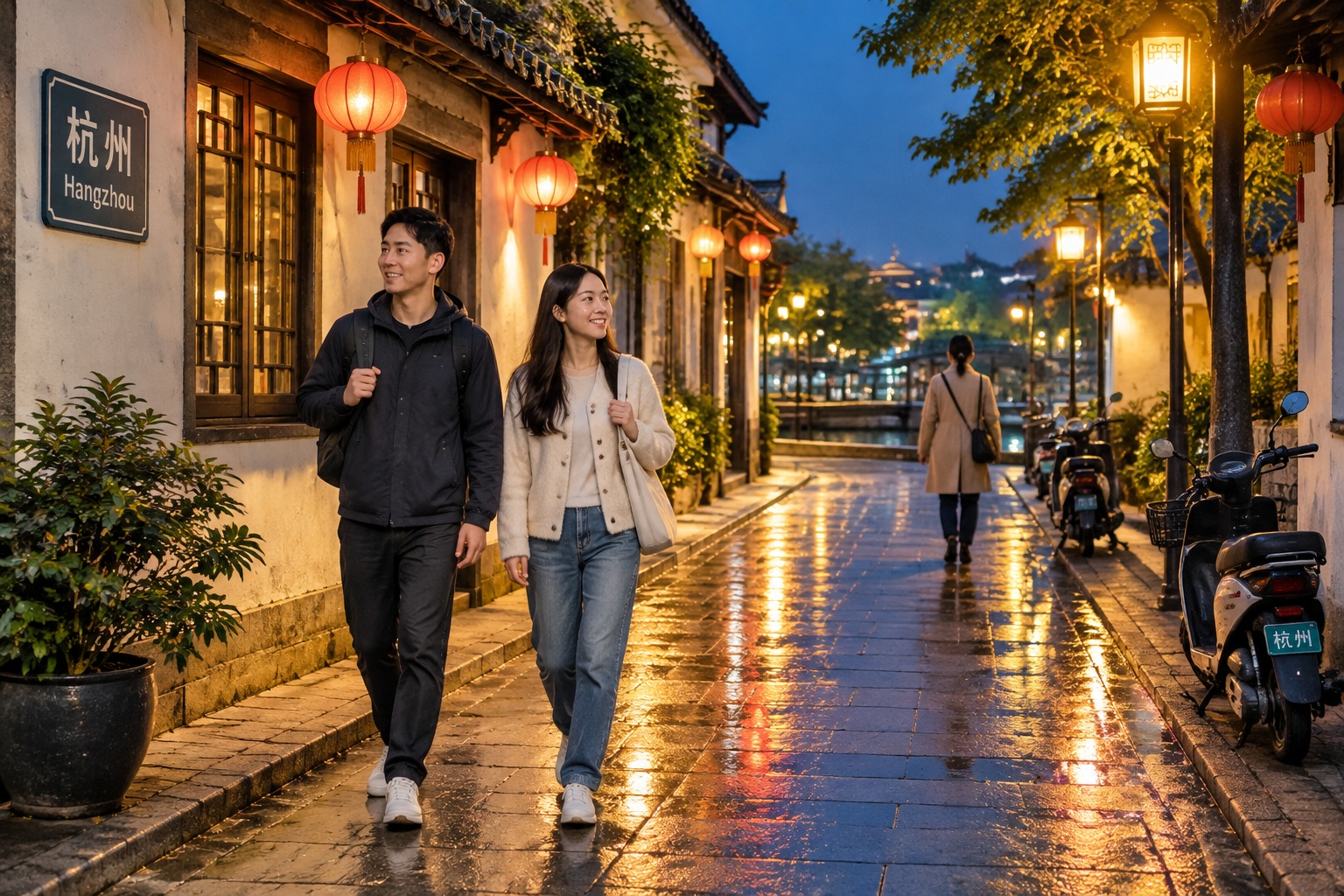
Walking down Hefang Street after 8 PM, you might miss the traditional architecture for a second to look at a phone. In Hangzhou, technology isn’t just a buzzword; it is the infrastructure of daily life. A young delivery rider named Chen stops his scooter at a street corner. He doesn’t reach into a wallet. Instead, he taps his screen on an Alipay app, scans a QR code on a vendor’s stall, and pays 12 yuan for a bowl of wontons.
This seamless transaction happens in seconds. For locals, the digital world is invisible yet omnipresent. Chen checks his GPS route, which optimizes traffic signals via smart city data, allowing him to weave through narrow alleys that cars cannot navigate. This efficiency isn’t limited to logistics; it shapes how people eat, drink, and move.
In a small bubble tea shop near the station, the owner uses a tablet to manage inventory while chatting with regulars who order via WeChat minutes before arriving. The line is short because everyone has already ordered. This level of integration means that even as tourists leave the main squares, the city’s digital nervous system remains fully active, connecting thousands of small transactions into a smooth flow of urban life.
Micro-Leisure: The Park as a Living Room
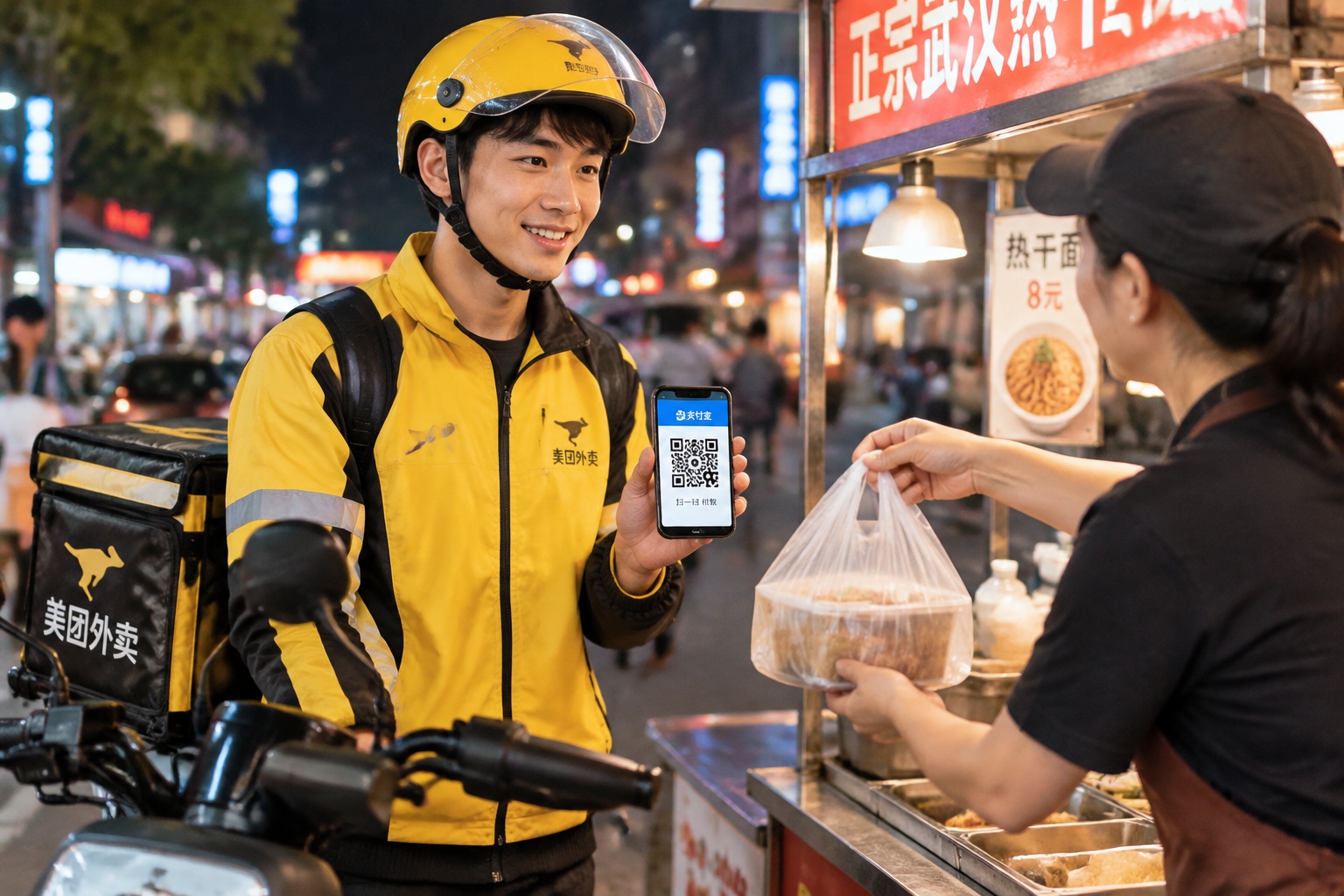
A few blocks away from the commercial district, the West Lake scenic area transforms again. By 8 PM, the day-trippers have gone to dinner or hotels. But in the public parks like Liuhe Pagoda Garden or along the Qiantang River promenade, the scene is entirely different.
Here, middle-aged men play badminton on makeshift courts marked by plastic cones. Teenagers practice skateboarding near a fountain while their parents sit on benches nearby, chatting quietly. In another corner, a group of women in matching tracksuits performs synchronized tai chi or yoga, moving to the soft sound of music from a portable speaker.
These spaces are free, safe, and accessible 24/7. For many residents, these parks serve as an extension of their living rooms. Unlike some Western cities where public spaces can feel unwelcoming after dark, Hangzhou’s urban planning prioritizes community access. The lighting is bright enough for safety but soft enough to be relaxing. There is no fee to enter, and the atmosphere is one of relaxed camaraderie rather than performance.
The Night Market Economy: Small Business After Dark
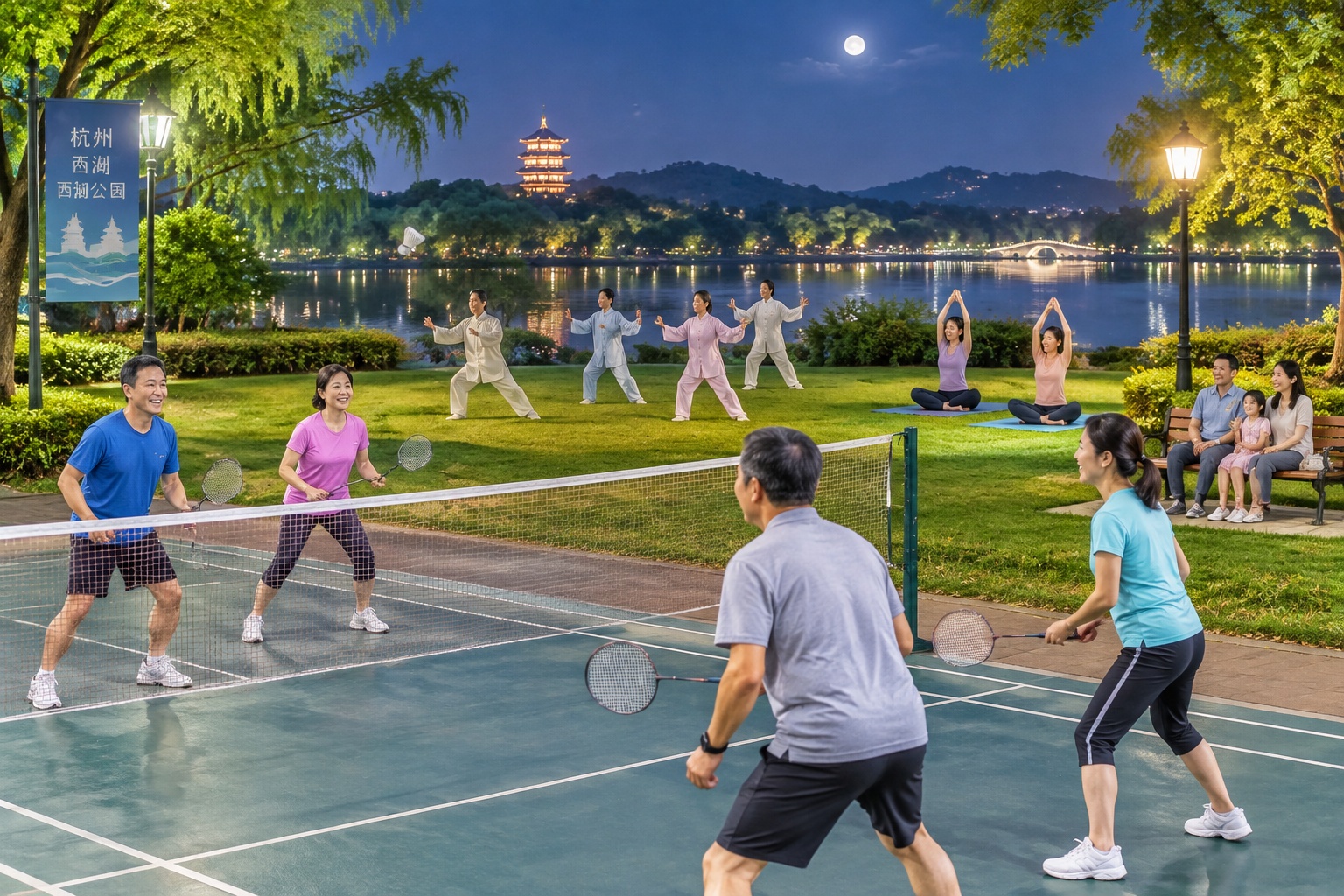
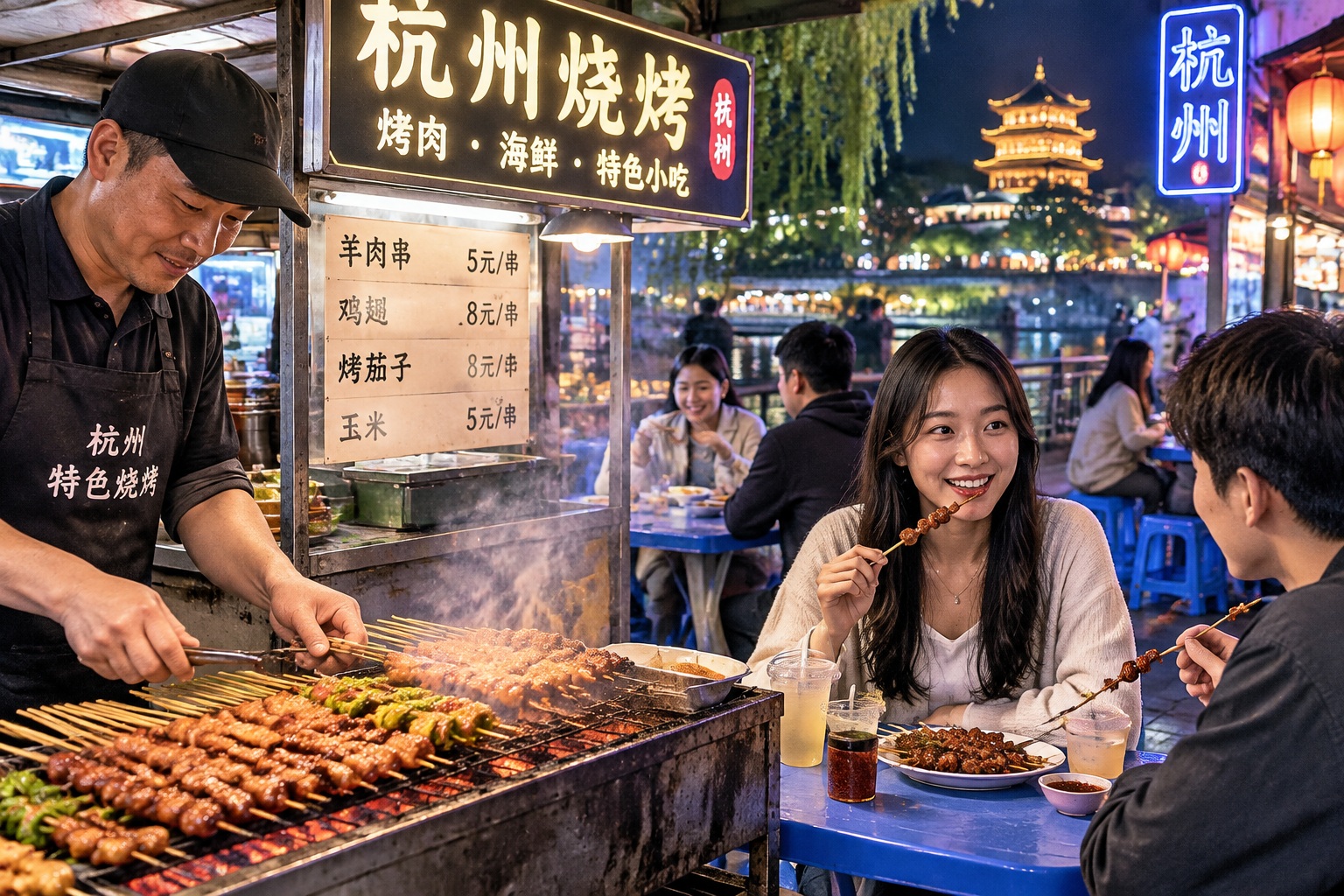
While big malls close up shop, a different kind of economy wakes up in the night markets. In areas like Wulin Square or the hidden alleys of Shangcheng District, small stalls set up tables as soon as the sun dips below the horizon.
I spoke with Li Wei, who runs a stall selling grilled squid and spicy noodles. “The tourists come during the day,” he told me, flipping skewers over a charcoal fire. “But they leave by 9 PM. My real customers are my neighbors—office workers in the building across the street, young couples walking home from the subway, and delivery riders taking a break.”
Li’s business model has shifted to serve this local crowd. He offers smaller portions at lower prices, catering to people who want a quick bite after work rather than a tourist feast. The turnover is high; tables are cleared and reset within minutes. This ecosystem relies on density and proximity. It is an economy built not for the postcard image, but for the daily survival and pleasure of the city’s inhabitants.
Beyond the Postcard: A City That Lives
Hangzhou is often reduced to images of ancient poetry and digital innovation. But the reality is far more grounded. When the tour groups leave, the city doesn’t stop; it simply shifts gears. The quiet streets are not empty; they are filled with the specific, unscripted moments of a modern Chinese community.
From the digital payments that speed up a dinner order to the badminton games in the park and the grilled squid stalls lit by neon signs, these are the threads that weave the fabric of daily life. For visitors, understanding this shift is key to seeing China not as a museum exhibit, but as a living, breathing place where technology serves humanity, and community remains central.
Start the discussion at forum.chinacomes.com