

Before the Silence Breaks
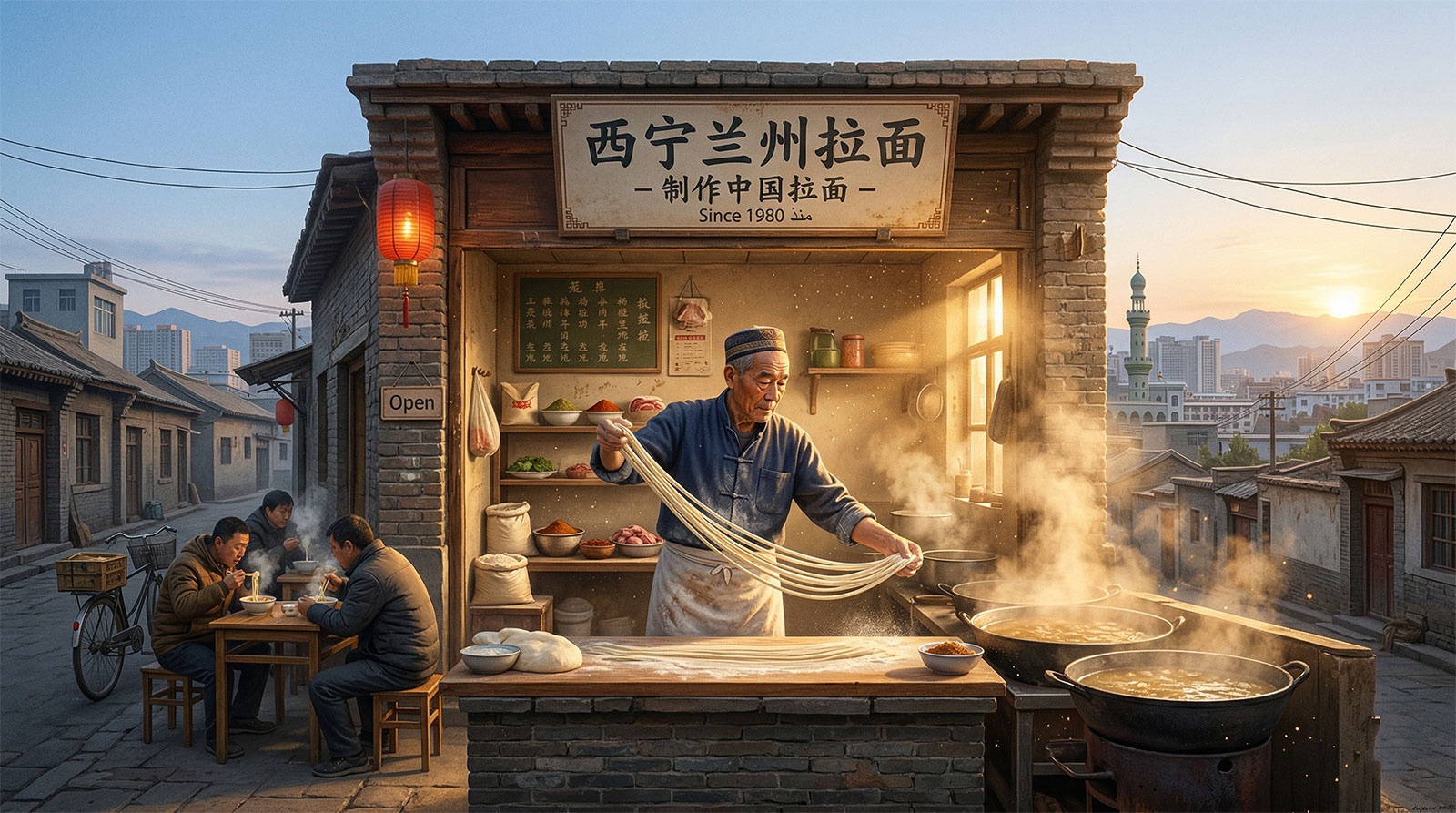
In Xining, Qinghai’s capital city located in China’s northwest, the air is still crisp at 3:00 AM. The streets are empty, save for a few delivery scooters and the occasional sanitation worker. But inside a small, unmarked shop with fogged-up windows, the real day is beginning.
Ma Cheng, 42, pulls back his sleeves. He doesn’t check emails or review spreadsheets. Instead, he reaches for a massive lump of dough sitting in a stainless steel tub. This is the start of what locals call mian, hand-pulled noodles that have fed generations in this region.
Most people outside China imagine Chinese food as complex dim sum or spicy stir-fries. But for millions in western China, breakfast is simple, fast, and incredibly labor-intensive: a bowl of clear broth, chewy noodles, and fresh cilantro. Today, we are following Ma through his shift to understand how this traditional craft survives in the modern era.
The Physics of Stretching Dough
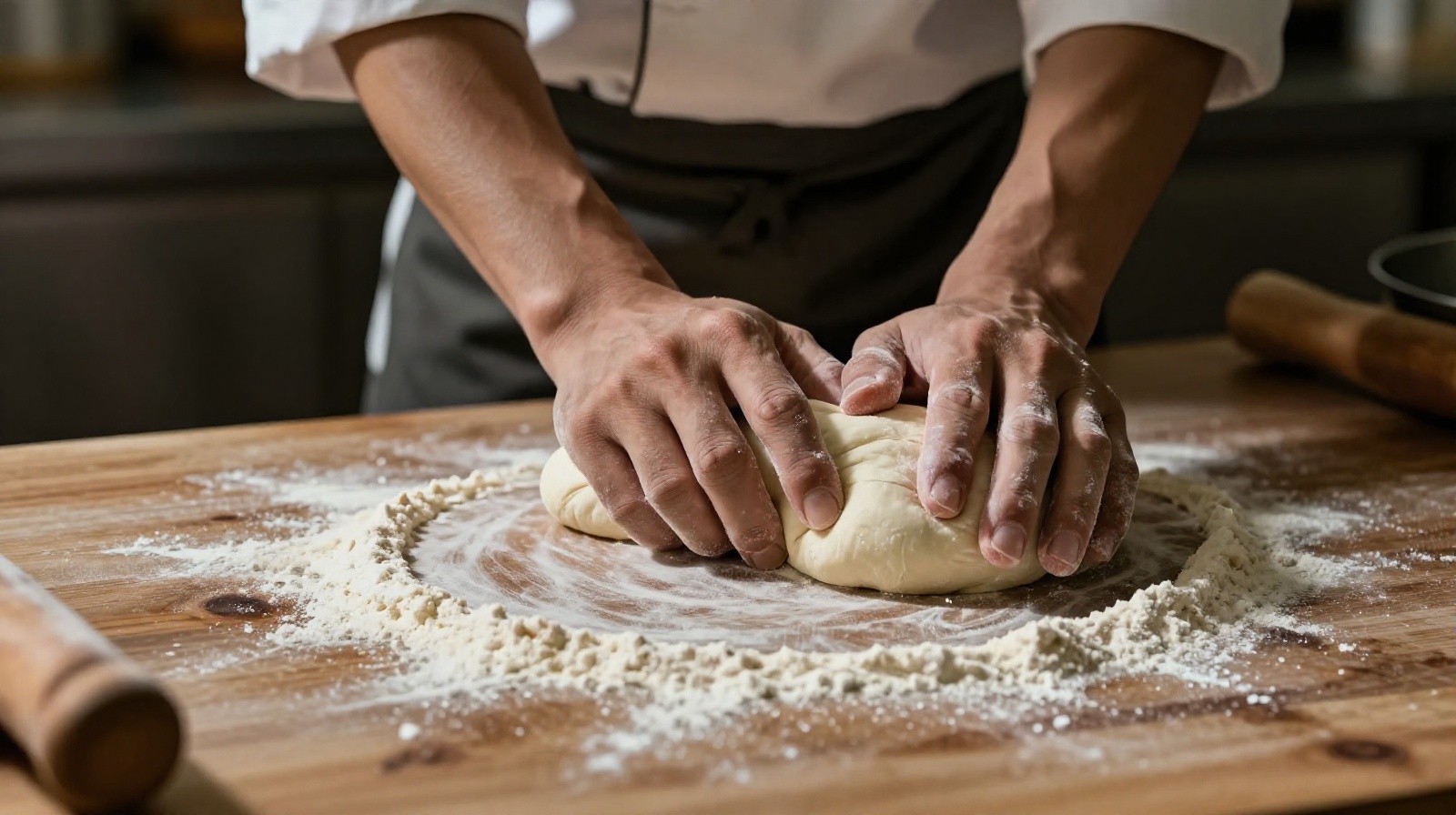
There is no machine here. Ma’s hands move with a rhythm that looks like a dance but feels more like wrestling.
“You have to listen to the dough,” Ma says, his voice raspy from the early heat. “If it’s too dry, it snaps. If it’s too wet, it sticks.”
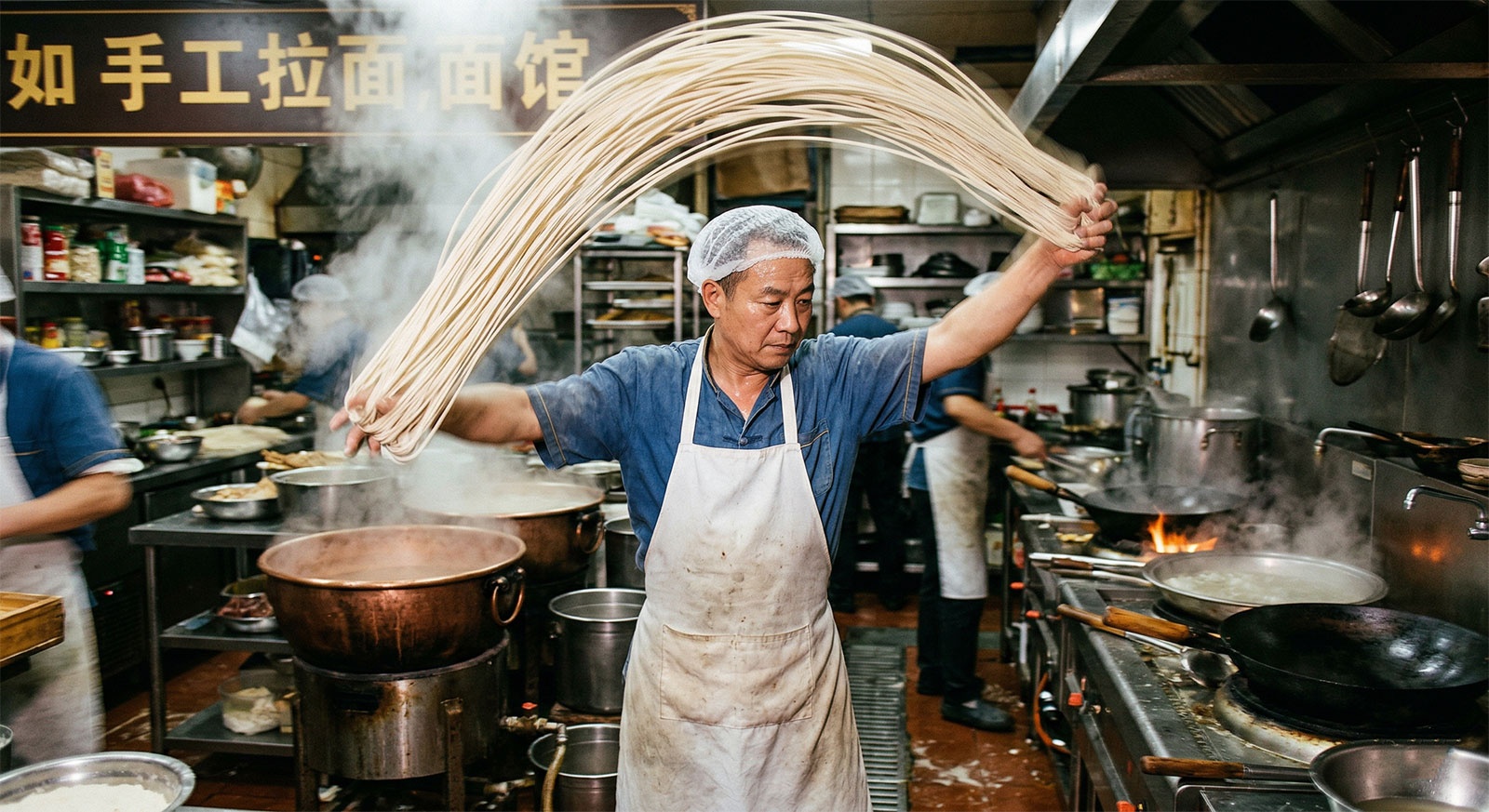
The process is physical and repetitive. He slaps the dough against the counter, folds it into a square, rolls it into a long rope, and twists it. Then comes the stretch. With a sharp flick of his wrists, he pulls the rope from both ends, doubling its length with each pull until it becomes hundreds of thin, translucent strands.
For an outsider, this might look like magic. In reality, it is years of muscle memory. Ma started making noodles at 14, working in his father’s shop. His hands are calloused and scarred, a map of forty years of labor.
This isn’t just about feeding people; it’s about maintaining a skill that machines struggle to replicate perfectly. While food delivery apps like Meituan dominate the city, they cannot deliver the specific texture Ma creates in his small kitchen. The demand for this manual craft remains surprisingly high among construction workers and truck drivers who need energy that lasts.
The Broth: Tradition Meets Logistics
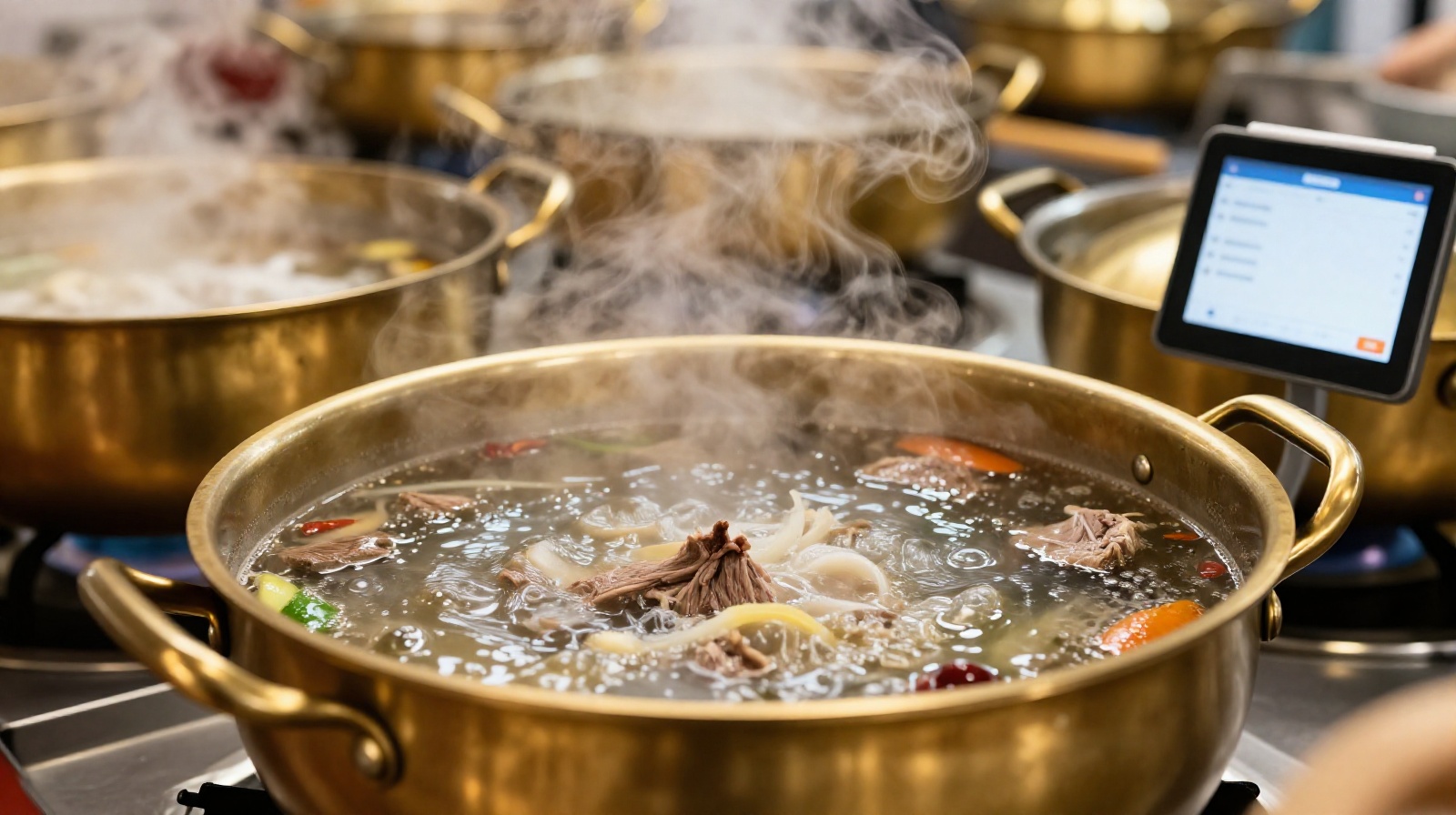
While Ma pulls noodles, his assistant is tending to the giant brass pots simmering on the stove. The broth here is not just water and salt. It requires beef bones boiled for over 10 hours with a specific blend of spices from across China.
In the past, sourcing these ingredients was difficult in Qinghai due to its remote location. Today, however, the story is different. Modern logistics networks have made it possible to get high-quality beef from Inner Mongolia and Sichuan within days. The spices are imported via cargo trucks that traverse the G109 highway, a lifeline connecting the plateau to the coast.
Ma’s shop has even adopted digital inventory systems. He uses a tablet to track when his spice packets run low, ordering replacements via an app before he even wakes up. “We keep the old taste, but we use new tools,” he explains. This blend of ancient technique and modern efficiency is exactly what defines small business in 2024 China.
The First Customers: A Morning Rush
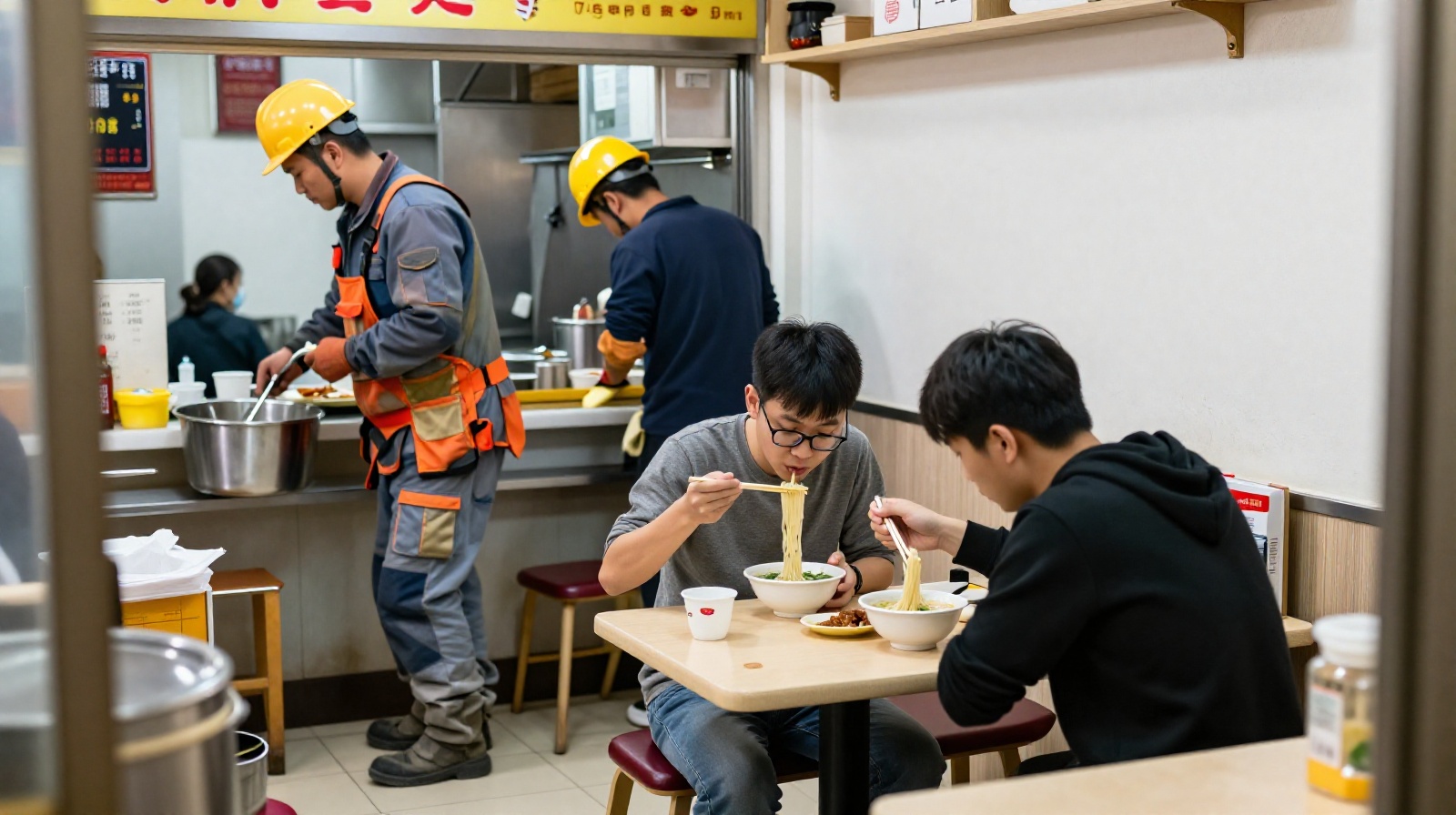
By 5:30 AM, the door opens. The first wave of customers floods in. There is no menu; everyone knows exactly what they want.
Liu Wei, a truck driver heading to a construction site in Gansu province, orders three bowls. He doesn’t care about the decor or the music (which is usually just the sound of boiling water and chopping). He cares about the warmth and the protein. “One bowl isn’t enough for the road,” he says while slurping noodles.
Next to him sits a university student, Xiao Ya. She has walked 15 minutes from campus to eat here because she trusts Ma’s hygiene standards more than big chains. For her, this is a moment of calm before a day of lectures and exams.
These interactions happen in seconds. Cashless payments are instant; customers tap their phones on a small scanner near the door. There is no waiting for change, no confusion about prices. It is a seamless flow of service that keeps the line moving quickly.
A Small Bowl, A Big Picture
Why does this matter? Ma’s shop represents a microcosm of Qinghai’s economy. The region has seen significant growth in tourism and infrastructure over the last decade, but small businesses like his are the foundation.
Data from local statistics shows that street food vendors contribute significantly to employment in western China. They provide flexible jobs for people who might not fit into a 9-to-5 office structure. For Ma, this work allows him to support his family and save enough to send his daughter to university in Xi’an.
Moreover, the shop is becoming part of the travel narrative. Tourists driving along the Qinghai-Tibet Railway now stop specifically for “Ma’s Noodles.” They aren’t just buying food; they are participating in a local ritual that connects them to the culture of the plateau.
The Quiet Satisfaction
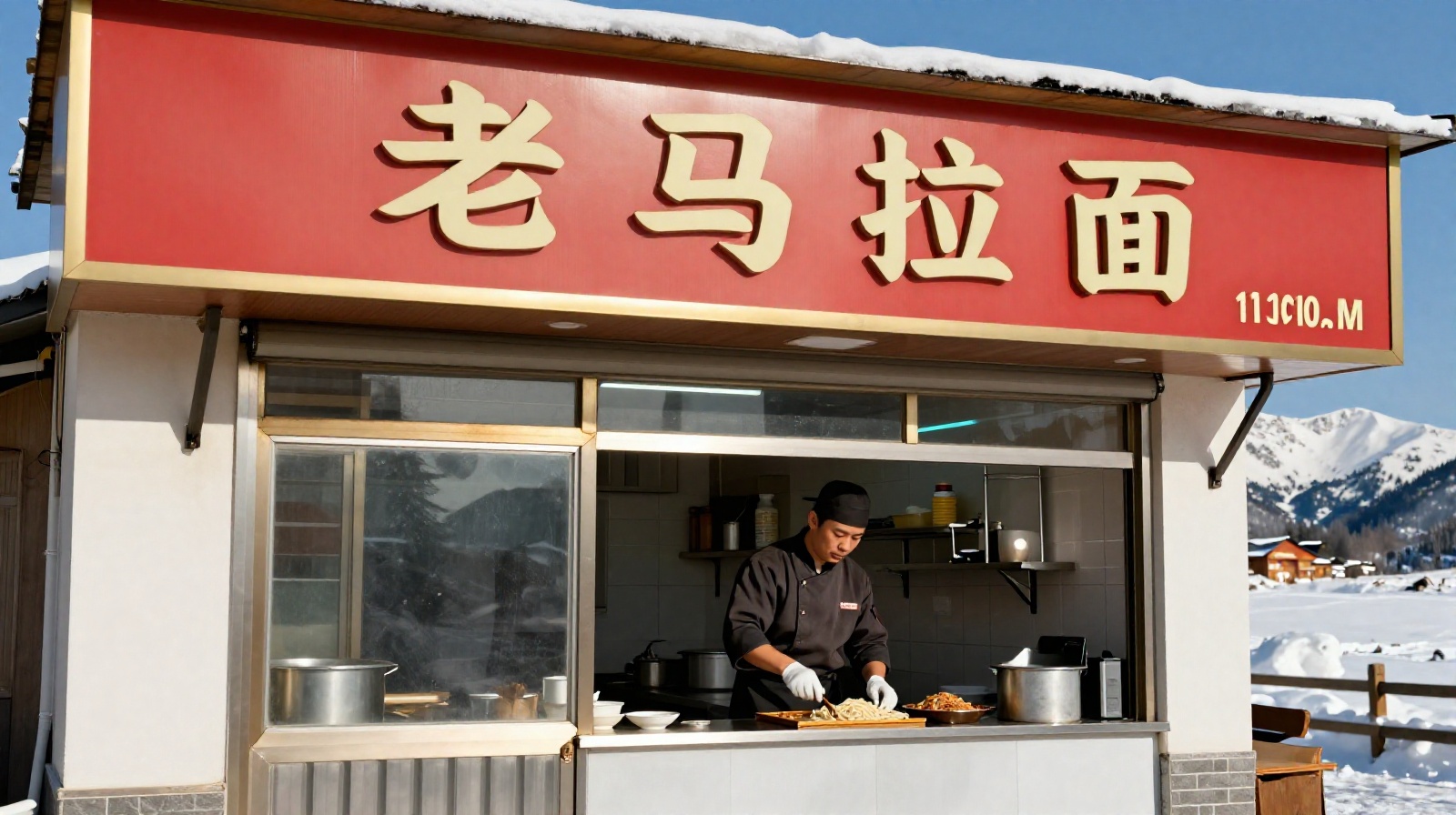
By 10:00 AM, the morning rush dies down. Ma wipes down his station, the steel tub now empty except for the last scraps of dough. He takes a short break, drinking a cup of strong tea.
Outside, the sun is fully up, illuminating the snow-capped mountains in the distance. The city is waking up, but inside the shop, there is a quiet pride. Ma knows that today, he fed hundreds of people who will now work hard to build and sustain their community.
In a world obsessed with speed and automation, Ma’s slow, deliberate hands remind us of something fundamental: progress doesn’t always mean replacing humans. Sometimes, it means giving them better tools while they continue to do what they do best.