
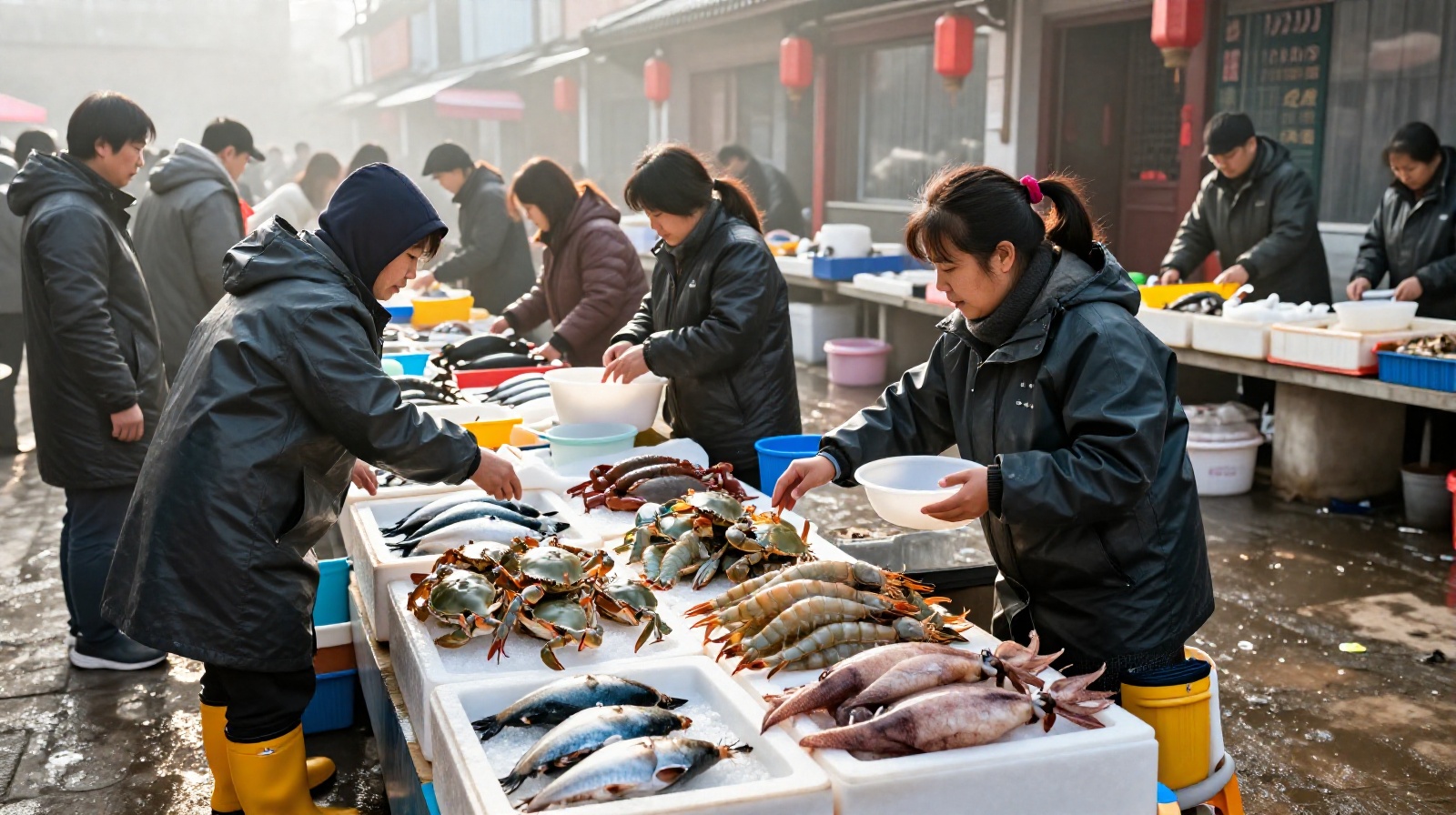

10:30 AM at the Fisherman’s Wharf Market
The air is thick with brine and the sharp cry of gulls. At the entrance to a busy market in Dalian, a tourist group pauses near a stall overflowing with blue crabs. The vendor, a woman in her fifties wearing rubber boots, shouts a price: 60 yuan ($8) per pound. To the visitors from New York or London, this seems like a steal compared to seafood back home. They pull out cash, eager for their “seafood freedom.”
But two blocks away, in a quiet residential alley known locally as *laobei* (old neighborhood), things look different. Here, at 10:30 AM, the stall is empty of tourists. It’s filled with local women checking the price of fresh squid—35 yuan ($4.70) per pound. The same vendor from the tourist spot would never sell here; the margins are too thin. This is where Dalian families actually eat.
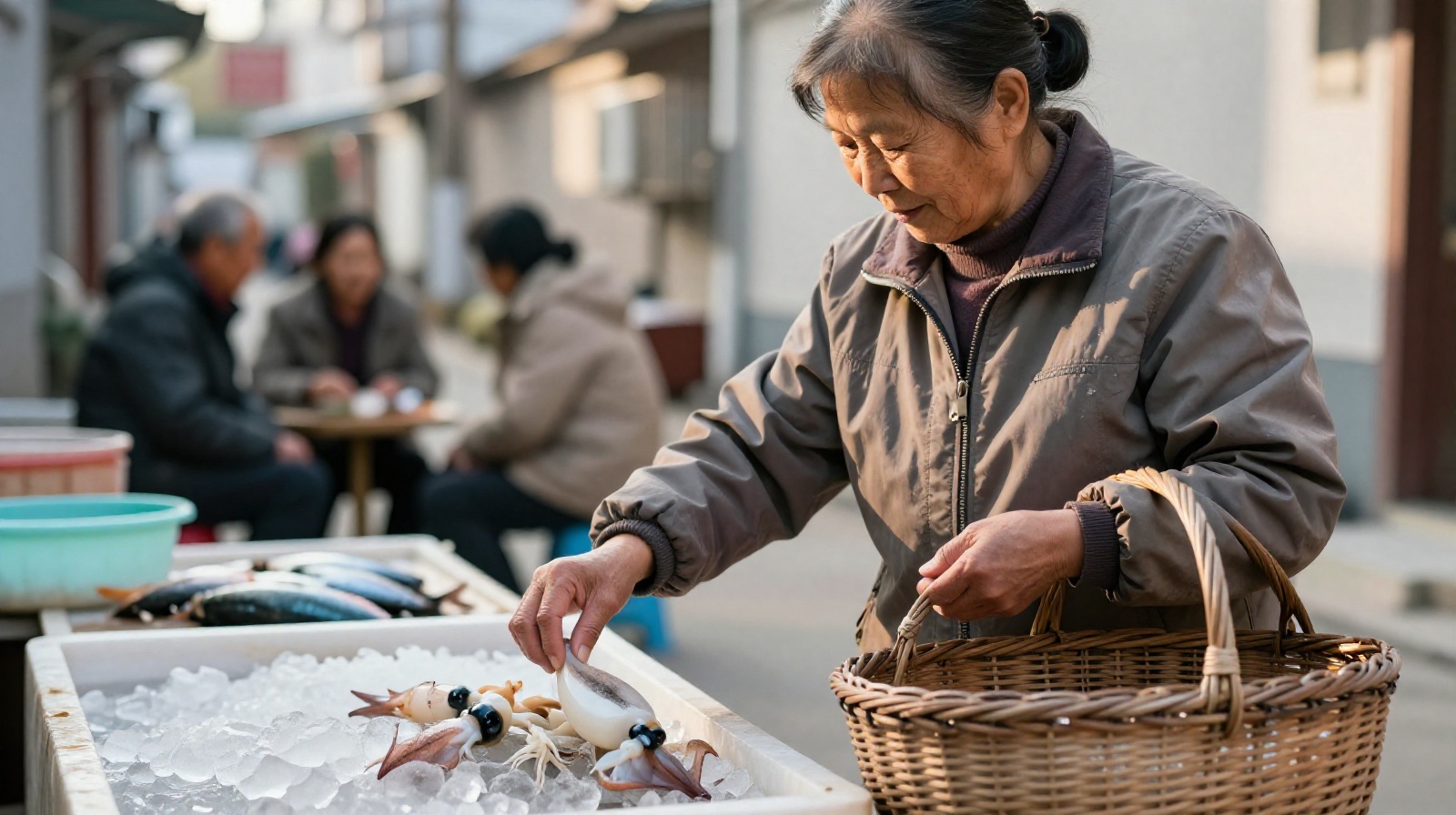
A local woman in a quiet residential alley examines fresh squid at a morning fish stall, with neighbors chatting nearby.
The Myth of “Seafood Freedom”
When travel influencers talk about “seafood freedom,” they usually mean the ability to order unlimited plates without checking your bank account. In Dalian’s tourist zones like Xinghai Square or the Fisherman’s Wharf, this illusion holds up for a few hours. You can buy crab legs and lobster tails at prices that feel low compared to Western capitals.
However, “freedom” implies abundance and accessibility for everyone. For locals, seafood is often a treat, not a daily staple. The price of high-quality local catch—like yellow croaker or sea urchin—can skyrocket during peak seasons or holidays. A recent survey by Dalian’s Municipal Bureau of Statistics noted that while fish prices have stabilized post-pandemic, premium species remain 30-50% more expensive than in inland provinces like Henan.
A Morning Market Routine
To understand the real cost of living, follow a typical morning routine. At 6:00 AM, Li Wei, a retired teacher from Shahekou District, arrives at the neighborhood wet market. She carries a woven basket and a small notebook to track prices. Her goal isn’t luxury; it’s three simple dishes for dinner: steamed clams, stir-fried kelp, and a soup made with leftover fish bones.
She pays 12 yuan ($1.60) for two pounds of clams, a price that has remained stable for years. “If I went to the tourist markets,” she says, wiping her hands on her apron, “I’d pay double for the same quality. Plus, the fish there is often caught by boats from far away, not local waters.” Her routine highlights a crucial distinction: locals buy based on freshness and proximity, while tourists buy based on spectacle.
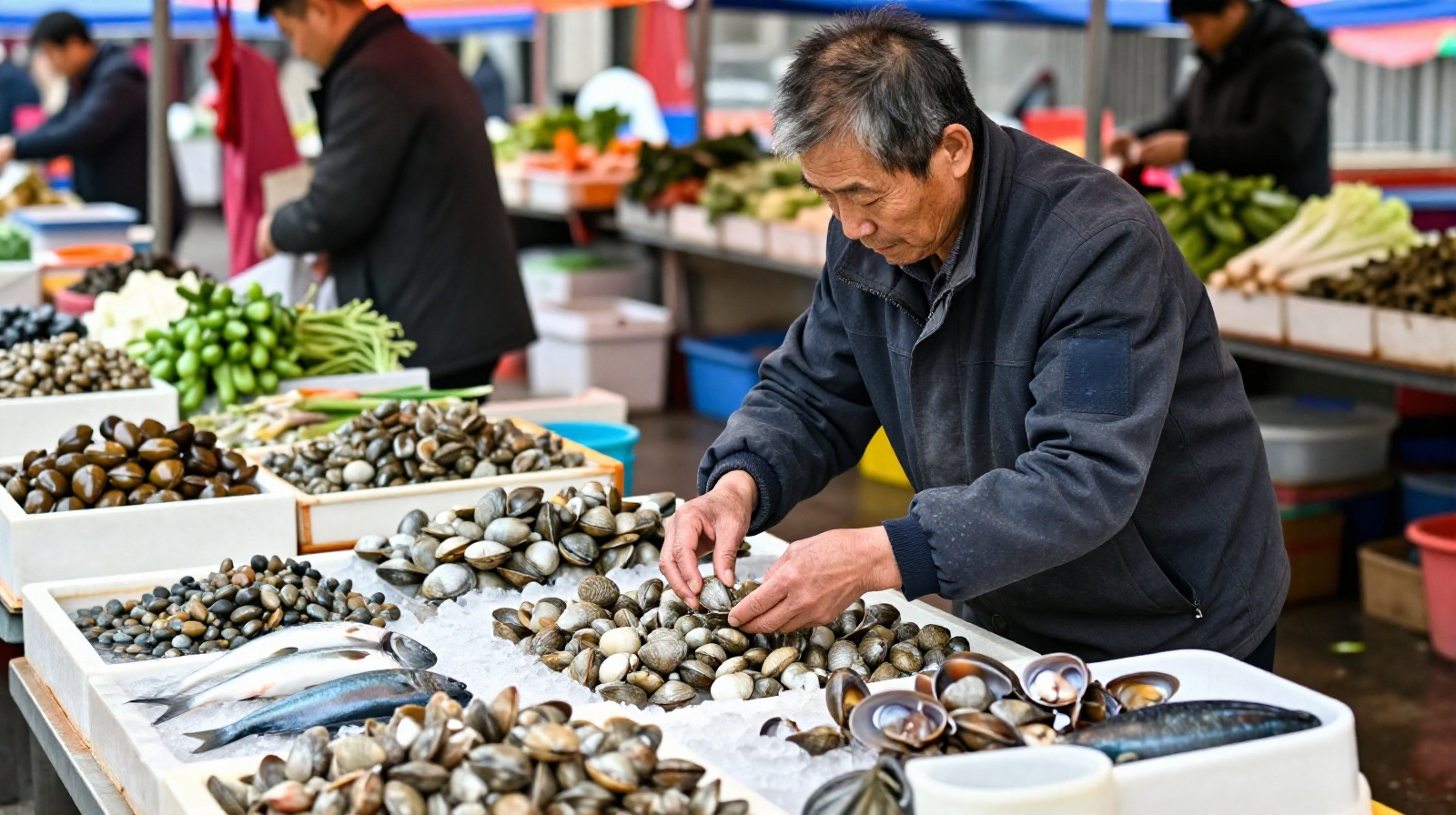
A retired teacher in Shahekou District carefully selects clams at a morning wet market, surrounded by baskets of fresh produce.
Seasons, Rules, and the Real Menu
What is on the table changes with the seasons. During the summer fishing ban (a government regulation to protect breeding stocks), local catches drop significantly. This is when locals rely more on frozen imports or inland farming—shrimp from aquaculture farms in Shandong rather than wild-caught varieties.
In winter, the catch of sea urchins and abalone peaks. Prices fluctuate based on supply chains that stretch across the Bohai Sea. A local housewife might wait until mid-December to buy abalone for a special family gathering, knowing the price will be lower once the new season starts.
This seasonal rhythm shapes the entire community’s diet. It’s not about having “unlimited” seafood; it’s about adapting to nature and policy. The government’s strict fishing bans, while sometimes frustrating for fishermen, ensure that the local ecosystem remains viable for future generations.
Seafood as Identity
In modern China, food is more than fuel; it is a marker of identity and community. For Dalian families, sharing a seafood meal is a way to connect with their coastal heritage. Even in high-rise apartments with air-conditioning, the smell of cooking seaweed or steaming crab brings back memories of the seaside.
The shift from “survival” to “quality” is evident. Twenty years ago, fish was a rare delicacy reserved for New Year’s Eve. Today, while prices are higher, the variety is greater. Young professionals might order online delivery apps to get fresh oysters delivered to their doorsteps, blending ancient traditions with modern convenience.
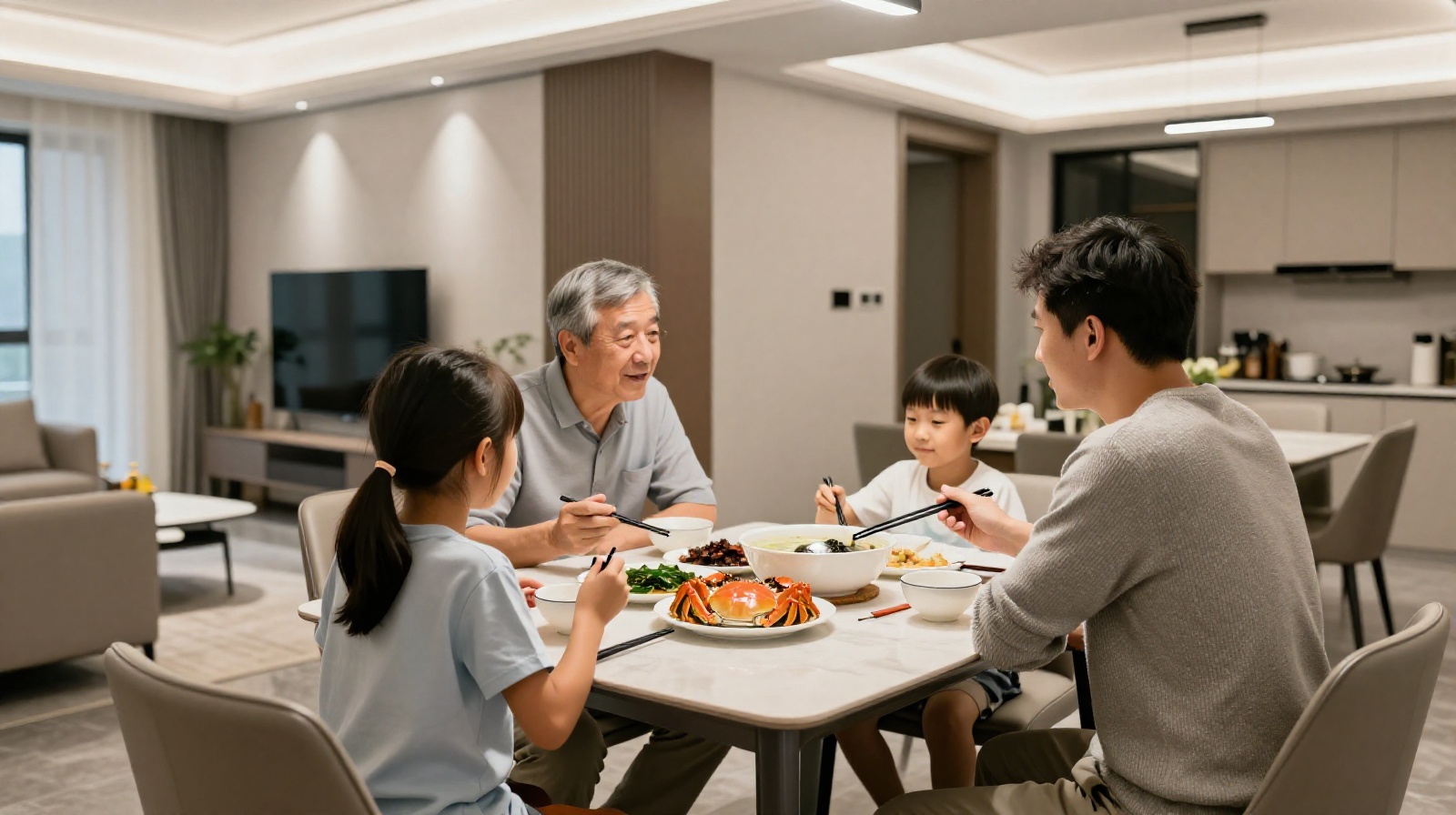
A family dining together in a modern apartment, enjoying steamed crab and seaweed soup, highlighting the blend of tradition and modern life.
Conclusion: Beyond the Tourist Lens
Dalian offers a unique case study in how global perceptions clash with local realities. The “seafood freedom” tourists enjoy is a temporary luxury, often purchased at a premium price point that excludes locals from their own backyard.
For the average Dalian resident, seafood is a cherished part of daily life, bought with care and respect for its value. It is not an endless buffet; it is a carefully curated experience shaped by seasons, regulations, and family traditions. This nuance is what makes the city’s food culture so rich—and why understanding the difference between the tourist menu and the local table matters more than any headline.