

The Myth of the “Natural Delicacy”
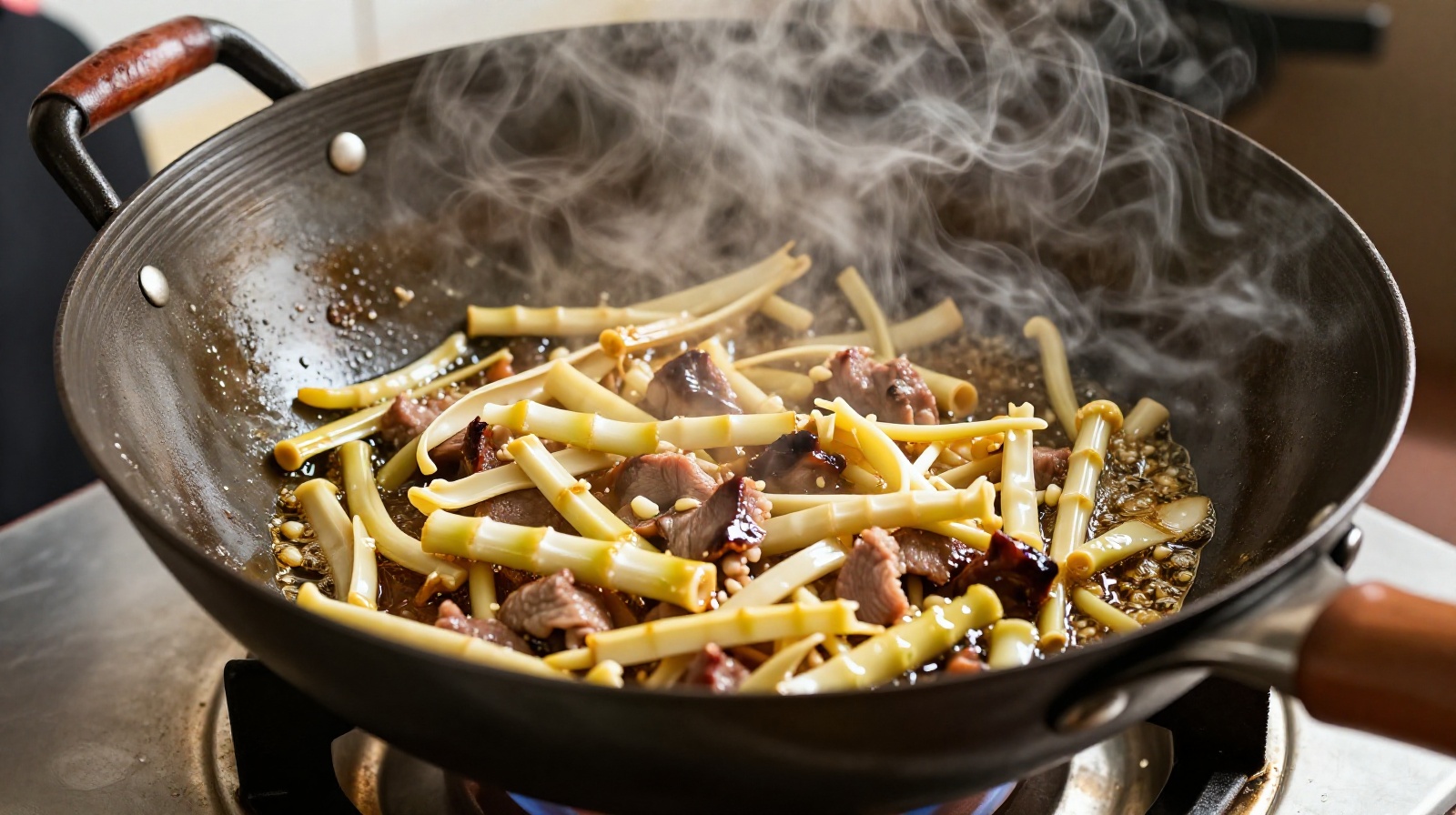
Picture a plate of Youmen Sun (oil-braised bamboo shoots) at your local Chinese restaurant. The slices are golden, glistening with oil, and look impossibly crisp and tender. It’s easy to assume that nature simply handed us this perfect ingredient.
The reality is much more brutal. If you were to dig up a fresh bamboo shoot from the wild today and boil it, you would likely be disappointed—and possibly hurt. Many varieties are intensely bitter. Some have fibers so coarse they feel like chewing wood chips. Others contain compounds that cause a numbing sensation on the tongue, similar to mild static electricity.
So why do Chinese people revere bamboo shoots as the ultimate symbol of spring? The answer lies not in biology, but in centuries of culinary discipline.
A Harsh Selection Mechanism
Bamboo is everywhere in Asia. Yet, turning it into a refined cuisine is uniquely Chinese. This isn’t because bamboo is inherently good to eat; it’s because humans filtered out the bad parts over thousands of years.
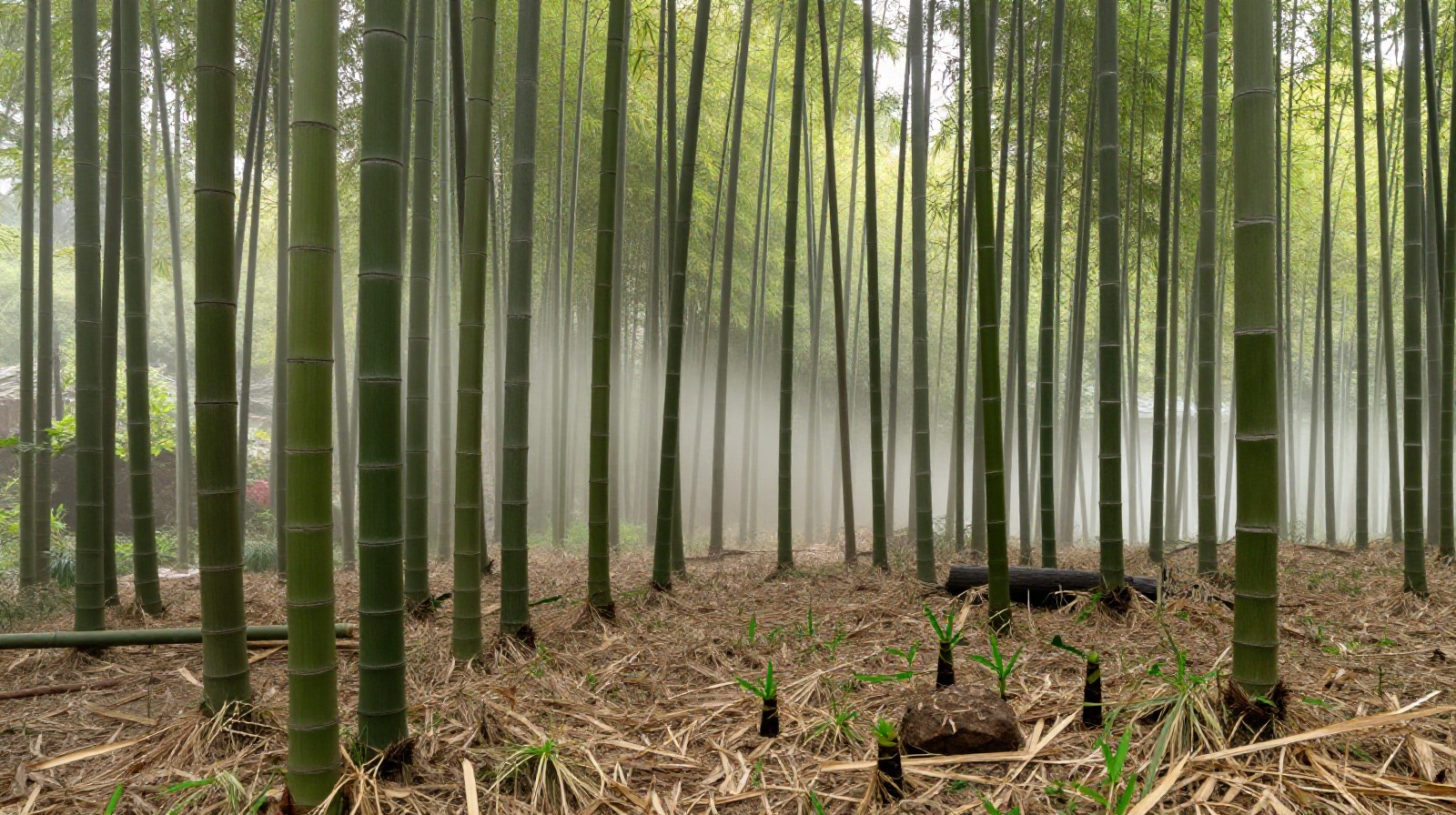
First, not all bamboo shoots are edible. There are hundreds of wild species. Most are either too small to harvest efficiently or too fibrous for human digestion. The bamboo we eat today is a result of careful selection—specific varieties grown in specific regions that balance yield with edibility.
Second, even edible shoots vary wildly in quality. Flavor depends heavily on the environment. Too much sun increases bitterness; poor soil makes the texture woody and astringent. This is why store-bought bamboo shoots abroad often fail to capture that elusive “spring freshness.” They lack the precise growing conditions required for peak flavor.
Transforming Bitterness into Flavor
This is where Chinese cooking shines: it doesn’t shy away from an ingredient’s flaws; it uses technique to fix them.
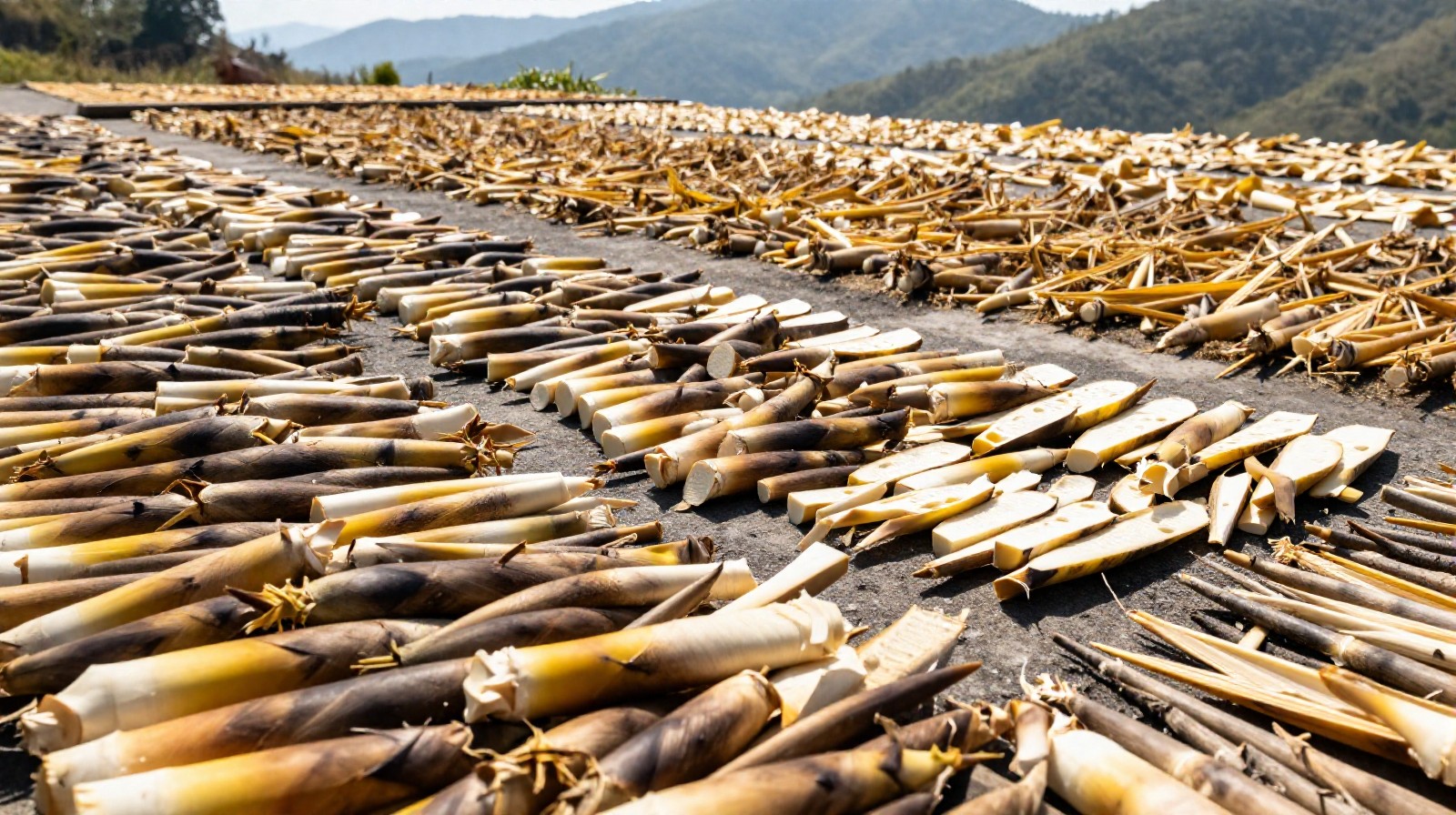
If a shoot is too bitter, we preserve it through fermentation (like Suan Sun, or sour bamboo shoots). If it’s too astringent, we boil it repeatedly in salted water. If it lacks crispness, we dry it (Sun Gan) to use in winter stews. These methods aren’t just about changing taste; they’re about preservation.
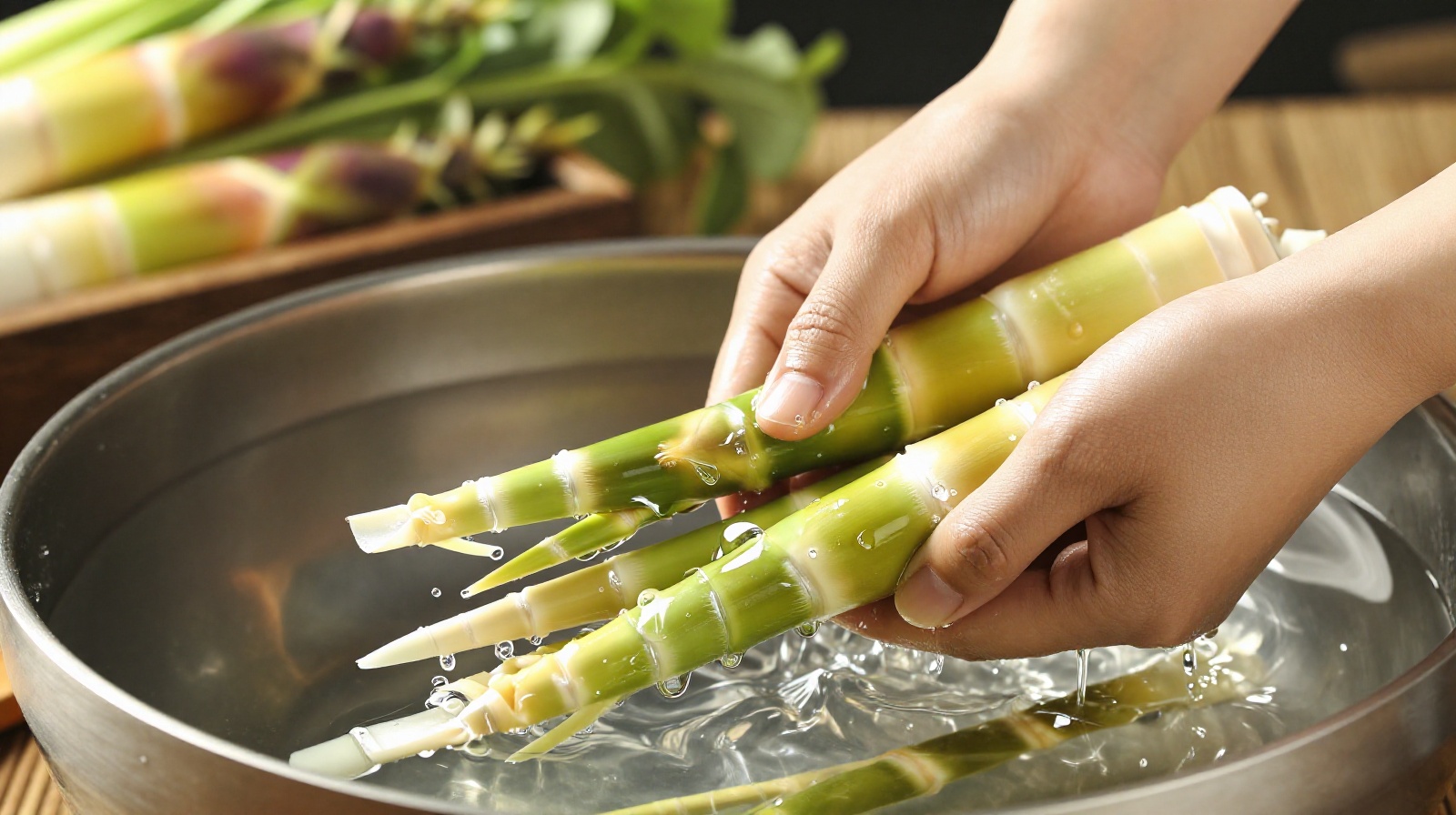
The most critical step is blanching. Boiling the shoots with rice bran or bamboo husks helps extract oxalic acid and cyanogenic glycosides—the very compounds causing bitterness and numbness. Only after this rigorous treatment does the shoot reveal its true, clean sweetness.
The Race Against Time
There’s another secret to bamboo shoots: speed.
Freshly dug shoots begin losing their sweetness and moisture within hours. Once out of the ground, enzymes break down sugars, and the texture ages rapidly. In regions like Jiangnan, locals race to buy fresh shoots early in the spring morning. Miss this window, and you’re left with an “expired” flavor.
This perishability drove the development of sophisticated preservation systems. Dried bamboo allows us to rehydrate and taste spring, even in the dead of winter.
A Culture of Discipline
So, are bamboo shoots naturally delicious? No. They are a testament to cultural discipline.
They represent a refusal to accept “inedible” as an excuse for mediocrity. By selecting varieties, mastering blanching techniques, and balancing fats with acidity, Chinese cooks tamed a harsh wild plant into a delicacy.
Next time you bite into crisp bamboo shoots, remember: their sweetness comes not just from nature, but from human wisdom and persistence against bitterness. It is the taste of spring, earned through effort.