

From Museum Glass to City Streets
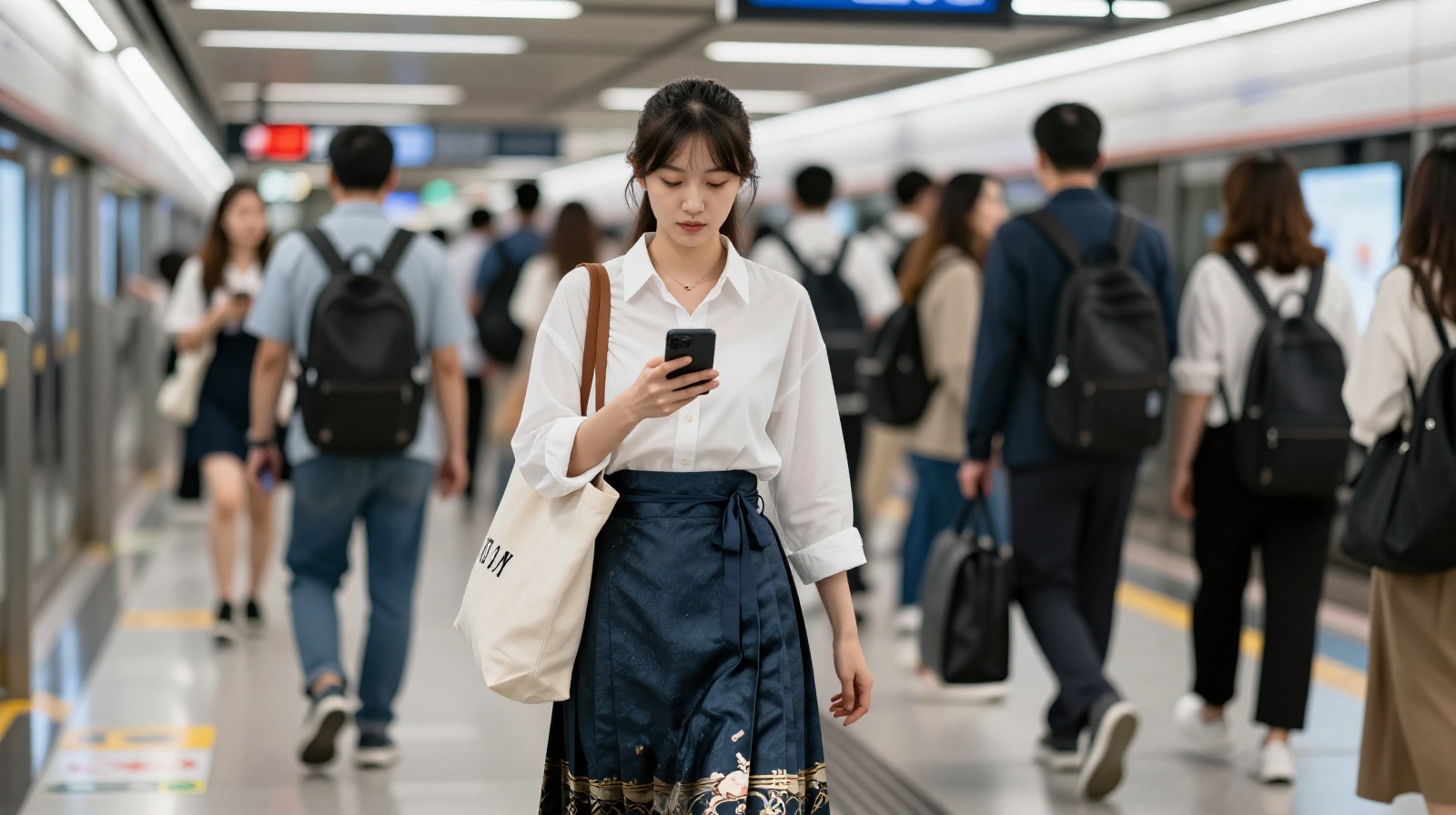
The air in the Shanghai metro station is thick with humidity and the scent of roasted sweet potatoes. It’s 8:45 AM on a Tuesday, and the rush hour crowd is a blur of grey coats and black umbrellas. Then, cutting through the sea of monotone, comes Li Na.
Li, 26, works in digital marketing. She steps off the escalator wearing a crisp white shirt tucked into a pleated Mamianqun—a traditional Chinese horse-face skirt—dyed in deep indigo with subtle cloud patterns. On her feet are comfortable white sneakers. To an outsider, it might look like she’s dressed for a historical drama shoot. But to Li and her colleagues, this is just Tuesday.
“People ask if I’m going to a wedding or a performance,” Li laughs as she scans her transit card. “I tell them I’m just going to work. It feels more like me than a suit does.”
This scene is no longer an anomaly. Across Chinese cities, from Beijing’s Zhongguancun tech hubs to Chengdu’s creative districts, young professionals are blending traditional garments with modern wardrobes. The Mamianqun, once confined to museum displays and hanfu enthusiast circles, has quietly become a staple of contemporary youth culture.
Redefining ‘Decency’: Tradition Meets Modernity
For decades, the definition of ‘decent’ clothing in China’s urban centers was dictated by Western corporate norms: blazers for men, pencil skirts or trousers for women. It was safe, invisible, and often uncomfortable.
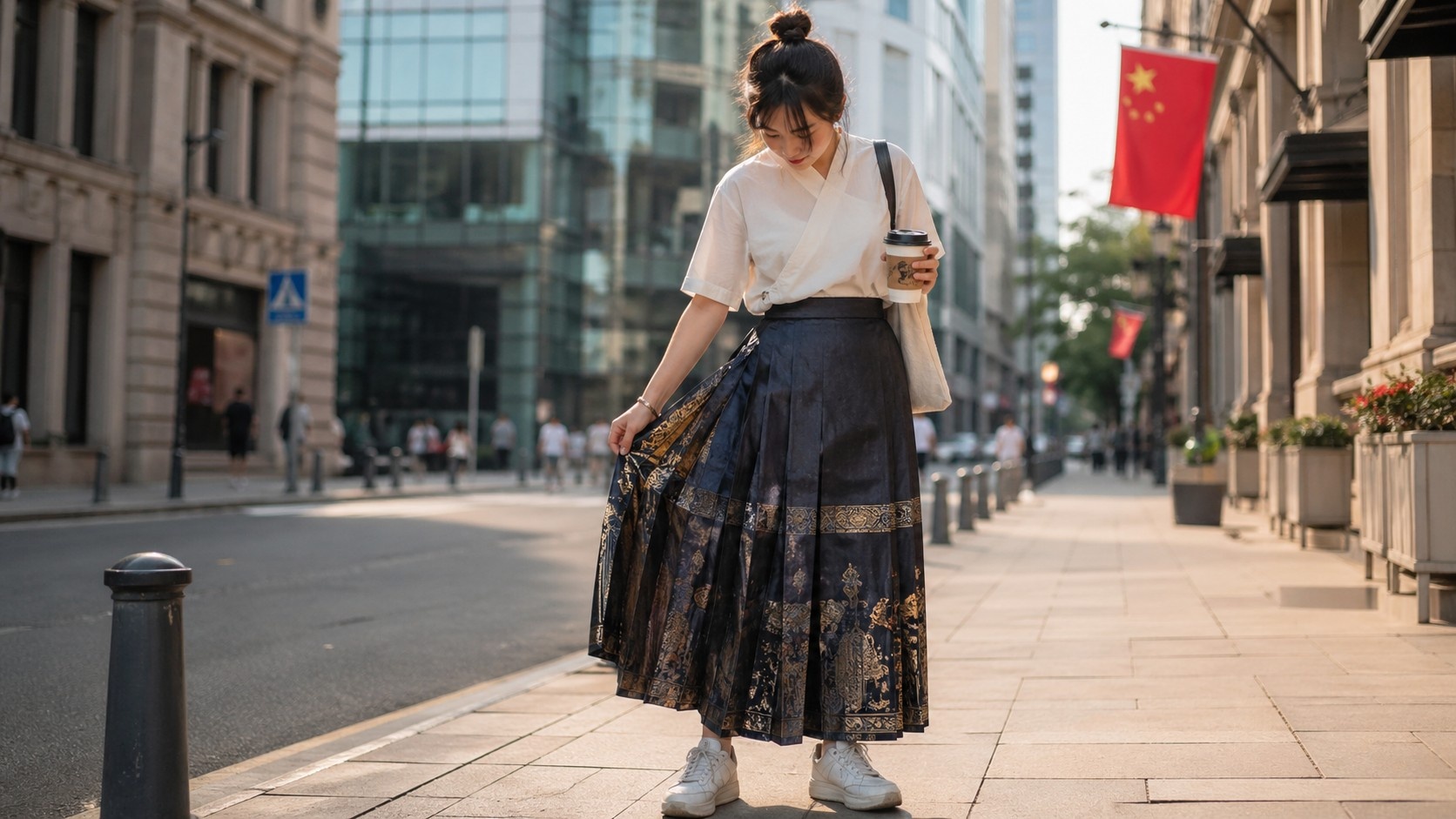
The current shift represents a reclamation of aesthetic identity. The Mamianqun, with its structured pleats and flowing silhouette, offers something modern fast fashion rarely does: dignity without restriction. Unlike the tight waistbands of Western high-waisted jeans or the restrictive cuts of business suits, the horse-face skirt allows for easy movement—crucial for young women navigating busy subway stations, climbing stairs in office buildings, or simply sitting through long meetings.
Moreover, it’s surprisingly versatile. Paired with a t-shirt and sneakers, it reads as casual streetwear. Tucked under a blazer, it passes as professional attire. Worn with an embroidered blouse, it elevates to evening wear. This flexibility is key. It doesn’t demand that the wearer sacrifice modern convenience for traditional beauty.
The Industry: From Craftsmanship to Supply Chain
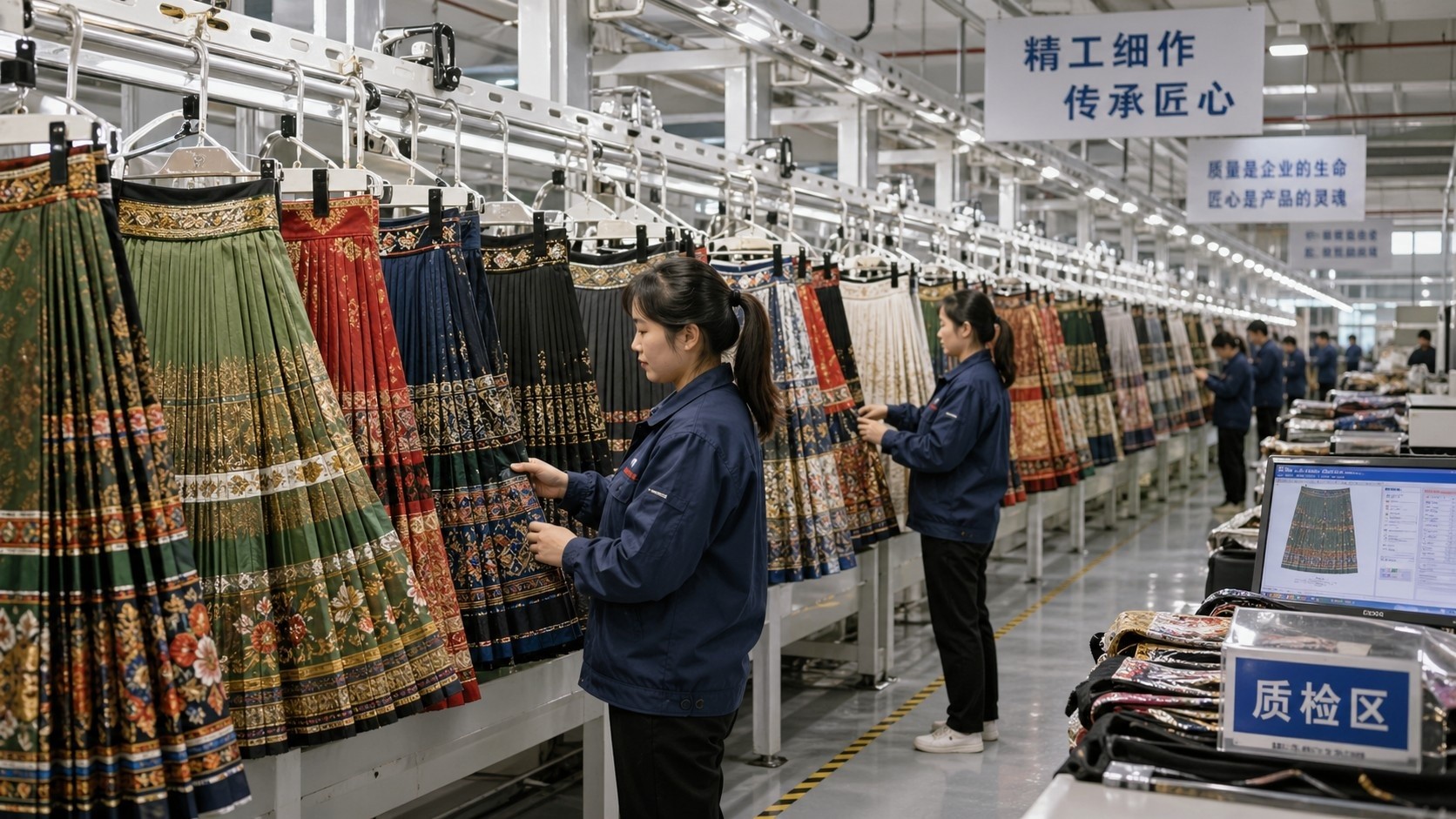
What makes this trend stick is not just sentiment; it’s supply chain efficiency. China’s apparel industry, already a global powerhouse in fast fashion, has rapidly adapted to the ‘Hanfu economy.’
In Hangzhou and Guangzhou, factories that once produced generic polyester dresses now run specialized lines for Mamianqun. The complexity of the garment—requiring precise pleating and traditional weaving techniques—is no longer a barrier to mass production. Advanced automated pleating machines can replicate hand-stitched patterns at scale, driving prices down from hundreds of dollars to affordable ranges under $20.
This industrial pivot has democratized the style. It’s no longer the exclusive domain of wealthy collectors or professional actors. Students in Shenzhen, interns in Shanghai, and teachers in Xi’an all wear them because they are accessible. The barrier to entry is low, but the cultural signal is high.
Social Currency: Identity and Connection
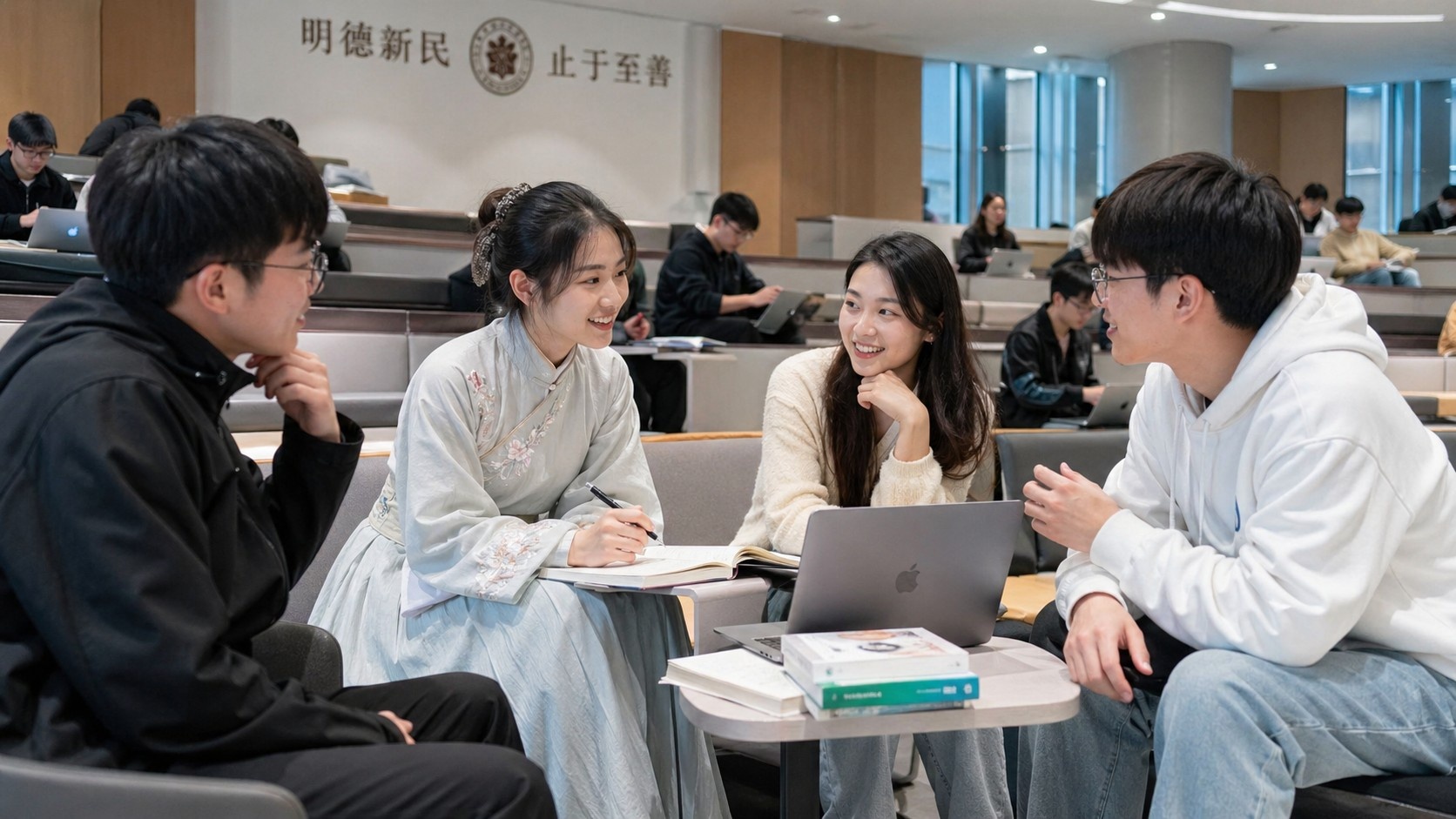
For Gen Z in China, wearing traditional clothing is a form of social currency. It signals a specific type of cultural confidence—one that isn’t loud or aggressive, but quiet and personal.
On social media platforms like Xiaohongshu (Little Red Book), hashtags related to ‘Hanfu daily wear’ have billions of views. Users share ‘OOTD’ (Outfit of the Day) posts not just to show off clothes, but to find community. Comments sections are filled with tips on how to style a Mamianqun for different body types, where to buy durable fabric, and which colors suit different skin tones.
It’s also a way to navigate the pressures of modern life. In a high-pressure work environment, wearing something that connects you to history provides a psychological anchor. It’s a small rebellion against the homogenization of global fashion. As one university student put it: ‘When I wear this, I feel like I’m carrying five thousand years of elegance with me into the lecture hall.’
Everyday Culture in Motion
The rise of the Mamianqun is not about rejecting modernity. It’s about expanding the definition of what it means to look good and feel right in contemporary China.
As more young people normalize wearing these garments in offices, schools, and public spaces, the line between ‘traditional costume’ and ‘everyday clothing’ dissolves. The Mamianqun is no longer a costume; it’s just another option in the wardrobe of a generation that refuses to choose between being modern and being Chinese.