

The Invisible Workforce
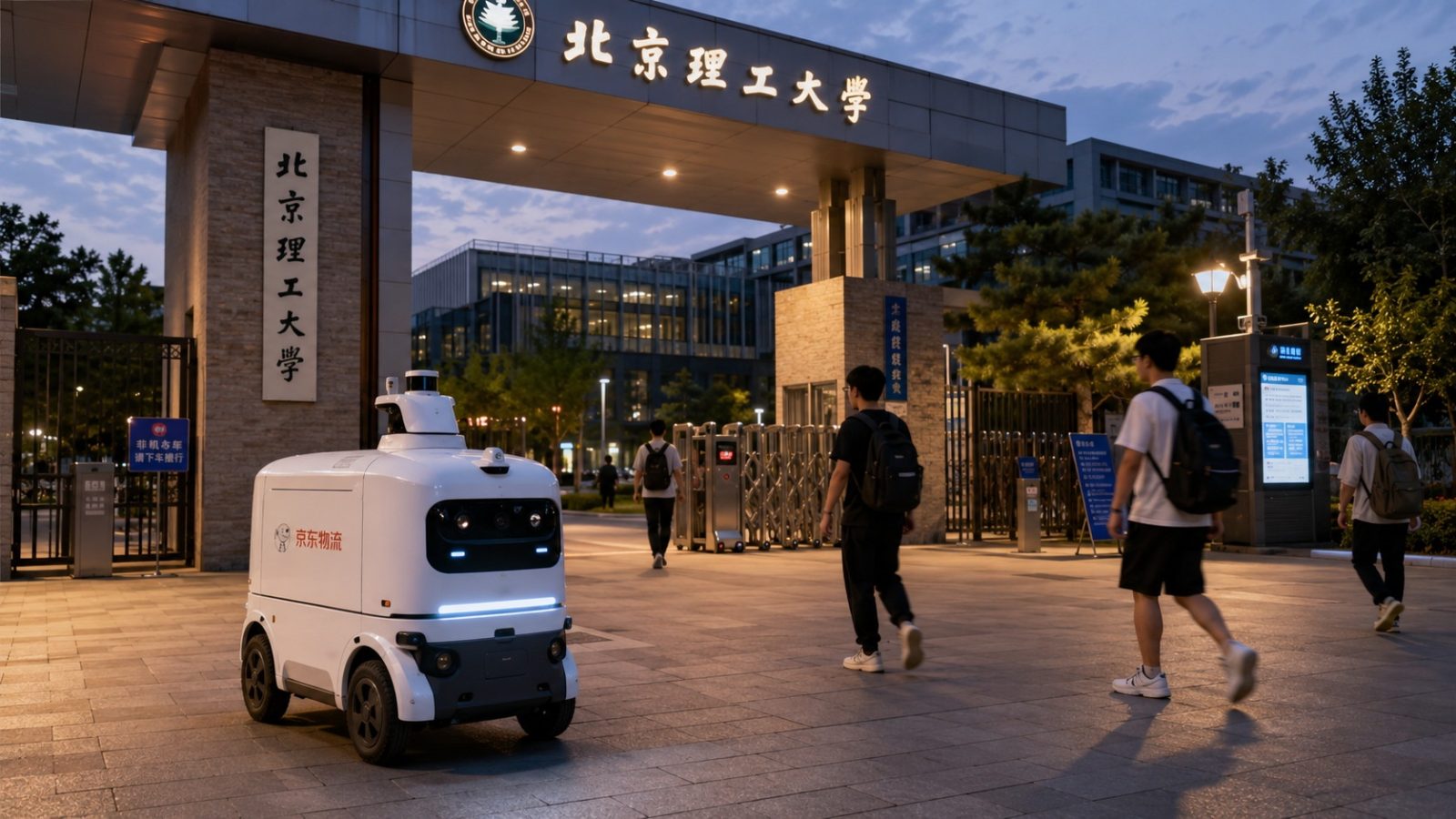
It is 7:30 PM in a university town in Hangzhou. The air smells of stir-fried cabbage and rain on hot asphalt. A small, white, box-like vehicle with four wheels bumps gently over a curb. It doesn’t have a driver. It stops in front of a dormitory gate, flashes its screen, and waits. Inside, a student named Li Wei checks his phone, walks to the gate, and opens the compartment. His dinner is there.
There is no dramatic music, no futuristic gleam. Just a quiet transaction. This is the reality of robotics in China today. While global headlines often obsess over humanoid robots that can walk or dance, the actual revolution happening on Chinese streets is far more mundane—and far more impactful. It is about solving immediate problems: labor shortages, traffic congestion, and the relentless demand for speed in a country of 1.4 billion people.
The Last Mile in Urban Labyrinths
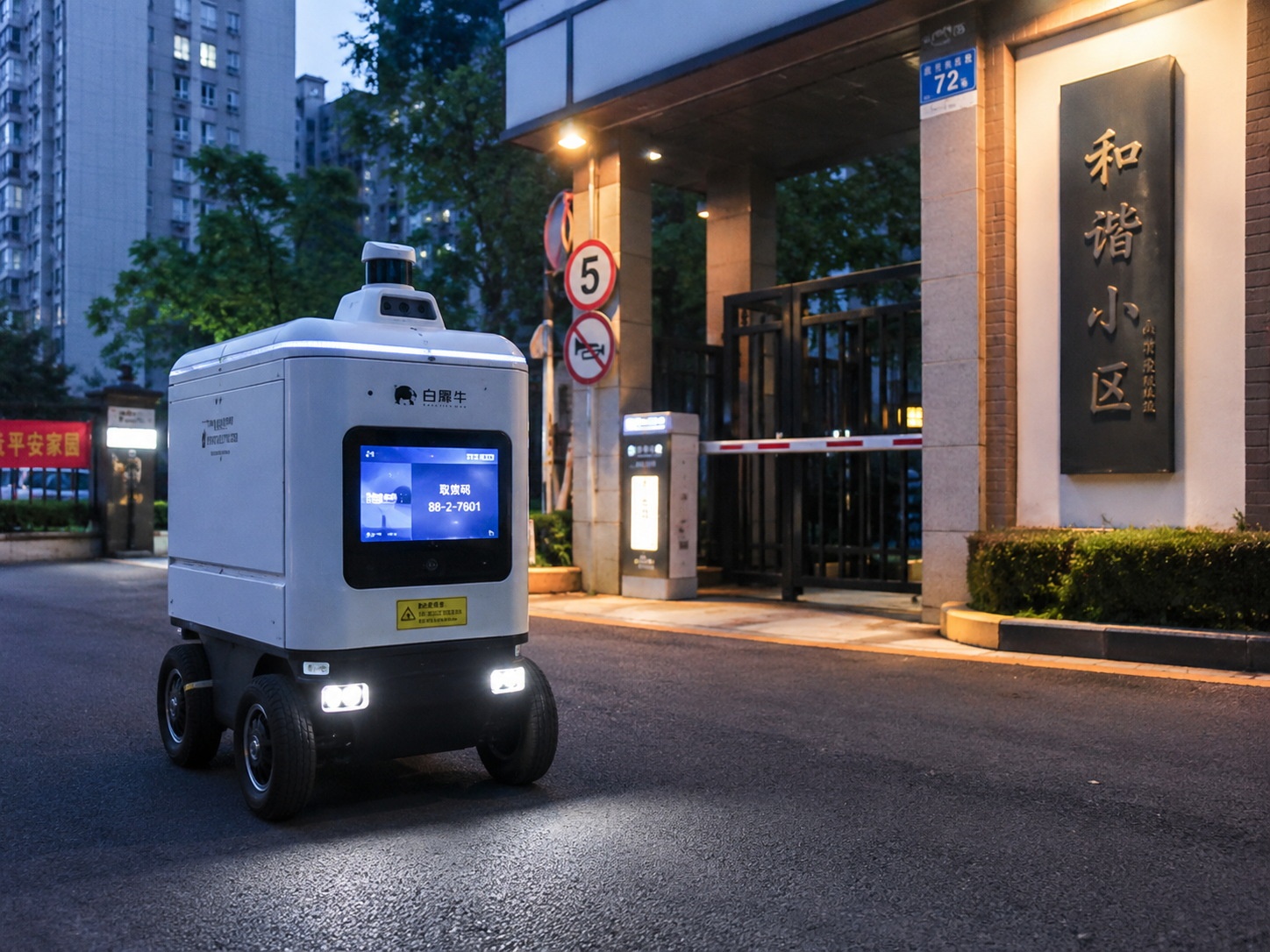
For years, human delivery riders have been the arteries of China’s city life. But in dense residential compounds with strict security gates and sprawling university campuses, they often face bureaucratic delays. Enter the autonomous delivery bot.
These machines are not trying to replace humans entirely; they are filling the gaps where human efficiency drops. In many Chinese universities, such as Tsinghua or Peking University, these bots handle the “last 50 meters.” They navigate crowded sidewalks, yielding to pedestrians with polite beeps, and climb small ramps that would be awkward for a bicycle.
For students like Li Wei, the benefit is convenience. For the delivery companies, it is a way to manage rising labor costs. The robots operate on fixed routes during peak hours, creating a predictable rhythm in the chaotic flow of urban logistics. They don’t complain about weather, and they don’t get lost in the maze of high-rise apartment blocks.
Behind the Scenes: The Scale of Smart Logistics
If you walk into a major sorting center operated by giants like JD.com or Cainiao during the Singles’ Day shopping festival, the silence is deafening. There are no shouting workers. Instead, thousands of yellow and blue automated guided vehicles (AGVs) move in synchronized swarms across the floor.
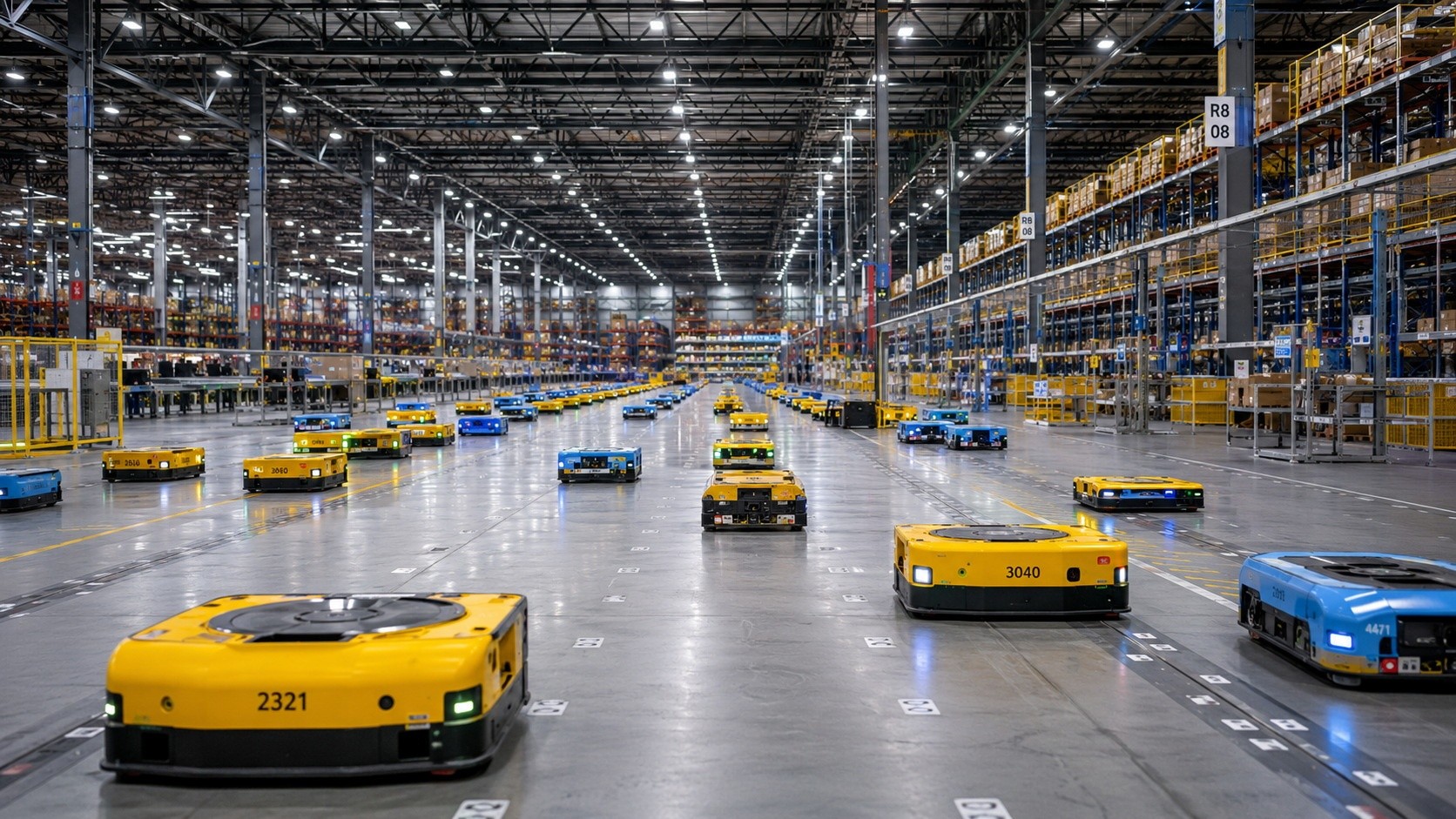
This is not just about speed; it is about scale. China’s e-commerce volume is staggering. In 2023, online retail sales exceeded 15 trillion yuan. Handling this volume with human labor alone would require millions of additional warehouse workers—a demographic reality that is becoming increasingly difficult to meet as China’s population ages.
The robots here do not “think” in the human sense. They follow pre-mapped algorithms. A shelf arrives at a picking station; a robotic arm grabs the item; it is scanned and placed on a conveyor belt. The system adjusts in real-time. If one machine slows down, another takes its place. This level of coordination turns chaos into a precise, mechanical ballet. For the ordinary consumer, it means next-day delivery is no longer a luxury, but the standard.
Care and Service: Hospitals and Supermarkets
The application of robotics extends beyond logistics into sensitive service sectors. In a large public hospital in Shanghai, a different kind of robot glides silently down the corridor. It is carrying a box of blood samples or surgical tools from the laboratory to the operating room.
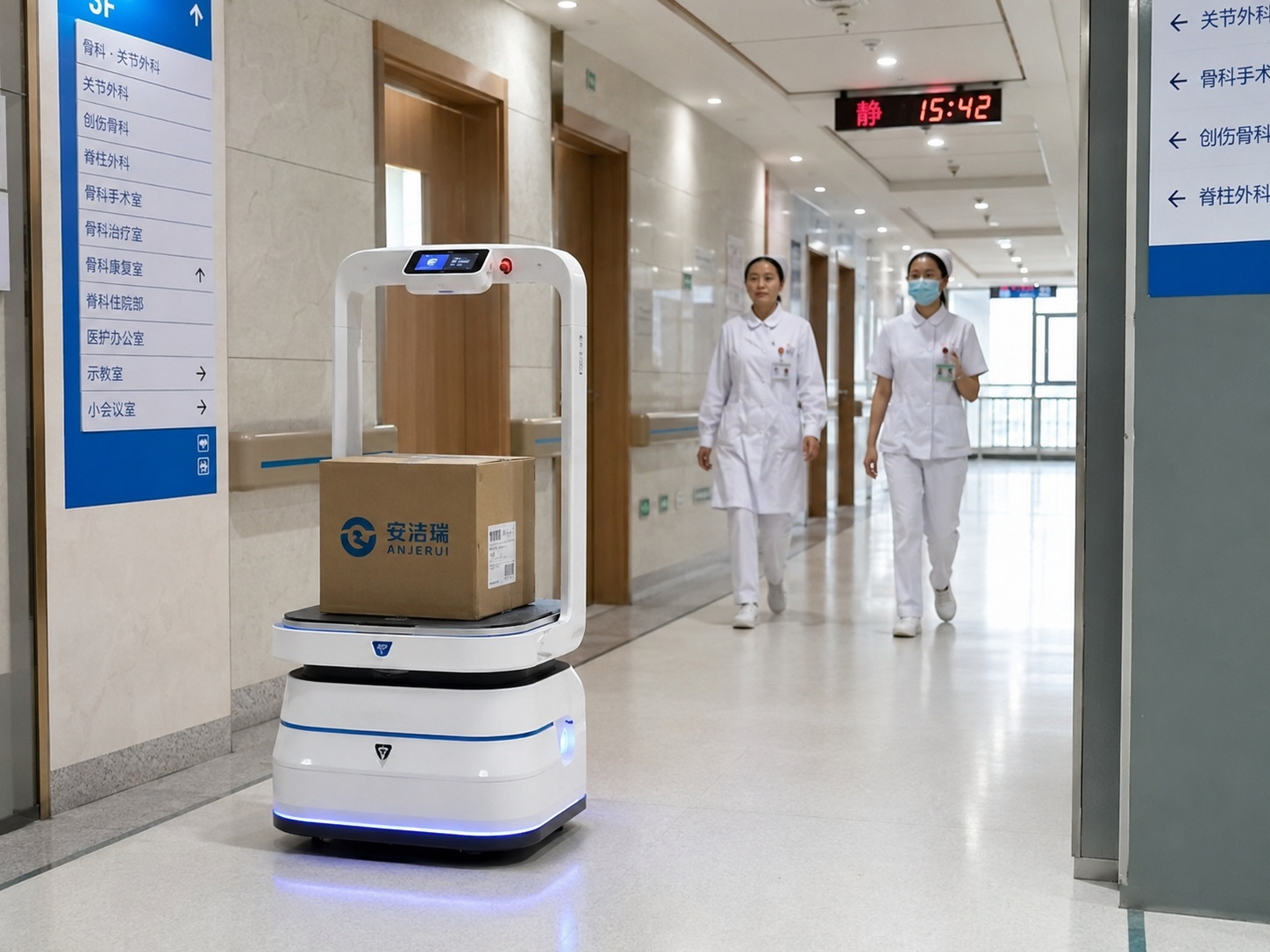
In this context, the robot is not a competitor to nurses but a helper. By automating the transport of non-critical items, it frees up nursing staff to focus on patient care. The hospital staff are accustomed to these machines. They know that if the bot stops, they can manually override it or take the box. It is a partnership, not a takeover.
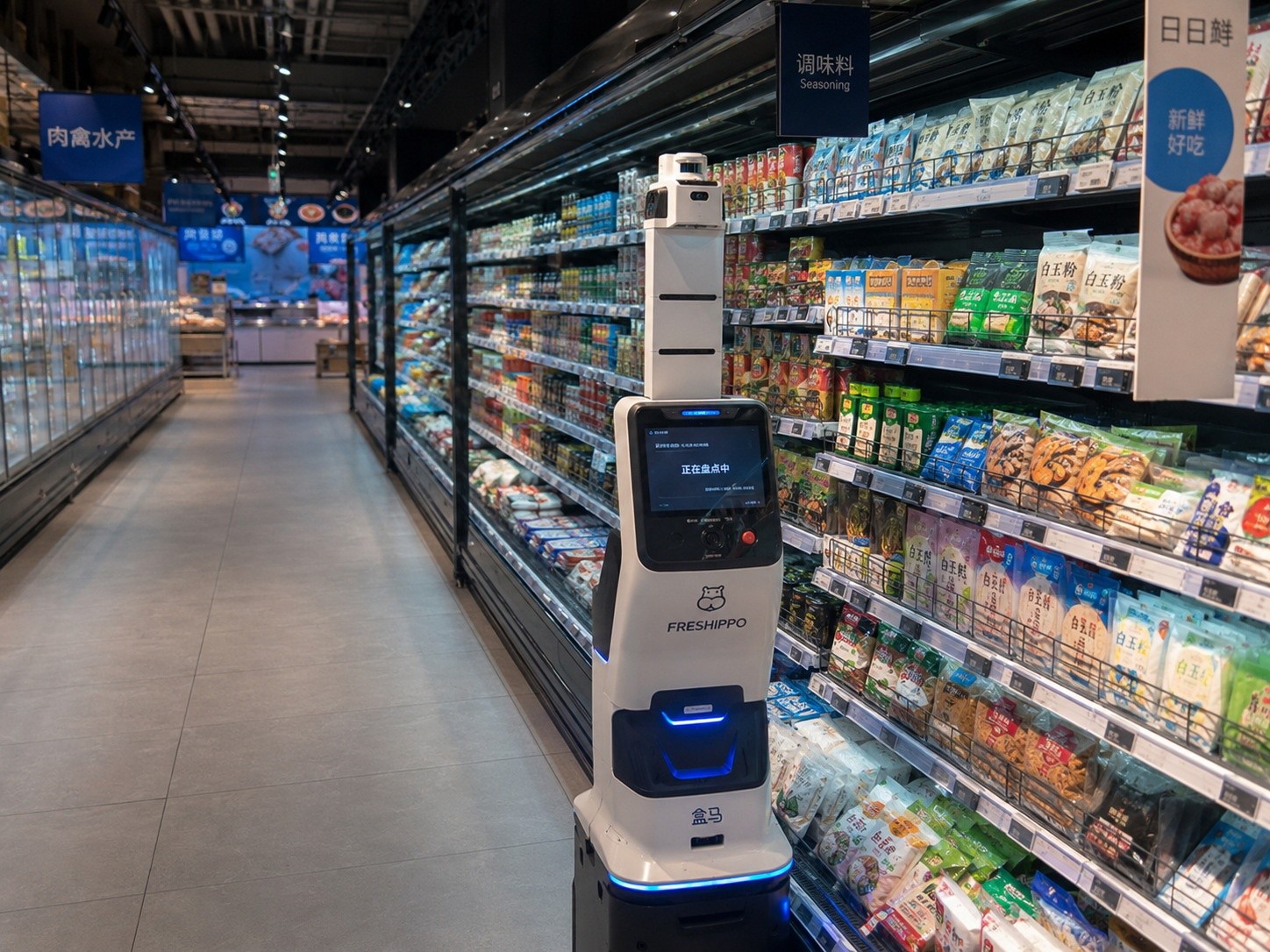
Similarly, in Freshippo (Hema) supermarkets, robots roam the aisles at night. While humans shop during the day, autonomous inventory scanners move through the store after closing hours. They use cameras and sensors to check stock levels, detect misplaced items, and monitor expiry dates. This allows the store to optimize supply chains without disrupting the shopping experience for customers.
The Human Perspective: Acceptance and Friction
Is the integration of robots seamless? Not entirely. There are moments of friction. A delivery bot might get stuck behind a parked electric scooter. A supermarket robot might confuse a hanging promotional banner with a product shelf. Pedestrians sometimes treat these machines as obstacles to be maneuvered around, just like any other urban nuisance.
However, the general public perception is one of pragmatic acceptance. There is no widespread fear that robots are “taking jobs” in the apocalyptic sense. Instead, there is a recognition that these tools handle the dull, dirty, and dangerous tasks that humans would rather avoid. In Chengdu, a delivery rider told me, “I still do the work when the weather is bad or the route is too complex. The robot is just another pair of hands, sometimes faster, sometimes slower. We work together.”
Pragmatic Innovation
The story of robotics in China is not about creating a sci-fi future. It is about making the present more efficient. These machines are born out of necessity—aging populations, high labor costs, and immense consumer expectations. They are designed to be robust, cost-effective, and easy to maintain.
As you walk through a Chinese city today, you might not notice the robots at first. They blend into the background, performing their small, repetitive tasks with quiet reliability. But if you look closely, you will see them everywhere: delivering your lunch, moving goods in a warehouse, scanning shelves in a store. This is the real workday of China’s robots. It is unglamorous, but it is changing the fabric of daily life, one delivery at a time.