

The Unexpected Tourist Boom in Northeast China
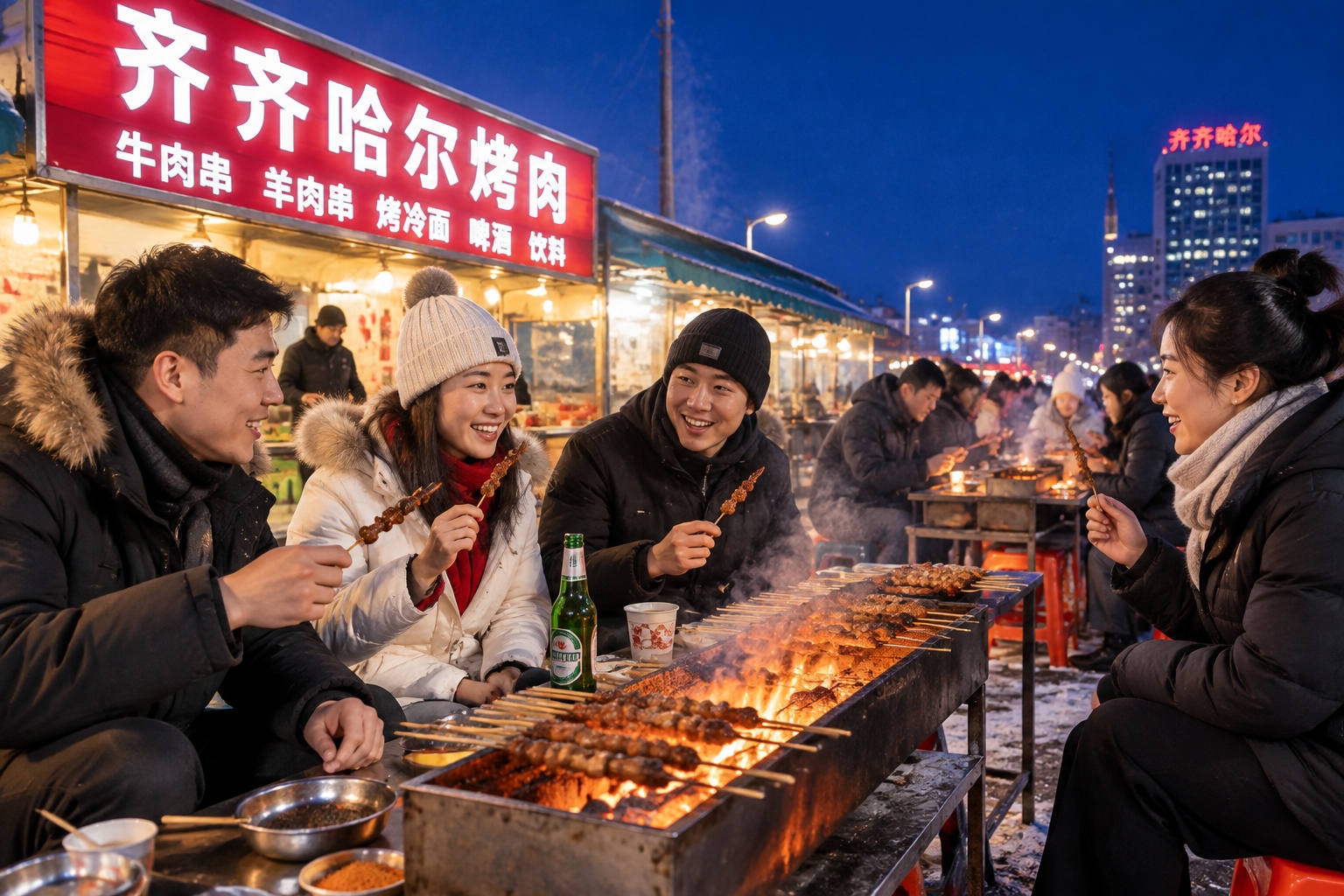
It is 7:30 PM in Qiqihar, a city in Heilongjiang province, where the temperature has already dropped below zero. The air smells of cold iron and charcoal. But inside the bustling open-air stalls, it is warm, loud, and crowded. For years, Qiqihar was known to outsiders only as a stopover on the way to Harbin’s ice festival or a post-industrial relic of China’s rust belt. Today, however, the narrative is shifting. While tourists once came for snow sculptures, a new wave of travelers is arriving for something far more visceral: the city’s legendary barbecue.
This culinary tourism boom is not just about food; it is a signal of cultural resilience. Qiqihar is reclaiming its identity not through grand monuments, but through the humble steel grills lining its streets. For visitors expecting high-end dining, the reality is strikingly different—and far more inviting.
The Anatomy of Authenticity: Why Local Matters More Than Recipes
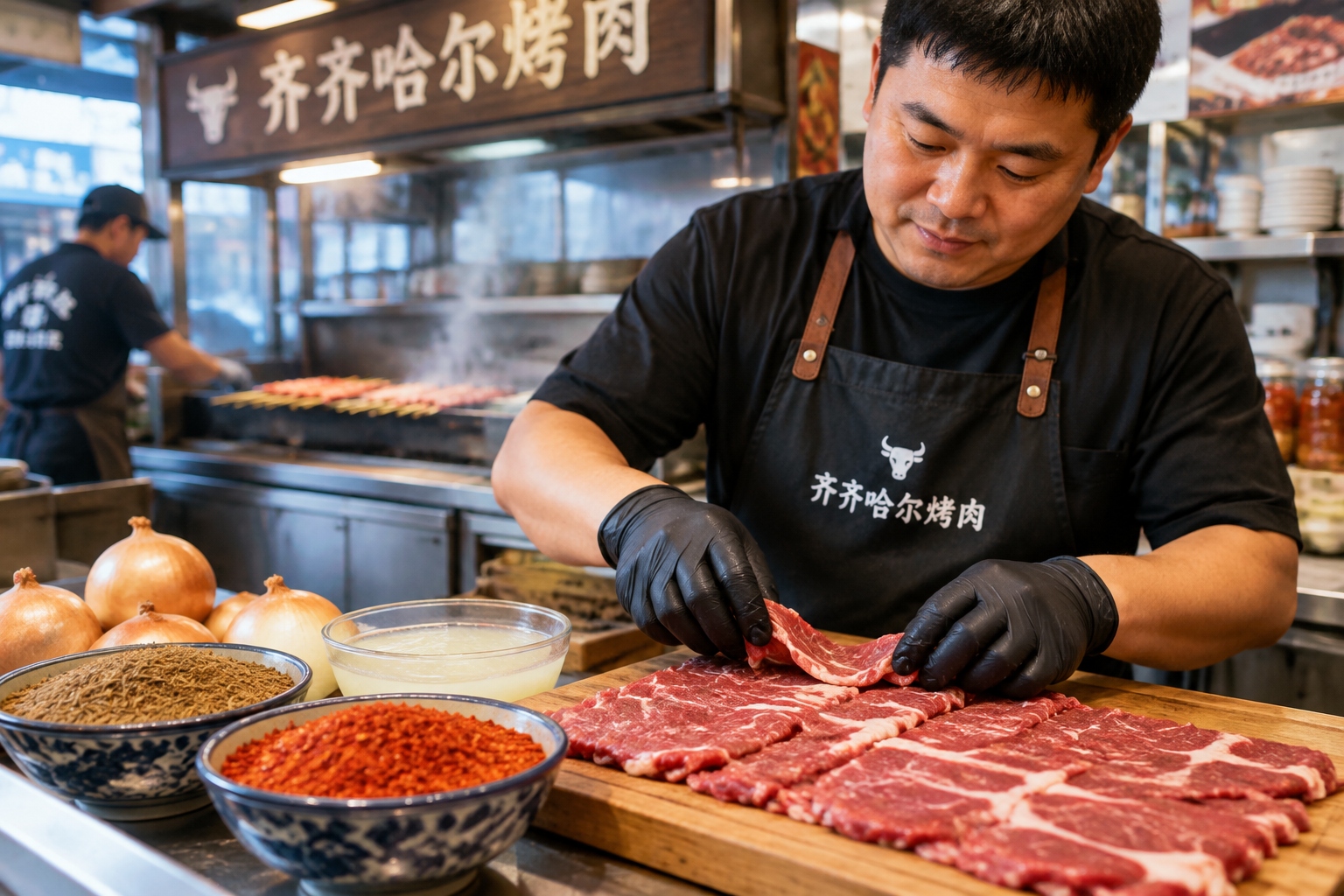
If you ask a local in Qiqihar for their “secret recipe,” they will likely laugh. There is no single formula, no proprietary spice blend sold in supermarkets. The authenticity of Qiqihar BBQ lies in its simplicity and the quality of its raw materials. The city has a long history of cattle farming, and the beef here is prized for its tenderness and flavor.
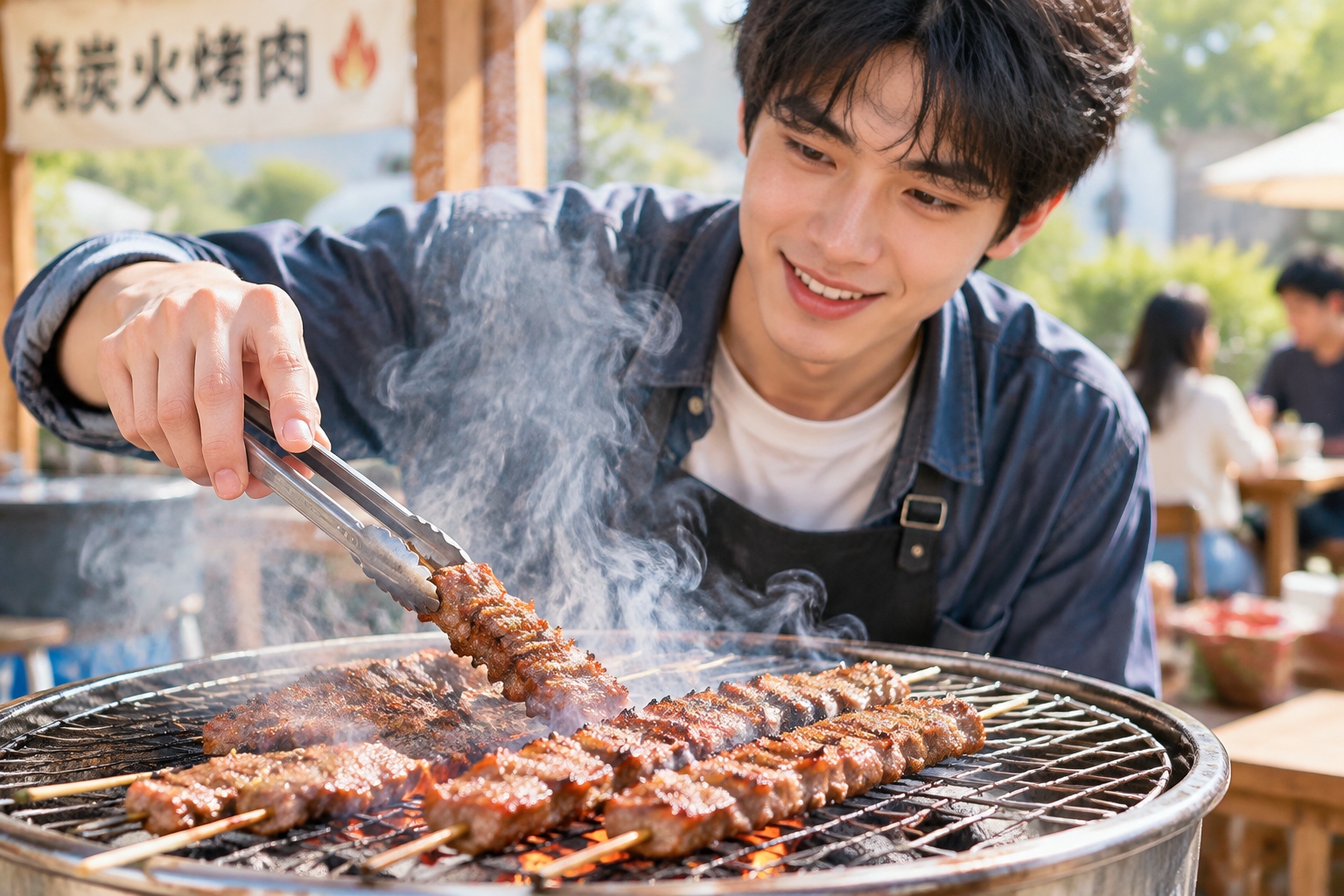
The process is ritualistic yet straightforward. Fresh beef, often cut from the shoulder or flank, is sliced thinly. It is then marinated not with complex sauces, but with simple ingredients: onion juice, ginger, and a generous dusting of cumin and chili powder. The magic happens on the grill—a flat, circular steel plate heated by charcoal. The meat sizzles instantly, releasing fat that drips onto the hot coals, creating clouds of aromatic smoke that rise to coat the meat in a smoky crust.
A Day in the Life: From Market to Table
To understand this culture, you must visit during peak hours. The scene at a typical “Da Pai Dang” (street-side stall) is a study in sensory overload. Plastic stools are squeezed together on concrete pavement. Strangers share small tables, their knees occasionally bumping. Waitresses weave through the crowd with trays of skewers, shouting orders in the rapid, thick dialect of the Northeast.
Unlike the quiet, air-conditioned environments of high-end restaurants, these stalls are raw and unfiltered. You can hear the clinking of beer glasses, the roar of laughter, and the crackle of meat. The smoke is thick enough to sting your eyes, but no one leaves. This is not a place for polite conversation; it is a place for release. After a long day in the cold, there is nothing quite like tearing into a piece of hot, charred beef while drinking chilled beer.
The Social Fabric: BBQ as Community Glue
In Qiqihar, BBQ stalls are more than eateries; they are living rooms for the city. They serve as neutral ground for business deals, family reunions, and casual chats among friends. The concept of “Xiao Jiu”—light drinking—is central to this social dynamic. It is not about getting drunk, but about lowering social barriers. In these smoky spaces, titles and hierarchies dissolve. A CEO might sit next to a factory worker, both equally focused on the grill in front of them.

Navigating the Scene: A Guide for Outsiders
For first-time visitors, the scene can be intimidating. Here is how to navigate it: First, do not expect table service in the traditional sense. You often order at a counter or via a QR code, then wait for your number to be called. Second, embrace the spice level. While mild options exist, the authentic experience involves the bold kick of local chili and the earthy warmth of cumin. Finally, relax your expectations of hygiene. The environment is rustic, with grease on the tables and smoke in the air, but the food itself is fresh and handled with care. Locals are proud of their cleanliness standards, which have improved significantly with urban management initiatives.
More Than Just Food
The rise of Qiqihar’s BBQ culture reflects a broader trend across China: cities leveraging local heritage for economic revitalization. It is a story of ordinary people preserving traditions in the face of rapid modernization. For the visitor, it offers a rare glimpse into the unvarnished soul of Northeast China. It is not about perfection; it is about connection. In the end, the true recipe for Qiqihar’s charm is not found in spices, but in the shared warmth of a meal under the winter sky.
Start the discussion at forum.chinacomes.com