
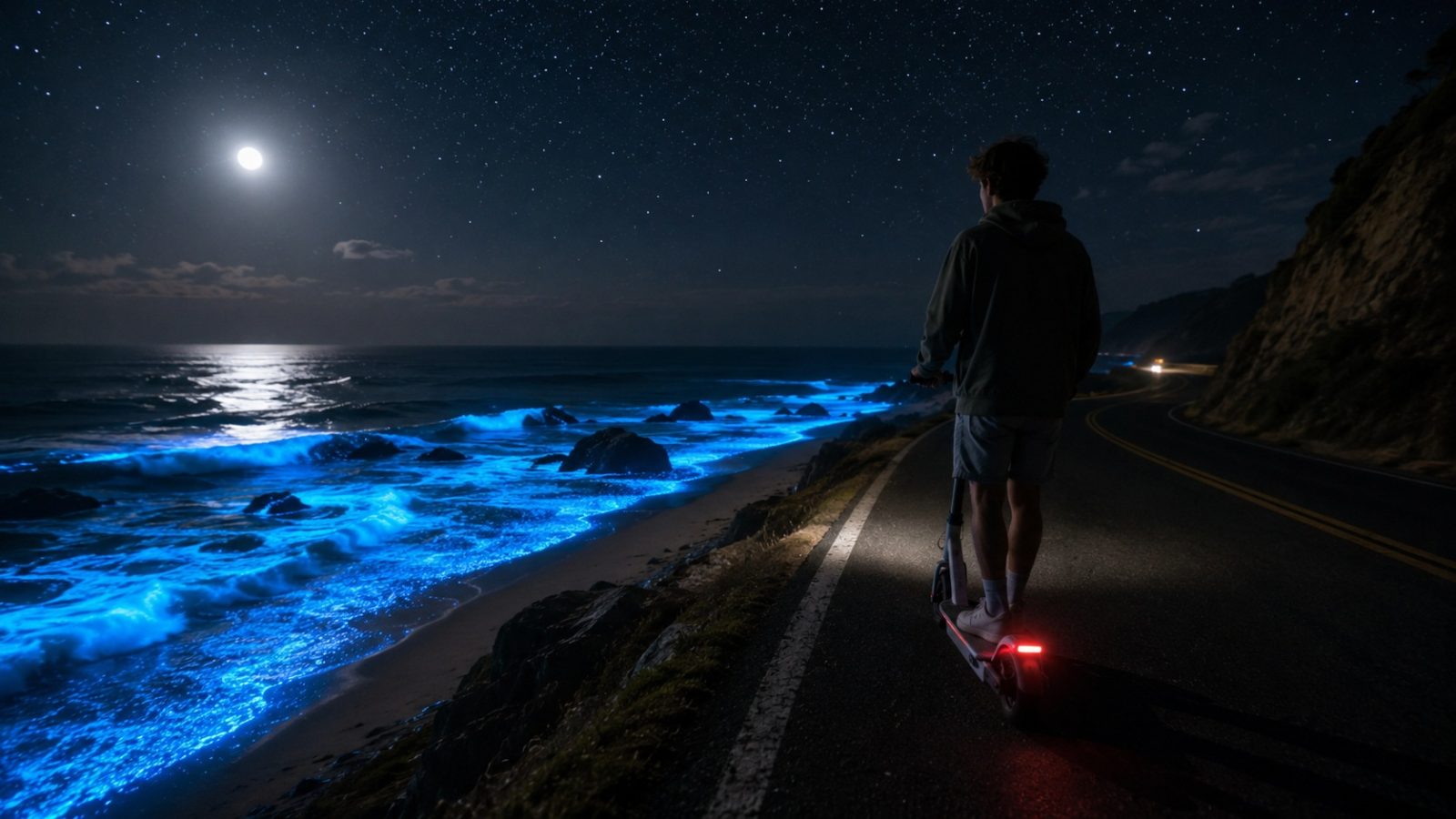

Not Your Typical Chinese Nightlife
Most travelers to China expect neon-lit skyscrapers, bustling night markets, or quiet tea houses. But on Pingtan Island, located just off the coast of Fujian Province, the nightlife looks nothing like that.
There are no high-rise hotels lining the main streets. Instead, there is a winding coastal road, empty parking lots, and the sound of crashing waves. The star of the show isn’t a performer, but the ocean itself. In late spring and early summer, the water glows with an eerie, electric blue light known locally as “Blue Tears” (蓝眼泪).
The Science Behind the Glow
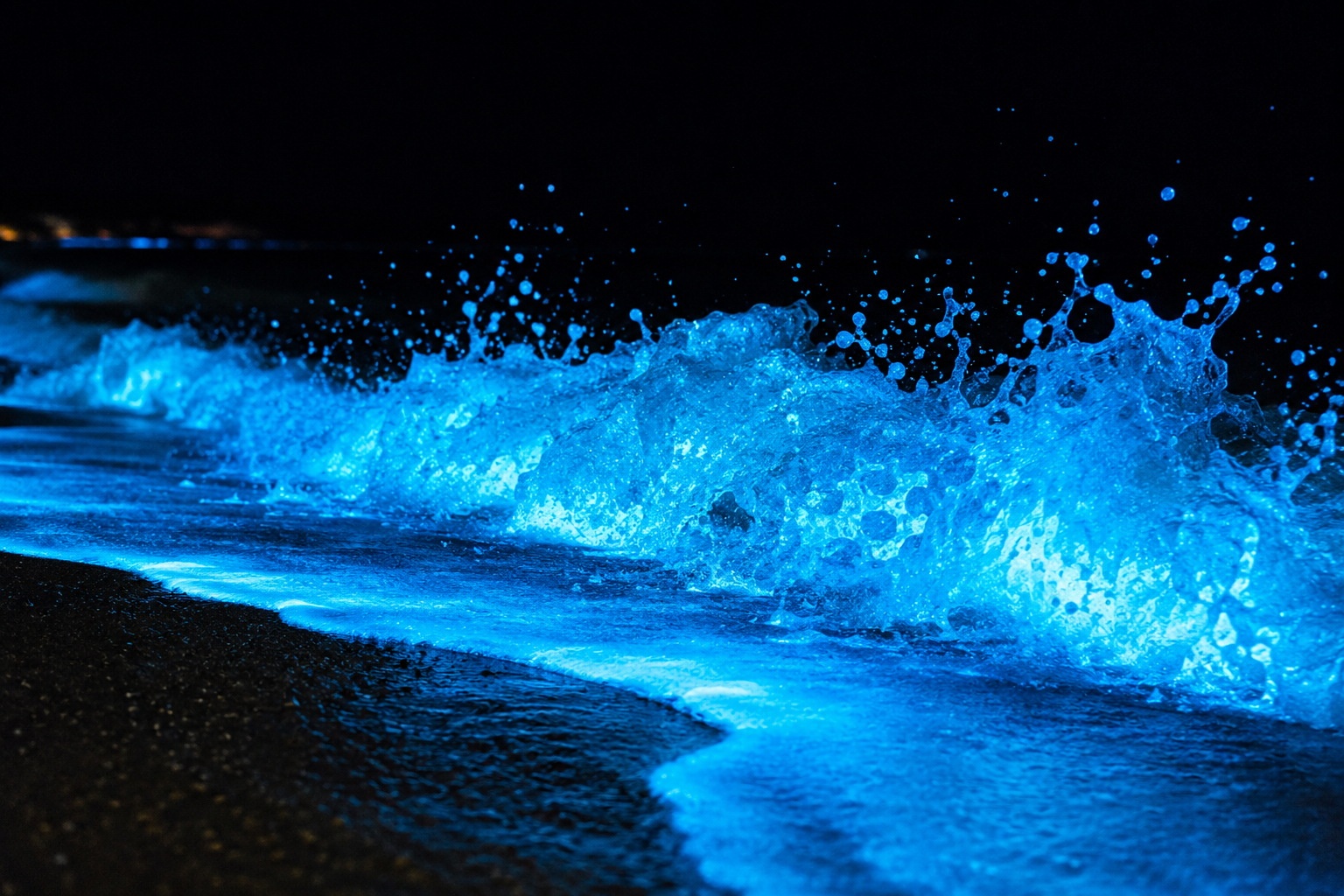
Is it a trick of the light? No. It’s biology. The “tears” are caused by a massive bloom of dinoflagellates—single-celled marine organisms that emit light when disturbed. Think of it as nature’s defense mechanism: when a wave hits or a foot splashes, the cells trigger a chemical reaction to scare off predators.
For years, this phenomenon was rare and unpredictable. But in recent years, warmer sea temperatures and specific wind conditions have made blooms more frequent, turning Pingtan into a seasonal pilgrimage site for nature lovers. It’s not guaranteed—like cherry blossoms in Japan or auroras in Norway—but when it happens, the effect is visceral.
Key Details:
- When: Typically April to June, peaking in May.
- Where: East-facing beaches are best, as they catch the incoming waves from the open ocean.
- What to wear: Light clothes and waterproof shoes. The sand can get slippery.
Riding the Coast at Midnight
To truly experience Pingtan, you need two wheels. The island has become incredibly scooter-friendly. You can rent an electric bike for about 30-50 RMB (€4-6) a day. It’s the most practical way to get around because public transport is sparse after dark, and taxis can be hard to find in remote areas.
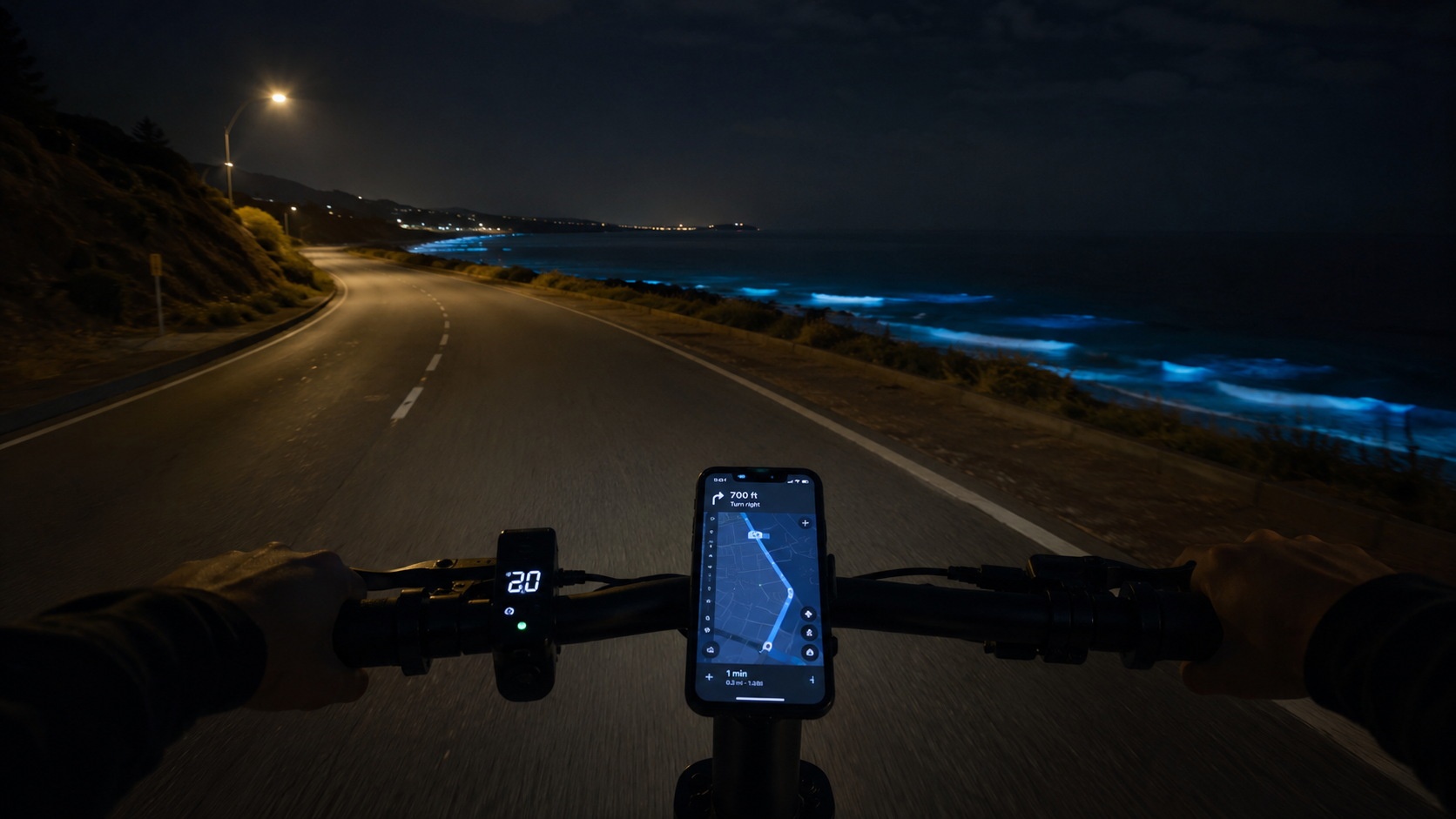
Imagine this: You leave your hotel around 9 PM. The air is warm and salty. You plug your phone into the bike’s mount, navigating by GPS to known “hotspots.” The road is smooth, paved with new asphalt as part of the island’s recent infrastructure upgrades. There are no traffic jams, no honking cars—just the hum of the electric motor and the wind in your ears.
As you ride closer to the beach, the horizon starts to shimmer. At first, it looks like distant stars reflected in the water. But as you approach, the waves begin to explode with blue light. It’s not a gentle glow; it’s a violent, sparkling eruption. Every time a wave crashes, it leaves a trail of neon blue foam that glows for seconds before fading.
Best Spots and the Reality Check
While many tourists flock to the main tourist beaches, the locals know better. The best spots are often smaller, less accessible coves along the eastern coast, such as Cuizhuawan (翡翠湾) or Qingyun Temple (青印寺). These areas have darker skies and less artificial light pollution, making the bioluminescence pop.
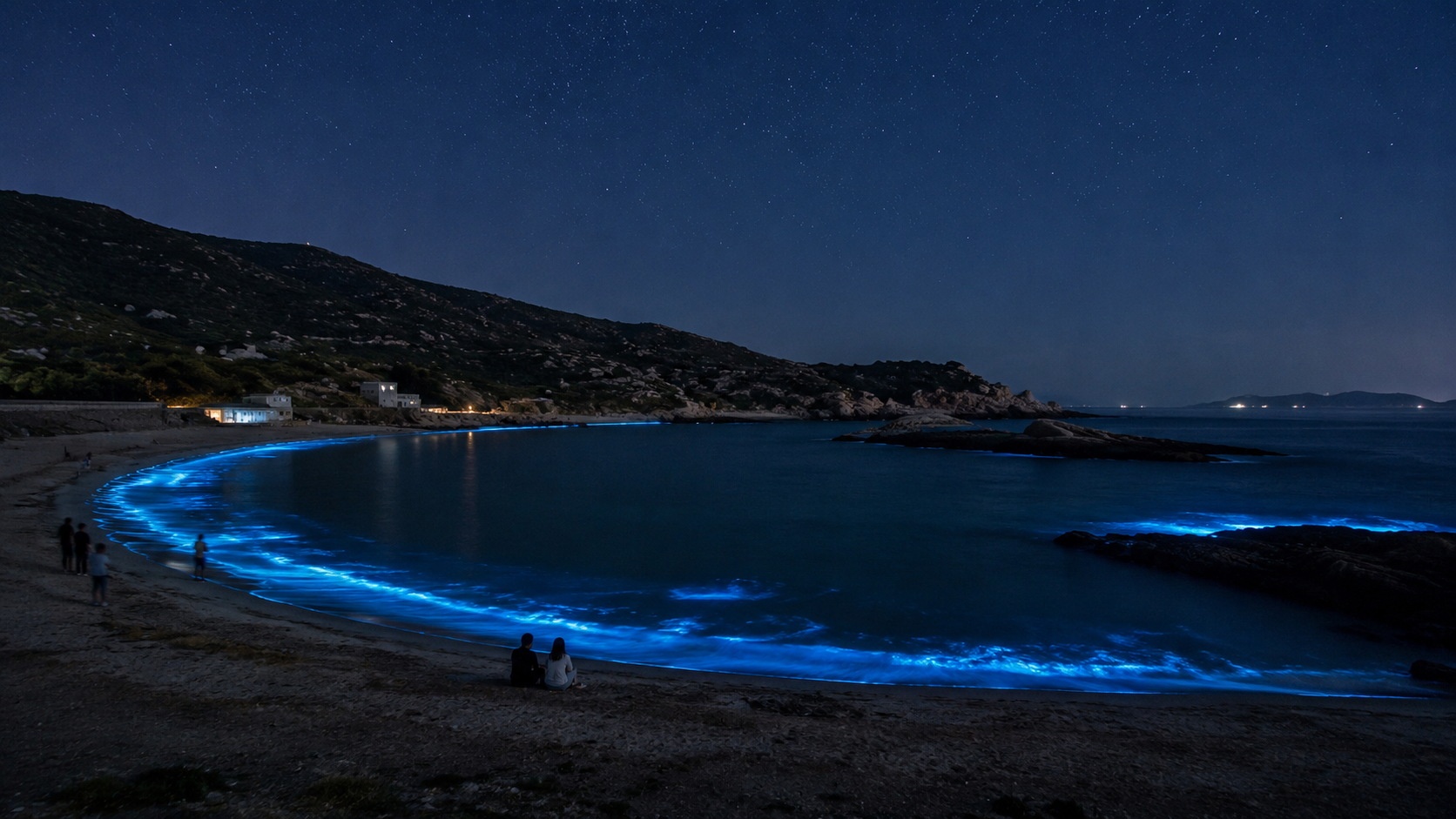
However, a reality check is necessary. “Blue Tears” are wild. They depend on wind direction, water temperature, and tidal cycles. You might ride for hours and see nothing. Or you might arrive just as a massive bloom is peaking. Manage your expectations: this is a gamble, but one worth taking.
Also, be aware that social media has changed the landscape. Popular spots can get crowded with photographers and tourists, sometimes leading to conflicts over the best viewing angles. Go early in the season or visit lesser-known coves to avoid the chaos.
Protecting the Fragile Ecosystem
Here is the tricky part: your excitement can hurt the phenomenon. Dinoflagellates are delicate. Running over them with bikes, trampling the dunes, or using flash photography can damage the algae and disrupt their life cycle.
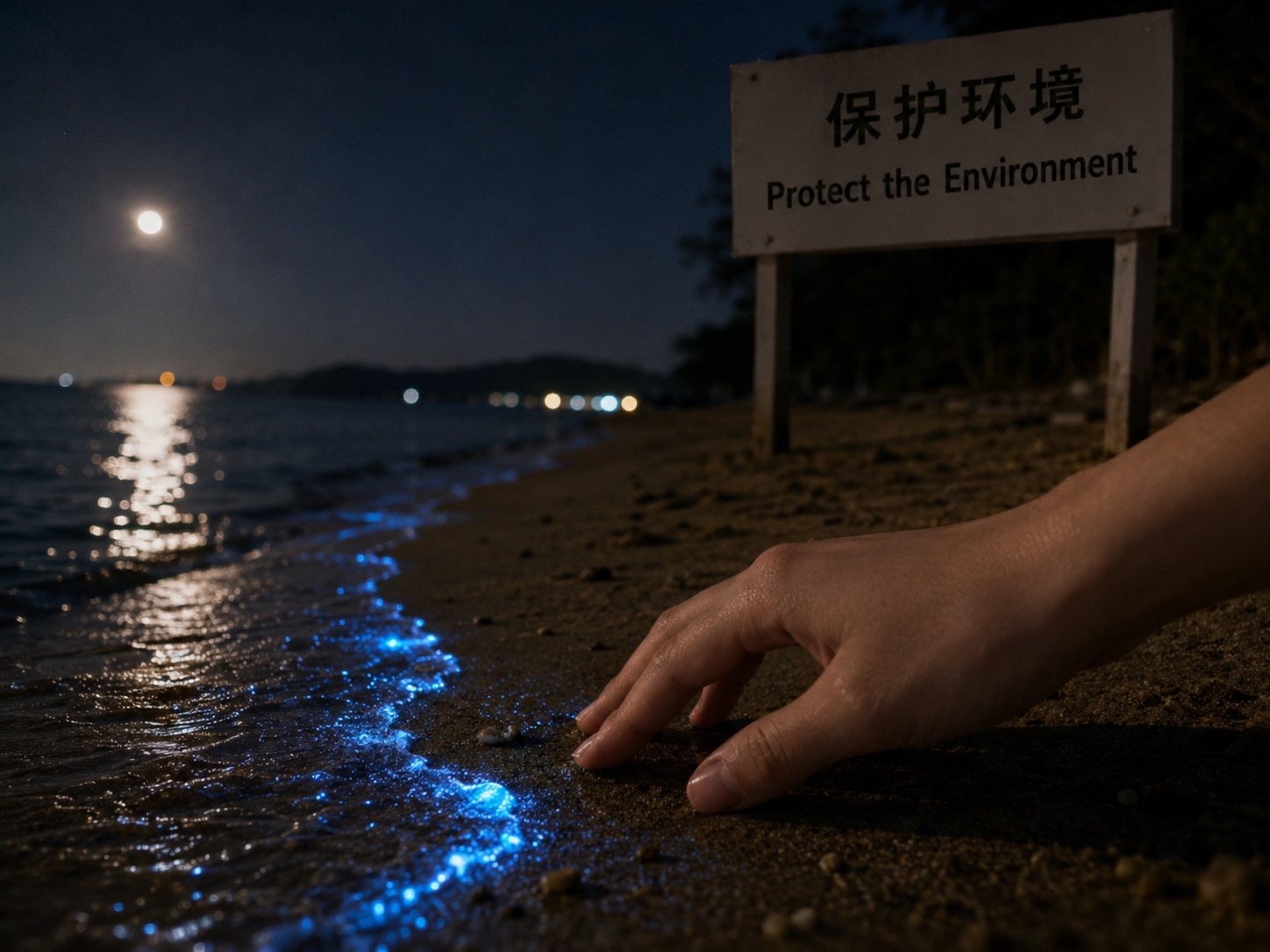
Local authorities have started regulating access to certain areas during peak bloom times. They ask visitors to:
- Stay on designated paths: Don’t trample the vegetation that holds the sand together.
- No swimming: The disturbance from swimming can cause excessive blooming, which might lead to a “dead zone” where oxygen is depleted.
- Turn off car headlights: Artificial light interferes with the algae’s biological rhythm.
The beauty of Pingtan isn’t just in the blue water; it’s in the raw, untouched nature. By respecting these rules, you help ensure that future travelers can still witness this magic.
Why Pingtan Matters Now
Pingtan Island is more than just a photo op. It represents a shift in China’s tourism model. For decades, Chinese travel was about hitting landmarks: the Great Wall, the Forbidden City. Today, younger Chinese tourists—Gen Z and Millennials—are seeking “experience economy” trips. They want immersion, not just observation.
The island is investing heavily in infrastructure to support this. New coastal roads, better charging stations for EVs, and eco-friendly accommodations are rising. But the core appeal remains simple: a connection with nature that feels both ancient and modern.
So, if you’re in China in May, skip the crowded cities. Rent a scooter, head east to the sea, and chase the blue light. It’s a reminder that sometimes, the most spectacular sights aren’t built by humans, but born from the ocean itself.