
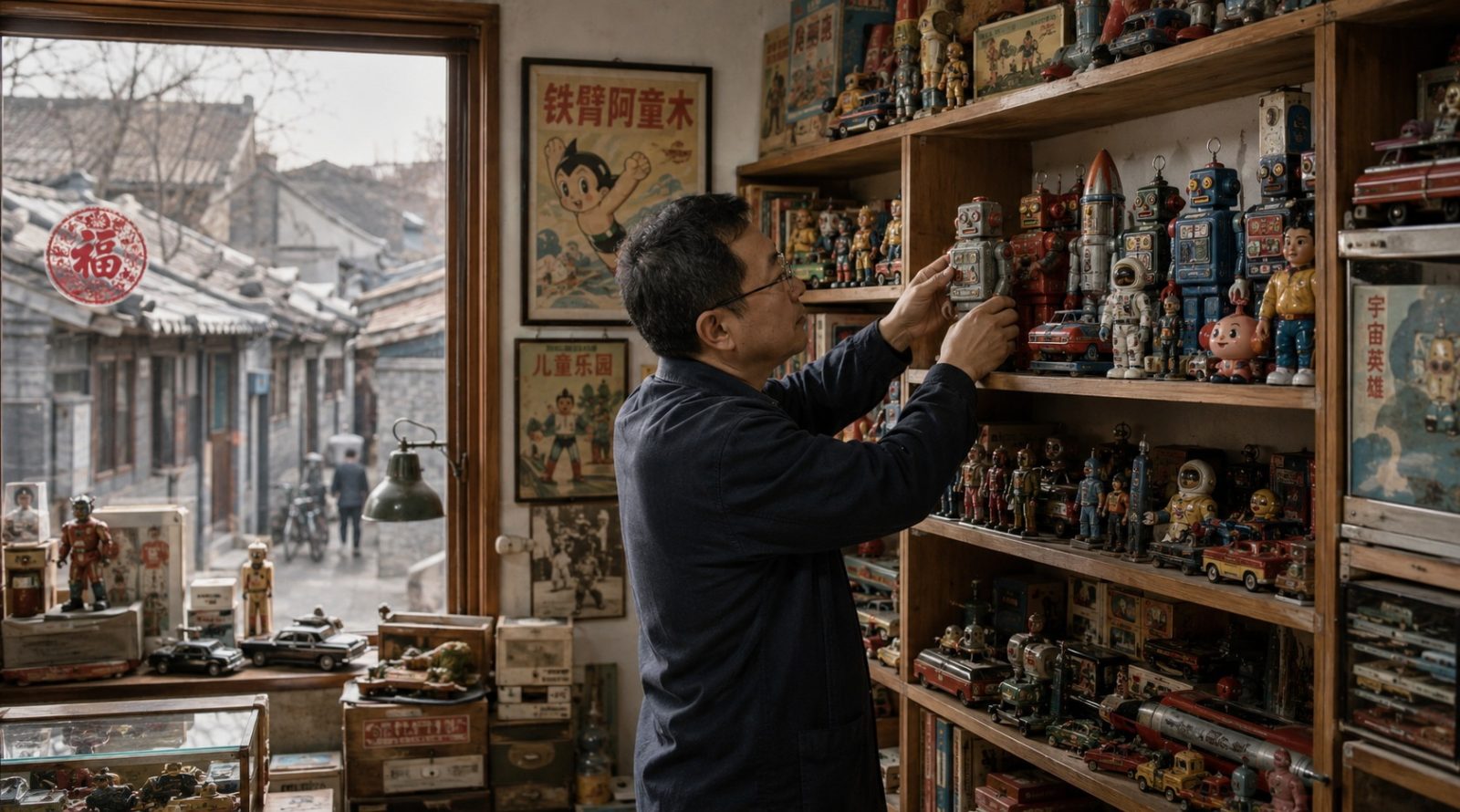

The Silence of Plastic and Metal
It is a humid Tuesday afternoon in July, but inside Li Wei’s studio in the Shichahai district, the air is cool and dry. The only sound is the rhythmic *click-clack* of a mechanical tin toy being wound up. Li, 58, adjusts his spectacles with a cloth that has seen better days, his fingers moving with the precision of a surgeon. Outside, the hum of Beijing’s traffic fades, replaced by the soft whir of a spinning top and the faint squeak of rubber tires.
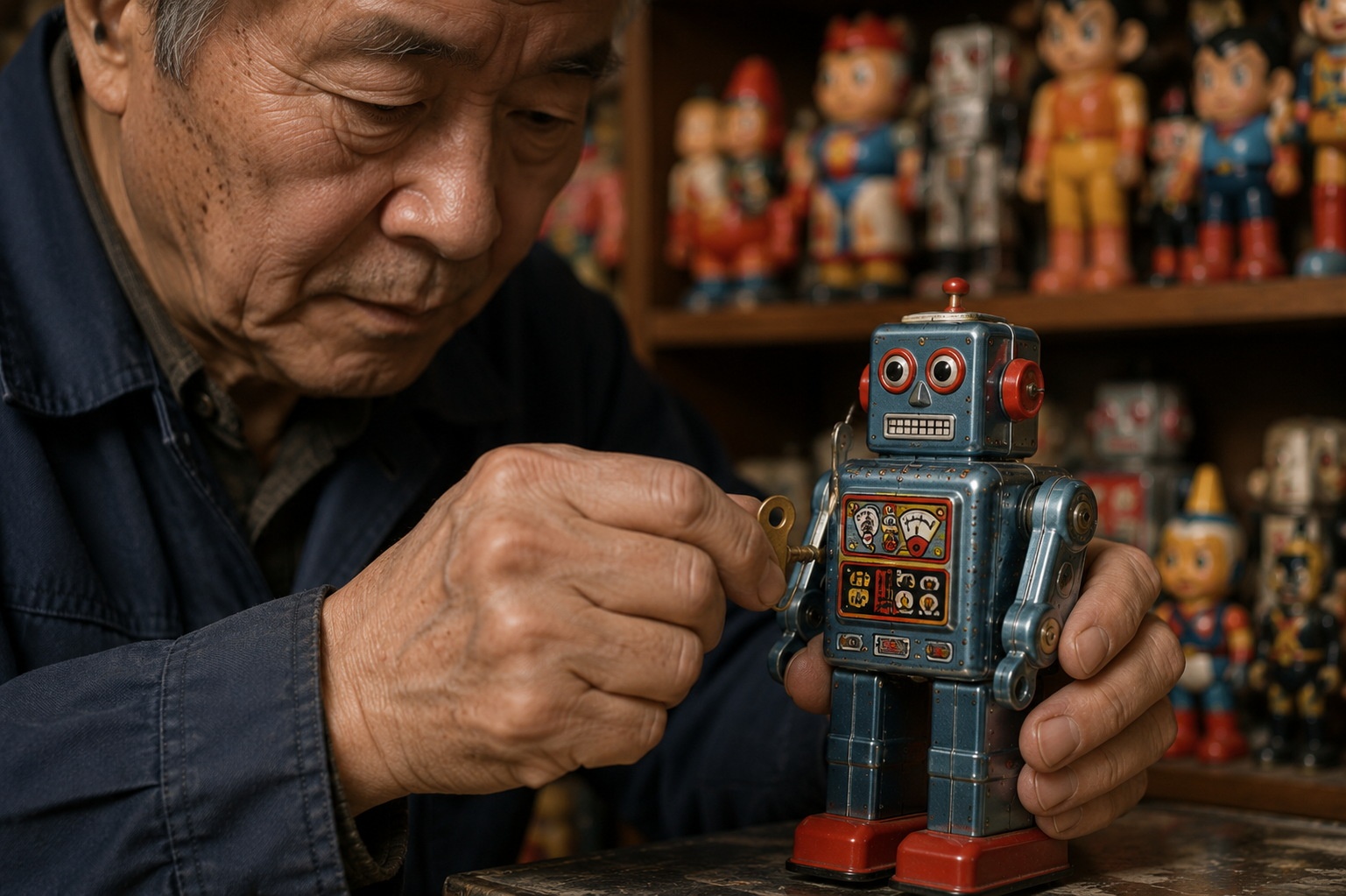
Li is not a typical antiquarian. He does not deal in porcelain or calligraphy. His shelves are lined with plastic soldiers, metal cars that smell of rust and old oil, and dolls with faded painted faces. To an outsider, this might look like a hoard of junk. To Li, it is an archive. “People think collecting is about value,” he says, gently placing a 1980s Chinese-made tin robot back on its shelf. “For me, it is about memory. These objects are the only things that remember who we were before everything changed so fast.”
A Time Capsule in the Heart of the City
Li’s studio, once a dilapidated warehouse in a *hutong* (traditional alleyway) undergoing gentrification, is now a carefully curated museum of childhood. The space is cluttered but organized. Every item has a story. He picks up a small, chipped plastic car from the late 1970s. It was one of the first mass-produced toys in China, made in a factory in Shanghai. “My father bought this for me with half a month’s salary,” Li recalls. “Back then, having a toy like this was a luxury. It wasn’t just a toy; it was a symbol of hope.”
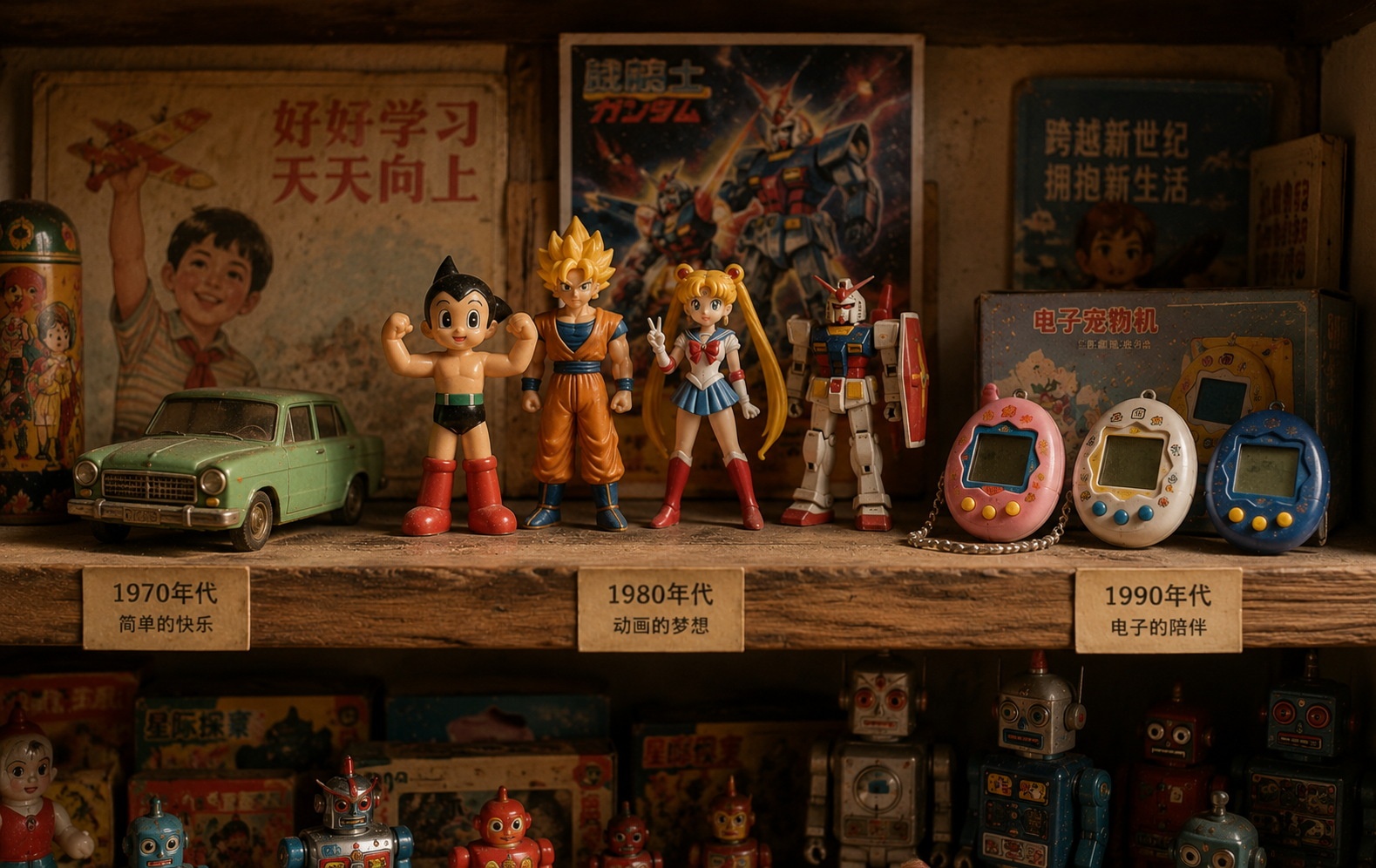
The collection reflects China’s rapid economic trajectory. In the 1980s, when Li was a child, toys were rare and precious. By the 1990s, as China opened up to the world, Japanese anime figures and American action heroes flooded the market. Li has shelves dedicated to *Transformers* and *Gundam* models, each one a testament to a generation that grew up watching satellite TV. In the early 2000s, as the internet age began, digital toys and electronic pets appeared. Li’s shelf holds a Tamagotchi, its screen long dead, but the plastic shell still intact.
More Than Just Objects
Why do these toys matter today? In a country where urbanization has erased many traditional neighborhoods and digital screens dominate children’s play, Li’s collection serves as a counter-narrative. It is a physical anchor in a fluid, fast-moving society. “When I show these to young people,” Li explains, “they are shocked. They cannot imagine a world without Wi-Fi or smartphones. But these toys teach them about patience, about making do with less, and about the joy of simple mechanics.”
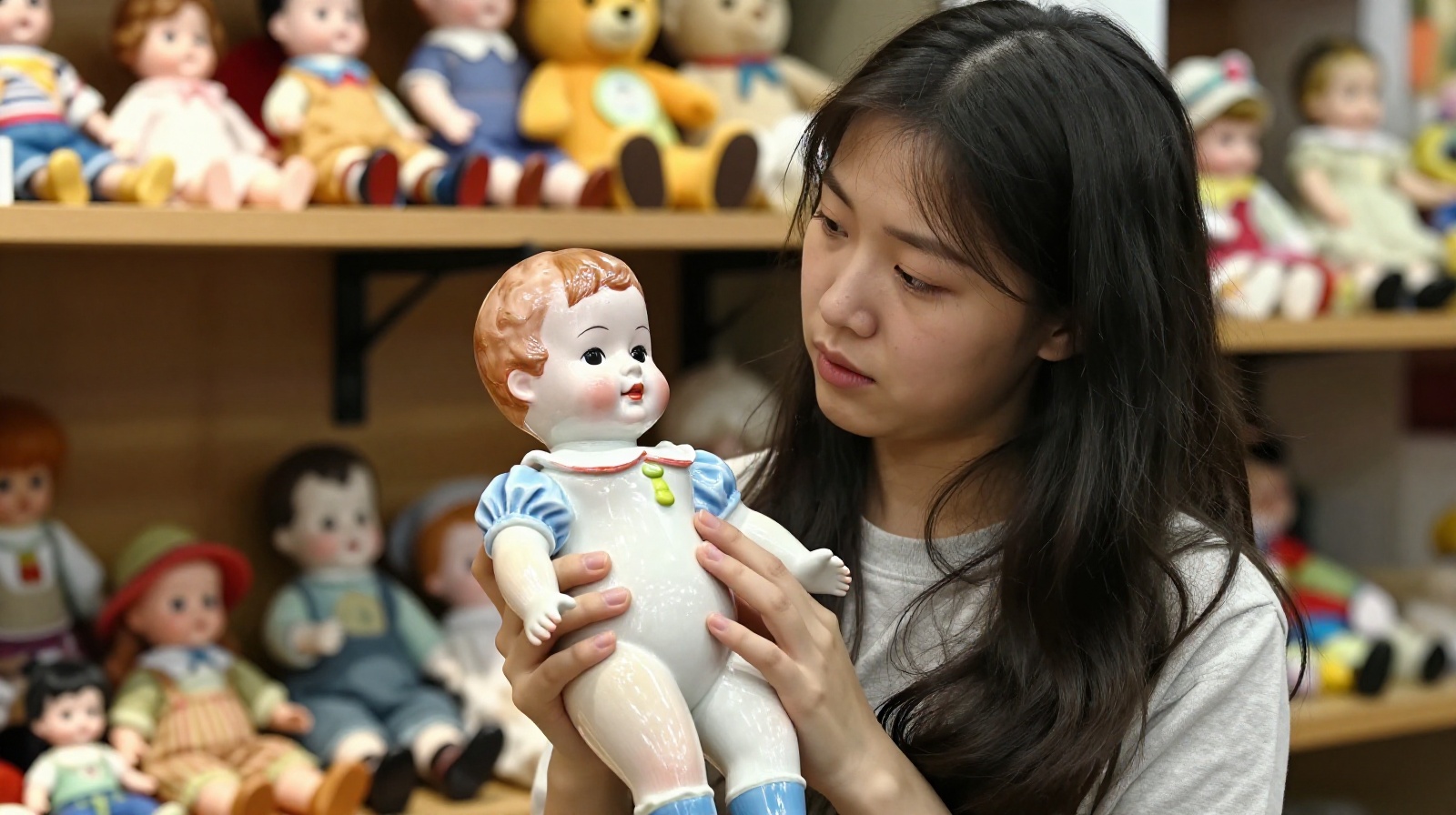
Li often hosts small gatherings in his studio. Visitors are not charged; they are invited to touch, to hold, to remember. Last week, a young woman visited, tears in her eyes. She held a porcelain doll from the 1960s, similar to one her grandmother had played with during the Cultural Revolution. “I never knew my grandmother’s childhood,” she said. “But holding this, I felt closer to her.” Li smiles. This is the true value of his collection: not the monetary worth, but the emotional bridge it builds across generations.
Preserving the Past in a Digital Age
Li acknowledges that his world is shrinking. The *hutong* around him is being renovated into high-end boutiques and cafes. His neighbors have moved to modern apartments with elevators. But he refuses to leave. “If I go, who will remember these stories?” he asks. He spends his days restoring broken toys, cleaning dust from plastic joints, and writing labels for each item. His work is slow, deliberate, and deeply personal.
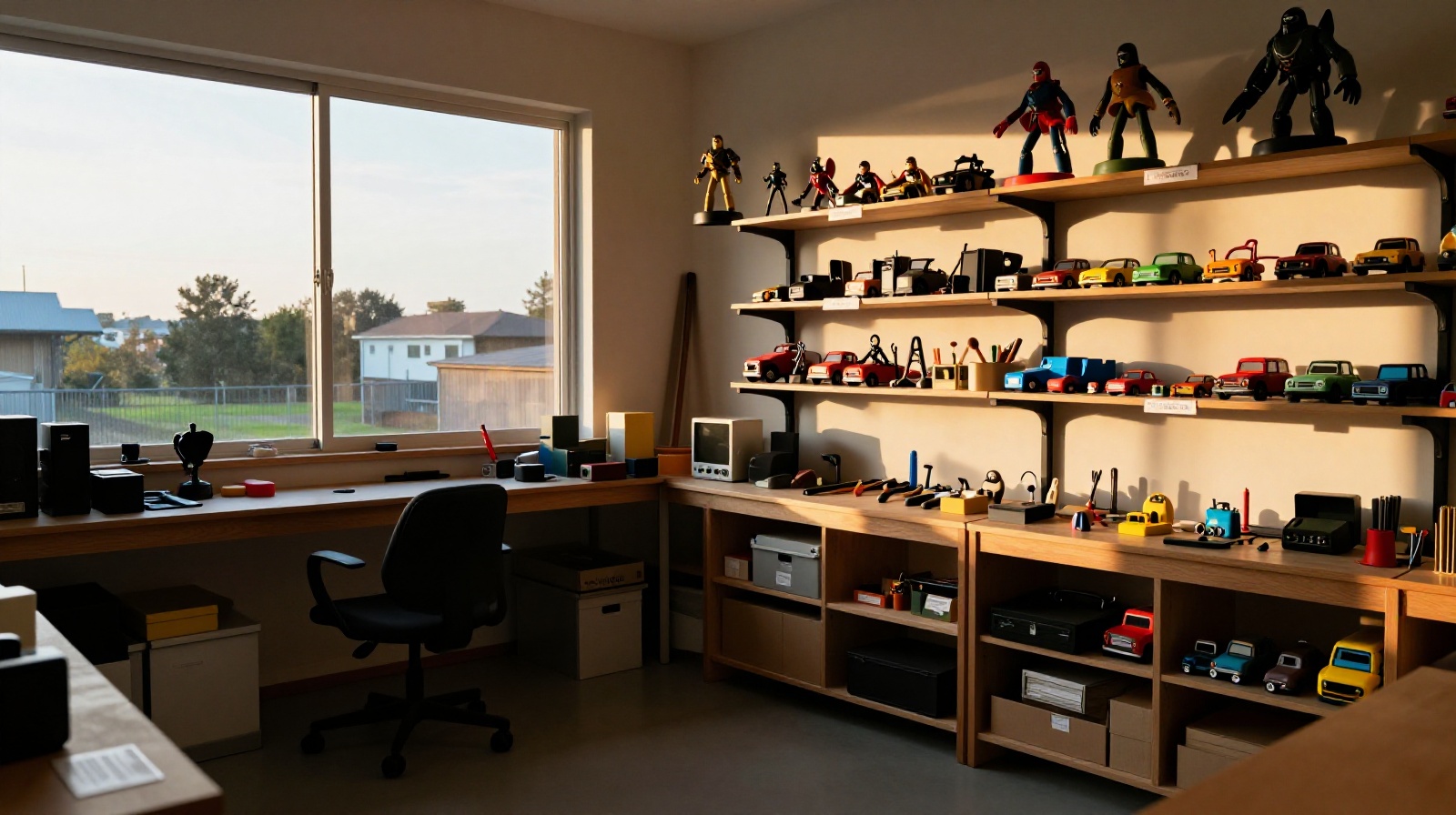
For Li, collecting is an act of resistance against forgetting. In a society obsessed with the new, the next, and the faster, he chooses to preserve the old. “We are moving so fast that we leave parts of ourselves behind,” he says. “These toys are the pieces we left behind. I am just holding them for you until you are ready to pick them up again.” As the sun sets over Beijing, casting long shadows through the window, Li winds up another tin toy. The mechanism clicks, the wheels turn, and for a moment, time stands still.