

Stop Calling It “Black” Tea (Unless You Mean the Color)
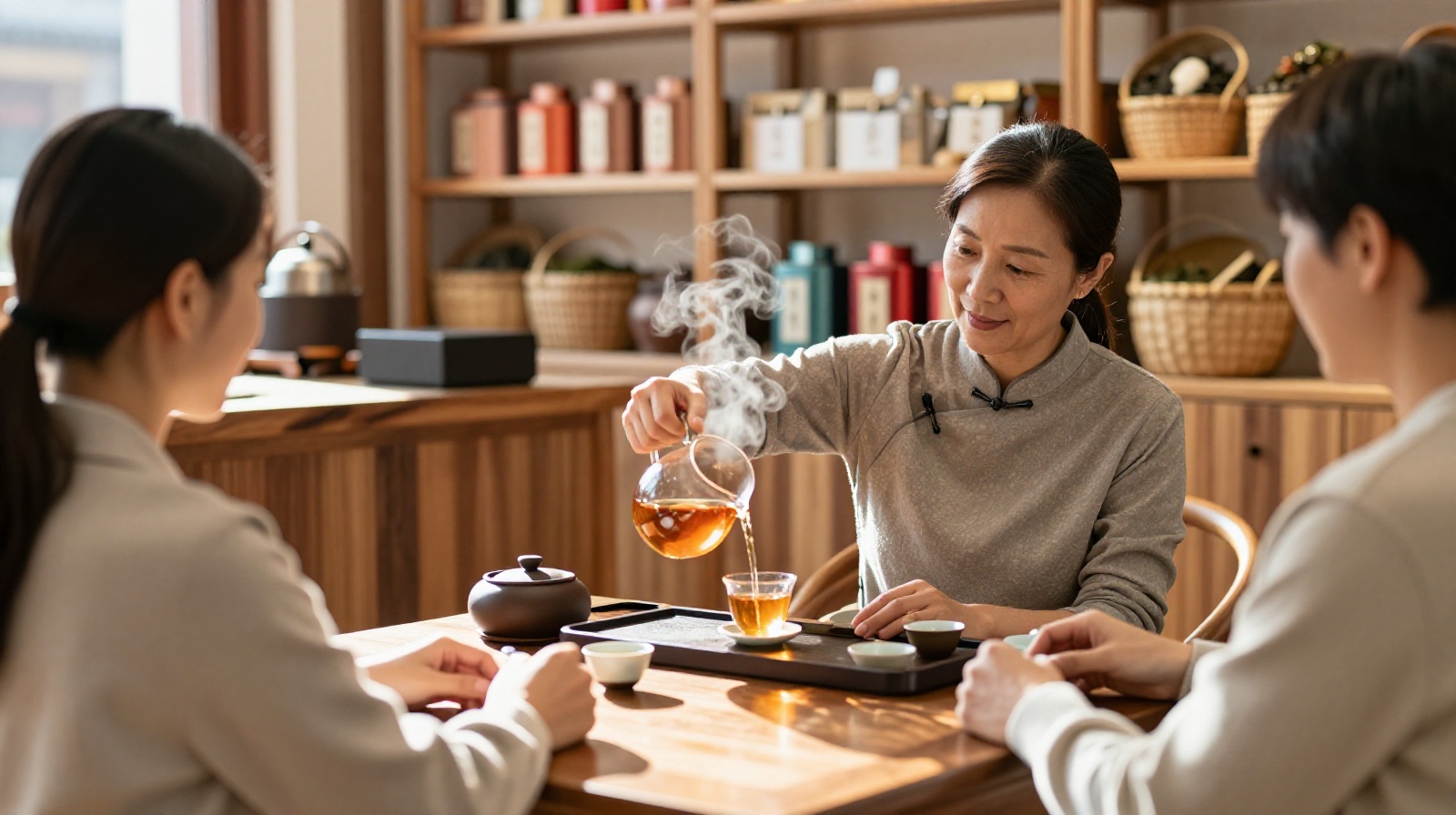
If you order a “black tea” in London, you expect a dark, strong brew. But walk into a tea shop in Hangzhou and ask for “red tea” (hongcha), and you might be handed a bright amber liquid that tastes nothing like the robust breakfast blends of England.
This naming confusion is the first hurdle for anyone new to Chinese tea culture. The truth is simple: Chinese teas are classified by their oxidation level, not the color of the dry leaves or the finished liquor in your cup. It’s a bit like cooking—roasting an apple makes it brown, but we don’t call it “brown fruit.” We name it based on what happened to it.
The Three Big Players: Green, Oolong, and Black
To understand Chinese tea, think of the leaf as an ingredient. How much you let it “cook” (oxidize) determines the final flavor.
1. Green Tea: The Fresh Spring Leaf
The Process: Imagine picking a leaf straight from the bush and immediately throwing it into a hot wok or steamer to stop it from reacting with air. This is “killing the green.” No oxidation happens.
The Taste: It tastes like the garden itself—grassy, vegetal, sometimes nutty, with a clean finish. It’s fresh and lively.
Real-life Example: In Shanghai, you’ll see locals drinking Longjing (Dragon Well) in glass cups on their desks at work. The leaves dance at the bottom of the clear water. It’s not a dark, heavy drink; it’s a light, refreshing pause.
2. Black Tea: The Fully Oxidized Leaf
The Process: Here, the leaf is rolled and left to sit in warm air until it turns dark brown or black on its own. This chemical change creates sweet, malty notes.
The Taste: Smooth, full-bodied, with hints of honey, dried fruit, or chocolate. It lacks the sharp “grassiness” of green tea.
Why the Name? In China, we call it hongcha (Red Tea) because the liquid is a beautiful ruby red. When British traders first saw this deep color in the cup, they called it “black tea” based on the dark dried leaves. Now both names stick.
3. Oolong Tea: The Art of Balance
The Process: This is the middle ground between green and black. Leaves are lightly bruised, oxidized halfway, then heated to stop the process exactly where they want it.
The Taste: Complex and floral. You might smell jasmine or orchids in a cup that looks amber-golden. It’s often described as having a “returning sweetness” (hui gan) that lingers after you swallow.
The Scene: Try an Oolong in a small clay teapot (like Yixing ware). In Guangdong, people sip this slowly while chatting at dim sum, letting the aroma fill the room without overwhelming it.
Your Tasting Map: What to Expect
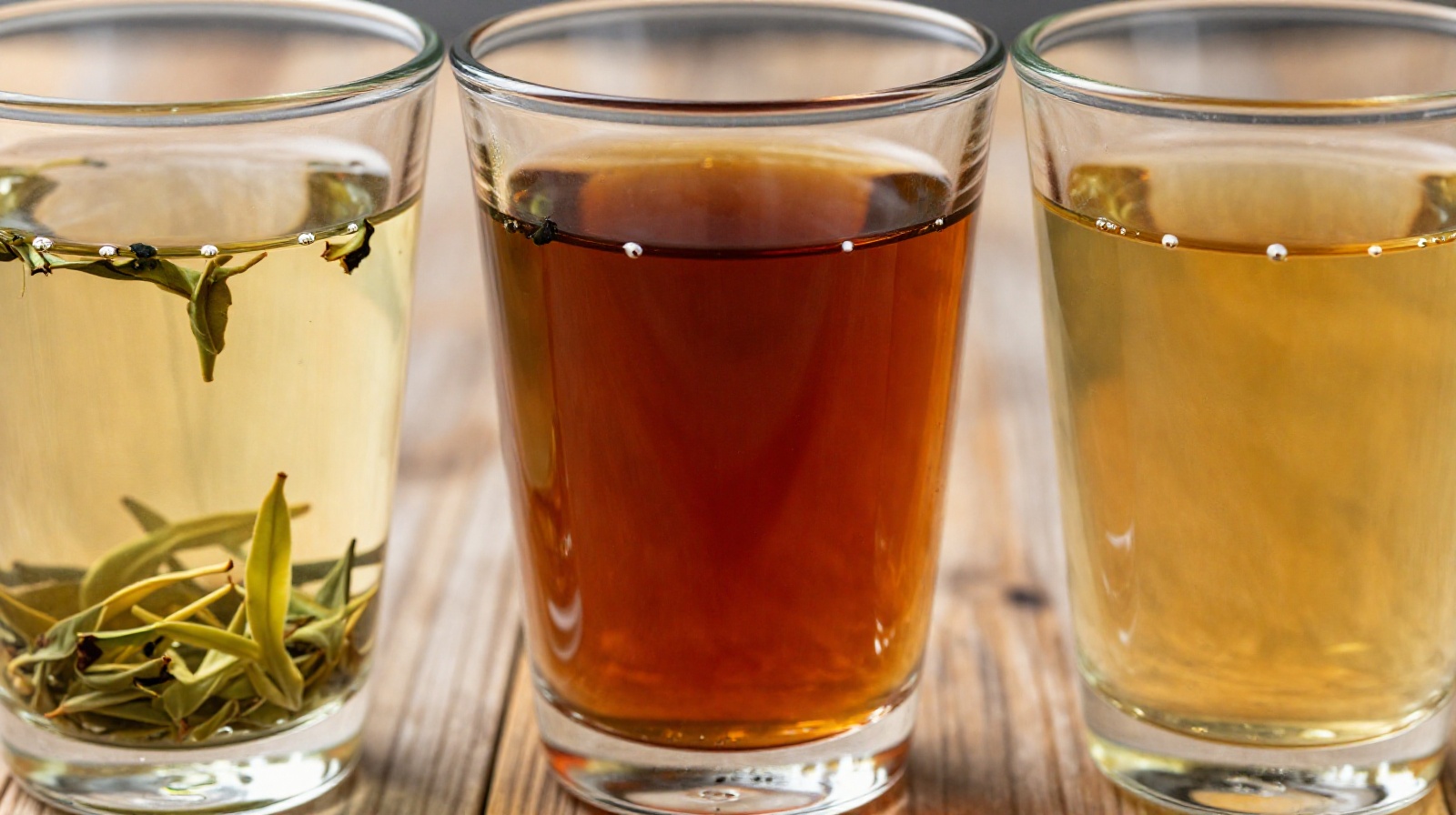
- Color: Green tea = Pale yellow/green. Black tea = Deep red/amber. Oolong = Golden/orange.
- Aroma: Green = Fresh grass/beans. Black = Malt/honey. Oolong = Flowers/fruits.
- Mouthfeel: Green = Crisp and refreshing. Black = Smooth and warm. Oolong = Silky and lingering.
How to Brew It Right (The Simple Way)
You don’t need a $500 set to make great tea. You just need the right temperature.
- Green Tea: Use water that isn’t boiling (about 160°F / 70°C). Boiling water will “cook” the leaves and make them bitter. Glass cups are best so you can watch the dance of the leaves.
- Black & Oolong: These want hot water, near boiling (200-212°F / 95-100°C). A clay pot or ceramic mug works well to keep the heat in.
Pro Tip: In modern Chinese cities, you often see tea bags at convenience stores. They work for a quick fix, but for the real experience, buy loose leaves from a local market. The difference is night and day.
Where to Buy Without Getting Scammed
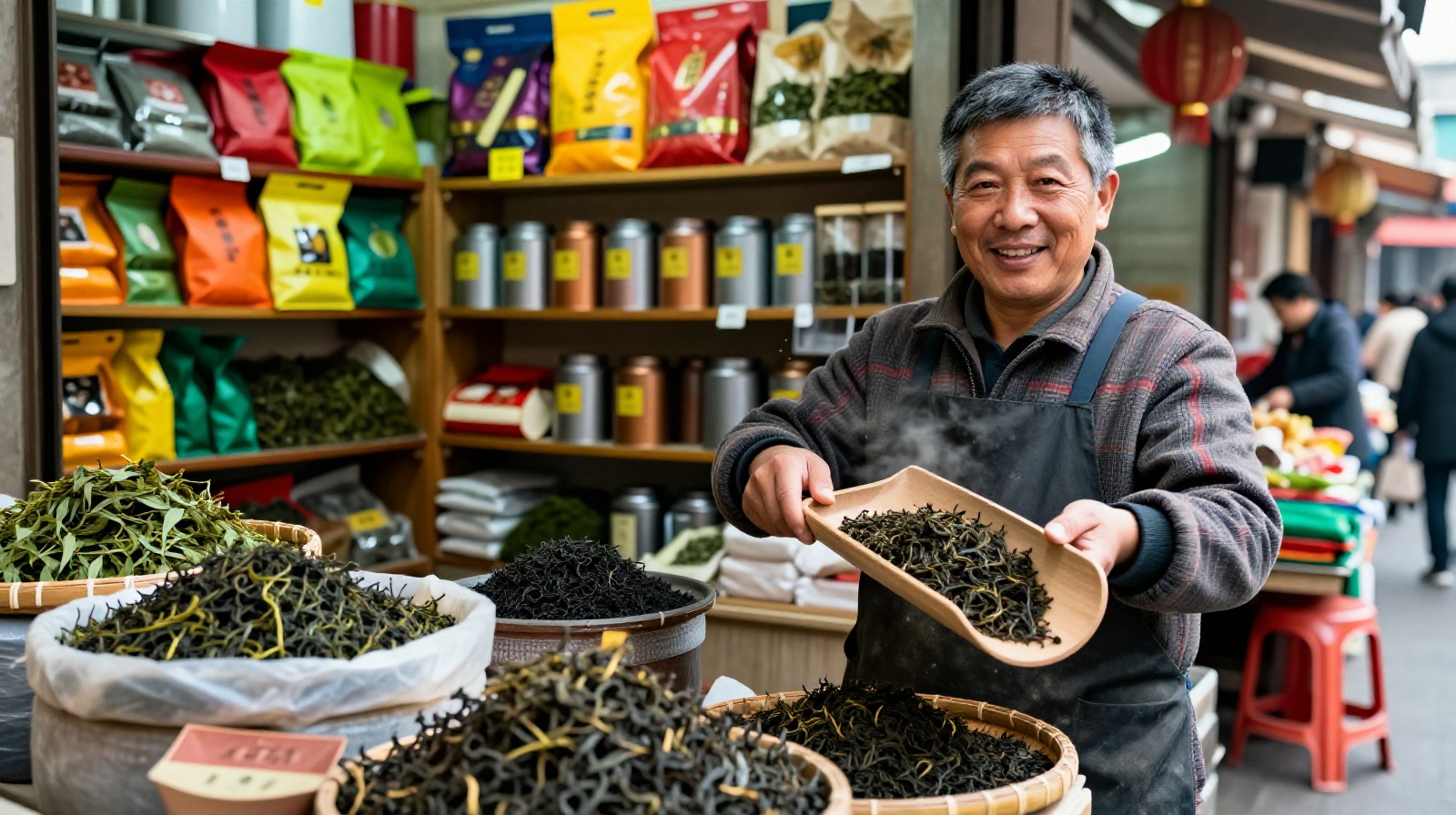
If you are in China and want to buy your first bag of tea, go to a street-level vendor or a dedicated tea shop rather than a high-end department store. Avoid the flashy “gift boxes” at airports; they often contain low-quality dust.
Look for these signs of quality:
- Smell it dry: High-quality leaves smell natural and sweet, not dusty or artificial.
- Look at the shape: Leaves should be whole or broken naturally, not a pile of uniform dust (unless buying tea bags).
- Ask for a taste: Most honest sellers will let you brew a small sample. If they refuse, walk away.
Tea in China isn’t just a drink; it’s a way to slow down. Whether you choose the grassy punch of green tea or the floral depth of oolong, remember that there are no strict rules. Just find what makes you happy, brew it hot, and enjoy the moment.