

The Morning Message That Changes Everything
At 7:15 AM, Li Wei’s phone buzzes. It isn’t a work email or a news alert. It’s a message from “Mrs. Zhang,” the neighborhood organizer for her apartment complex in Chengdu.
“Good morning! The watermelons from Hunan arrived fresh this morning. 12 yuan per jin (500g), down from 18 yuan at the market. Reply ‘3’ to order three.”
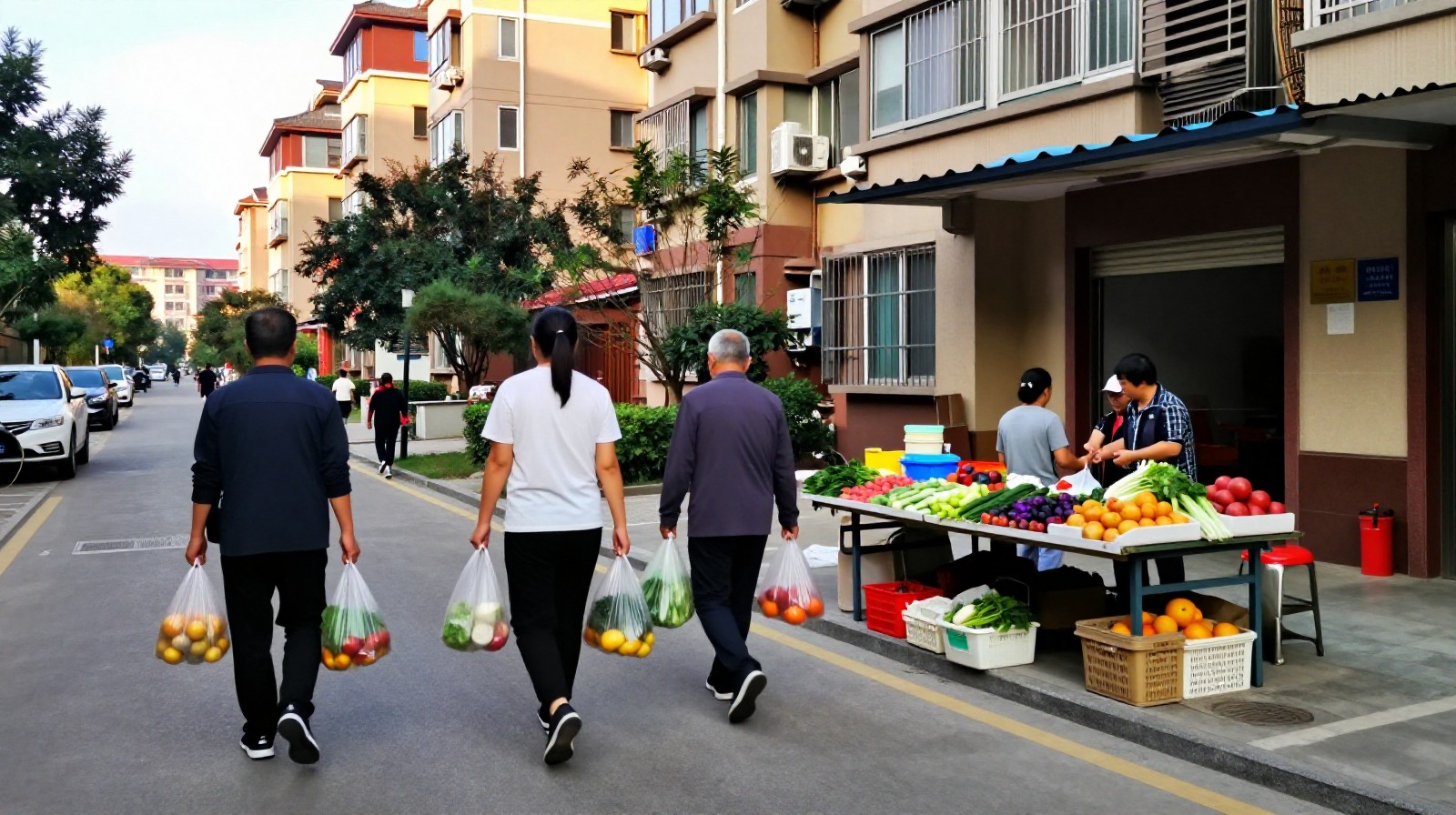
This is how millions of Chinese families shop for groceries today. It’s called community group buying. Instead of driving to a supermarket or paying high fees for delivery, neighbors join a WeChat group led by a local resident—often an elderly woman, a stay-at-home parent, or a small shop owner—who collects orders and coordinates pickup.

How It Actually Works: A Story of One Family
Let’s follow Li Wei’s evening routine. After work, he checks the group chat. The “团长” (group leader), Mrs. Zhang, has posted a list:
- Pork belly: 35 yuan/kg (10% cheaper than local markets)
- Baby spinach: 4 yuan/bunch (usually sold at 7 yuan elsewhere)
- Apples: 6 yuan/jin (sold in bulk from orchards)
Li Wei types “3” for the watermelon and “2” for the spinach. He doesn’t pay Mrs. Zhang directly. Instead, he pays through WeChat Pay instantly. The system aggregates his order with hundreds of others.
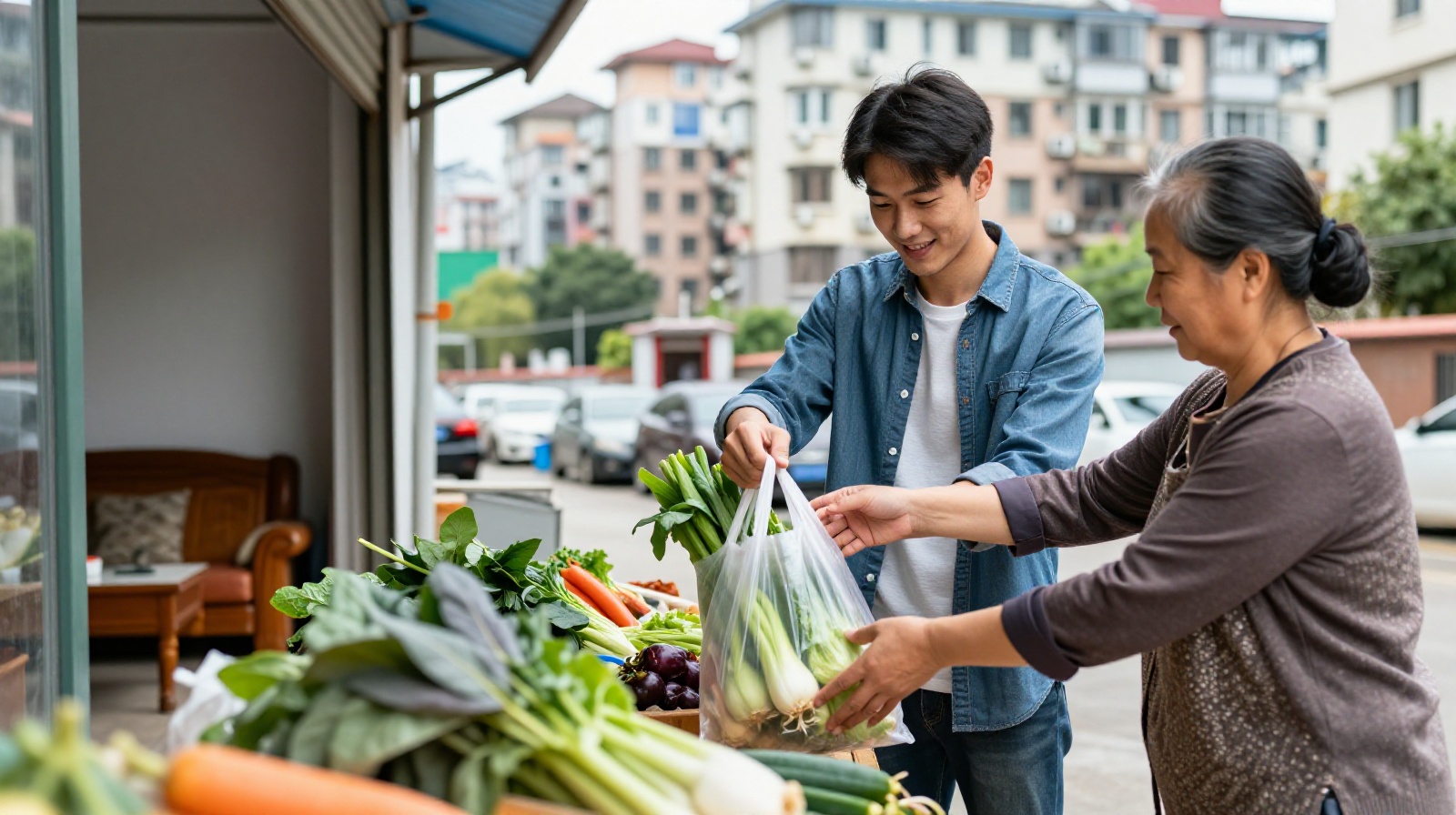
The next afternoon, at 5:00 PM, Li stops by Mrs. Zhang’s living room or a small corner shop designated as the pickup point. She has a stack of bags waiting for him. He picks up his watermelon and spinach. No delivery fee. No waiting. Just fresh food collected from a neighbor.
Why Is This So Much Cheaper?
You might wonder: how can vegetables be so cheap? The secret lies in cutting out the middlemen.
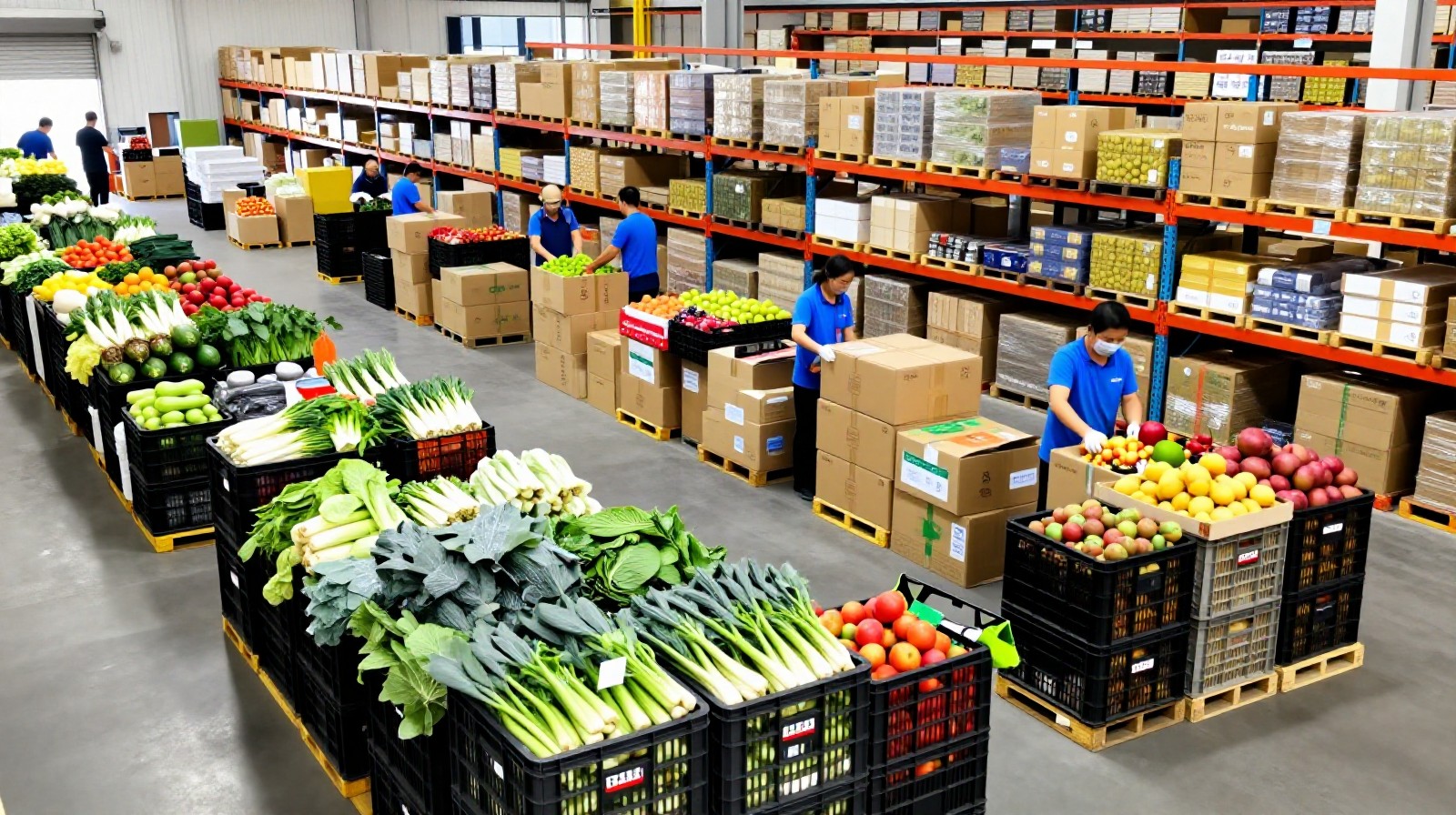
In the traditional supply chain, produce travels from farm to wholesale market, then to a distributor, then to a supermarket, and finally to you. Each stop adds cost for transport, storage, and profit margins. In community group buying, farmers ship directly to a city-wide distribution center. From there, goods go straight to the neighborhood pickup point.
This model is known as “pre-order, next-day delivery.” Because orders are collected 24 hours in advance, suppliers know exactly how much to send. There is no waste from unsold food rotting on shelves. That saved money gets passed down to the shopper.
More Than Just Savings: Rebuilding Trust
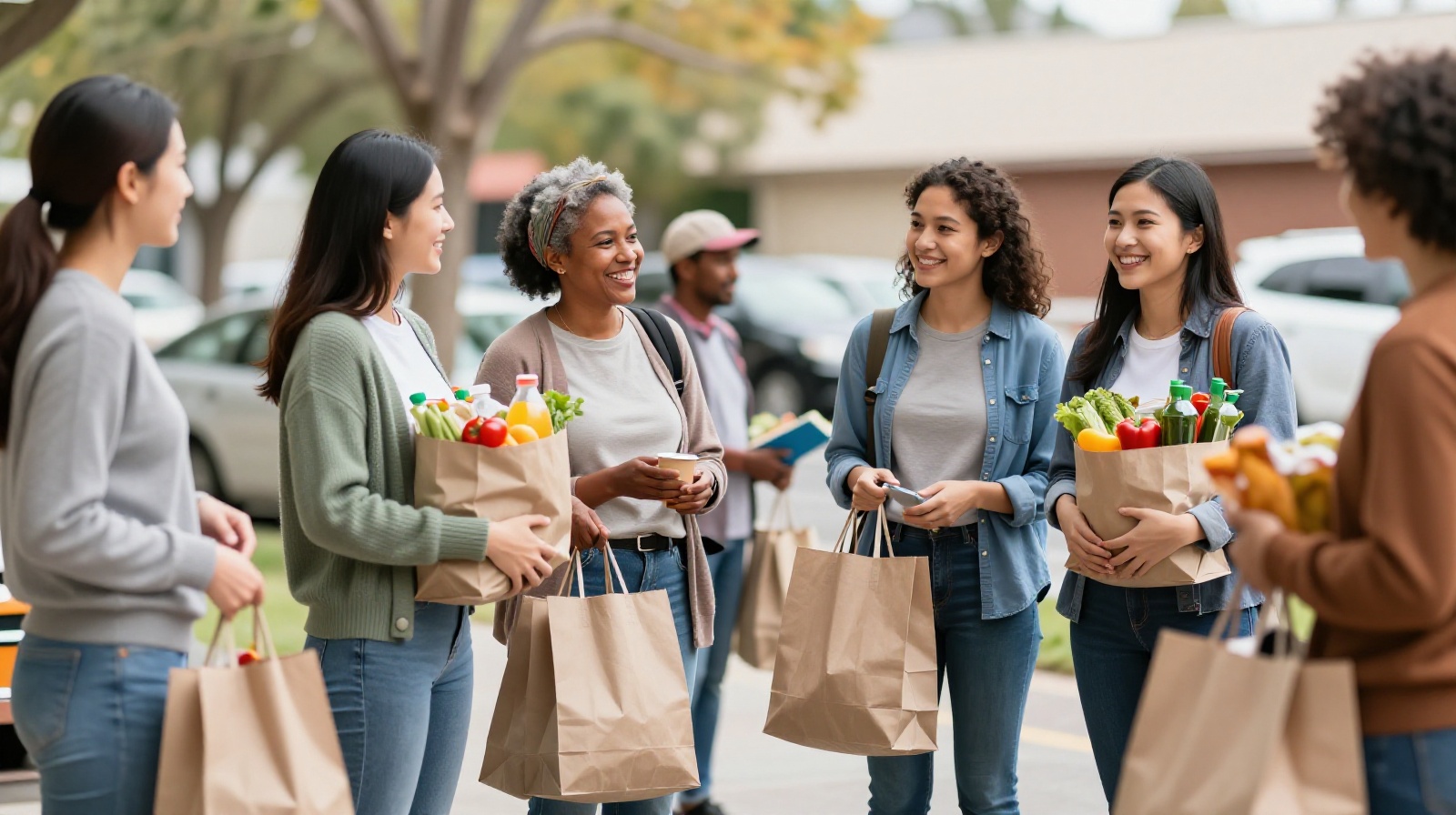
In many big cities, people live in tall buildings but rarely speak to their neighbors. You might not even know who lives next door. Community group buying changes this dynamic quietly.
The “group leader” is usually someone trusted in the community—a neighbor you see every day. If the vegetables are rotten or the wrong item arrives, you don’t call a distant customer service hotline. You walk to Mrs. Zhang’s house and talk to her face-to-face. She replaces it immediately. This creates a layer of accountability that big tech companies often lack.
For retirees like Mrs. Zhang, this is also a source of income without needing a corporate job. For young families like Li Wei’s, it means fresh food at prices they can afford during tough economic times.
The Trade-Offs: What You Give Up
It isn’t perfect. Community group buying requires patience. You can’t just run to the store for a single egg if you forget it. You have to plan ahead and wait until the next day to pick up your order.
Also, the variety is limited to what the group leader selected. If you are looking for a specific brand of imported cheese or exotic fruit not in the bulk order, this system won’t work for you. It’s about staples: rice, vegetables, eggs, and daily meat.
Why This Matters to the World
Community group buying shows how technology in China is often applied not just for profit, but for efficiency and social cohesion. While Western e-commerce focuses on instant gratification with drone delivery or same-day shipping, Chinese innovations like this prioritize cost reduction and community connection.
It proves that in a rapidly modernizing society, the oldest human instinct—trading with your neighbor—is still the most powerful tool for saving money.