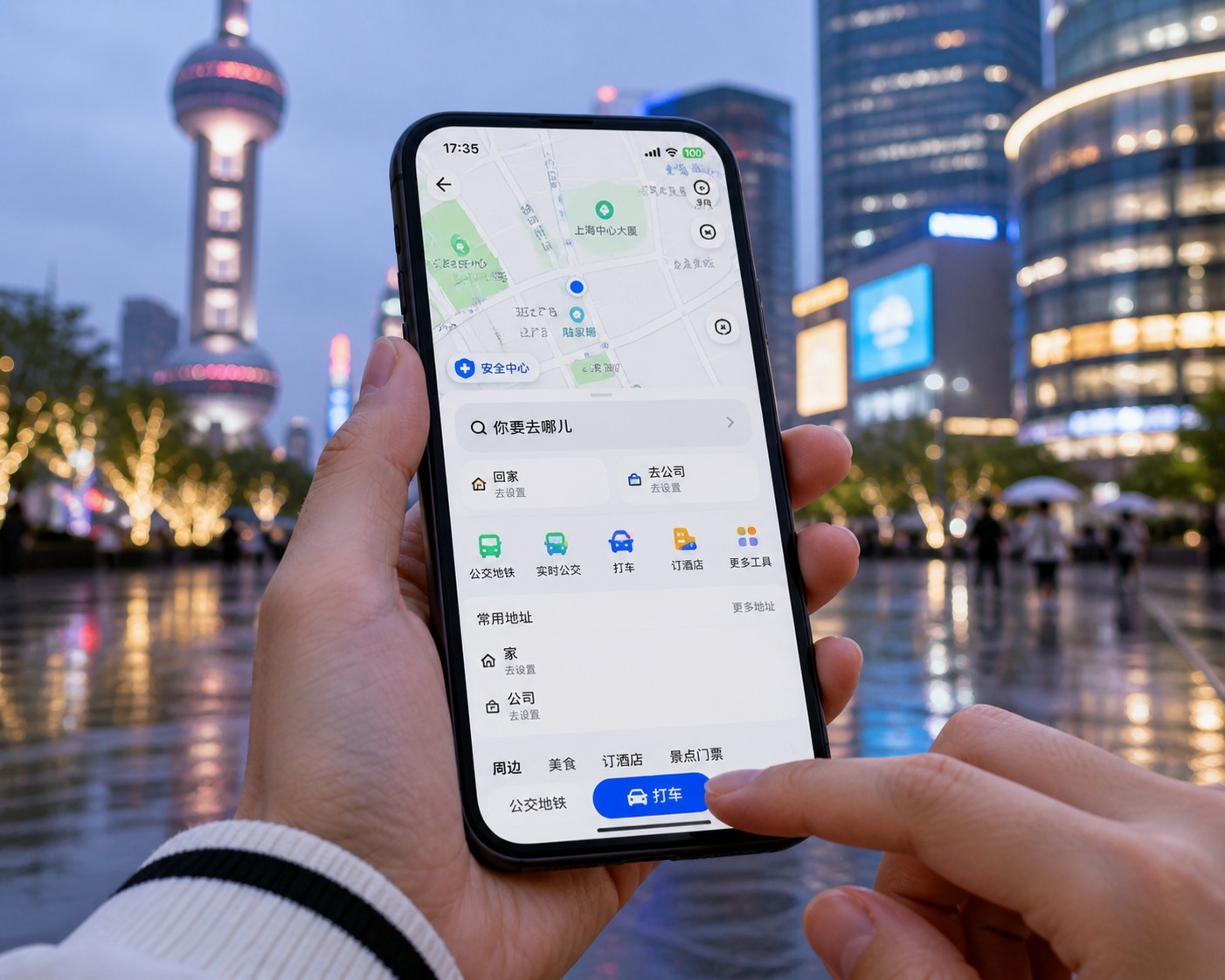
Imagine standing on a street corner in Shanghai at 10 PM. It’s raining, you have no cash, and your phone battery is at 5%. You need to get home, but you also realize you promised a friend you’d pick up a prescription from the pharmacy on the way.
In many Western cities, this scenario triggers a frantic app-switching dance: open Uber or Lyft for the ride, then switch to Google Maps to find the pharmacy, then maybe open another app for payment. In China, it’s different. You open Amap (Gaode Ditu) or Baidu Maps, and within two minutes, you’ve haggled with algorithms for the best car price, booked a ride that will arrive in four minutes, and set your navigation to stop at the nearest pharmacy—all without leaving the map interface.
The Super-App Ecosystem: More Than Just Navigation
To an outsider, Chinese map applications look like simple GPS tools. But they have evolved into what tech analysts call “super-apps” for location-based services. They are not just telling you where to go; they are aggregating the entire digital infrastructure of urban mobility and local commerce.
This integration is driven by intense competition. Unlike in some markets where ride-hailing giants like Uber or Didi operate as standalone products, Chinese map apps act as gateways. By embedding services directly into maps, companies like Alibaba (Amap) and Baidu have created a seamless loop: find a place, book the transport to get there, and pay for entry or goods.
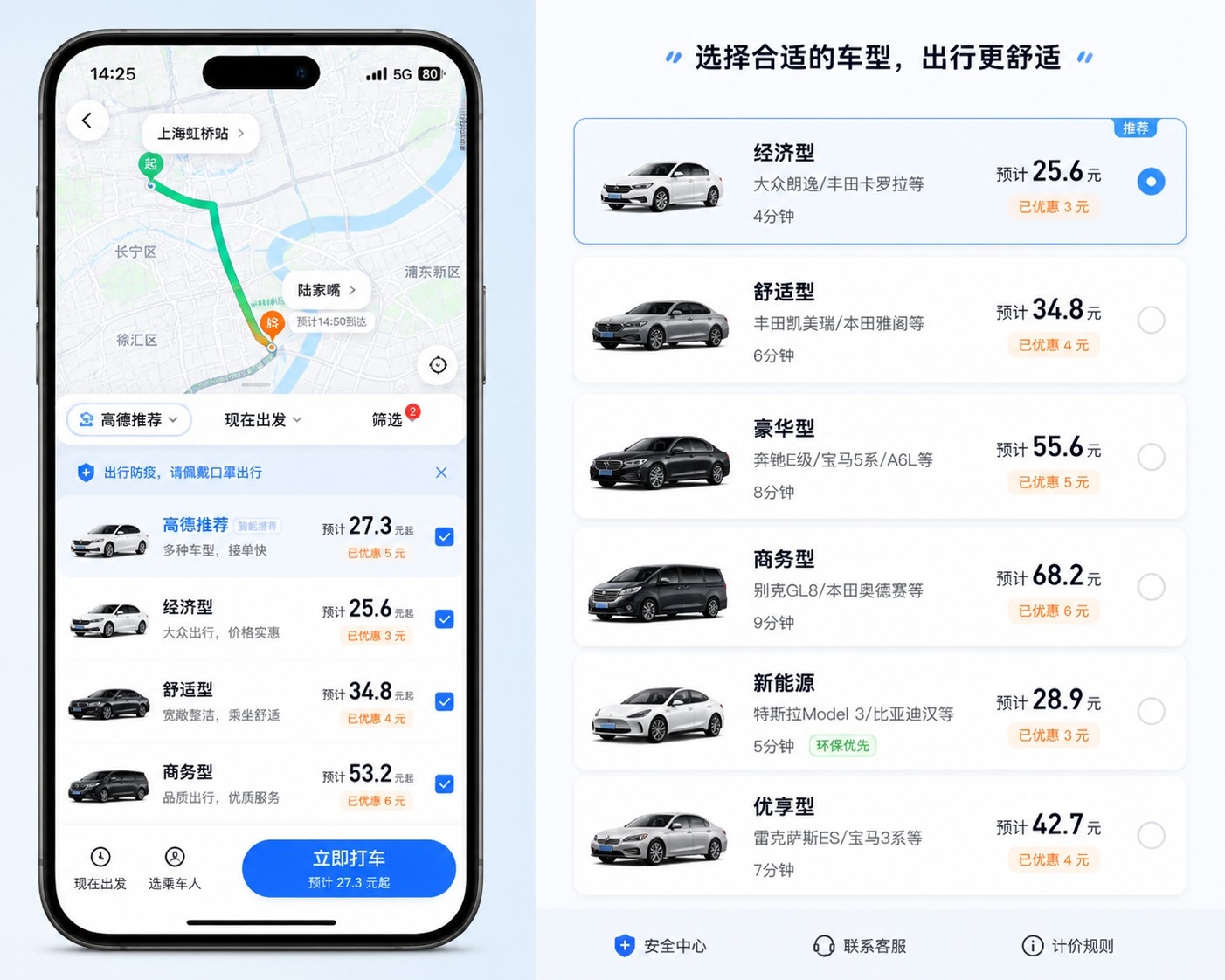
Map apps in China aggregate dozens of ride-hailing services, allowing users to compare prices and wait times instantly.
The most striking feature for foreigners is the Aggregated Ride-Hailing system. When you tap “Call Car” in Amap or Baidu Maps, you aren’t just offered one service. You are presented with a list of dozens of ride-hailing companies—Didi, Cao Cao Mobility, T3 Travel, and many smaller local fleets.
This aggregation is a game-changer for efficiency and price transparency. The map app compares real-time availability and prices across all these providers simultaneously. You can see which car will arrive fastest and which is cheapest, often within seconds. For the user, this eliminates the need to download multiple ride-hailing apps or negotiate with drivers. It’s an instant marketplace embedded in a utility tool.
From Navigation to Reservation: Buying Tickets on the Fly
The utility of these maps extends far beyond getting from point A to B. In China, the line between “finding” a place and “booking” it has blurred.
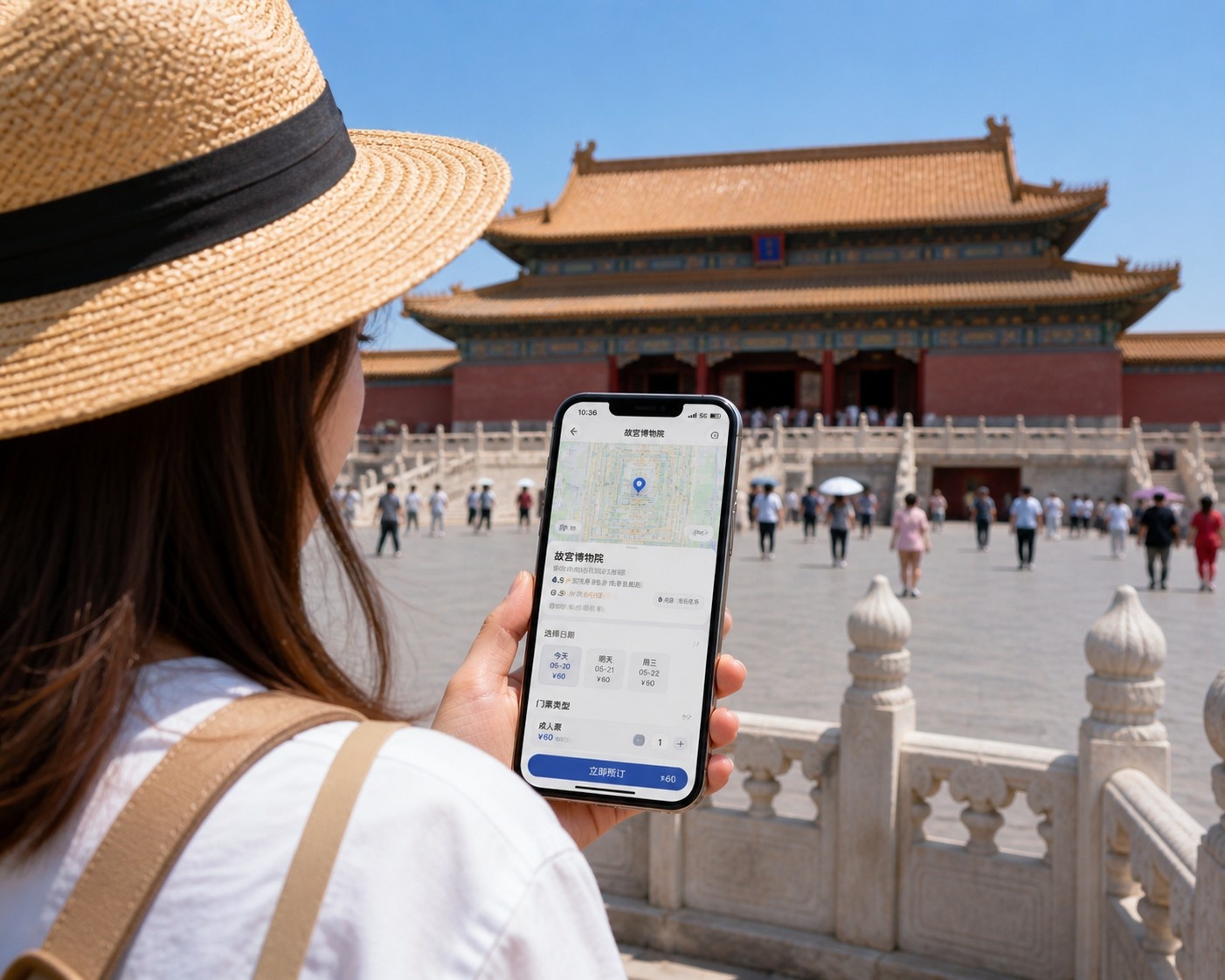
Let’s say you are in Beijing and want to visit the Palace Museum (Forbidden City). Historically, this required booking weeks in advance on a separate travel portal. Today, if you search for the museum in Baidu Maps, you will see ticket availability directly alongside the address and reviews. You can purchase the entry ticket with one tap, using the same payment method linked to your map account.
This functionality applies to everything: tickets for national parks, reservations for hot pot restaurants, or even booking a haircut at a nearby salon. The map becomes a transactional hub. For travelers, this reduces friction significantly. You no longer need to worry about which specific website sells the ticket; if it’s on the map, you can buy it.
You can often book entry tickets directly within the map app, eliminating the need for separate websites or queues.
Planning the Perfect Day: Integrated Itineraries
The true power of these apps reveals itself when planning a full day out. Traditional travel blogs or guidebooks suggest places to visit but leave the logistics up to you. Chinese map apps solve this by offering Custom Route Planning.
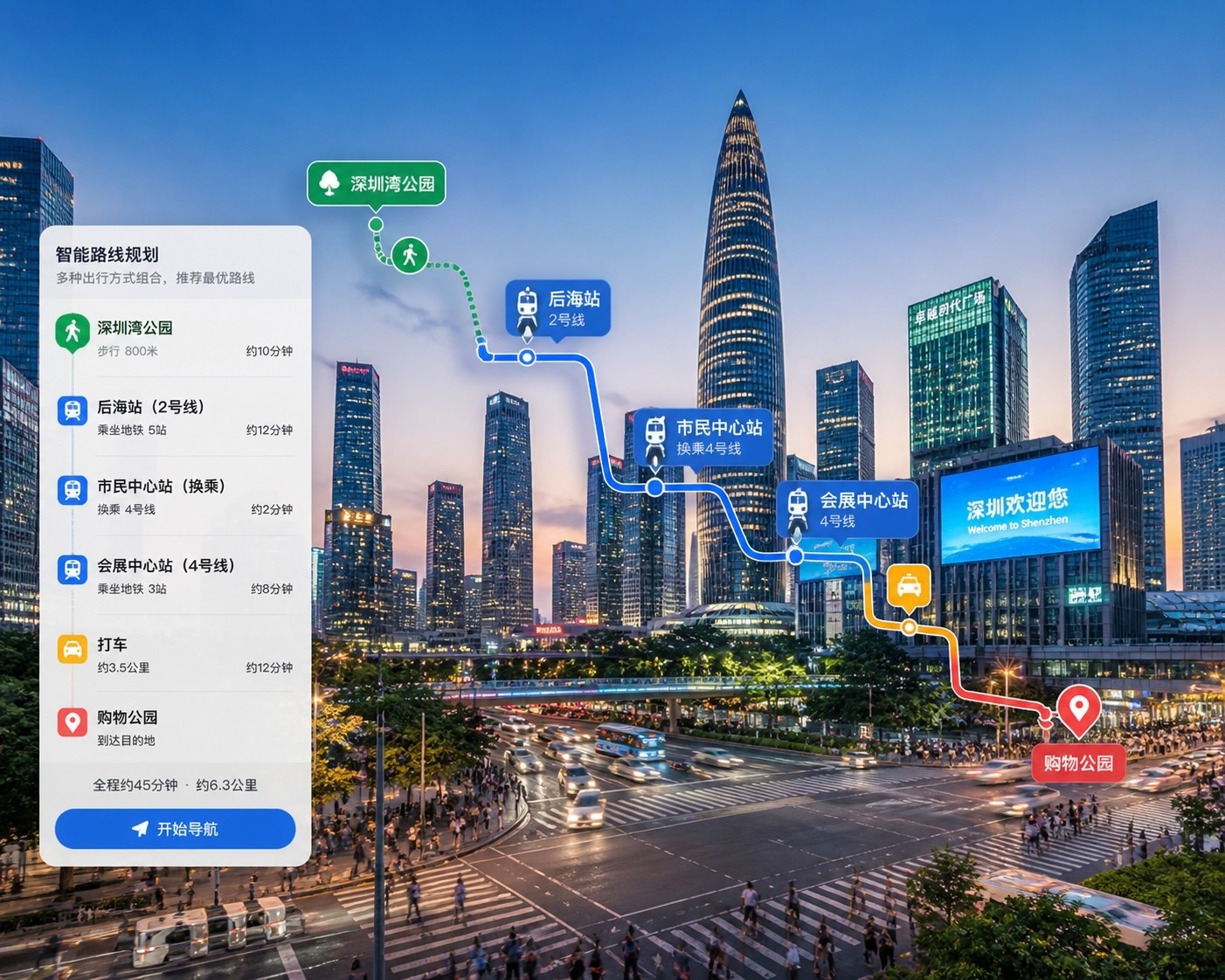
You can input multiple destinations—say, a morning coffee at a specific cafe, a lunch spot three kilometers away, and an afternoon museum visit. The app calculates the optimal sequence based on traffic data, walking time, and opening hours. It then generates a step-by-step itinerary that includes turn-by-turn navigation for each leg of the journey.
This is particularly useful in mega-cities where traffic patterns are complex. The apps integrate real-time public transit data (subway lines, bus routes) with ride-hailing options. You might see a route suggestion: “Take Subway Line 4 for 10 minutes, then walk 300 meters.” If it starts raining, you can instantly switch to “Call Car” and the map will guide the driver to your exact location.
Why This Matters: A Lesson in Digital Convenience
For Western readers accustomed to fragmented digital services—where maps, ride-hailing, ticketing, and payments are often siloed into different ecosystems—this level of integration can feel almost magical. But it’s not magic; it’s the result of a mobile-first internet culture where efficiency is paramount.
The key takeaway for visitors and expats isn’t just about convenience; it’s about understanding how Chinese cities function. These apps reflect a society that values speed, transparency in pricing, and the elimination of redundant steps. They turn the map from a passive reference tool into an active agent of daily life.
Practical Tips for Using Map Apps in China
Download Both: While Amap (Gaode) is often praised for its accuracy and clean interface, Baidu Maps has slightly better coverage of rural areas and detailed POI (Point of Interest) data. Having both installed is wise.
Enable English: Both apps now offer an English interface. Look for the language toggle in the settings menu. However, some local services within the app may still be in Chinese.
Link a Payment Method: To fully utilize ticket booking and ride-hailing aggregation, you must link a Chinese bank card or Alipay/WeChat Pay. This is non-negotiable for the full experience.
Use Real-Time Traffic: Always check the traffic color overlay (green, yellow, red) before departing. The algorithms are highly accurate and can save you from gridlock.
Integrated itinerary planning combines public transit, walking routes, and ride-hailing into a single seamless journey.
In conclusion, using Baidu or Amap in China is less like using a compass and more like carrying a personal assistant, taxi dispatcher, and ticket agent in your pocket. It’s a glimpse into a future where digital tools don’t just inform us about the world—they actively help us navigate it.