
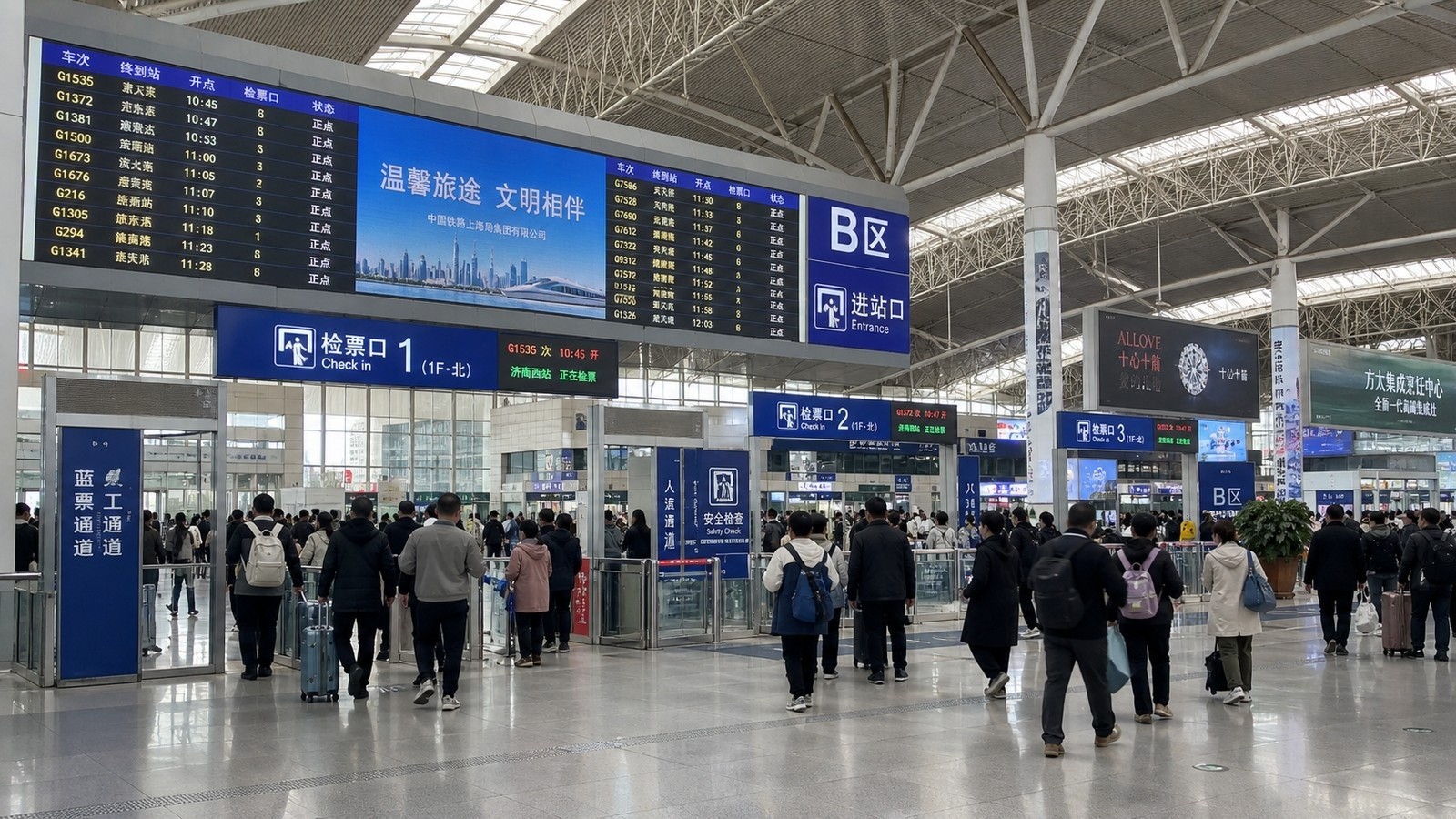

The First Shock: It’s Not Just a Station, It’s a City
If you have ever traveled through a European or American regional train station, walking into China’s major high-speed rail hubs can feel like stepping onto another planet. Take Shanghai Hongqiao or Beijing South Station. These are not merely buildings; they are vast underground and above-ground complexes that handle hundreds of thousands of passengers daily.
For the first-time visitor, the sheer scale is disorienting. The ceilings soar fifty meters high. The corridors stretch longer than a football field. You can easily spend twenty minutes just walking from the entrance to the security check, only to realize you are still miles away from your platform.
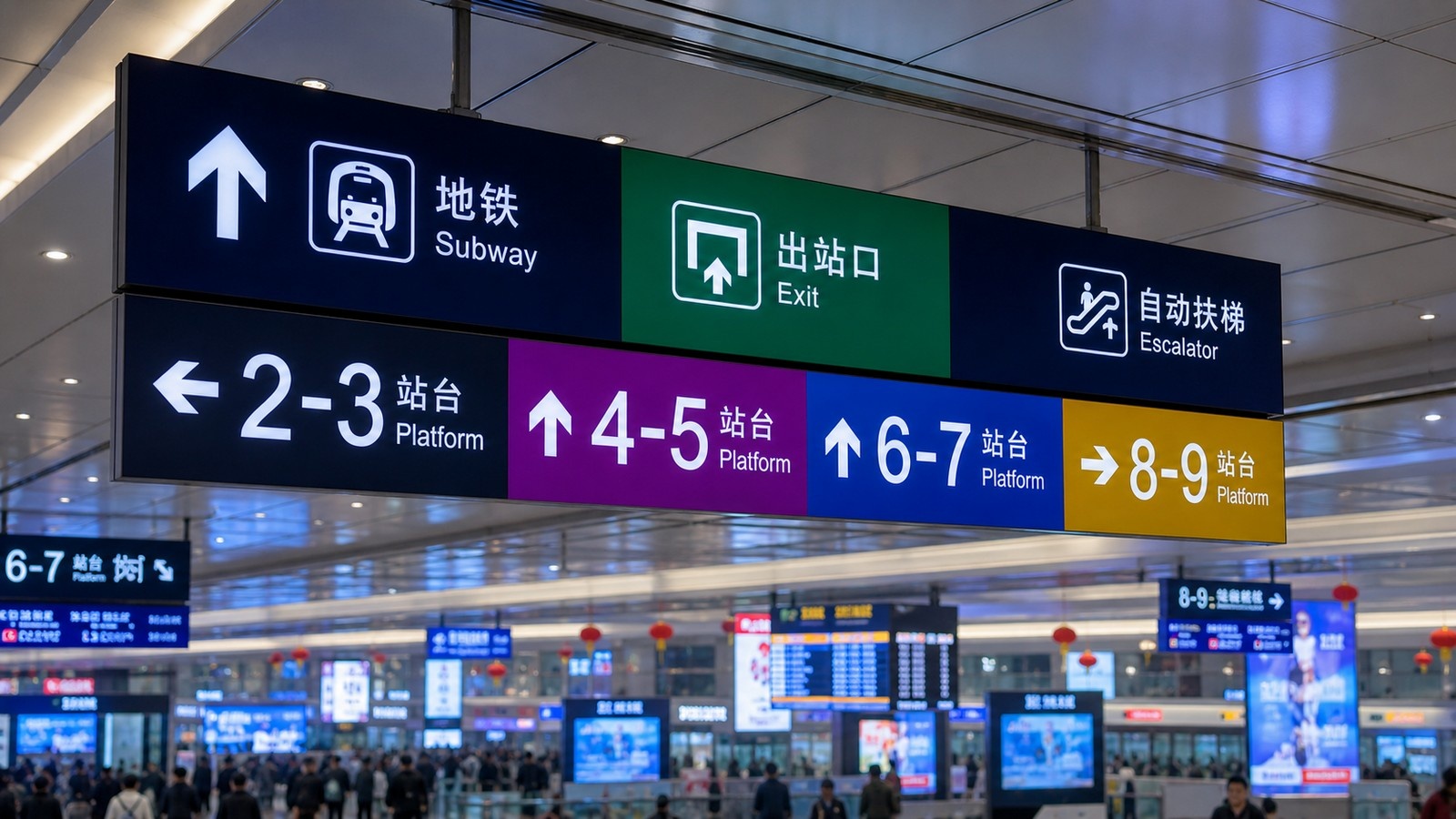
Decoding the Map: Color Codes and Vertical Logic
The key to surviving these giants is understanding that they operate less like traditional train stations and more like international airports. The layout is strictly vertical and color-coded.
Most mega-stations use a simple logic: Up means departure, Down means arrival.
- Concourse Level (Usually Floor 2): This is where you enter. You will find the ticketing machines, security checkpoints, and waiting halls here. It is the busiest floor.
- Platform Level (Usually Ground or Floor -1): After passing through the ticket gates on the concourse level, you walk down escalators to the actual train platforms.
The stations often use distinct colors for different lines. For example, Line 10 might be marked in blue, while Line 2 is red. The digital signs hanging above the waiting areas will display your train number (e.g., G1234) along with its color. If you follow the colored arrows on the floor or ceiling that match your ticket’s line color, you are rarely lost.
The Security Trap: Don’t Wait Until the Last Minute
Here is the most common mistake foreigners make: treating security checks like a regular airport checkpoint where you can arrive just 15 minutes before departure. In China’s high-speed rail network, this is a dangerous gamble.
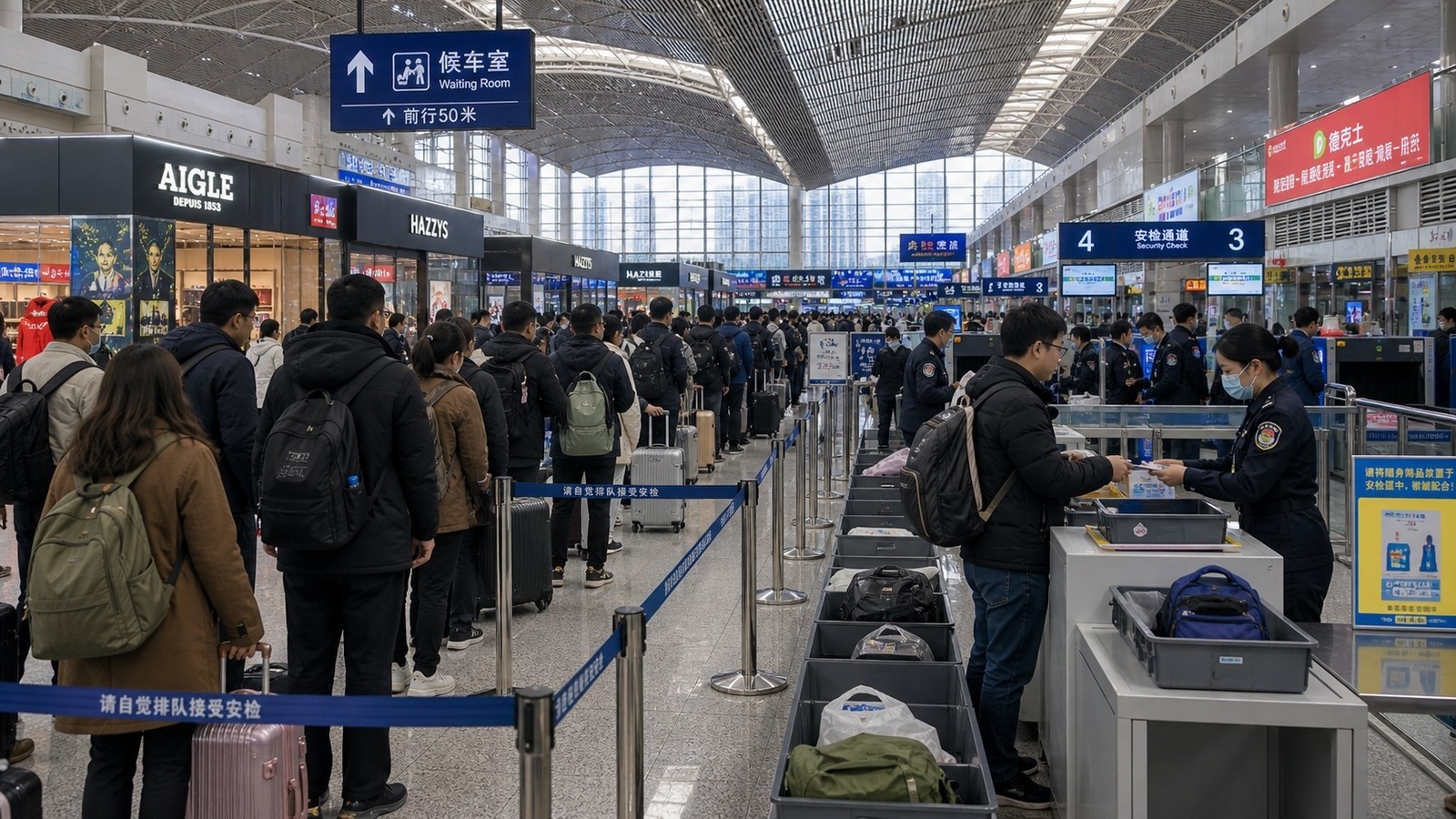
Security lines at mega-stations are long because they are extremely thorough. Every bag goes through X-ray, and every passenger walks through metal detectors or body scanners. During rush hours, these queues can stretch for hundreds of meters. If you arrive with only ten minutes left before boarding, you will likely miss your train.
Locals know the rule: Arrive at least 45 to 60 minutes early. This gives you time to park, walk to the entrance, clear security, find the right waiting hall, and then head down to the platform. It feels excessive if you are used to smaller stations, but it is the only way to avoid panic.
The Digital Compass: Using Apps Instead of Signposts
While physical signs are plentiful, they can be overwhelming when written in Chinese characters that look identical at a glance. This is where technology bridges the gap. If you have access to Alipay or WeChat, you can scan your train ticket QR code directly into these apps.
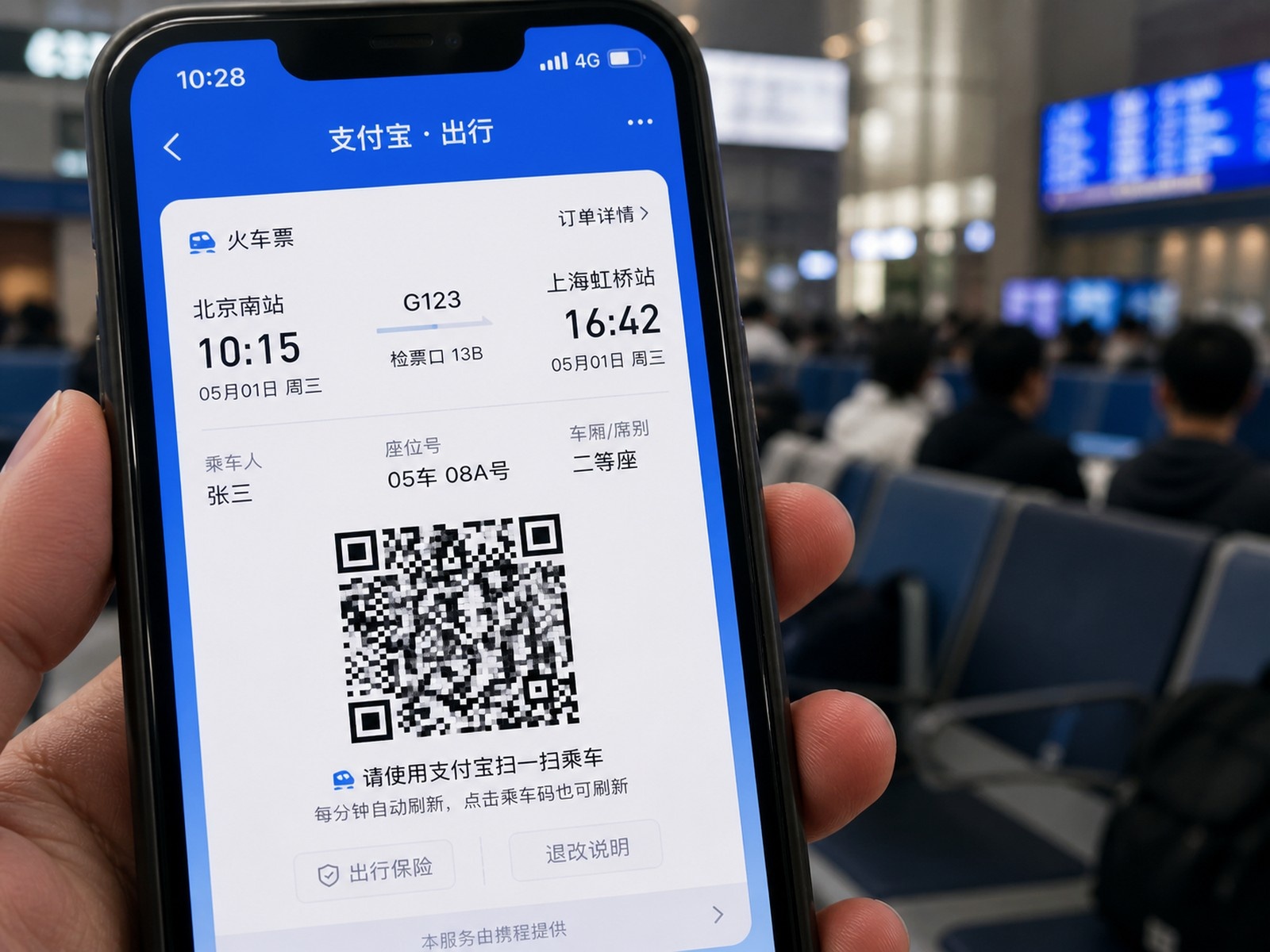
These mini-apps do more than store your ticket. They provide real-time navigation. You can input your seat number (e.g., Car 8, Seat 12A), and the app will tell you exactly which end of the platform to wait at. Why does this matter? Because in China’s high-speed trains, boarding is strictly organized by car number. The staff will open only the doors corresponding to your car’s position. If you stand at the wrong end of the platform, you might have to walk back and forth while everyone else rushes past.
Inside the Waiting Hall: It’s Like a Mall
Once you pass security, you enter the waiting hall. This is not just a row of plastic seats. In mega-stations like Guangzhou South or Xi’an North, these halls are massive indoor spaces that resemble shopping malls.
You will find fast-food chains, local snack bars, convenience stores, and even hotels inside. There are charging stations everywhere—more than you can use. The atmosphere is calm but busy. People work on laptops, children play quietly in corners, and announcements guide the flow of traffic.
Final Tip: Watch the Screens, Not Just Your Phone
Your ticket might say Gate 15B. But sometimes, due to operational reasons, the gate changes five minutes before departure. The physical screens hanging above every waiting zone update instantly. Always glance up at the big LED boards one last time before you walk down to the platform.
Navigating a Chinese mega-station can feel intimidating at first. But once you understand the vertical logic, respect the security timeline, and use digital tools to pinpoint your exact spot on the train, it becomes as easy as walking through any major international hub. It is a system designed for efficiency, not confusion.