

The Three Giants: Not Just “Chinese Amazon”
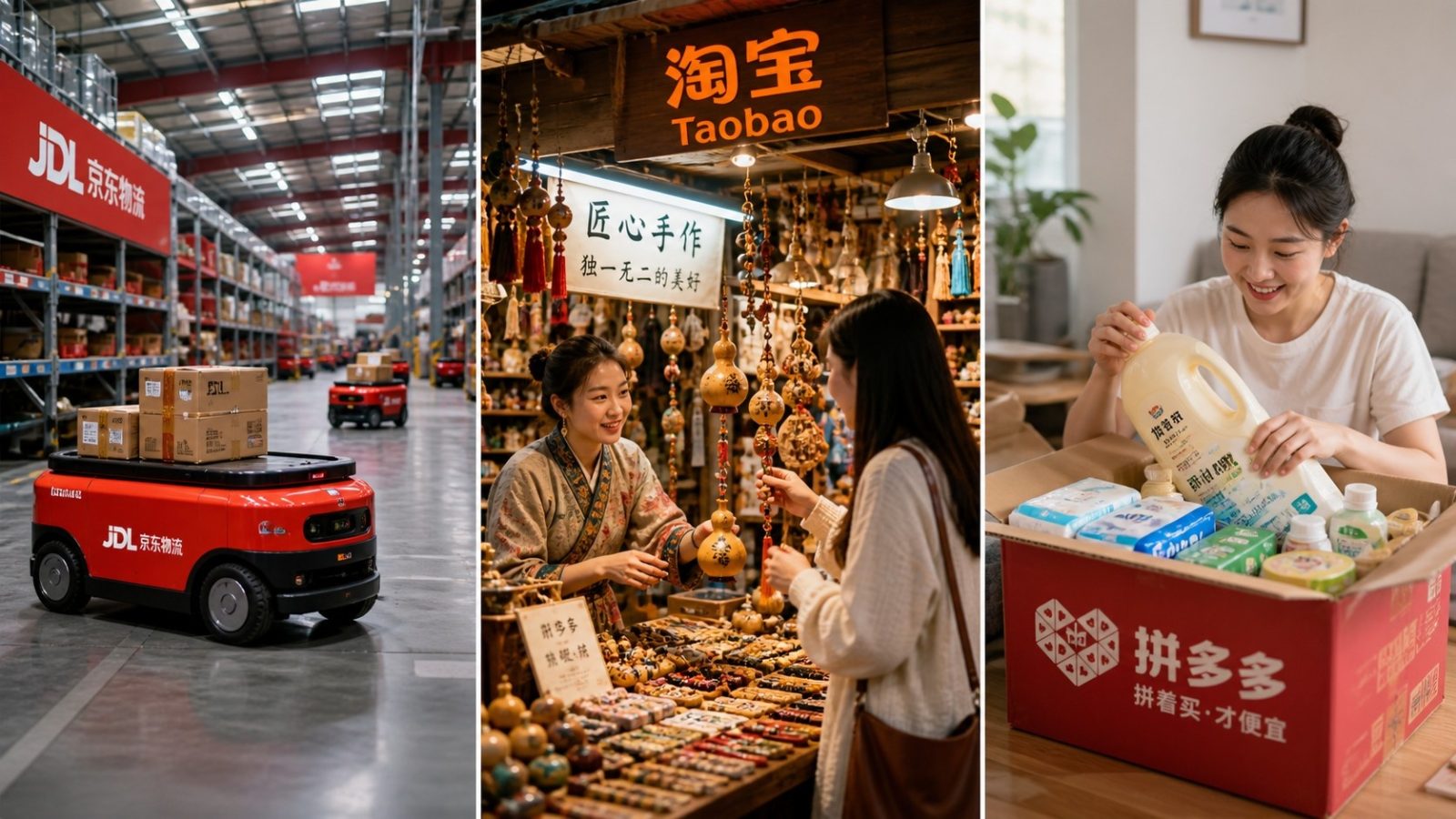
If you ask a foreigner in China to shop online, they will likely mention Taobao. But telling someone that “Taobao is like Amazon” is only half true—and potentially misleading. In the United States, Amazon dominates both logistics and marketplace sales. In China, those roles are split among three powerful platforms, each serving a different psychological and practical need.
For an outsider, choosing between Taobao, JD.com (Jingdong), and Pinduoduo can feel like navigating a maze. The interfaces look similar: search bars, red discount tags, and endless scrolling. But the underlying logic is vastly different. Understanding these differences isn’t just about saving money; it’s about understanding how modern Chinese consumers balance speed, variety, and price.
JD.com: The Reliable Express
Imagine you need a laptop for work tomorrow morning. You don’t have time to wait three days for shipping or worry about whether the box contains a refurbished unit sold by a third-party seller. This is where JD.com shines.
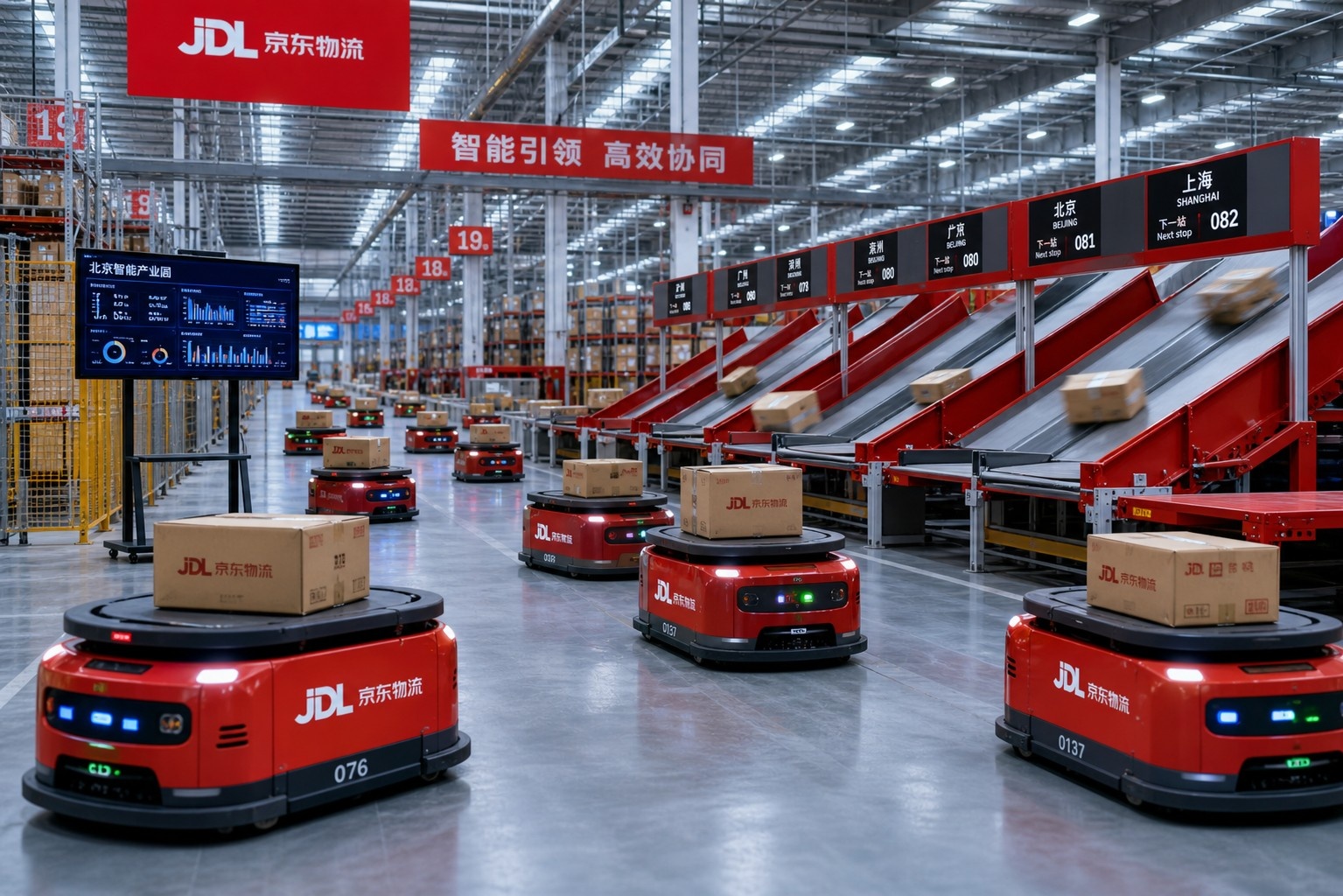
Founded in 1998, JD started as an offline retailer of optical drives and switched to e-commerce because online sales were faster than their physical stores. Today, it operates China’s most sophisticated private logistics network. When you buy directly from “JD Self-Operated” (Zi Ying) items, the product ships from a warehouse located in your city—often within 10 kilometers of your home.
The result is delivery speed that feels almost aggressive: same-day or next-morning arrival is standard for major cities. For foreigners living in China, this reliability is invaluable. JD is also the go-to platform for high-value electronics (phones, cameras, computers) and household appliances because its supply chain controls inventory tightly, minimizing the risk of counterfeits.
However, this speed comes at a premium. Prices on JD are rarely the cheapest, especially compared to Pinduoduo. You are paying for certainty: authentic products, fast delivery, and easy returns.
Taobao: The Infinite Bazaar
If JD is a high-end supermarket, Taobao is a sprawling, chaotic night market that never closes. Launched by Alibaba in 2003, Taobao is not just a store; it’s a platform for millions of small merchants, manufacturers, and even individual sellers.
The sheer variety on Taobao is unmatched. Need a replacement screw for a 15-year-old camera? A specific style of Hanfu (traditional Chinese clothing)? A custom-made cat bed? It’s likely on Taobao. This “long-tail” effect means that for niche interests, Taobao is the only option.
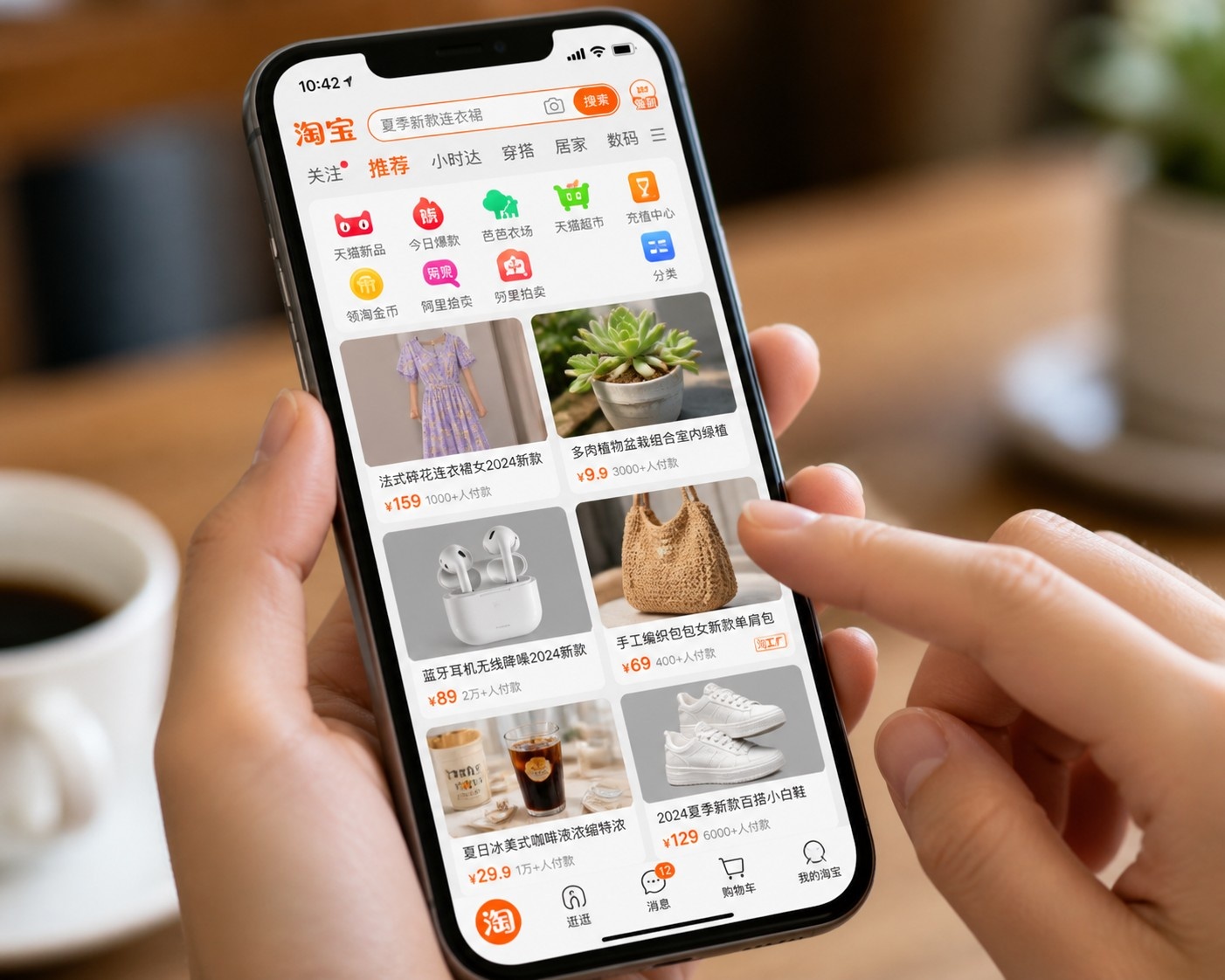
For foreigners, Taobao offers a unique window into local culture. Many listings include detailed photos of foreign models to show fit and fabric quality, anticipating an international audience. However, the interface can be overwhelming. Unlike JD’s standardized product pages, Taobao relies heavily on chat apps (like DingTalk or AliWangWang) where you negotiate with sellers directly.
It is also worth noting that Alibaba owns Xianyu, a massive second-hand marketplace integrated into the Taobao ecosystem. For students and young professionals looking to sell old furniture or buy vintage items, Xianyu has become an essential part of daily life in Chinese cities.
Pinduoduo: The Social Bargain Hunter
Enter Pinduoduo (PDD), the platform that shocked Wall Street by surpassing Alibaba in user growth. Launched in 2015, Pinduoduo’s genius lies not in technology, but in human psychology and social dynamics.
The core mechanic is “team buying.” To get the lowest price, you must invite friends to join your purchase. This viral loop turned shopping into a social game. While Westerners might find this annoying, it resonated deeply in China’s lower-tier cities and rural areas, where community trust drives spending.
Pinduoduo also bypassed traditional branding. Instead of selling iPhones or Nike shoes, PDD initially focused on “white-label” goods—unbranded agricultural products, tissues, and phone cases sold directly from factories to consumers. This cut out middlemen, allowing prices to drop by 30-50% compared to other platforms.

Today, Pinduoduo has upgraded its image with the “Ten Billion Subsidy” program, which guarantees authentic luxury goods and electronics at discounted rates. This has attracted urban middle-class shoppers who previously ignored the platform for being too “cheap.” For foreigners, PDD is ideal for buying non-perishable daily essentials: laundry detergent, snacks, or bulk toilet paper where brand authenticity matters less than unit price.
How to Choose: A Practical Guide
So, which app should you download? The answer depends entirely on what you are buying. Here is a simple framework for navigating the Chinese e-commerce landscape:
- Buy High-Value Electronics (Phones, Laptops): Use JD.com. The risk of counterfeit goods is near zero, and if something breaks, their customer service is among the best in the industry. Check prices on Pinduoduo’s “Ten Billion Subsidy” section as a benchmark.
- Buy Unique Items, Clothing, or Home Decor: Use Taobao. The variety is endless. Take screenshots of items you find and use price-checking apps to see if the same item is cheaper elsewhere.
- Buy Daily Essentials (Food, Cleaning Supplies): Use Pinduoduo. For items like rice, oil, or paper towels, the price difference can be significant. Just ensure you are buying from large, established stores rather than unknown new sellers.
The modern Chinese shopper rarely uses just one app. They might buy a phone on JD for the speed, order clothes on Taobao for the style, and grab groceries on Pinduoduo for the savings. Mastering this mix is not just a consumer skill; it is a way to live more efficiently in China.