

The Morning Rush at the Bin
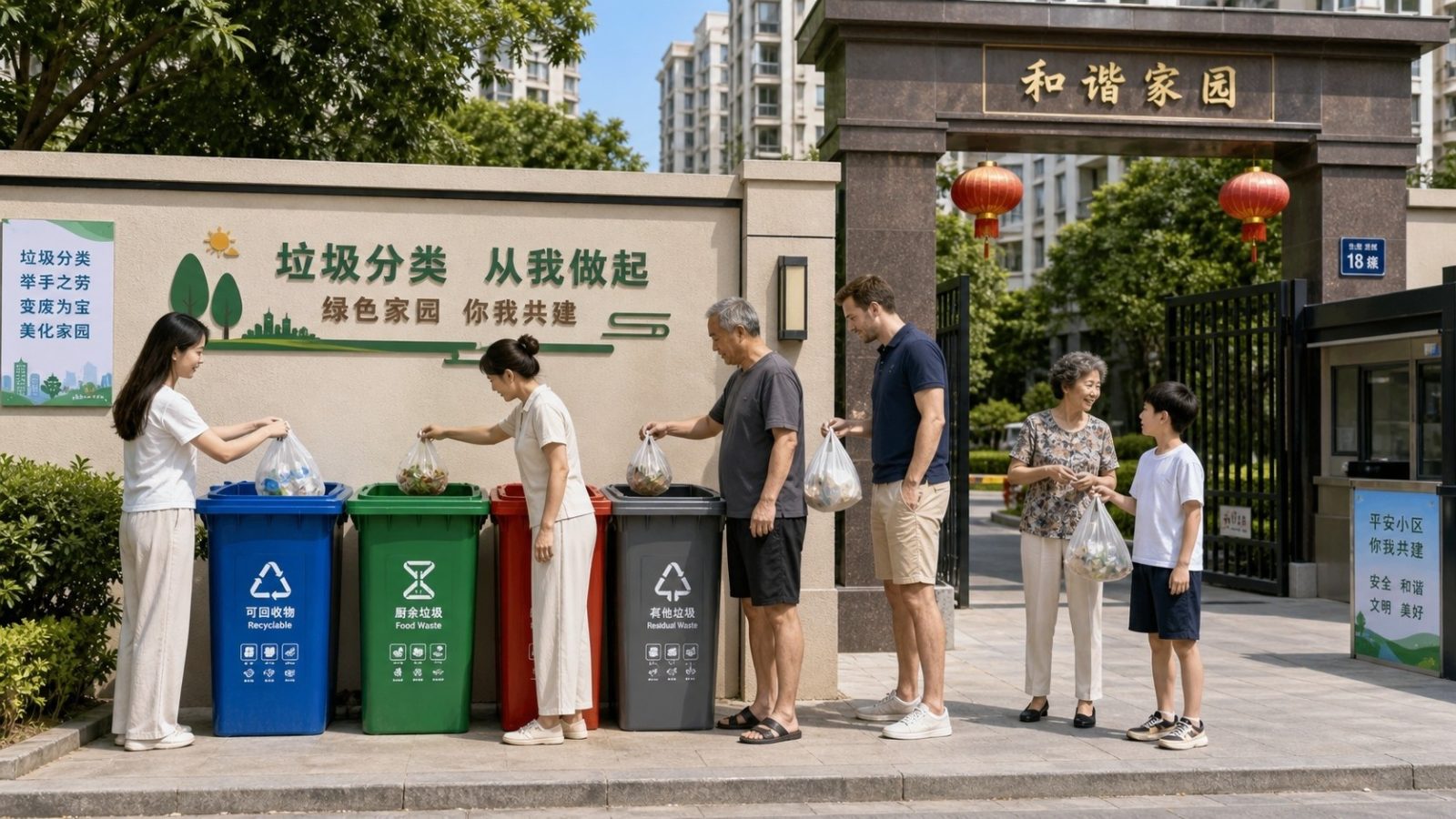
It is 7:30 AM on a Tuesday in Shanghai. The air is cool, carrying the faint scent of steamed buns from the neighborhood bakery. But my eyes are not on the sunrise; they are fixed on four distinct colored bins lined up against the wall of our residential compound. A small crowd has gathered, all holding bags of varying sizes and states of disarray.
The Initial Confusion: Wet vs. Dry
For anyone new to China, especially in major cities like Shanghai, Beijing, or Shenzhen, garbage sorting can feel less like environmental duty and more like an entrance exam for adulthood. The categories vary slightly by city—some use “Kitchen Waste” instead of “Wet,” others call recyclables “Recyclable Resources”—but the core logic remains similar: you must separate your waste before it leaves your home.
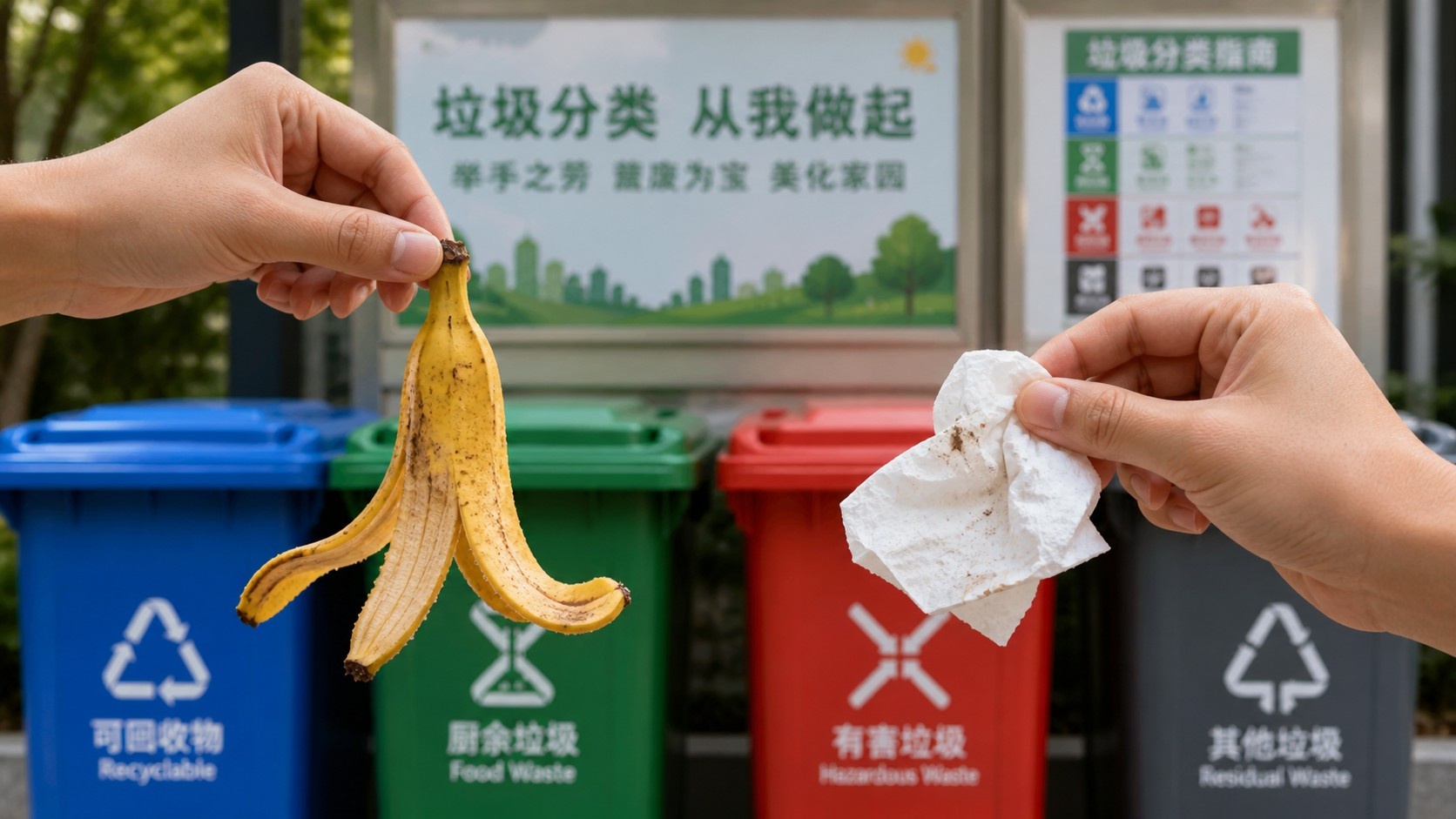
The most common stumbling block is the distinction between Wet (Kitchen) and Dry (Other/Residual) trash. In my first month, I spent five minutes in front of a banana peel, trying to decide if it was organic matter or just “trash.” The answer? It’s wet. And yes, you have to take the peel out of the plastic bag before throwing it away.
The ‘Cheat Sheet’: Simple Rules for Common Items
You don’t need to memorize every item in the national catalog. Here are a few practical heuristics that helped me stop hesitating at the bin:
- Leftover food is always Wet. Rice, vegetables, meat, even bones (unless they are huge chicken femurs or crab shells, which can be “Dry” depending on local rules). If it was once alive and decomposes easily, it’s likely wet.
- Used tissues and napkins are Dry. This is the biggest trap. Because they touch food or liquids, you might think they are “wet.” But because they are now dirty paper that cannot be recycled, they go into the Dry (Other) bin.
- Plastic bottles and cardboard are Recyclable. Flatten your boxes. Rinse your bottles if they are sticky. These go in the blue bin.
- Batteries, medicines, and lamps are Hazardous. These need special handling. Look for the red bin or a dedicated drop-off point at your community center.
The Infrastructure: Timed Bins and Volunteer Supervisors
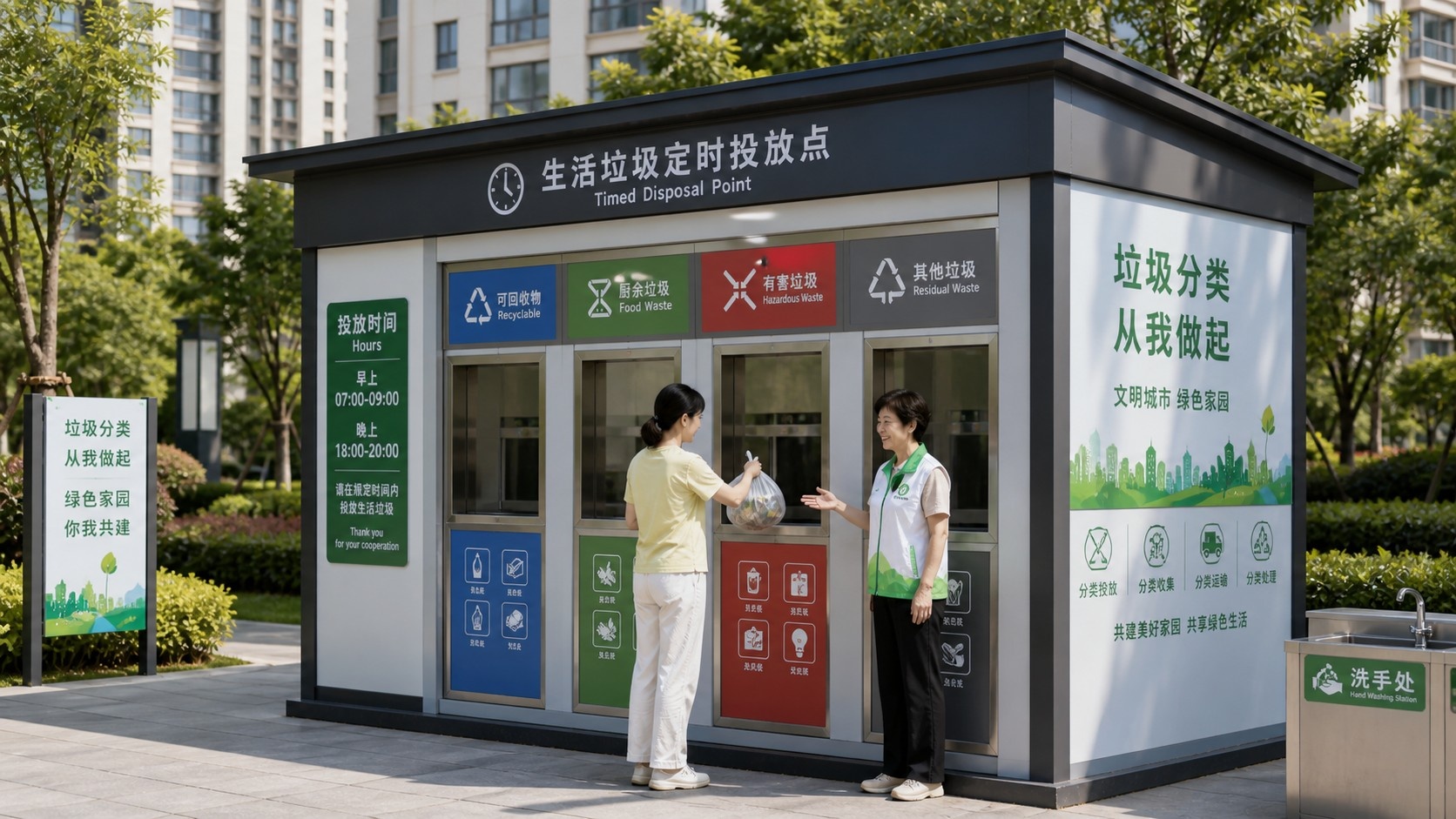
In many newer residential compounds, you won’t just find bins sitting open 24/7. Instead, you will encounter Timed Disposal Points. These are usually enclosed booths or designated areas that are only open for waste disposal during specific windows—typically in the morning (7:00–9:00 AM) and evening (6:00–8:00 PM).
Why the restriction? It’s about odor control and convenience. Most apartment buildings in China do not have individual trash chutes that go directly to a central landfill. Instead, residents carry their waste down to these community hubs.
During these peak hours, you will often see Volunteer Supervisors. These are usually retired neighbors or local community workers standing by the bins. They are not police officers; they are helpful guides. If you hesitate too long or put a plastic bag full of leftovers into the dry bin, they will gently point it out and ask you to separate it. At first, I felt embarrassed. Now, I see them as friendly neighbors ensuring our community stays clean.
Social Etiquette: The Unspoken Rules
Garbage sorting in China is deeply tied to social etiquette. It’s not just about the rules; it’s about respecting your neighbors and the sanitation workers who come after 9 PM when the bins are finally emptied.
The ‘Leakage’ Taboo
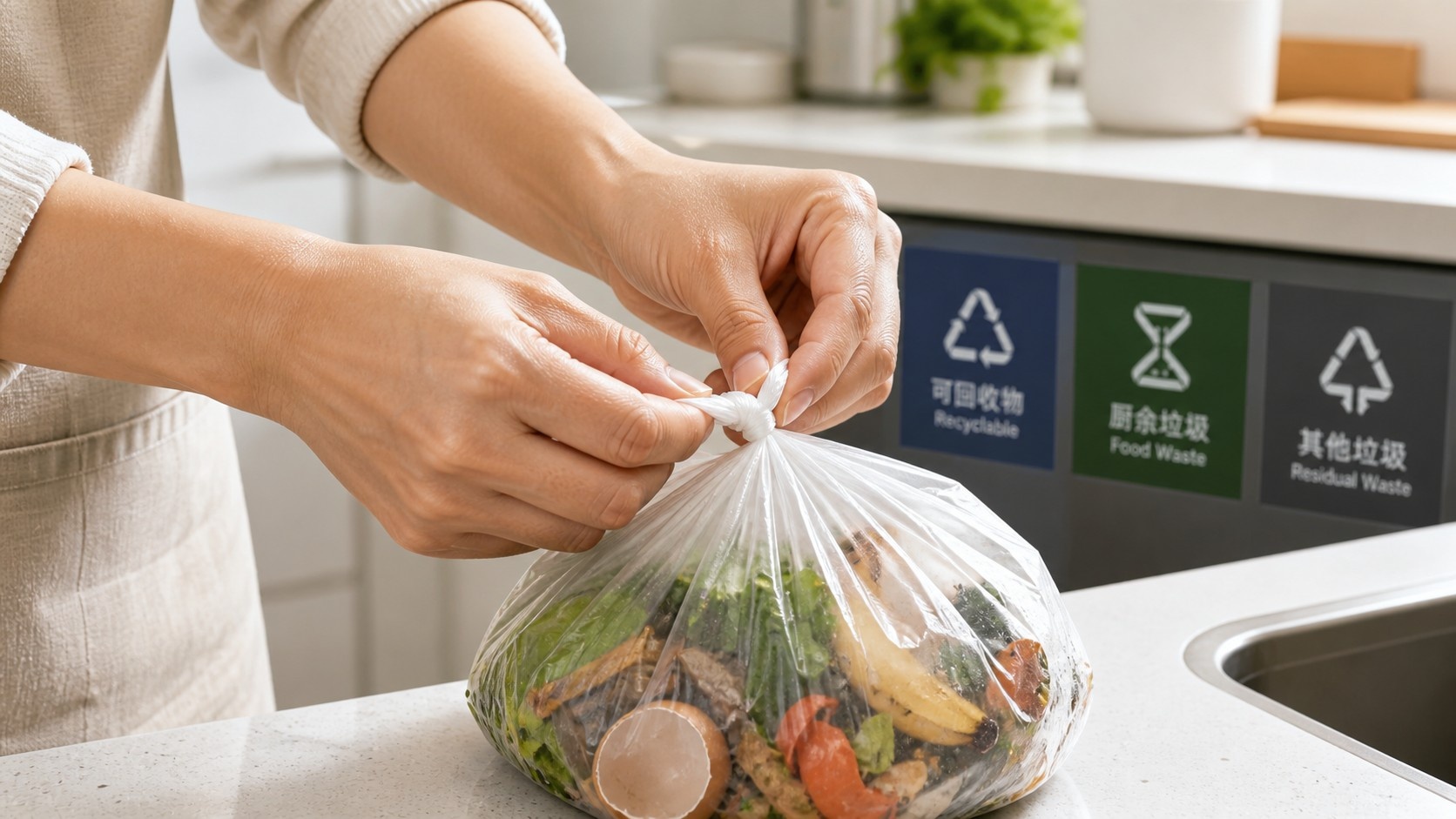
The number one sin in Chinese garbage sorting is leaking liquids. If you throw away a bag of wet kitchen waste, it must be sealed. Liquefied food scraps (the “soup” from your leftovers) should ideally be poured into the sink or toilet before disposal. A leaking bag creates a mess on the ground, attracts flies, and makes the job incredibly difficult for the cleaners.
Tip: Keep small, empty plastic bags in your kitchen drawer. When you take out the wet trash, tie the bag tightly. If it’s too full or heavy, replace it with a fresh one. This small act of consideration is noticed and appreciated by everyone in the building.
The Plastic Bag Dilemma
Here is where it gets tricky: In many communities, you are expected to separate the content from the container. The food goes into the Wet bin. The plastic bag that held it? It usually goes into the Dry bin (unless it’s clean and recyclable). This means a tiny bit of extra effort every time, but it ensures the recycling stream stays clean.
A Shift in Daily Routines
After six months of living here, I’ve noticed a subtle shift. The process has become muscle memory. I find myself looking at a coffee cup and instantly calculating: rinse for recyclable, lid for dry, remaining dregs for wet.

This isn’t just about following rules; it’s part of a broader cultural shift towards environmental awareness. Seeing the results—cleaner streets, less odor in summer, and more efficient waste management—makes the extra effort feel worthwhile. For expats and locals alike, navigating garbage sorting is one of the first real steps toward integrating into Chinese urban life.
So, the next time you stand before those four colored bins, don’t panic. Check your cheat sheet, tie that bag tight, and maybe even offer a smile to the volunteer supervisor. You’re not just throwing away trash; you’re participating in one of the world’s largest civic experiments, one peel at a time.