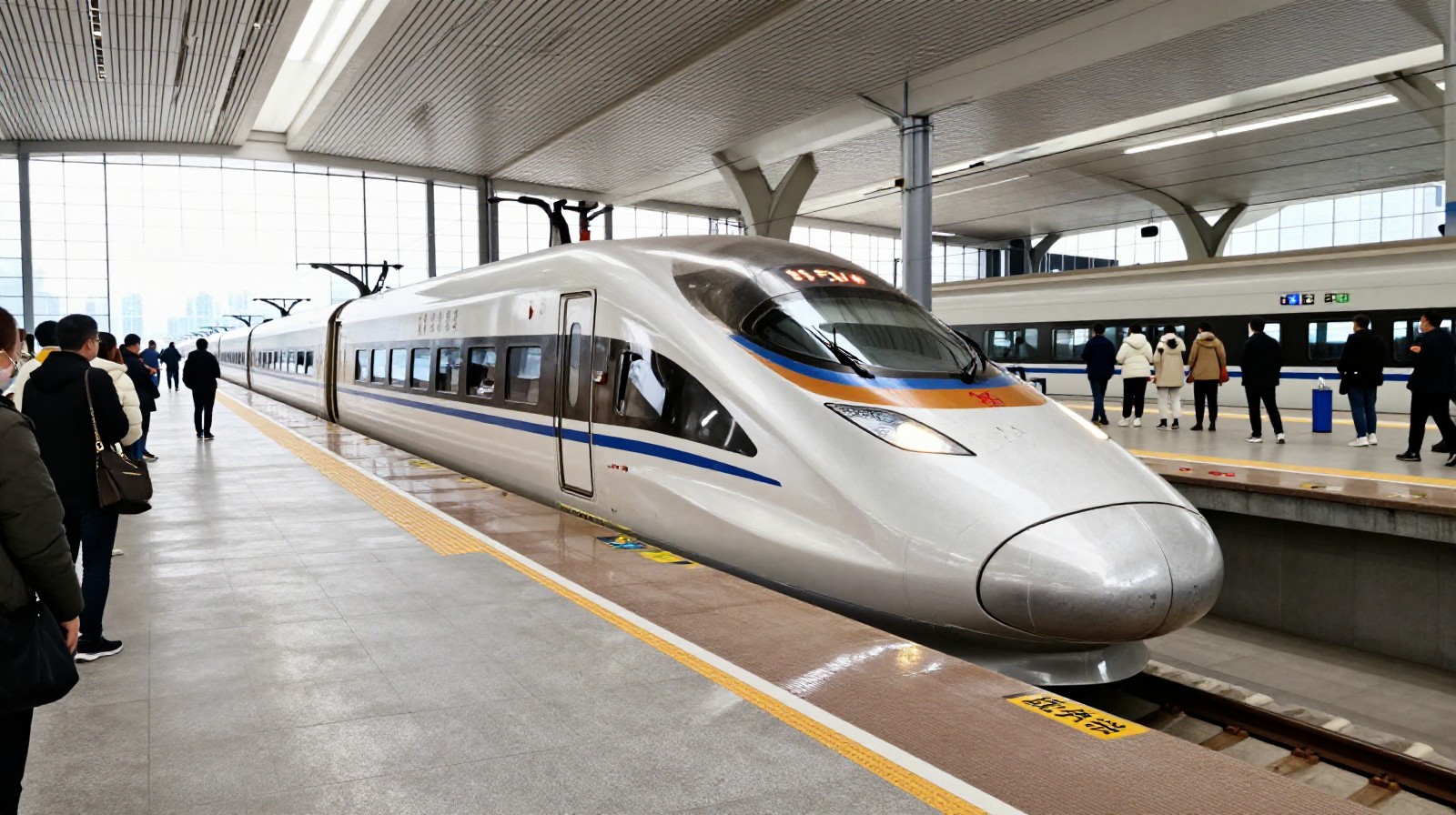
Imagine standing in a terminal where security lines move faster than coffee can be brewed. This is the reality of China’s high-speed rail (HSR) network, often called the ‘bullet train.’ Spanning over 45,000 kilometers, it connects nearly every major city from Beijing to Shanghai, Guangzhou to Chengdu.
For travelers, the math is simple: a trip between these cities takes 2.5 to 6 hours door-to-door by train. The same journey by air requires arriving two hours early, dealing with airport transfers, and waiting for boarding. A high-speed rail ticket from Beijing to Shanghai costs roughly $100 USD (800 RMB) in second class, compared to $130-$250 for a flight depending on the season. It’s not just about speed; it’s about the seamless integration of city centers.
Step 1: Booking Without a Chinese Phone Number
The biggest hurdle for foreigners used to booking on sites like Expedia or Skyscanner is that China’s official railway platform, 12306, is in Chinese and historically required a domestic phone number. This has changed.
You can now download the 12306 International Version app or visit the English version of their website. The process mirrors other platforms:
Create an Account: Use your passport number, not a national ID card. Upload a clear photo of your passport page.
Select Route: Enter origin and destination. Dates are flexible; the calendar shows available seats in real-time.
Payment: Visa, Mastercard, and UnionPay are accepted directly through the app or website. No need to hunt for local agents.
Tickets are electronic. You do not need to print a paper ticket at a machine. Your passport is your boarding pass.
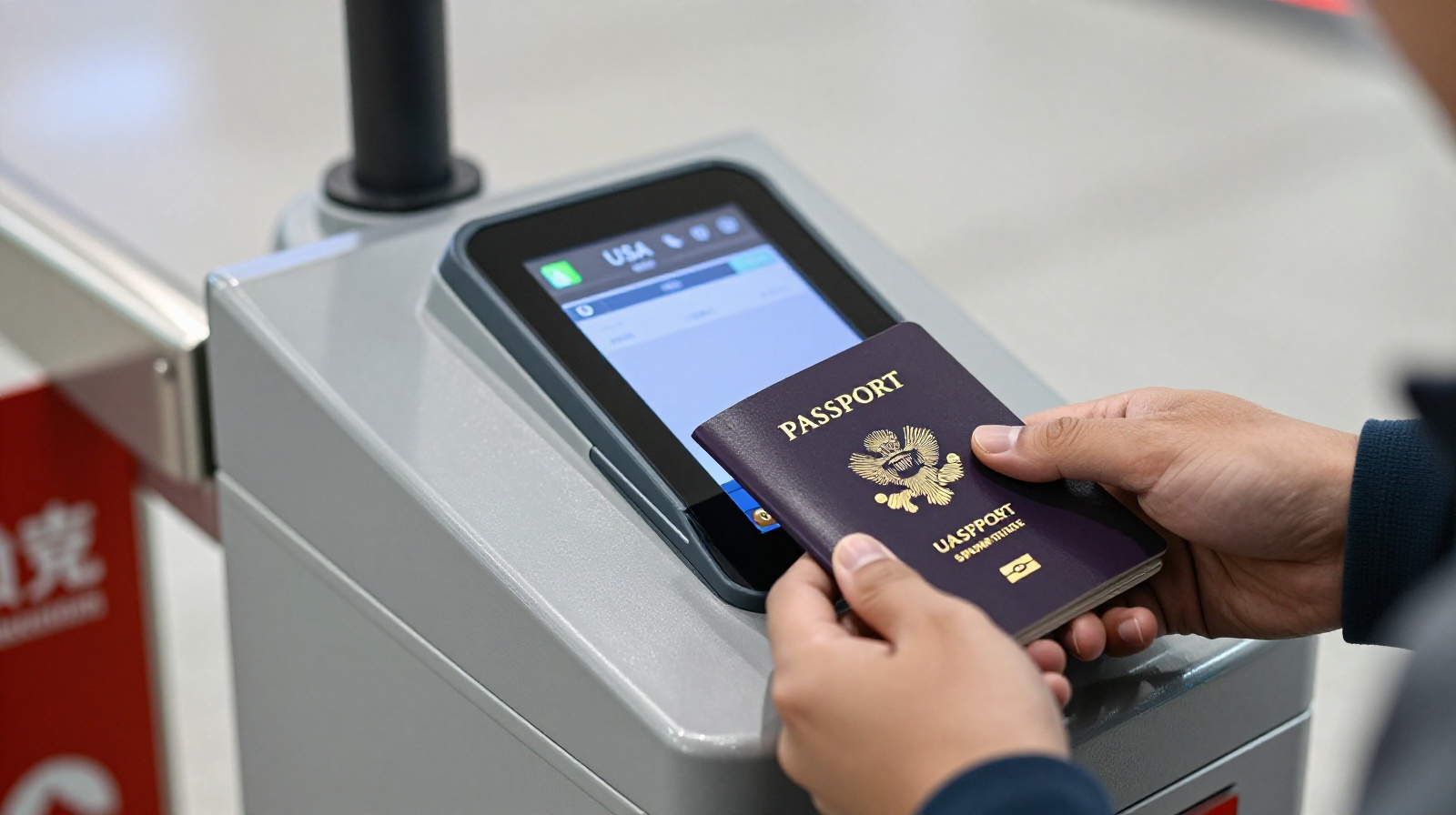
Facial recognition gates allow passengers to board without physical tickets.
Step 2: Entering the Station and Boarding
Arrive at the station 45 minutes before departure. Modern Chinese HSR stations are massive, often larger than international airports. Don’t panic; follow the digital signs.
The Security Check: Unlike many countries where you remove laptops or liquids from bags, China’s security is surprisingly smooth. You place your bag on a conveyor belt and walk through a metal detector. If it beeps, a quick manual check follows.
Facial Recognition: This is the game-changer. In major stations like Shanghai Hongqiao or Beijing South, there are automated gates labeled ‘E-Ticket’ or with an eye-scanner icon. You place your passport on the scanner, and your face matches the ticket data instantly. No staff member to ask for a ticket number. The gate opens.
If you miss the automatic gate, look for the manual lane where station staff will scan your passport barcode. They are accustomed to foreign faces and often speak basic English phrases like ‘Passport’ or ‘Gate 5’.
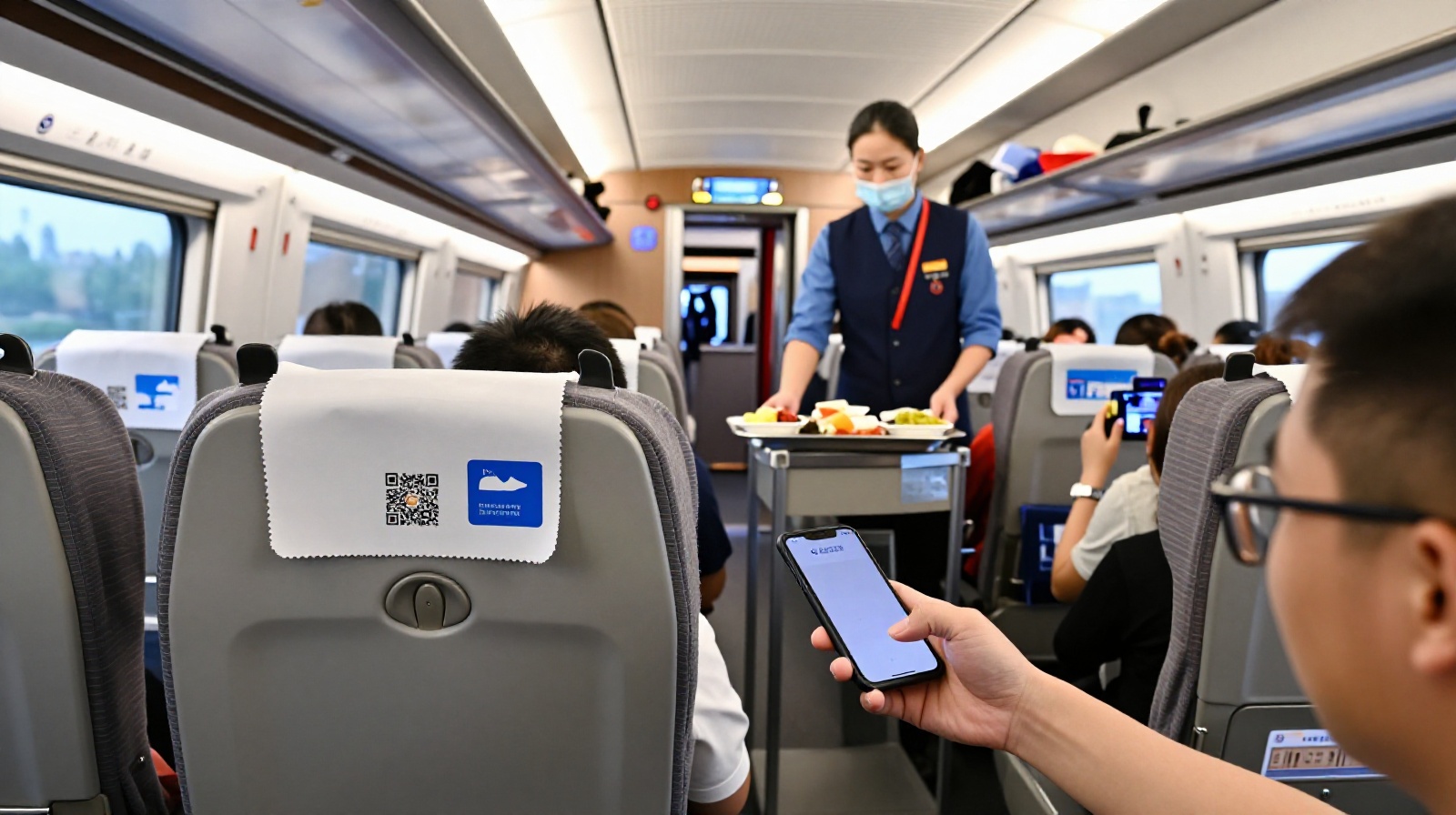
Dining service has evolved: order local specialties directly from your seat.
Step 3: Finding Your Seat and The ‘Food on Demand’ Feature
Finding your seat is intuitive. Your ticket shows the carriage number (e.g., Car 08) and seat letter (A, B, C, D, or F). Seats are arranged like airplane economy class: two seats on one side of the aisle, three on the other.
Once seated, here is the experience that surprises most first-time visitors: ordering food to your seat.
In China, high-speed trains have evolved into mobile dining halls. At each seatback, you will find a QR code labeled ‘Scan for Food’ or similar. Using WeChat (the universal app in China) or Alipay:
Scan the code on your seat.
The menu displays local specialties from the cities your train is passing through—steamed buns from Shanghai, spicy noodles from Wuhan, or dumplings from Xi’an.
Select your meal and pay instantly.
A staff member walks through the carriages with a cart. They call out the seat number (e.g., ’08A!’) and deliver the hot food directly to you. It is not pre-packaged airline-style meals; it is fresh, hot, and often cheaper than station cafes.
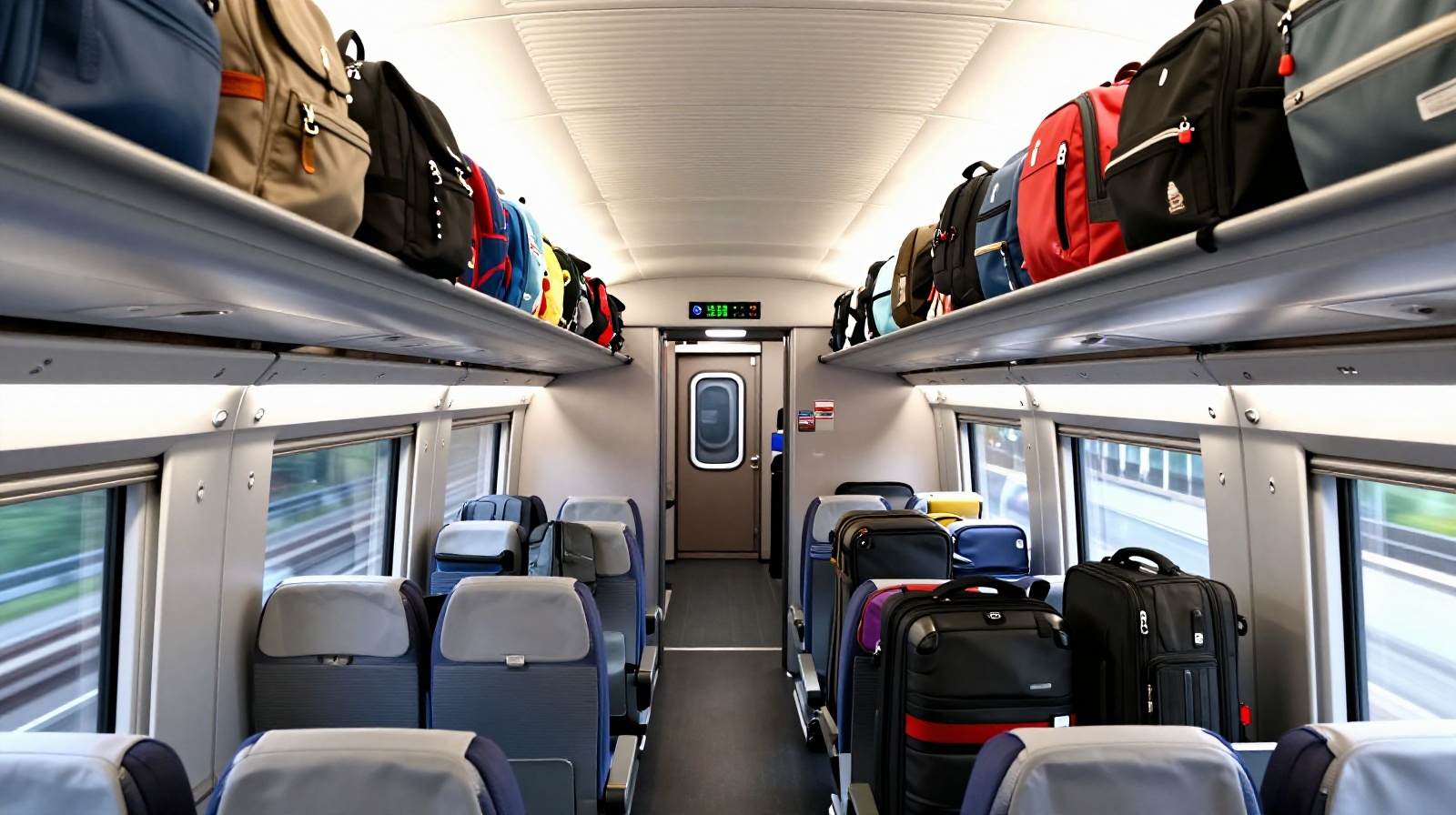
Proper luggage placement keeps aisles clear and ensures passenger safety.
Step 4: Luggage Rules You Should Know
Luggage rules are strict but logical. Each passenger can take two items free of charge:
Total weight: Under 20 kg (44 lbs) for adults.
Dimensions: Length + width + height must not exceed 130 cm (about 51 inches).
For larger items like suitcases or sports equipment, there are designated storage areas at the end of each carriage or above the seats. Overhead racks can hold backpacks and small bags.
Note: You cannot place large luggage on the seat next to you. If your bag is too big for the overhead rack, a staff member may ask you to move it to the dedicated area at the car’s end. This keeps aisles clear and safe for everyone.
Conclusion
China’s high-speed rail is not just infrastructure; it is a daily service that feels invisible until you need it. It connects people, cities, and cultures with a reliability and speed that sets a new standard globally. Whether you are commuting or traveling across the country, mastering this system turns a potential logistical nightmare into the most comfortable part of your journey.