
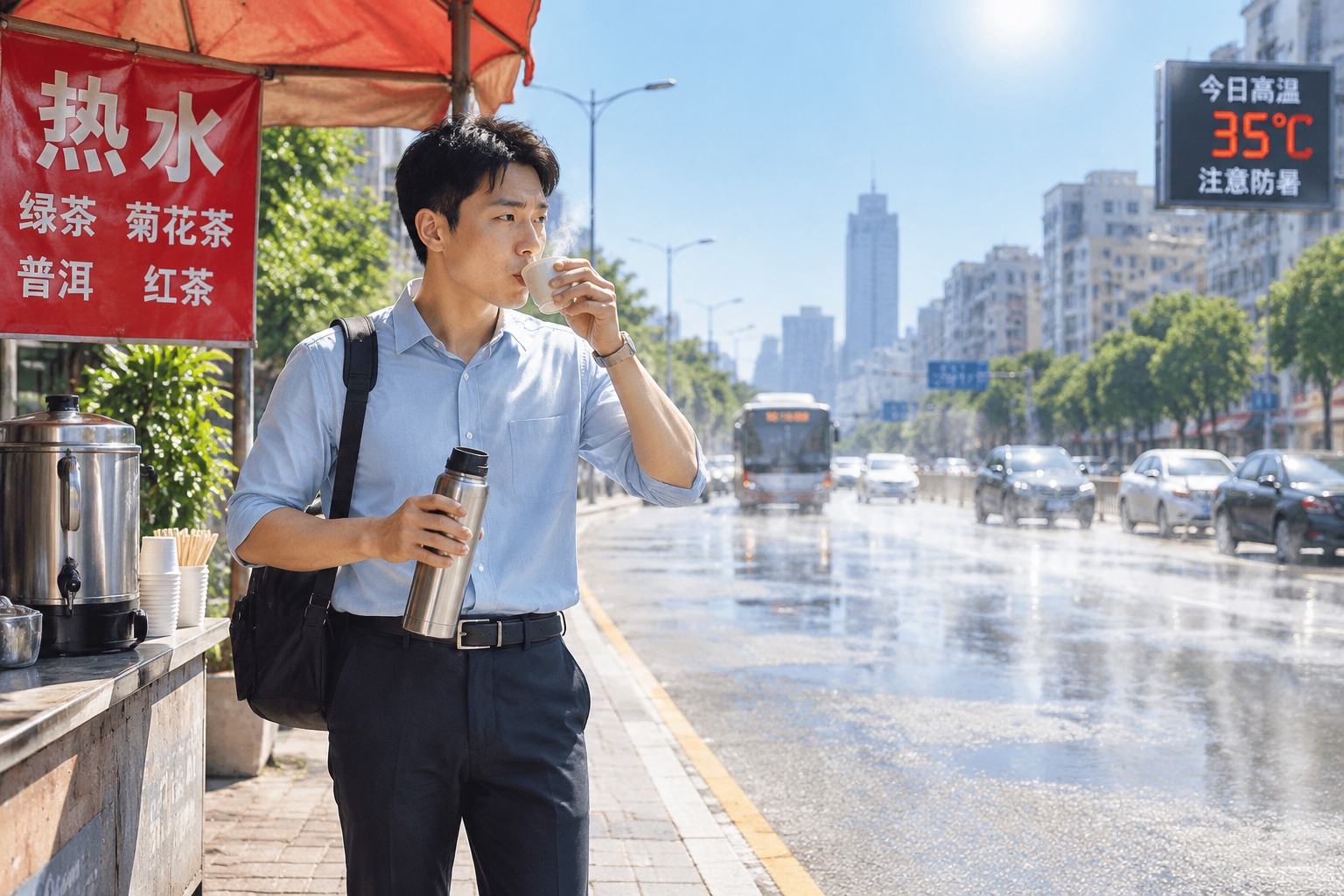

The Scene: A Thermos in the Summer Heat
It is mid-July in Shanghai. The air outside feels like a physical weight, shimmering off the asphalt at 40°C (104°F). Yet, inside a bustling noodle shop in downtown Shanghai, a young office worker in his early thirties pulls out a sleek stainless steel thermos. He twists the cap and pours steaming water into a small ceramic cup. Around him, everyone is sipping hot liquids—tea, soup, or just plain water.
For visitors from Europe or the US, this looks contradictory. If it’s that hot outside, why isn’t everyone reaching for an ice-cold soda or a glass of iced water? In their experience, cold drinks cool you down instantly. Here, they see the opposite: people seeking heat when the thermometer spikes.
More Than Just Tradition
This habit is often dismissed by outsiders as “old-fashioned” or rooted in mystical Chinese medicine theories that are hard to grasp. But for the average person on the street, it’s not about mysticism; it’s about a specific understanding of how the body works.
In Western dietary habits, cold water is seen as a direct way to lower internal temperature during heatwaves. In China, the prevailing view—whether from traditional perspectives or modern common sense—is that drinking ice-cold water shocks the digestive system. It causes blood vessels to constrict too quickly and can lead to stomach cramps, fatigue, or immediate discomfort.
“My grandmother always said, ‘Cold water stops your digestion,'” says Li Wei, a 28-year-old graphic designer in Beijing. She keeps a thermos of hot green tea at her desk all day. “I don’t feel like I’m drinking it to cool down. I drink it because my stomach feels better after work when I finish with warm water. It’s just… normal.”
For many Chinese people, the goal isn’t to match the external temperature but to maintain a stable internal environment. They believe hot water helps “open” the pores for sweating (which is seen as healthy cooling) while keeping the stomach and digestive organs relaxed.
The Modern Convenience of Hot Water
One might wonder: How do people manage this in our fast-paced, digital world? Isn’t it inconvenient to carry a thermos?
Actually, technology has made drinking hot water easier than ever. In almost every Chinese office, school, and public space, you will find electric water dispensers providing boiling water on tap. You don’t need a kettle; you just press a button.
This infrastructure supports the habit without requiring effort. Furthermore, the market is flooded with smart thermoses that keep water hot for 12 hours or even heat up cold water to your preferred temperature with a tap of an app. In Shanghai’s subway stations, vending machines sell instant hot drinks alongside cold sodas.

A Cultural Divide in Comfort
If you come from the West, this might feel strange because it challenges the basic instinct: heat = bad, cold = good. But for Chinese people, the logic is different. It’s similar to how some cultures prefer spicy food not just for flavor, but for the “warming” effect on the body.
This isn’t about rejecting modernity. Young people in Shenzhen or Hangzhou are fully digital natives who use AI and electric vehicles daily, yet they still carry their thermoses. The choice reflects a cultural preference for stability over shock. It’s a subtle but profound difference in how different societies prioritize physical comfort.
Health as Daily Maintenance
Ultimately, this habit is a gateway to understanding “Yang Sheng” (health preservation) in China. It’s not about curing diseases with herbs alone; it’s about daily maintenance. Just as we brush our teeth to prevent cavities, drinking warm water is seen as preventing digestive issues.
It’s a quiet, practical ritual that connects generations. Whether you are 20 or 80, the thermos on your desk or in your hand is a reminder that your body needs care even when the world around you is sweltering. It’s not a paradox; it’s a different way of listening to your own body.
Start the discussion at forum.chinacomes.com