

A City That Holds Its Breath
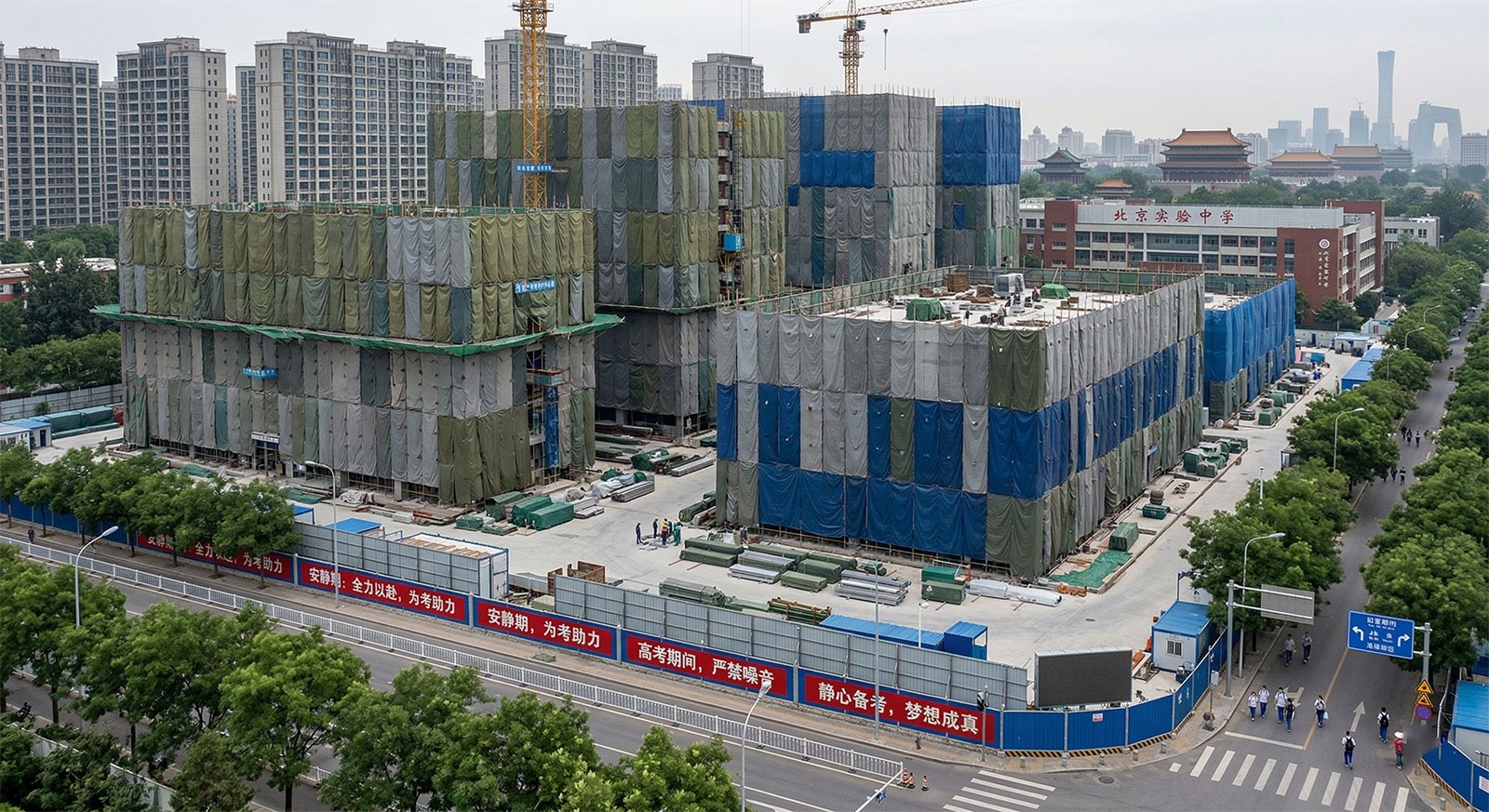
At 7:00 AM on June 7, the usually chaotic streets of Beijing’s Haidian District fall silent. The roar of construction cranes stops. Construction sites are covered with heavy tarps to dampen noise. Even the air conditioning units outside residential buildings are temporarily turned off in some zones. This is not a holiday or a festival; it is the first day of the Gaokao, China’s National College Entrance Examination.
For 13 million students and their families, this two-day exam determines which university they will attend, shaping their future career paths and social mobility. It is often described as the most high-stakes test in the world. But beyond the students sitting in exam halls, a different kind of operation is underway: the entire city has been reconfigured to serve them.
The Mechanics of Mobilization
How does a megacity with 20 million people coordinate such a massive shift in just one day? The answer lies in a deeply ingrained social contract and a robust administrative system that prioritizes public welfare over individual convenience during specific windows.
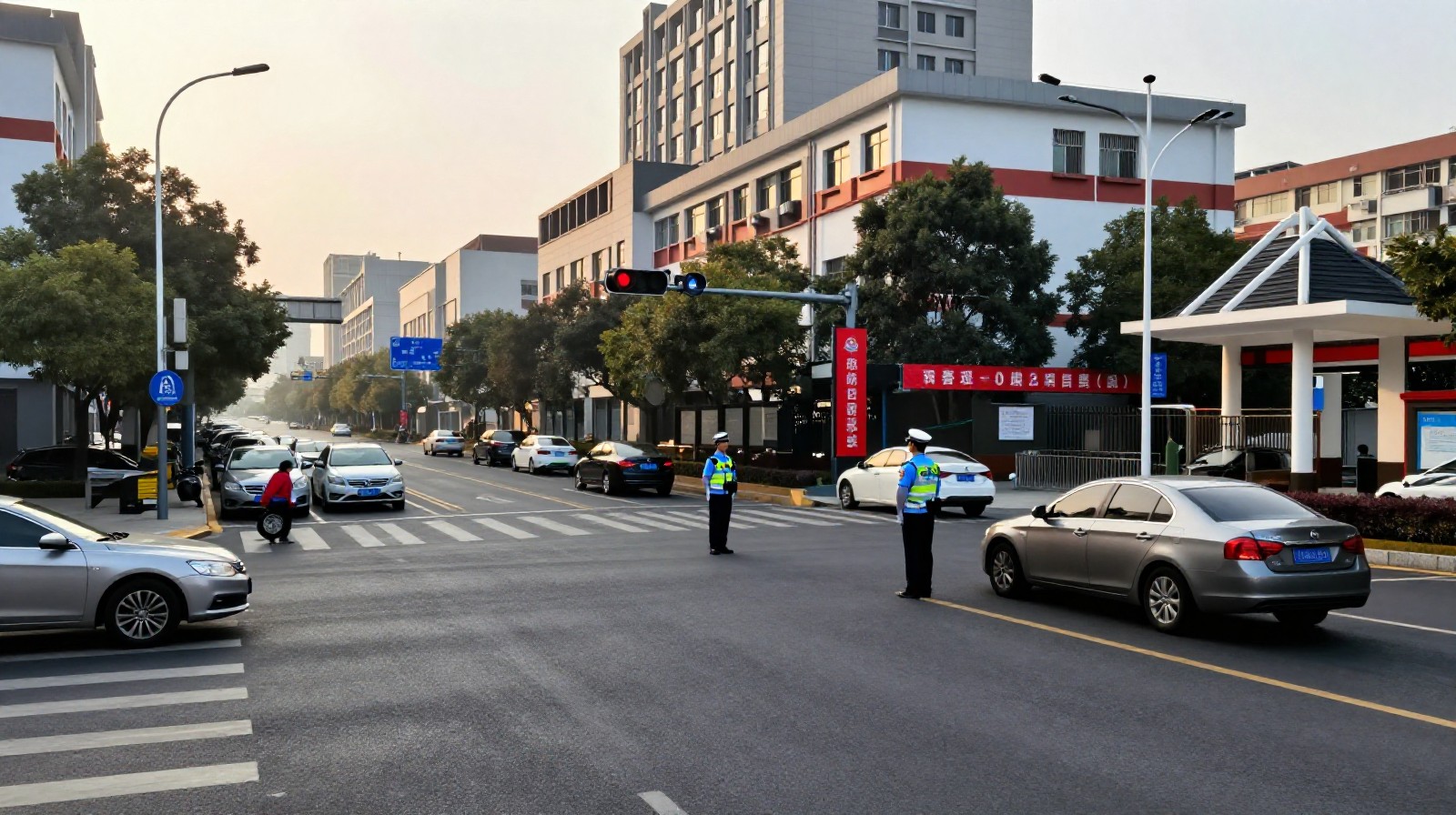
Hours before the exam starts, traffic police form human chains at every intersection near test sites. They are not just directing cars; they are creating “green corridors” where no honking is allowed. In many cities, local governments issue emergency notices banning construction work and loud machinery within a 500-meter radius of schools.
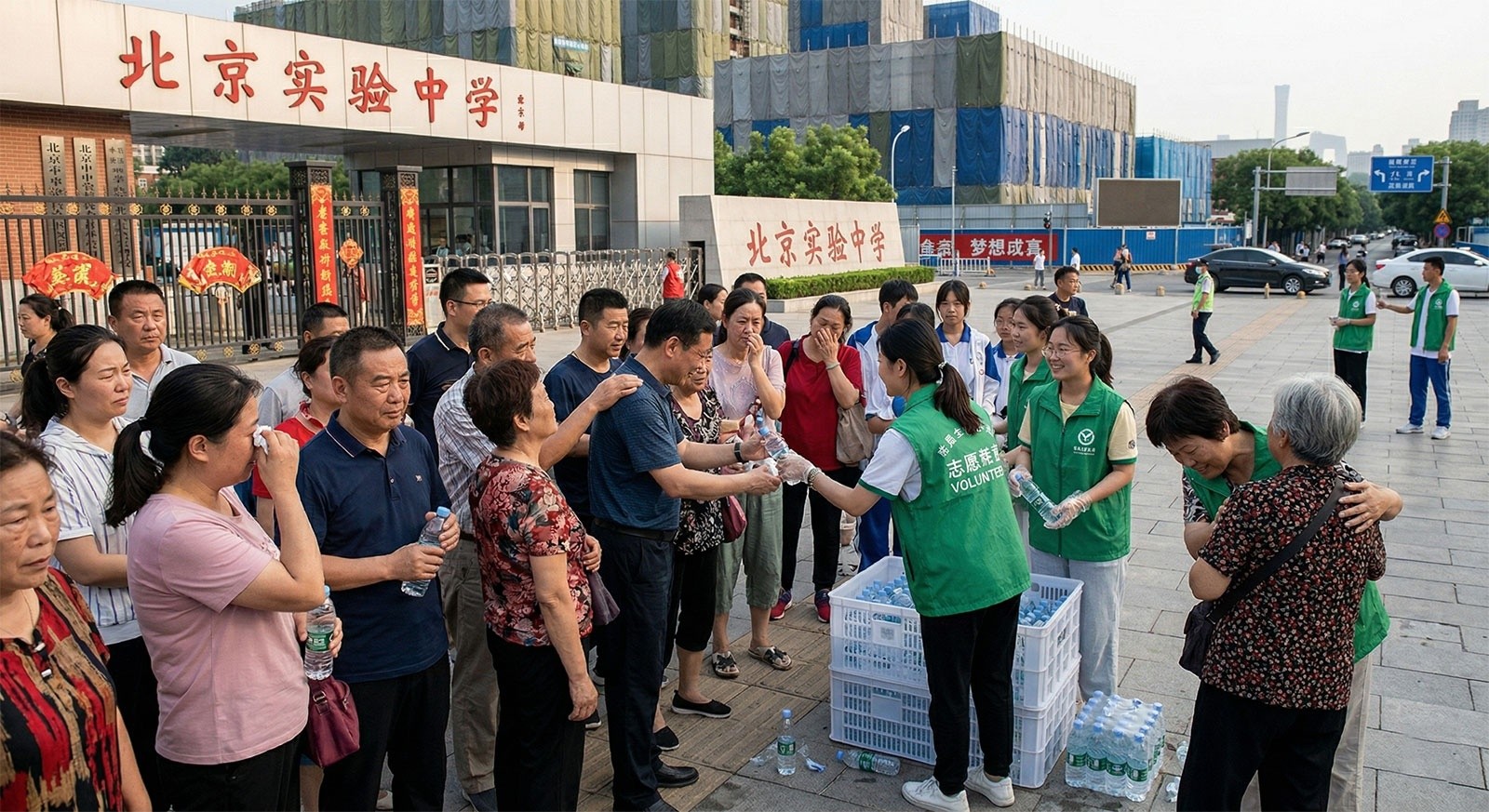
Shop owners play a quiet but crucial role. A noodle shop owner in Chengdu might close early or install soundproof curtains on the first floor during peak hours. Taxi drivers are instructed to avoid idling near exam entrances to prevent engine noise. Volunteer groups, often consisting of retired teachers and university students, set up water stations, provide free umbrellas for sudden rain, and offer mental support to anxious parents waiting outside.
A Story from the Streets
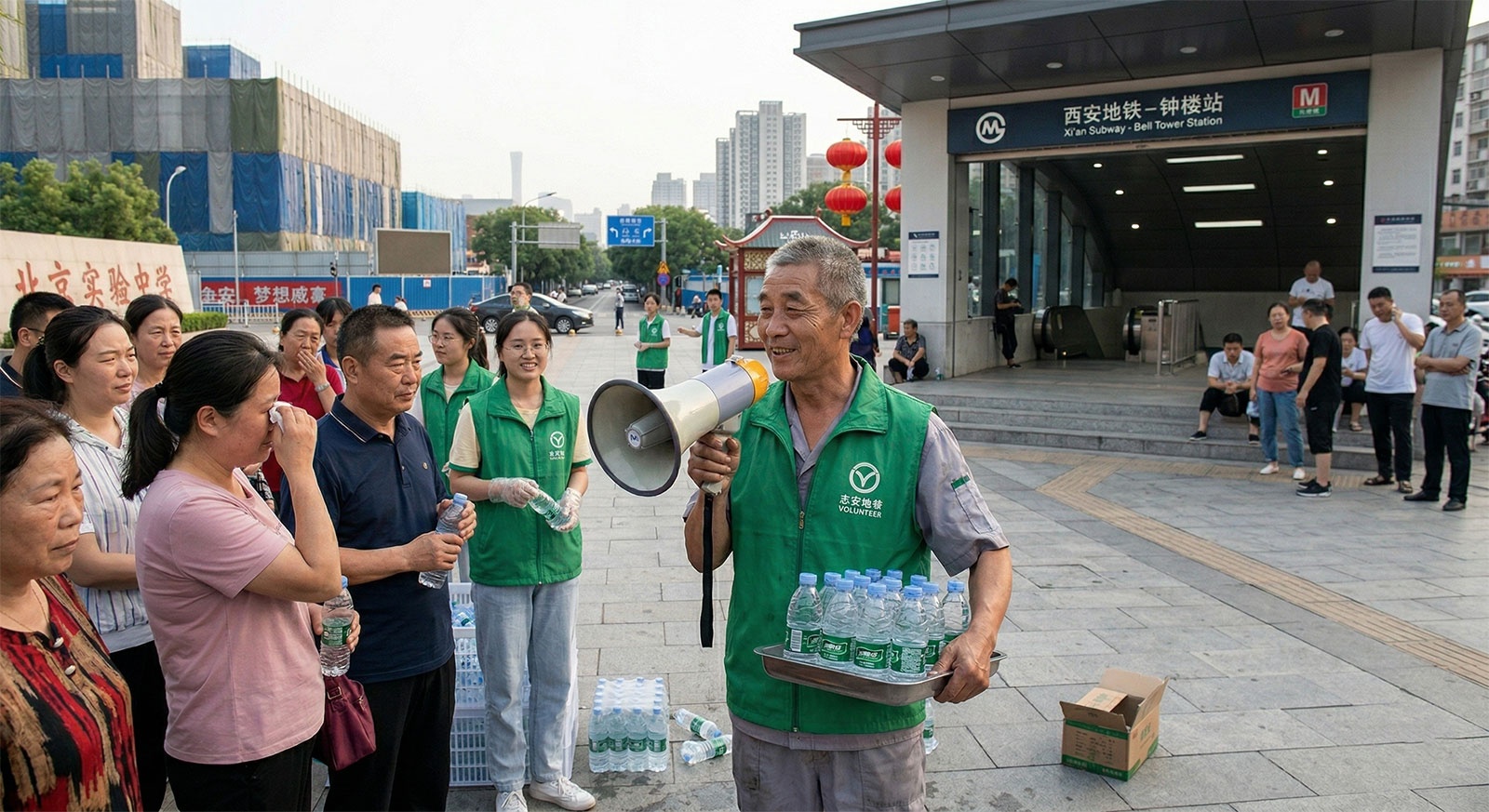
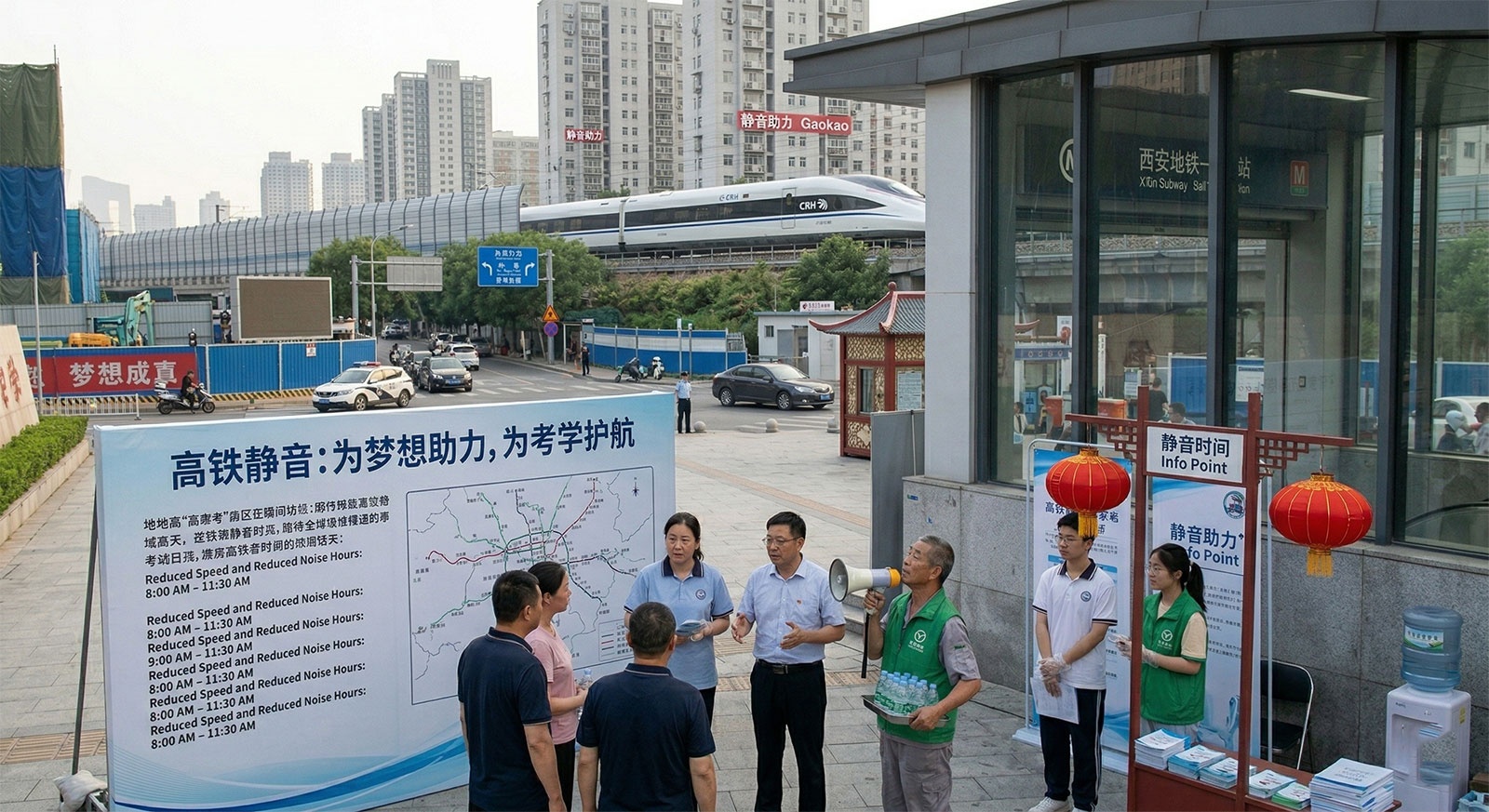
Last year, I watched a volunteer named Li Wei in Xi’an. He is a 58-year-old retired mechanic who usually spends his days fixing scooters near a subway station. On Gaokao day, he swapped his wrench for a megaphone and a tray of bottled water.
“Every student is someone’s child,” Li Wei told me as he handed a bottle to a nervous parent. “If we can’t change their scores, we must ensure they don’t get distracted by noise or traffic.” His team works in shifts, ensuring that at any given moment, there are calm faces guiding parents who have circled the building ten times looking for parking.
This isn’t just about one person; it’s a city-wide rhythm. In Shanghai, emergency vehicles are rerouted away from exam zones unless absolutely necessary. In Guangzhou, high-speed trains reduce speed when passing near major test centers to minimize vibration and noise. These measures are not accidental; they are the result of years of refining a system where individual needs temporarily yield to a collective goal.
The Cultural Logic Behind the Silence
For Western readers, this level of sacrifice might seem unusual. In many countries, exams are important, but they rarely trigger a city-wide shutdown of normal activity. Why does China do this?
The answer is rooted in the concept of “education as destiny.” In a society where social mobility has historically been slow and resources scarce, the Gaokao serves as the primary, and often only, meritocratic ladder to rise above one’s origins. It is not just about getting into college; it is about changing the trajectory of an entire family line.
This cultural weight creates a unique form of social solidarity. When a city mobilizes for the Gaokao, it is not merely following government orders; it is participating in a shared belief that protecting this moment benefits everyone. The quiet streets and reduced noise are a tangible expression of collective responsibility.
There are challenges, of course. Some residents complain about the inconvenience of detours or closed shops. In recent years, cities have started using technology to balance these needs better, such as using real-time traffic apps to guide drivers away from exam zones without shutting down entire roads. Yet, the overall spirit remains: when the clock strikes for the Gaokao, the city breathes in unison.
A Global Perspective
Comparing this to the SATs or A-Levels in the US and UK highlights a distinct difference. In those systems, while parents support their children, there is no expectation that the entire urban infrastructure will adjust. The focus is on individual preparation rather than communal protection.
In China, the Gaokao is a national event because it touches the core of how society functions. It reflects a deep-seated value system where the community actively participates in the success of its youth. This mobilization demonstrates not just administrative efficiency, but a profound social trust: citizens believe that when they sacrifice short-term convenience for long-term collective good, the result is a fairer and more opportunity-rich future.
The scene at 7:00 AM on June 7 is a microcosm of modern China. It is not just about growth or technology; it is about how millions of people coordinate their daily lives around a shared vision of the future. For the students walking into those exam halls, they are not alone. They are backed by the silent hum of a city that has paused its engines to let them fly.