
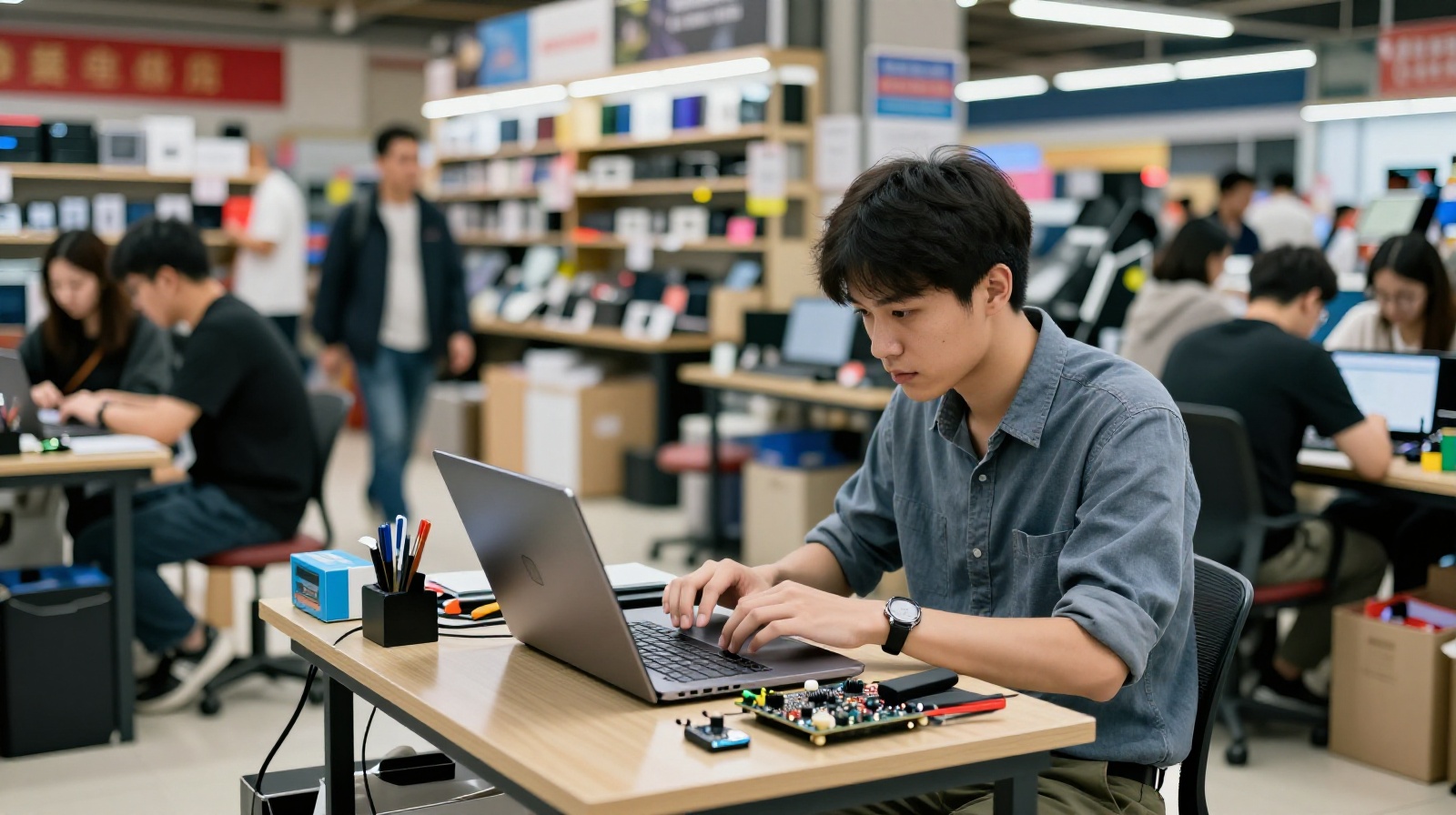

Under the fluorescent lights of Huaqiangbei
The air inside the electronics market buzzes with a specific kind of energy. It is not just the noise of bargaining, but the hum of possibility. Here, Li Wei, a twenty-eight-year-old hardware engineer, sits at a small table cluttered with screwdrivers and circuit boards. On his phone screen is a rough sketch: a smart plant pot that warns owners when soil moisture drops below a certain level.
Three years ago, getting this idea made would have taken months of shipping delays and expensive overseas design fees. Today, Li just needs to walk out the door. Within hours, he can find the specific sensor needed for the project in a shop on the next block. He doesn’t need to order parts from China’s distant interior; he buys them right here, where thousands of specialized vendors sit within walking distance.
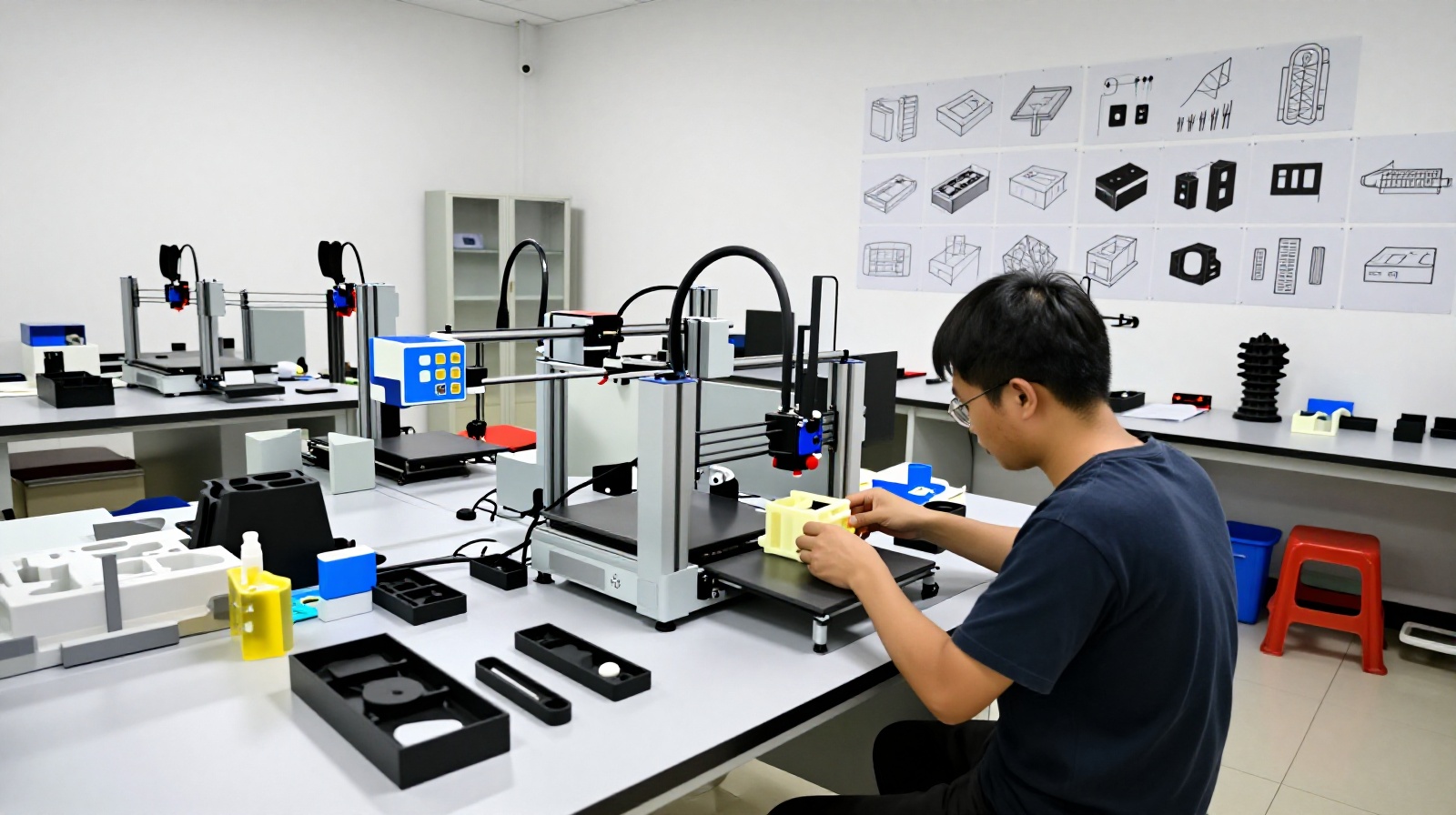
The 48-hour prototype
Li walks three blocks away to a small workshop known for rapid prototyping. He shows the owner his sketch on his phone. The owner nods, grabs a tablet, and starts typing into a 3D modeling software. “We can have your first plastic shell in six hours,” the owner says confidently.
This is the heart of Shenzhen’s manufacturing magic: proximity. In other parts of the world, a designer might wait weeks for a mold to be shipped from another city or country. Here, the entire supply chain—from raw plastic pellets to injection molding machines—is concentrated within a few square kilometers. Li picks up his first prototype the same afternoon. It is not perfect; the buttons feel slightly stiff, and the casing has a small seam. But it works.
He takes the rough shell back to his desk, tweaks the code on his laptop, and reprints the part overnight. By Monday morning, he has a working device that looks like a finished product. This is what people mean when they talk about “Shenzhen Speed.” It is not just about working faster; it is about removing friction from every single step of creation.
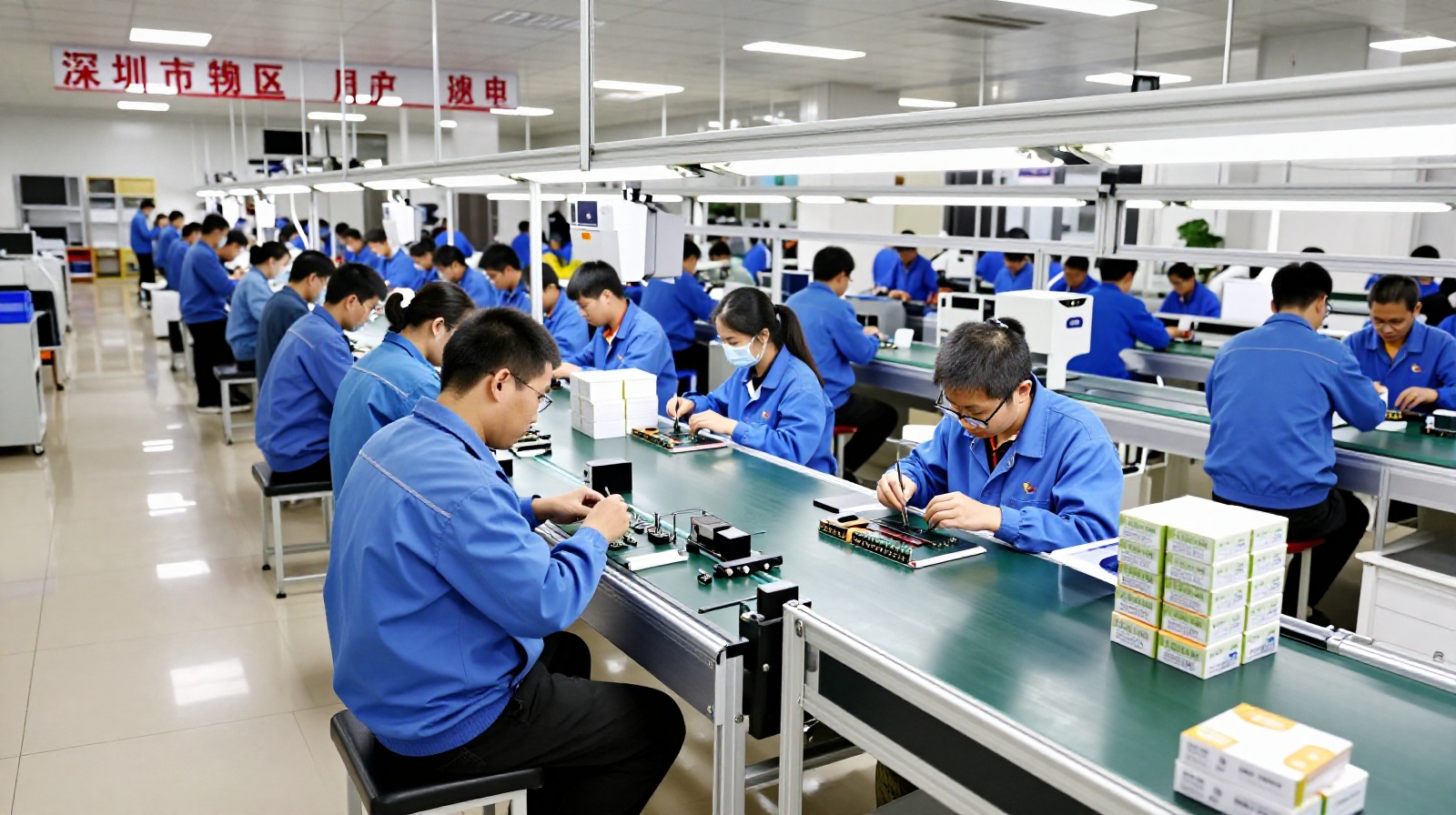
From one to ten thousand
The real test comes after the prototype. How does Li get this into mass production? In many countries, moving from a workshop model to a factory line involves complex negotiations with distant manufacturers and long lead times for tooling.
In Shenzhen, Li visits a local factory floor just two kilometers away. The owner of the factory has already seen his design and agrees to open a mold. “We can have your first batch of 500 units ready in ten days,” the factory manager tells him. This speed is possible because the factories here are flexible. They do not wait for massive orders before setting up production; they are built to handle small batches with high precision.
The components are sourced from suppliers who deliver within hours. A battery supplier might drop off 1,000 cells just as Li arrives. The assembly line is set up in a corner of the warehouse, and by Friday, the boxes are sealed.
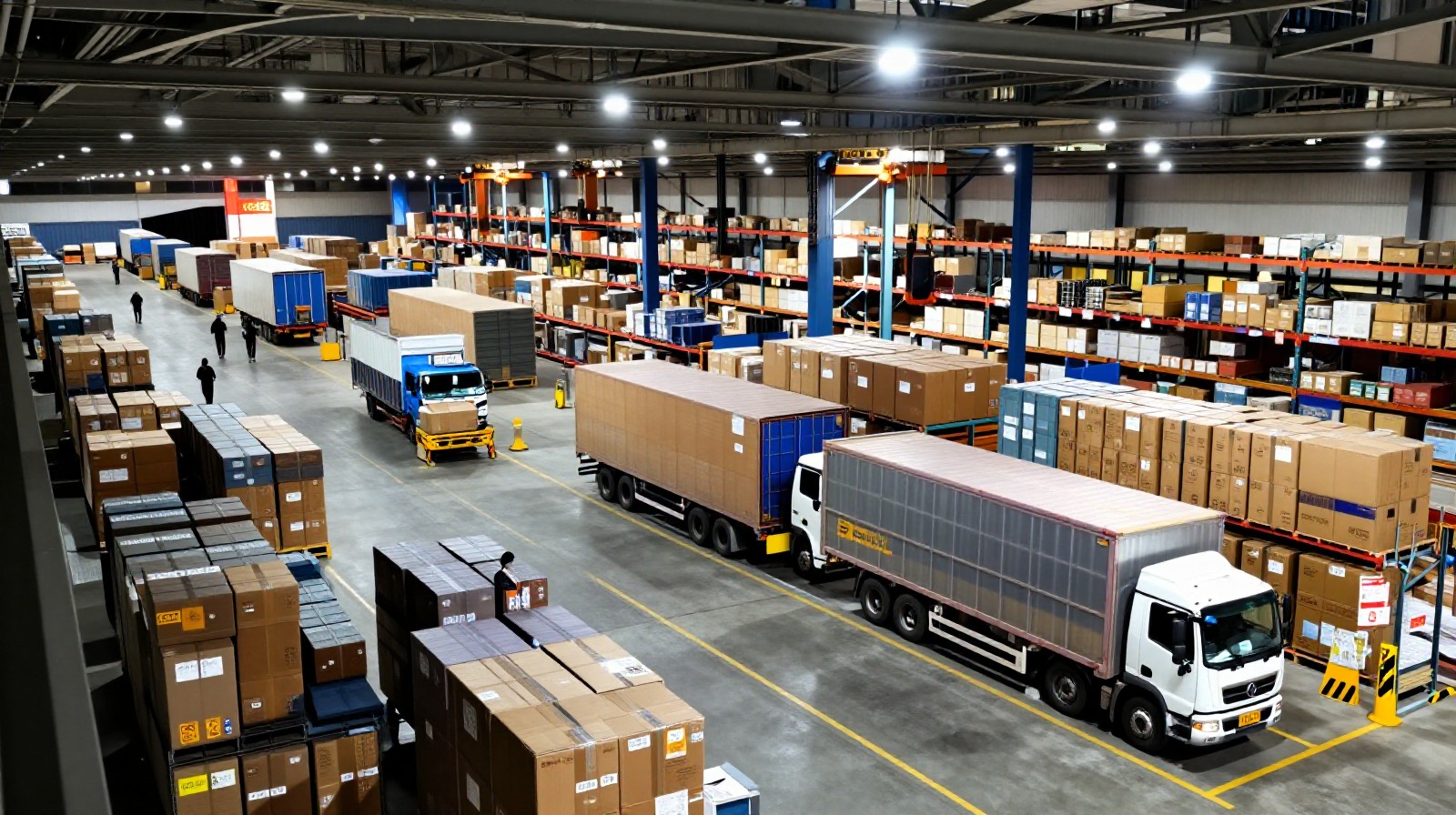
Why this matters globally
This ecosystem does not exist in isolation. It represents a fundamental shift in how physical products are built worldwide. For global brands, Shenzhen offers a way to test market demand before committing millions of dollars to inventory. If the plant pot fails with early adopters, Li can pivot his design and try again next week without financial ruin.
However, this speed comes with its own challenges. Critics argue that the pressure for rapid iteration sometimes leads to quality control issues or a lack of long-term durability testing. Li admits this is true. “Sometimes we cut corners because time is money,” he says, showing a slightly imperfect casing from his first batch. “But our customers in Europe and America are getting better at demanding standards. So the speed is evolving into something more sustainable.”
The future of making things
Li’s plant pot is now on its way to Amazon warehouses across the globe. The journey from a napkin sketch to a global product took less than three weeks. This timeline was unimaginable in 2010, and even surprising to many just five years ago.
The “Shenzhen Speed” is not a myth or a marketing slogan. It is the result of a dense, interconnected web of engineers, suppliers, factories, and logistics networks that have evolved over decades. For the rest of the world, it serves as a reminder: innovation is no longer just about having a great idea; it is about how quickly you can turn that idea into reality.