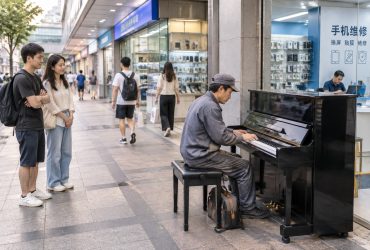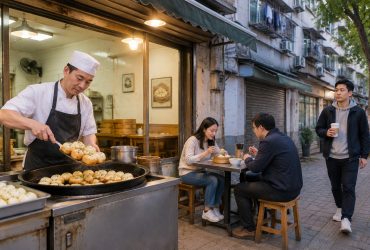
Foreign feeds often portray Chinese streets as heavily barricaded. Walk them tonight, and you’ll find a quiet revolution in urban design: flexible barriers, community-led order, and night markets that thrive on trust rather than fences.
When a narrow Beijing alley turns into a parking bottleneck, residents don’t call the police. They pull up chairs, share tea, and draft a rotating schedule. This is how informal negotiation keeps old neighborhoods running.
Beyond the neon headlines, China’s cities run on a quiet rhythm after dark. This piece follows ordinary night-shift workers, street-level infrastructure, and everyday tech to show how urban safety is built into daily life—not as a headline, but as a baseline.
A first-person look at China’s late-night street culture. Beyond the headlines, ordinary people find safety, community, and economic rhythm in city night markets.
Forget the headlines about consumption downgrading. China's night markets run on informal credit, mobile payments, and community trust. A grounded look at how ordinary people are spending, eating, and rebuilding daily life one stall at a time.
In Chongqing, a spinning GPS arrow isn’t a glitch—it’s the default. This report follows everyday commuters through layered streets, half-mountain staircases, and sky-high transit lines to show how residents turn three-dimensional geography into a practical navigation system.
GPS says you’ve arrived, but you’re actually on the twelfth floor. Navigating Chongqing isn’t about flat-grid logic; it’s about learning to read space vertically, trust digital layers, and adjust to a city that moves with elevation rather than straight lines.
Chinese cities are moving away from mass demolition. In old neighborhoods, planners are upgrading infrastructure while keeping street vendors, community networks, and daily rhythms intact. A look at how micro-renewal is reshaping urban life.
For China’s urban youth, the day doesn’t end when they leave the office. Driven by delivery apps and work culture, 'after-work' time is a complex mix of digital efficiency and physical isolation. This looks at how algorithms shape dinner plans, solo dining habits, and the quiet negotiation between convenience and human connection.
Cash is barely used in China, and navigation, payments, and even doctor visits run through smartphones. Here is a practical, scenario-driven guide to the ten apps that will keep you moving smoothly from your first taxi ride to your last street food stop.