

The Sensory Shift in Yunnan
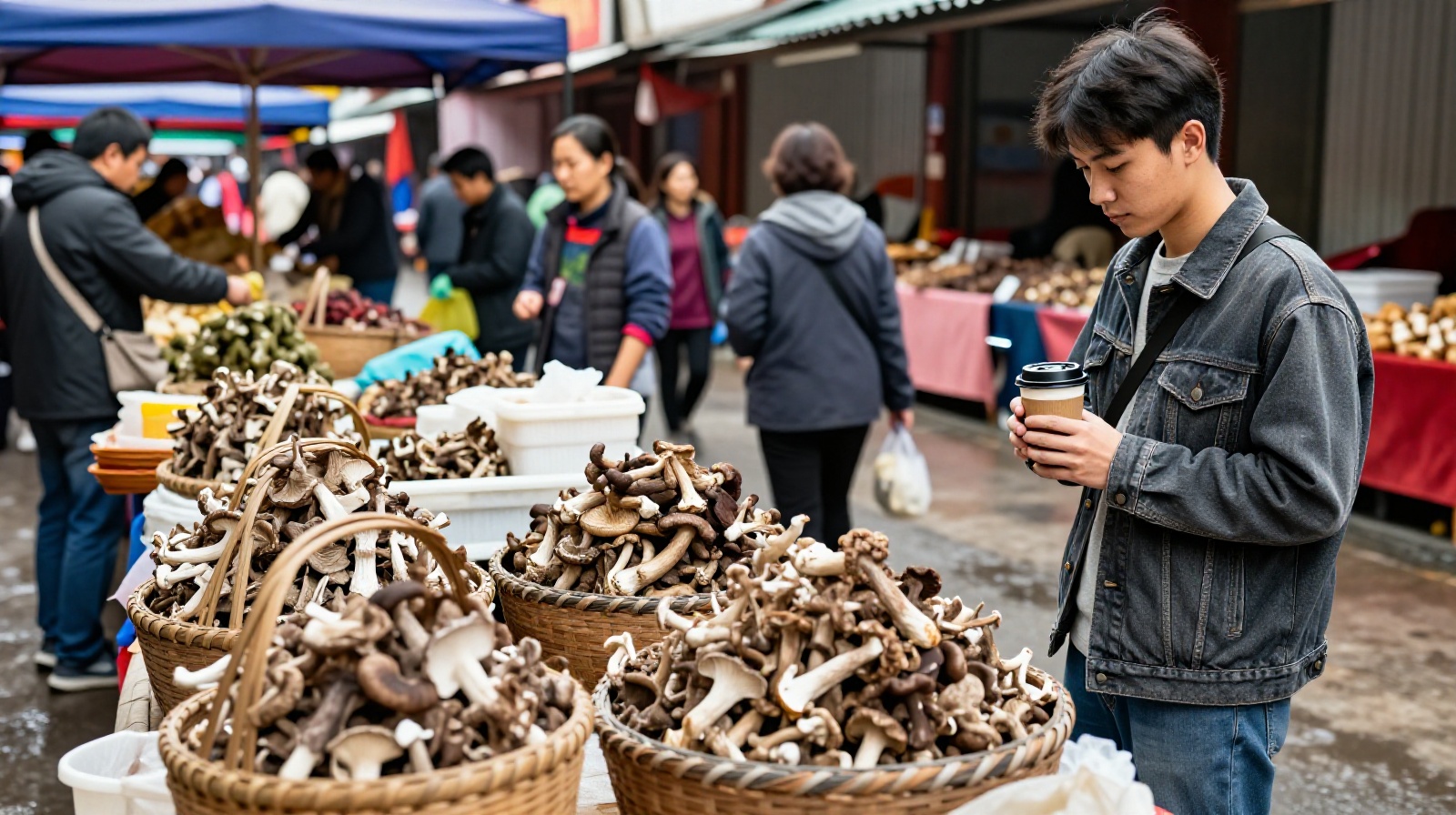
Walk through the wet markets of Kunming or Lijiang in July, and the air is thick with the earthy scent of songrong (porcini) and wild mushrooms. For thousands of years, this seasonal rush defined the local diet. Families would spend their savings on these fleeting delicacies, treating them as a rare luxury during the rainy season.
But if you look at the same streets today, something else is happening. In coffee shops that have popped up in every neighborhood, young professionals are sipping lattes made from beans grown just two hours away in Pu’er or Baoshan. The thrill of the hunt for wild mushrooms is still there, but it has been joined by a steady, daily ritual: high-quality, affordable local coffee.
The Mushroom Economy: More Than Just Food
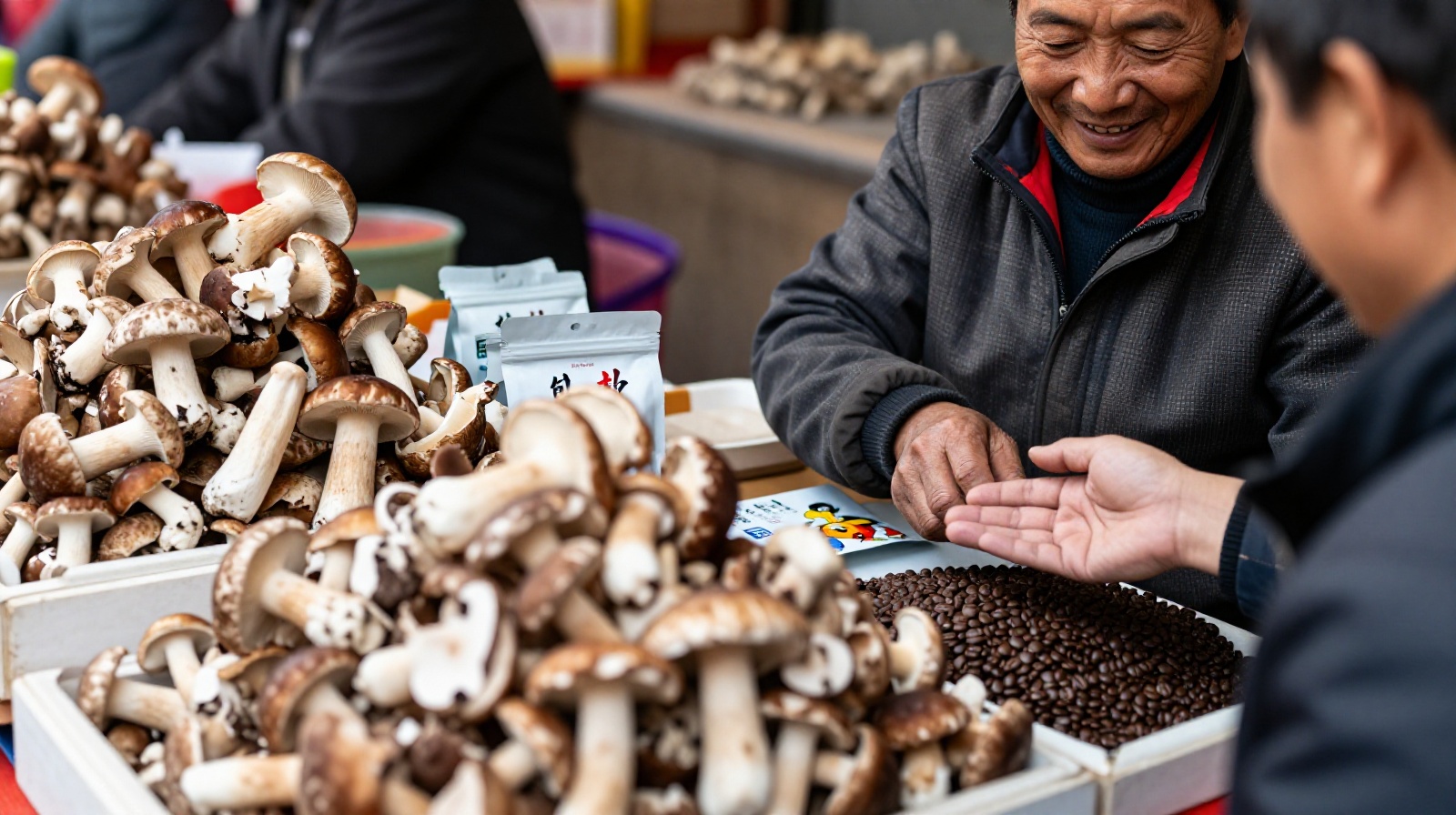
To understand this shift, we must first look at how Yunnan’s wild mushroom economy works. It is not just about taste; it is a critical income source for rural households in the mountainous regions.
Every rainy season (June to September), thousands of locals become foragers. They navigate steep forests, guided by generations of knowledge passed down orally. A single kilogram of rare Coprinopsis mushrooms can fetch hundreds of yuan ($15–$20 USD) in urban markets like Kunming’s Xizhongtian Market. For a rural family, this seasonal income can cover school fees or medical bills for the year.
This is a fragile economy. It relies on weather patterns and traditional ecological knowledge. While it provides cash, it does not offer stability. This limitation is exactly why the next trend caught fire so quickly.
Coffee Culture Goes Local: From Export Crop to Daily Habit
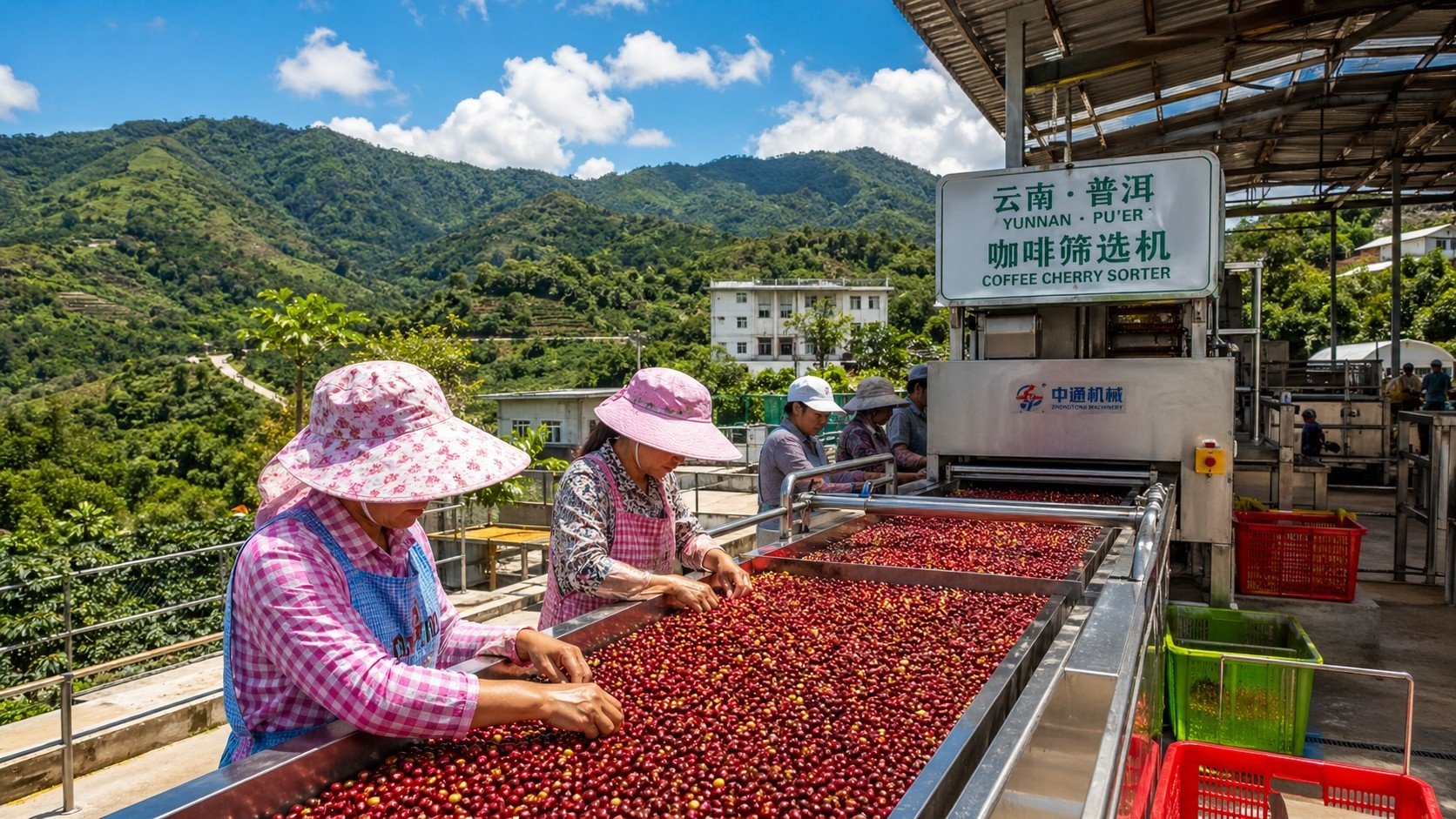
Yunnan produces over 98% of China’s coffee beans. For decades, these beans were exported as bulk commodity crops, often sold cheaply to international brands that blended them into mass-market instant coffee or espresso blends. The local farmers saw little profit, and the locals themselves rarely drank their own produce.
That changed with the rise of domestic consumption. Driven by younger generations in cities like Kunming, Chongqing, and Chengdu, there is now a booming market for Chinese local lifestyle products that prioritize origin and quality.

Today, a cup of latte in a Yunnan café costs roughly 15–25 yuan ($2–$3.50 USD). This is significantly cheaper than imported brands like Starbucks or Luckin Coffee in tier-1 cities, yet the quality has improved drastically due to better processing techniques and direct sourcing from local farms.
The economic logic is clear: supply chain maturity has lowered costs. Farmers no longer rely solely on volatile wild harvests; they have stable contracts for coffee cherries. Consumers get a premium product at an accessible price point. It is a win-win that reflects the broader industrial upgrading in rural China.
The Price Tag of Preference: Analyzing the ‘Economic Ledger’
Why does this matter to someone living thousands of miles away? Because this shift reveals the dietary changes in China’s emerging middle class. It is not just about having more money; it is about how that money is spent.
In the past, spending was driven by necessity: calories and protein were paramount. Today, with disposable incomes rising, people are willing to pay for experience and traceability.
- Convenience: Brewing local coffee is fast and consistent. Forcing oneself to cook complex mushroom dishes requires time and skill; brewing a latte does not.
- Status & Identity: Drinking locally sourced, specialty-grade coffee signals a connection to modernity and environmental consciousness without the premium price tag of imported goods.
- Risk Management: Wild mushrooms carry risks (some are toxic if improperly prepared). Coffee is safe, standardized, and predictable.
This “economic ledger” shows that Chinese consumers are becoming more rational. They are not blindly chasing foreign brands; they are supporting local industries that offer better value.
A Bridge for Global Readers: What This Means for China’s Everyday Life
For international observers, everyday life in China can sometimes seem like a blur of high-speed trains and futuristic skylines. But the real story is often found in what people eat and drink at home.
The transition from wild mushrooms to coffee mirrors a broader national trend: moving from survival to enjoyment. It signifies that basic needs are met, allowing for experimentation with taste and culture. It also shows that China’s rural-urban divide is narrowing, not just in income, but in access to quality goods.
Tasting the Future
Yunnan’s table is a microcosm of modern China. The wild mushrooms represent the past—a life tied to nature’s whims and traditional knowledge. The local coffee represents the present and future: industrialized, sustainable, and integrated into a global supply chain on Chinese terms.
For those looking to understand China’s internal dynamics, look no further than the kitchen table. When people can afford to choose between a rare seasonal delicacy and a daily cup of quality brew, it means the economy is not just growing; it is stabilizing. And that stability is the foundation for all future consumption.